
Last Updated:
Lance Watson breaks down Jaipur Polo’s resurgence under Pacho, the pressure moments that defined the season, and how heritage, culture and modern systems fuel the team’s rise.

Lance Watson of the Jaipur Polo Team in action
The Jaipur Polo Team was central to Indian polo’s identity for nearly a decade. A dominant force in the mid-20th century, it eventually faded from the competitive landscape after years of inactivity.
Today, the team is back near the top of Indian polo – a resurgence driven by HH Maharaja Sawai Padmanabh Singh, known as Pacho and supported by South African professional Lance Watson.
Jaipur already has seven trophies this season, with goals coming in a flood.
Watson, who has played extensively across India and abroad, joined Jaipur with a broad understanding of the sport. What he didn’t fully grasp at first was the weight of the team’s heritage.
“When I got the call to join Jaipur, I already knew India well, but the history is something else,” he says. “That legacy isn’t just polo history; it’s Indian sporting heritage.” Watson tells News18 Sportsadding, “It motivated me.”
Watson has been among the side’s most consistent performers and two matches stand out for him.
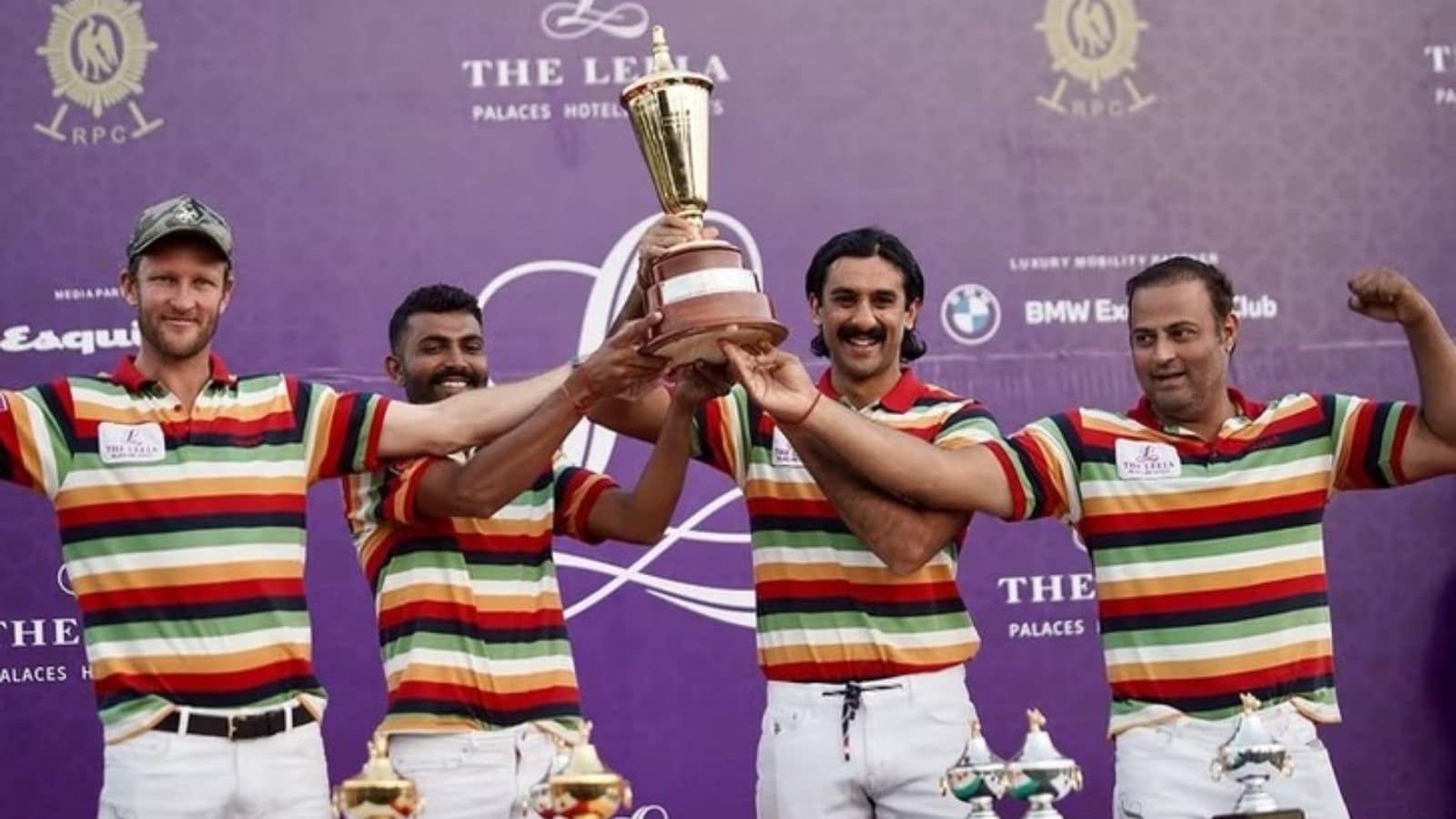
The BM Birla Cup final remains the most significant. Jaipur trailed 5- 2 after three chukkas before fighting back to force a fifth. Watson scored the winner in the third minute of that final period.
“Knowing the match rested on that moment, that’s what makes polo what it is,” he says.
The Chinkara Cup final sits close behind, largely because of the context. Watson scored six goals to help Jaipur overturn a previous loss to the same opponents in the Army Commander’s Cup.
He attributes the team’s success in tight moments to clarity under pressure. “We don’t panic,” he says. “Pacho’s leadership from the back, Angad’s consistency and our trust in each other allow us to execute.”
Padmanabh Singh’s Role in the Revival
Padmanabh Singh has been the driving force behind the team and playing alongside a royal could have felt complicated. In practice, Watson says, it has been straightforward.
“He never uses his royal status on the field. He earns respect through how he plays,” says Watson.
Singh’s numbers reinforce that point: more than 100 goals this season, and a 120-yard strike during the Maharaja of Jodhpur Golden Jubilee Cup that was voted goal of the year.
“That shot sums up his instinct,” Watson remembers.
He also highlights Singh’s work off the field. “He’s managing team operations, international tours, development programs and still performing at a high level.”
Watson and Singh’s partnership extends beyond matches. “There was an off-season riding drill that turned into a mini polo match – just the two of us,” he recalls. “He won on speed; I say I won on precision.”
It’s a light moment, but he says this sort of rivalry “keeps the environment sharp.”
Changing the Infrastructure and the Culture
Watson has witnessed the team’s transformation up close. When he arrived, rebuilding was underway; now, he says, the results are visible everywhere.
The Rajasthan Polo Club ground, untouched for more than 40 years, was rebuilt with modern irrigation and maintenance systems. The team’s infrastructure, including the horses, training support and staffing, has expanded rapidly.
But the cultural changes, he believes, matter just as much. “There’s a renewed sense of purpose,” notes Watson. He points to the Sawai Man Singh Polo Academy, which aims to bring new players into the system regardless of their financial background.
“This isn’t just about trophies. It’s about setting up an ecosystem so Indian polo can compete internationally.”
Even on the field, Watson finds Jaipur’s approach refreshing.
“There’s a blend of elegance and precision,” he says. “Other teams are very data-driven, which is important, but Jaipur still emphasises horsemanship and intuition.”
He adds that Jaipur’s support systems of horse-breeding programmes, ground quality, and match preparation are on par with the strongest international outfits. Their international exposure, including a winning tour at Guards Polo Club in the UK, reinforces that identity.
“It’s a combination of heritage and modern systems,” Watson says. “You don’t see that in many places.”
Integrating into the team meant understanding more than tactics. Watson says the cultural component mattered just as much.
“When you wear the Jaipur jersey, the five-colour Pachranga design, you’re representing a city, not just a team,” he says.
Watson has tried to learn Hindi, attend local festivals when possible, and make time for supporters. “Understanding the culture helps you understand what you’re playing for,” he quips.
Balancing Polo With Family Life
Watson’s international schedule often takes him far from home. Balancing that with parenting has been one of his career’s ongoing challenges.
“My kids find it fascinating that I’m playing halfway across the world and with Indian royalty. But I try to teach them that it’s about work ethic, not glamour,” says Watson.
What Does the Future Hold for Polo?
Watson, who has watched polo shift from a traditional social sport to one defined by athleticism and strategy, expects that evolution to continue.
“Training will get more scientific,” he says. “Sports psychology, performance analytics for both players and horses, stricter safety standards, all of that is going to grow.”
He points to breeding innovations, including cloning technologies emerging from Argentina, which will bring difficult ethical questions. Meanwhile, accessibility is improving through programmes like the Sawai Man Singh Academy.
Broadcast partnerships, especially the expansion of televised polo in India, will also influence the sport’s growth. “Coverage brings new audiences, and new audiences bring growth,” he says.
But he hopes polo’s core remains unchanged. “The bond between a rider and a horse – that’s central. The sport shouldn’t lose that.”

Vineet R is an accomplished sports media professional with over 15 years of experience in digital journalism. As Deputy Editor – Sports at CricketNext and News18 Sports, he has led impactful cricket coverage, e…Read More
Vineet R is an accomplished sports media professional with over 15 years of experience in digital journalism. As Deputy Editor – Sports at CricketNext and News18 Sports, he has led impactful cricket coverage, e… Read More
November 20, 2025, 6:41 PM IST
Read More
Source link
[ad_3]