
- Hindi News
- Business
- India Fertilizer Production Crisis Reason; Iran War LNG Supply | Hormuz Strait
New Delhi32 minutes ago
- copy link
India’s fertilizer production declined by about a quarter in March due to the US-Israel and Iran wars. According to the Commerce Ministry, fertilizer production in March 2026 has declined by 24.6% as compared to March 2025.
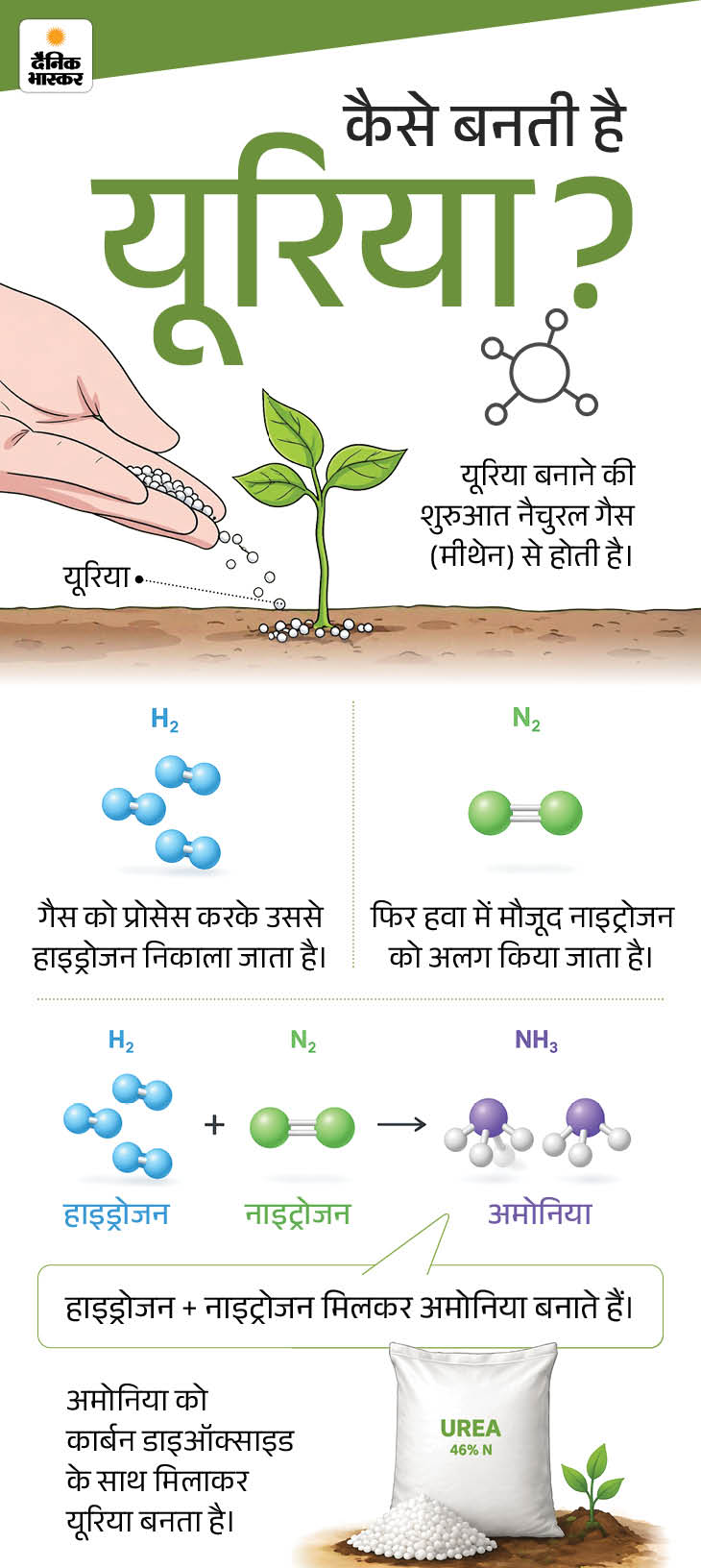
Actually, the supply of natural gas used in making fertilizers has been affected due to the war in the Middle East. Natural gas is used to make urea, which is a very important fertilizer for Indian agriculture.
For this, India is completely dependent on international energy prices and supply. Due to war, traffic on the Hormuz route is almost closed. Raw materials related to energy and fertilizers are supplied through this route.
India depends on Gulf countries for 60% LNG and 40% urea
According to the report, due to closure of Hormuz, the consignment of liquefied natural gas coming from Gulf countries is not able to reach India. India is dependent on these countries for about 60% of its requirement of LNG and 40% of urea.
At the same time, about one-third of the world’s fertilizers also pass through this sea route. After this blockage, many warnings have been given by experts and many international organizations regarding the impact on food production.
Farming in India is done on small farms and often does not produce much, but more than 45% of the country’s population is dependent on farming.
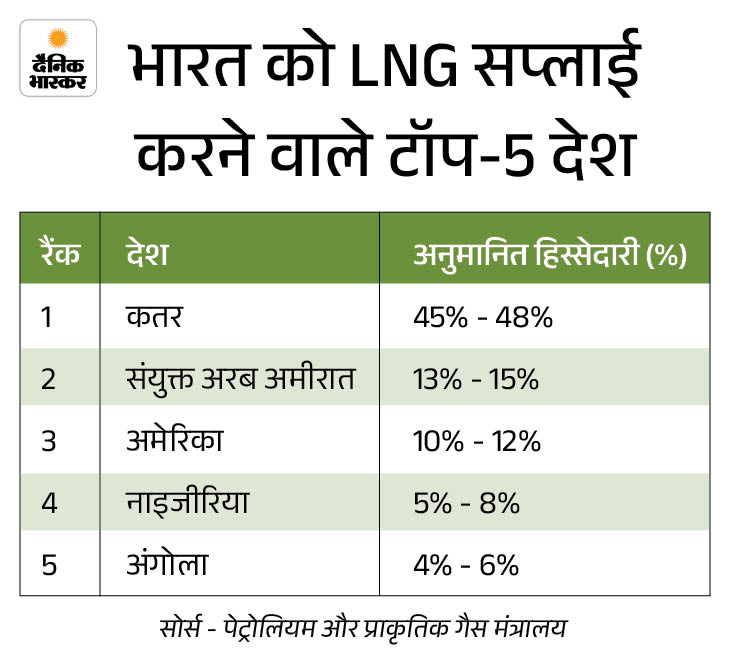
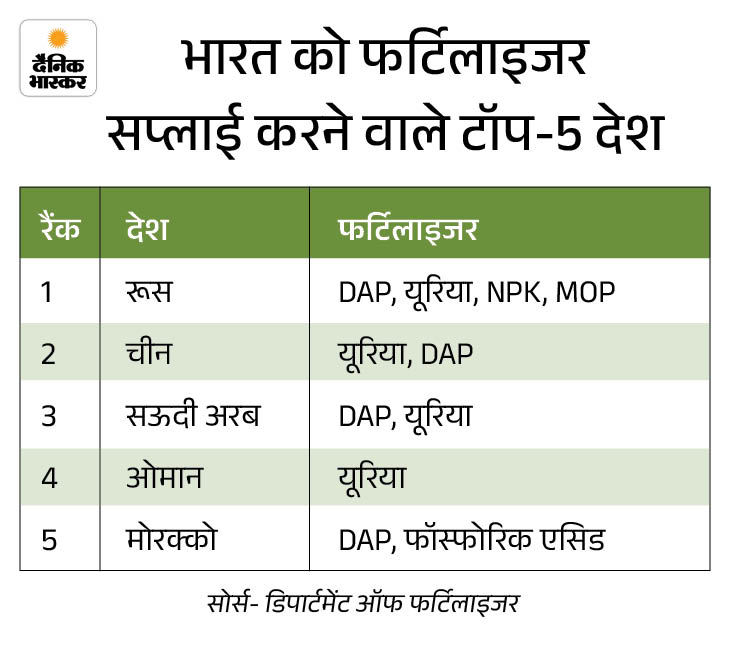
India’s heavy dependence on imports for fertilizers
- India is among the world’s largest fertilizer consumers, but the bulk of the requirement comes from outside.
- About 30–35% of the country’s total fertilizer requirement is directly imported.
- India is close to self-sufficiency in urea, yet is dependent on imports for raw material (gas).
- There is 80–90% import dependence in fertilizers like di-ammonium phosphate (DAP) and potash.
Main reasons for decrease in fertilizer production
- Shortage of Raw Materials: Natural gas is the most important ‘feedstock’ for making urea. India imports much of the gas it needs, the supply of which has been disrupted due to the war.
- Hormuz Route Crisis: This is the most important sea route in the world. Due to closure of movement here, raw material ships coming from Gulf countries are not able to reach India.
- Energy prices surge: In case of war, the prices of gas and oil increase in the international market. Due to this, the cost of production has increased so much that many plants are not able to work at their full capacity.
- Logistics and Insurance Costs: Insurance of ships passing near the war zone has become expensive, due to which ordering of goods has become not only difficult but also extremely expensive.
Impact of decline in fertilizer production on India and farmers
45% of India’s population is dependent on agriculture, so the impact of reduction in fertilizer production could be greater…
- Threat to food security: Due to less fertilizer, the yield per hectare can decrease by 10% to 15%. Due to this, there is a danger of food shortage and increasing inflation in the country.
- Reduction in farmers’ income: Shortage of fertilizer or its black marketing will increase the cost of farming, which will reduce the profits of small farmers.
- Burden on government exchequer: The government gives huge subsidy to farmers to provide fertilizers at cheap prices. Due to increase in international prices, the government will have to spend crores of rupees extra, which may increase the country’s fiscal deficit.
- Slowdown in rural economy: When agricultural income decreases, demand in rural markets decreases, which can be negative for the entire economy.
What options does India have now?
In such a crisis situation, the Indian government and the industry can take these steps…
1. Short-term options
- Diversification of supply chain: India will now try to make long-term deals for fertilizers and raw materials with Russia, Canada, Oman or African countries instead of the Middle East.
- Use of buffer stock: The emergency stock stored by the government will be released in the market, so that there is no shortage at the time of sowing.
- Direct Benefit Transfer (DBT): To ensure proper utilization of subsidy so that wastage and smuggling of fertilizers can be prevented.
2. Long-Term Options
- Promotion of Nano Urea: India is at the forefront in the production of nano urea. Its use will be intensified instead of traditional urea, because it consumes very less natural gas.
- Coal Gasification: India has large reserves of coal. To reduce dependence on natural gas, plants producing urea from coal (like Talcher plant) will be activated rapidly.
- Green Ammonia: In future, emphasis will be laid on making ‘green ammonia’ using renewable energy, so that the need for gas coming from abroad will be eliminated.
- Investing abroad: India can buy stakes in fertilizer plants in countries (like Morocco or Senegal) where raw materials are available in large quantities.
Why is the Strait of Hormuz so important?
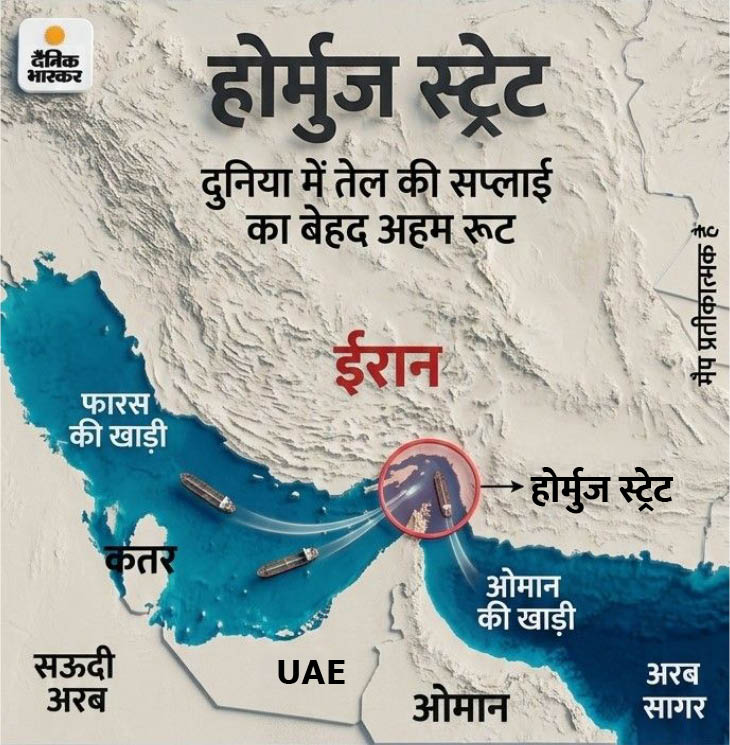
The Strait of Hormuz connects the Persian Gulf to the Gulf of Oman and the Arabian Sea. It is only a 33 km wide sea route, but about 20% of the world’s oil and LNG (Liquefied Natural Gas) supply passes through here.
At the same time, a large part of the gas and fertilizer coming from Gulf countries (Qatar, Saudi Arabia, UAE) also reaches Asia including India through this route. This gas is the main raw material for urea production. That is, if this route is closed, the feedstock of the fertilizer factory itself stops.
At the same time, about one-third of the world’s fertilizers also pass through this route. At the same time, big importers like Europe, China, Japan are also affected when the supply from here is stopped. Therefore, the blockage in Hormuz directly impacts global food production and inflation.
Economic experts and institutions expressed concern
Aditi Nair, chief economist of rating agency ICRA, said that this huge reduction in fertilizer production may impact the sowing of the coming Kharif season (June-July).
At the same time, some agricultural experts believe that if this supply chain is not restored soon, there may be a shortage of fertilizers in the country, due to which crop production will decrease and food inflation may increase.
Government said- sufficient buffer stock available for the season
According to PIB, on the decline in food production, the government says that India currently has enough buffer stock for the Kharif season. The government has started talks for alternative routes and supplies from countries like Morocco or Jordan so that the impact of the war can be reduced.
According to experts, this crisis is a ‘wake-up call’ for India to reduce its dependence on foreign energy routes for its agricultural needs and move rapidly towards indigenous alternatives (such as nano fertilizers and organic farming).
Read this news also…
John Ternes will take charge of Apple after Tim Cook: Company’s CEO changing after 15 years; Cook will now become the executive chairman

John Ternes will now be the new CEO of Apple in place of Tim Cook. He will take charge of the company from September 1, 2026. Cook will now play the role of executive chairman of the company’s board of directors. The board has unanimously approved this plan. Read the full news…

Source link
[ad_3]

