
- Hindi News
- National
- Supreme Court Notice To Centre On Digital Personal Data Protection Act Plea
New Delhi29 minutes ago
- copy link
The Supreme Court on Tuesday sought a response from the Central Government on a petition challenging the Digital Personal Data Protection (DPDP) Act and its related rules. This petition has been filed by Digital News Publishers Association (DNPA).
The petition states that due to lack of exemption for journalism in the law, investigative journalism, news reporting and protecting the identity of confidential sources may become difficult. News publishers have demanded the repeal of many provisions of the law, calling them unconstitutional.
The association has raised questions on the condition of consent for use of personal information under the Data Act, changes in the RTI Act and the powers to demand information given to the government. The next hearing of the case will be on November 17.
Ambani-Adani companies are also among those challenging the data law
DNPA had filed a petition in the Supreme Court on 6 October. In this, many provisions of the Data Protection Act and its related rules have been challenged. The association includes 21 news publishers of the country. These include media groups like Mukesh Ambani-owned Network18, Gautam Adani’s NDTV, Indian Express.
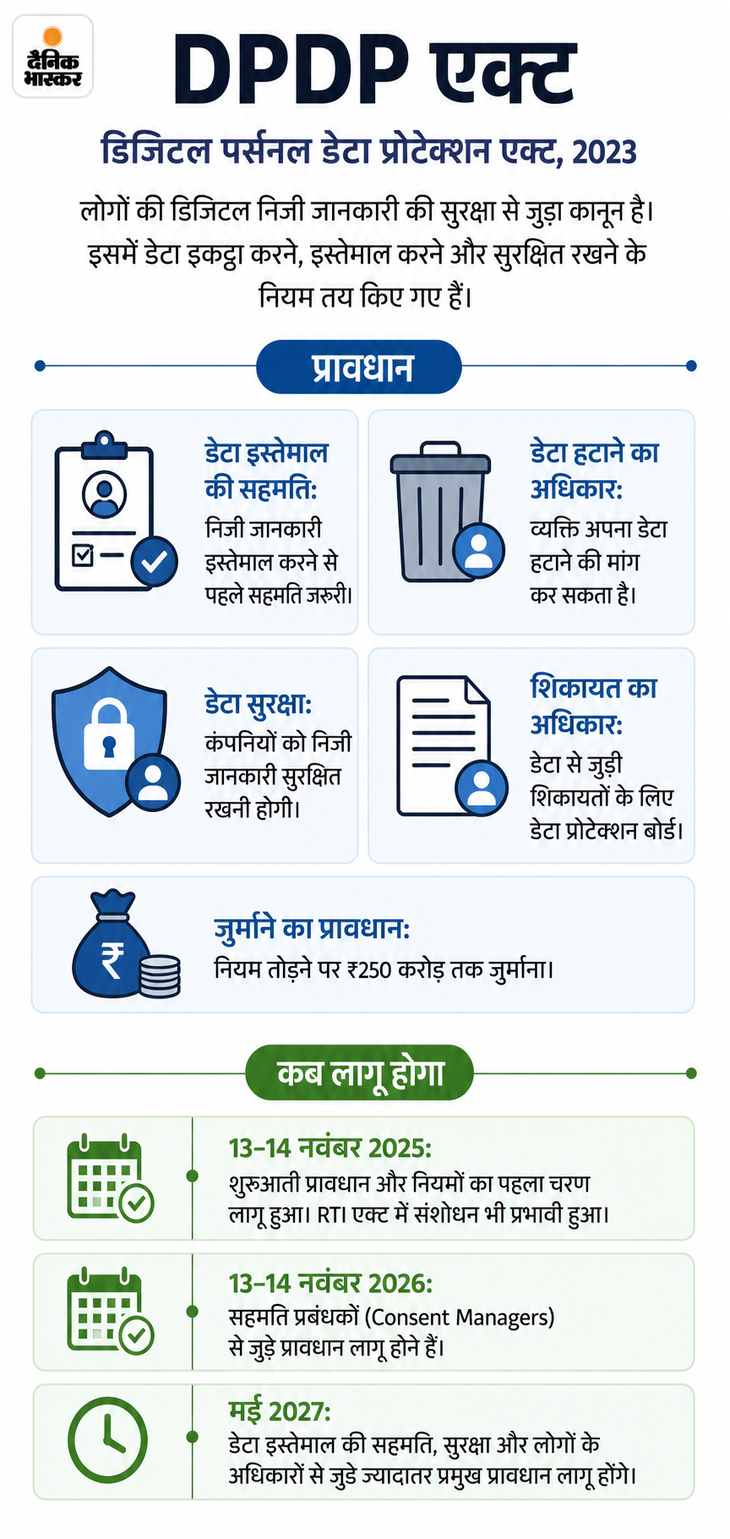
The Central Government has made this law to protect people’s personal information on digital mediums. Under this, the responsibility of following the rules has been fixed on the organizations using digital personal data.
News publishers say that the freedom of the press may be affected if media organizations are not given exemption. In the petition, along with the repeal of the disputed provisions of the law, a demand has also been made to impose an interim stay on them during the hearing.
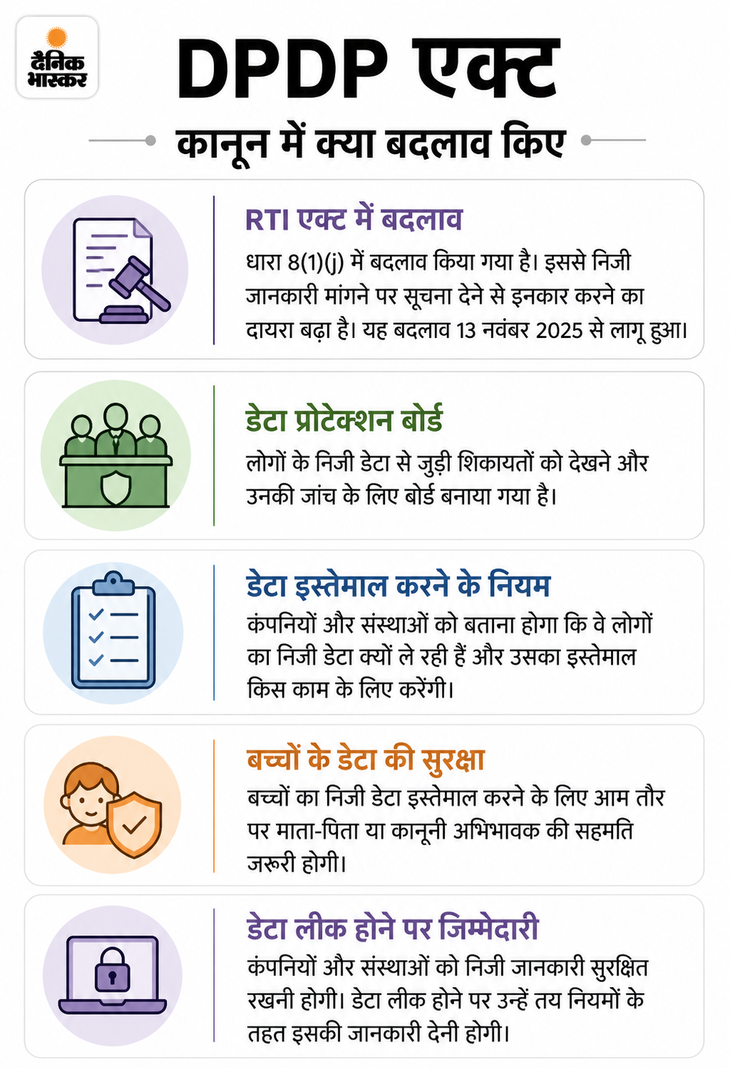
Said in the petition – There can be pressure to remove news, 5 things…
1. Journalism will be affected by the condition of consent
According to the DNPA, requiring a person’s consent before using his or her personal information could impact investigative journalism. If the journalist informs the person concerned about the investigation in advance, he may destroy evidence or intimidate witnesses.
2. There may be pressure to remove published news
The petition states that under the law, a person can demand erasure of personal information by withdrawing his consent. The association fears that there may be a demand to remove or make changes to the news published due to this. According to the petition, the law does not provide adequate protection for news of public interest.
3. Danger of revealing the identity of journalists’ confidential sources
DNPA has raised questions on the government being given powers to demand information from organizations. The association says that the use of these powers could expose the identities of journalists’ confidential sources. This could also impact people reporting corruption, corporate malpractices and electoral irregularities.
4. Challenge to change in Section 8(1)(j) of RTI Act
News publishers have also challenged the changes made in Section 8(1)(j) of the Right to Information (RTI) Act. It is feared in the petition that this may affect the public’s access to information related to government officials and other people.
5. Raised questions on the powers of the government
The petition states that under the DPDP Act, the government can seek information from organizations and block access to information on the basis of public interest. The DNPA argues that there should be clear limits to the use of these powers. The association has also said that government institutions have been exempted from the law, whereas journalism does not have the same protection.
—————————–
Read this news also…
Supreme Court said – Keeping children away from the Internet is absurd: Database should be created to remove child sexual abuse content; Cases increased 26.6 times in 5 years
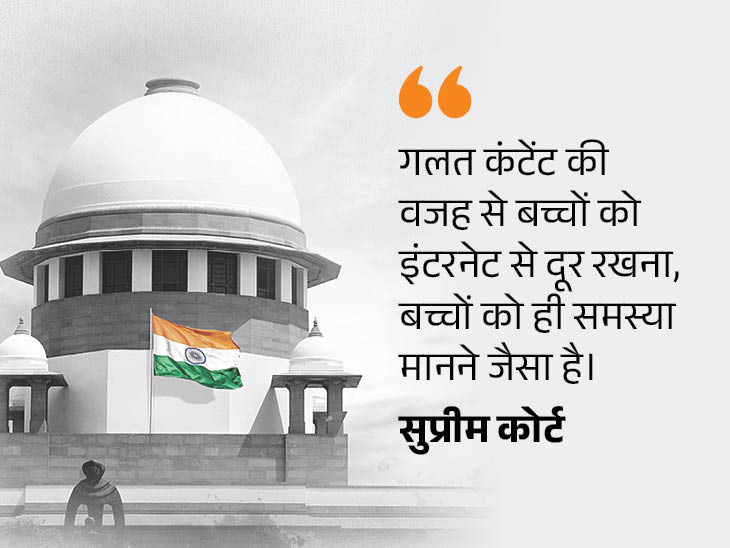
The Supreme Court has said that using the Internet is a fundamental right of every person, even children. It would be absurd to keep children away from the Internet completely. The court said that it is important to take care of both the online safety of children and their freedom. Read the full news…

Source link
[ad_3]

