
During my recent visit to Puri, I noticed something quietly transformative unfolding on dining tables: classic Odia dishes were being reinvented. At the award-winning restaurant Amo Odisha at Sterling Puri, known for its authentic Oriya and Mayurbhanj cuisine, tradition remains sacrosanct. Yet beyond the familiar comfort of mustard-laced curries and temple-inspired fare, chefs are experimenting – thoughtfully, respectfully – to appeal to younger, urban palates.
Also Read: What Is Special About Bosnian Coffee, And How Is It Different From Turkish Coffee?
Across Odisha, fusion cuisine is no longer a passing fad. It reflects a new generation negotiating identity – rooted in grandmother’s kitchen yet plated for a global palate. Young Odias travel, scroll, and taste the world. They relish sushi and pasta but return home craving pakhala or chhena poda. Fusion bridges that space. A burrito filled with fermented rice, a cheesecake inspired by caramelised cottage cheese, or santula presented as a wellness bowl – these are not departures from tradition, but reinterpretations.
Photo: Vijaya Pratap
Urbanisation, social media aesthetics, and a rising pride in regional heritage have all contributed to this shift. Fusion Odia cuisine is not about dilution. It is about evolution.
Senior Chef Abhijit Nag, with decades of experience in leading Indian and international hotels, embodies this balance between legacy and innovation. Trained in continental cuisine, he now moves fluidly between the traditional and the experimental. “We are making Indian food with a continental touch,” he tells me. “Experimentation is necessary. Masala pizzas are much sought after now – why shouldn’t Odia food travel the same road?”
Yet his foundations remain firmly traditional.
His Chattu Besera Croquettes reinterpret a rustic mushroom-mustard preparation. Mushrooms are marinated in yellow mustard, sauteed with onion, garlic, kasuri methi and spices, then shaped into croquettes and shallow fried – crisp outside, pungent and earthy within.
Mangsa Muri, a Mayurbhanj specialty, is deeply nostalgic: mutton marinated in ginger-garlic paste, turmeric and mustard oil, slow-cooked with onions and finished with a whisper of saunf powder. It is served with crisp puffed rice. The interplay of tender meat and airy crunch is both simple and sublime.
Macho Besaro channels royal Mayurbhanj kitchens – fish marinated in a paste of yellow mustard, cumin and coriander, cooked gently in mustard oil until the flavours bloom.
The showstopper, however, is his Daab Chingudi. Tender coconut water and cream are scooped out and reserved. Prawns are sauteed briefly with a paste of mustard, poppy seeds, onion and green chillies, then returned to the coconut shell along with its water and cream. Steamed for fifteen minutes, the result is delicately smoky, faintly sweet and richly coastal – served with plain rice to absorb every nuance.
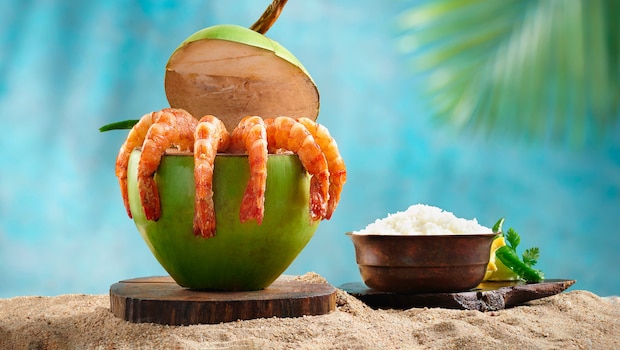
Photo: Vijaya Pratap
While Chef Nag honours authenticity, young and dynamic Chef Omkar Sawant represents the next wave – bold, playful and globally inspired.
His Dalma Veloute transforms Odisha’s staple lentil-vegetable stew into a silken French-style soup. Vegetables are boiled and pureed with mashed arhar dal, enriched lightly with butter and cream, and seasoned with freshly ground dalma masala – coriander, cumin, red chilli and cardamom. Finished with grated coconut, it is familiar yet refined.
Baingan Chhena Lasagna layers roasted brinjal slices with arrabbiata sauce and shredded chhena. The brinjal replaces pasta sheets; the chhena – moist, crumbly and delicately tangy – melts into the spicy tomato sauce. Topped with mozzarella and baked, it is Odisha meeting Rome in harmonious layers.
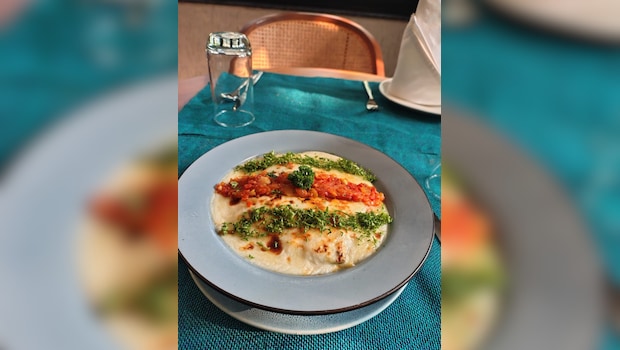
Photo: Vijaya Pratap
Basil Paneer Tikka swaps the standard yogurt marinade for a vibrant paste of fresh basil and Indian spices before being charred in the tandoor – herbaceous, smoky and strikingly green.
Dessert travels to Koraput. His Koraput Tiramisu celebrates the state’s emerging Arabica coffee. Instead of traditional ladyfinger biscuits, he uses Biscoff; mascarpone lends creamy sweetness, while locally grown coffee brings depth and aroma. The result feels indulgent yet proudly regional.
Also Read: How To Make Gujarati Kathiyawadi Sev Tamatar Ki Sabji In Just 15 Minutes
Even his Prawn Tempura with Ghee Podi Dust nods to cross-cultural play. Straightened prawns are dipped in a chilled soda batter of refined flour, corn flour and rice flour, fried crisp, then finished with aromatic ghee podi (same spicy powder used in ghee podi dosa) and fried curry leaves – crunchy, fragrant and addictive.
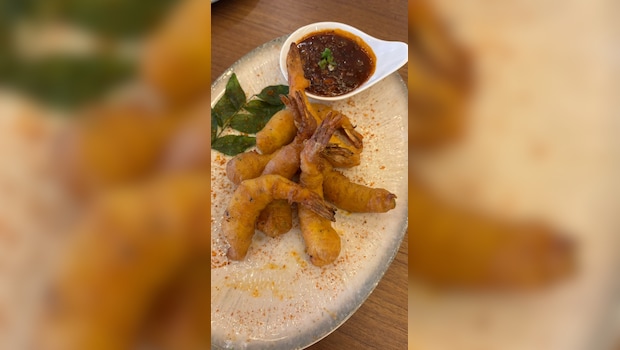
Photo: Vijaya Pratap
Together, the two chefs represent a dialogue rather than a divide. One safeguards tradition; the other stretches its boundaries. Both agree that Odia cuisine deserves global recognition. As Chef Nag observes after recent culinary travels abroad, Indian food is already celebrated worldwide – and regional cuisines are next in line.
Fusion Odia cuisine is not abandoning its roots – it is simply learning to speak the language of a new generation.
Source link
[ad_3]

