
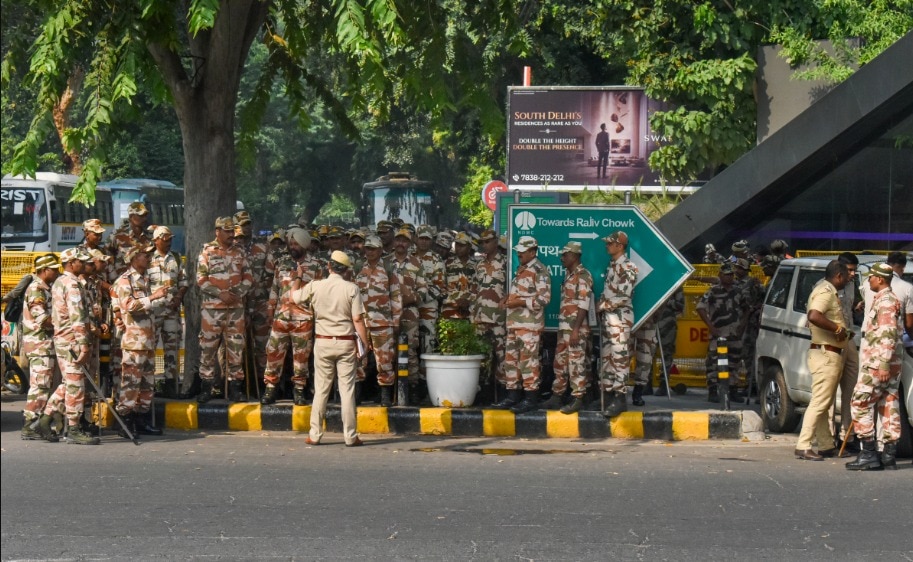
A hearing was held in the Supreme Court on Friday on the restrictions imposed on the protests called by CJP in Delhi. During this, Chief Justice Surya Kant expressed concern over the decision to close metro stations, railway services and roads. He said that necessary steps can be taken to maintain law and order, but the movement of common citizens should not be completely stopped. Referring to the principle of proportionality, the CJI said that only as many measures should be taken as are necessary to prevent a situation. For this ‘a hammer cannot be used to kill a fly.’
During the hearing, Solicitor General Tushar Mehta presented the government’s side. He said that restrictions have been imposed in view of security and they will be reviewed according to the situation.
Supreme Court 10 big things about the hearing
1. ‘Can’t use a hammer to kill a fly’
Chief Justice Surya Kant said that the principle of proportionality applies in the case of every citizen. It may be necessary to take action to prevent a situation, but action should be taken only to the extent necessary. He said that this does not mean that a hammer should be used to kill flies.
2. Difference between closing metro and reducing frequency.
Taking cognizance of the notices of Railways and Metro, Justice Bagchi said that there is a contradiction in the notices of Metro. On one hand there has been talk of reducing the frequency of trains, while on the other hand there is a provision to stop services. He said that reducing the frequency is controlling the services, while stopping them completely is a restriction. This notice needs to be reconsidered.
3. Concern of passengers coming from Noida-Gurugram
CJI said that a large number of people from Noida, Gurugram and surrounding areas come to Delhi for jobs and studies. In such a situation, closure of metro stations will cause problems to common citizens. The movement of children, students and senior citizens should not be affected.
4. SG will talk to the government on closing metro, trains and roads
Solicitor General Tushar Mehta told the court that he will talk to the government regarding the closure of entry gates of metro stations and restrictions imposed on transport services. He said that precautionary measures have been taken till the situation becomes normal.
5. Barricading on roads should also be reviewed
During the hearing, senior advocate Hariharan said that the roads have been closed by barricading at many places. On this the CJI said that the decision to close the roads should also be reviewed. He said that if barricading has been done on any route, then people should be informed about the alternative route.
6. ‘Police have no right to stop citizens from going to protest’
Senior advocate Vrinda Grover alleged that policemen are visiting PGs, hostels and other complexes and asking the youth not to come out and not join the protest. He raised the question whether this does not create an atmosphere of fear? Senior advocate Gopal Shankaranarayanan said that it is the citizen’s own decision to join a protest or not. The police do not have the right to tell people not to participate in the demonstration.
7. Suggestion to provide separate large space for peaceful demonstration
Chief Justice Surya Kant asked whether some other big place cannot be earmarked for peaceful protests and democratic expression, where the demonstration can be allowed? During the hearing, the lawyers said that lakhs of people come to Delhi for political rallies, but they are not stopped. On this the CJI said that such rallies take place with the permission of the police and security arrangements.
Kapil Sibal said that the place decided for the demonstration should have facilities of water, food, adequate lighting and security along with connectivity of metro and train.
Also read: ‘Women policemen were molested during Rahul Gandhi’s protest’, government alleges in SC
8. ‘Parliament is a symbol of the country’s sovereignty’- Tushar Mehta
Solicitor General Tushar Mehta said that the protesters want to go towards Parliament. He said that Parliament is not a political building but a symbol of the country’s sovereignty.
Mehta claimed that earlier also the protesters had taken permission for a limited time, but continued the protest for more than the stipulated time. He told that on June 20, the organizers had sought permission for the demonstration and had given written assurance that they would vacate the place the next day. However, the demonstration continued for 17 days, even though permission was given only for one day till 5 pm.
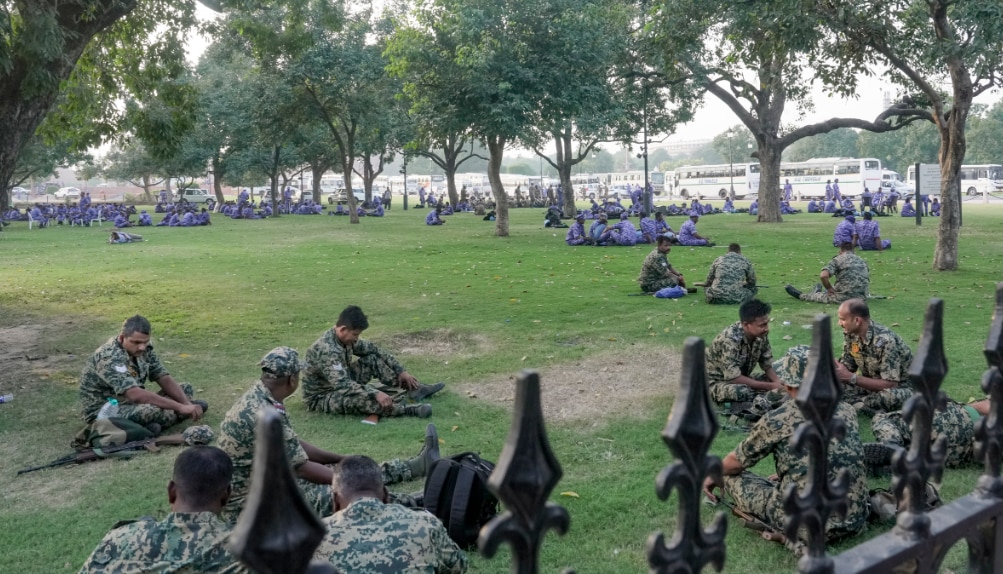
He claimed that more than 200 policemen were injured in the previous violent protests. Women policemen were also misbehaved and molested. Mehta said that there is a right to protest, but there is also a responsibility towards the people living nearby.
9. ‘The picture of entire Delhi coming to a standstill is being presented’
The Solicitor General said that it is being shown as if the entire city has come to a standstill. He said that internet ban has been imposed only in Raisina, Rashtrapati Bhavan and within its four kilometer radius. Internet services will be restored as per the situation.
He also said that if there is a possibility of anti-social or anti-national elements being involved in any protest, then the security agencies should be allowed to take appropriate action. On this, the CJI said that the government has CCTV cameras and other security measures available, but common citizens also have the right to use public transport.
10. The Supreme Court said that it is first considering the issue of movement of common passengers and access to public facilities, which have no connection with the protests.
Justice Bagchi said that the court respects the right to protest and will pass orders on the issue of movement of citizens and access to essential facilities.
—- End —-
Source link
[ad_3]

