
In most parts of India, Navratri means fasting, vegetarian food, and avoiding ingredients such as onion and garlic. In Bengal, Durga Puja can mean something very different. For many Bengali families, the festive table may include fish, mutton, and other non-vegetarian dishes. In some traditions, even meat has historically been connected to religious offerings.
So, why does non-vegetarian food have a place in a festival dedicated to Goddess Durga?
The answer goes back to Bengal’s Shakta traditions, its food culture, and the deeply personal way in which many Bengalis understand Durga Puja.
Bengal’s Durga Puja Comes From The Shakta Tradition
Chef Ananya Banerjee explains that the starting point is the tradition itself. “Bengal’s Durga Puja belongs to the Shakta tradition,” she says. In Shakta worship, the Goddess is worshipped as Shakti, the powerful feminine force. As Banerjee explains, Durga is seen as the “powerful, warrior goddess who destroys evil.”
Historically, some traditions of Shakta worship included animal sacrifice and meat offerings. Banerjee points out that this history is significant, but it should not be treated as a rule followed by every Bengali household. “This does not mean every Durga Puja or every Bengali household follows the same practice; many worshippers observe strictly vegetarian rituals,” she says. That distinction is important.
Also Read: The Next Rs.1,000-Crore Opportunity In India’s Food Industry
And Banerjee says, “Mutton remains strongly associated with the celebratory meals of Puja for many Bengalis.” This is why a plate of kosha mangsho during Puja cannot simply be understood through the lens of the vegetarian fasting traditions followed elsewhere in India.
But Eating Meat Does Not Necessarily Mean Offering It To Durga
A family may offer vegetarian bhog to Durga and still eat fish or meat at home. A community Puja may serve vegetarian khichuri as bhog, while non-vegetarian food is served separately as part of the larger festive meal. And certain Shakta Pujas may have their own traditions involving non-vegetarian offerings.
Chef Avinandan Kundu, Head Chef at Sienna in Kolkata, stresses this difference. “Meat or fish is part of the bhog in specific types of durga pujo, especially in the shakta style,” he says.
But, he adds, “Most community pujos will have non-veg as part of the lunch for everyone, but not offer it specifically to Ma Durga as part of the bhog.” So when someone says Bengalis eat meat during Durga Puja, it does not automatically mean that meat is being offered to the Goddess.
There Is Also The Very Bengali Idea Of Durga Coming Home
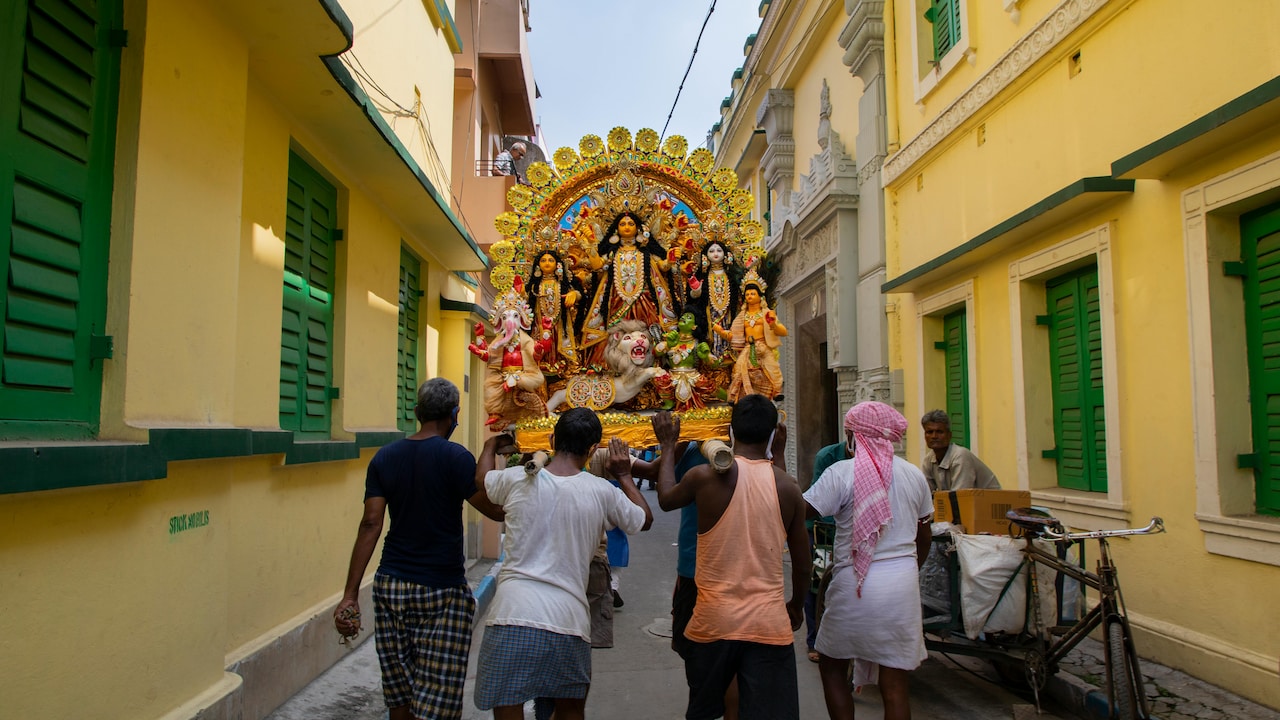
Photo: Pexels
Perhaps the most important part of understanding Bengali Durga Puja has nothing to do with dietary rules but with family. In Bengal, Durga is closely associated with Uma, the daughter who returns to her maternal home during the festival.
Chef Ananya Banerjee describes Durga Puja as “both worship and a great homecoming.”
Banerjee explains, “The Bengali imagination of Durga Puja is deeply connected with the idea of Uma coming home.”
Then comes the most familiar Bengali response to a loved one coming home. As she puts it, “And when a daughter comes home, there is hospitality, abundance, and a grand family table.” That is why Puja food is also about celebration.
Also Read: She Started With A Rs 300 Oven And Turned It Into A Rs 7,400 Crore Company
This Is Where Bengal Differs From Some Other Parts Of India
Across India, Hindu religious traditions have developed different ideas around food and purity. In regions strongly influenced by Vaishnavite traditions, vegetarian food is often closely associated with devotion. Bengal’s Shakta traditions have historically offered a wider range of practices.
Chef Avinandan Kundu says, “I think it’s important to make a distinction as to how Durga Puja is treated in Bengal vis-a-vis other religious festivals across the country.” “It’s more cultural than just purely religious,” he adds.
Durga Puja in Bengal is a religious festival, but it is also a massive social and cultural celebration, and food becomes part of almost every part of that experience. Chef Kundu says, “What’s important is this bit: we don’t necessarily treat Ma Durga as a deity.” He recalls seeing grandmothers treat Durga as their own daughter. “I have seen grandmothers treat her as their own daughter, crying when she leaves and happy when she comes home.” That emotional relationship is at the heart of his understanding of Bengali Durga Puja.
He adds, “That’s the important distinction. It’s respect out of love and devotion. Not fear and dogma.” And in Bengali culture, welcoming someone means feeding them.
So Does Every Bengali Eat Non-Veg During Puja?
This is one of the biggest misconceptions. Chef Ananya Banerjee is clear about it. “Not every Bengali eats meat. Not every Durga Puja serves fish. Not every Shakta ritual involves sacrifice.”
At the same time, she says, “But equally, many Bengalis have traditionally eaten fish and meat during the festival.”
Source link
[ad_3]

