
- Hindi News
- Business
- India UK FTA From July 15: Cheaper Whisky, Cars & More; Know What Changes
New Delhi29 minutes ago
- copy link
After the Free Trade Agreement, 99% of India’s goods will be exported to UK at zero tariff. Whereas 99% of UK goods will be imported at 3% average tariff.
UK cars, whiskey, clothes and footwear will become cheaper in India after 27 days. Because, the free trade agreement between India and UK will come into effect from July 15. That means from this day 99% of India’s goods will be exported to UK at zero tariff. Whereas 99% of UK goods will be imported at 3% average tariff.
With this, bilateral trade is likely to double to $120 billion by 2030. After 14 rounds of talks in about 3 years, this agreement was signed on 24 July 2025 by Commerce Minister Piyush Goyal and British Trade Minister Jonathan Reynolds in the presence of PM Narendra Modi and his UK counterpart Keir Starmer.
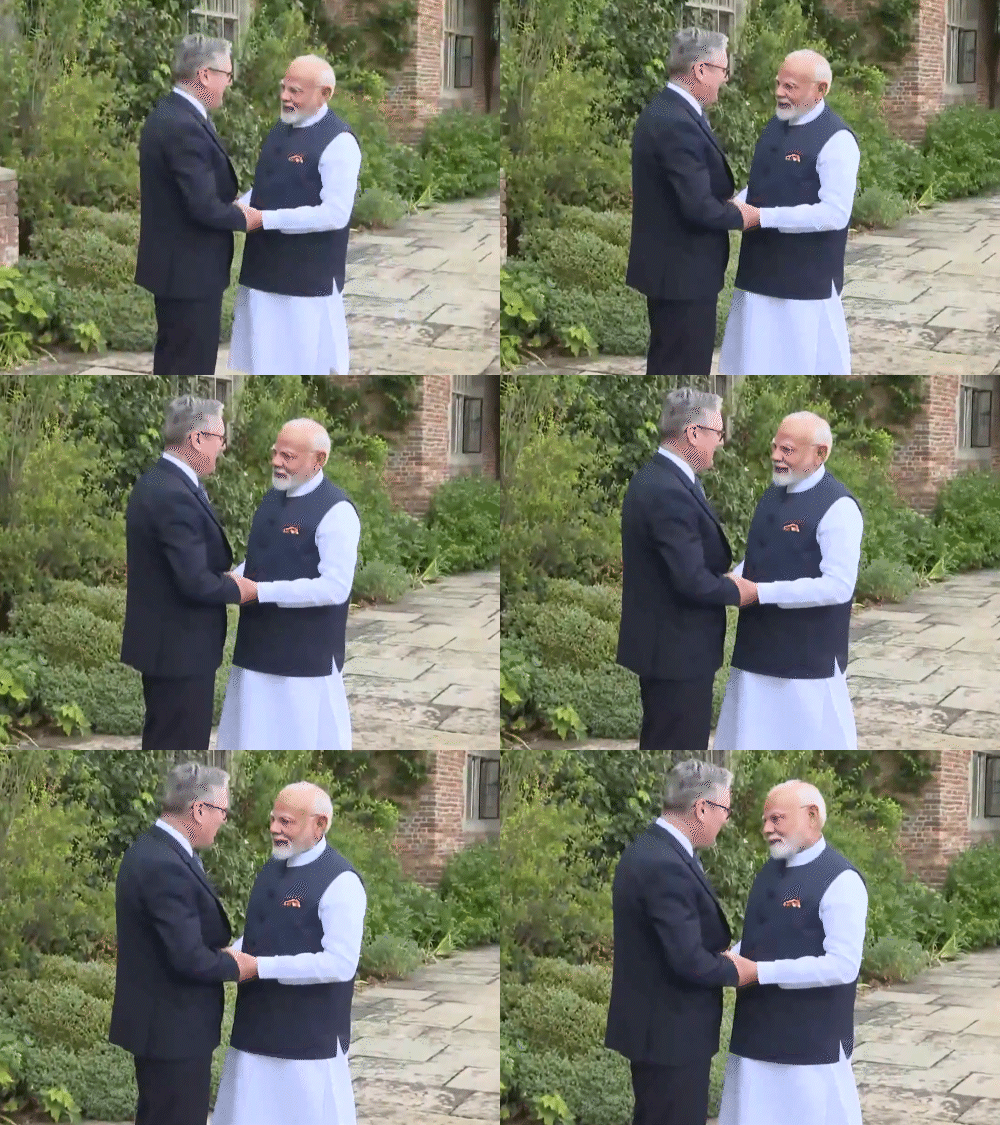
Free trade agreement was signed between India and Britain on Thursday, 24 July. Earlier, PM Modi and British PM Starmer met.
British High Commissioner said ‘historic moment’
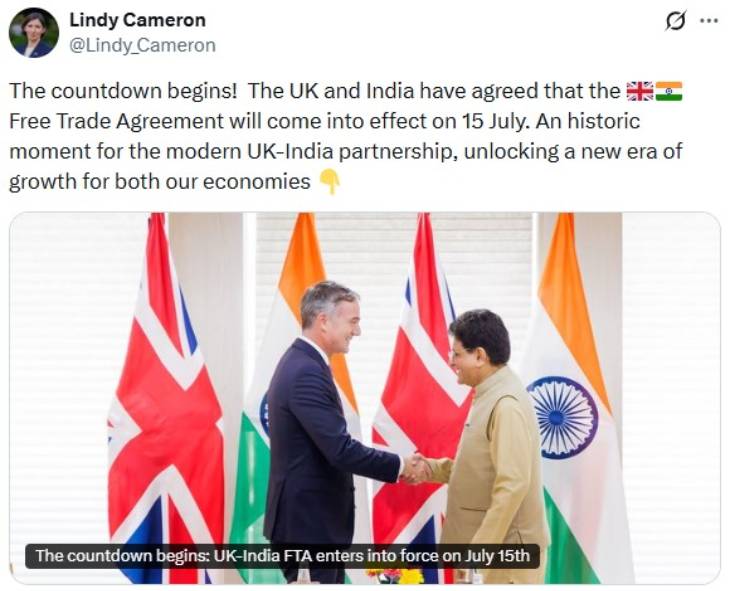
Now only less than a month is left for the businesses and companies of both the countries to prepare before the implementation of this trade agreement. UK High Commissioner to India Lindy Cameron wrote on social media platform
Understand in the questions and answers what will be the benefits of this agreement…
Question 1: Which things will be cheaper in India?
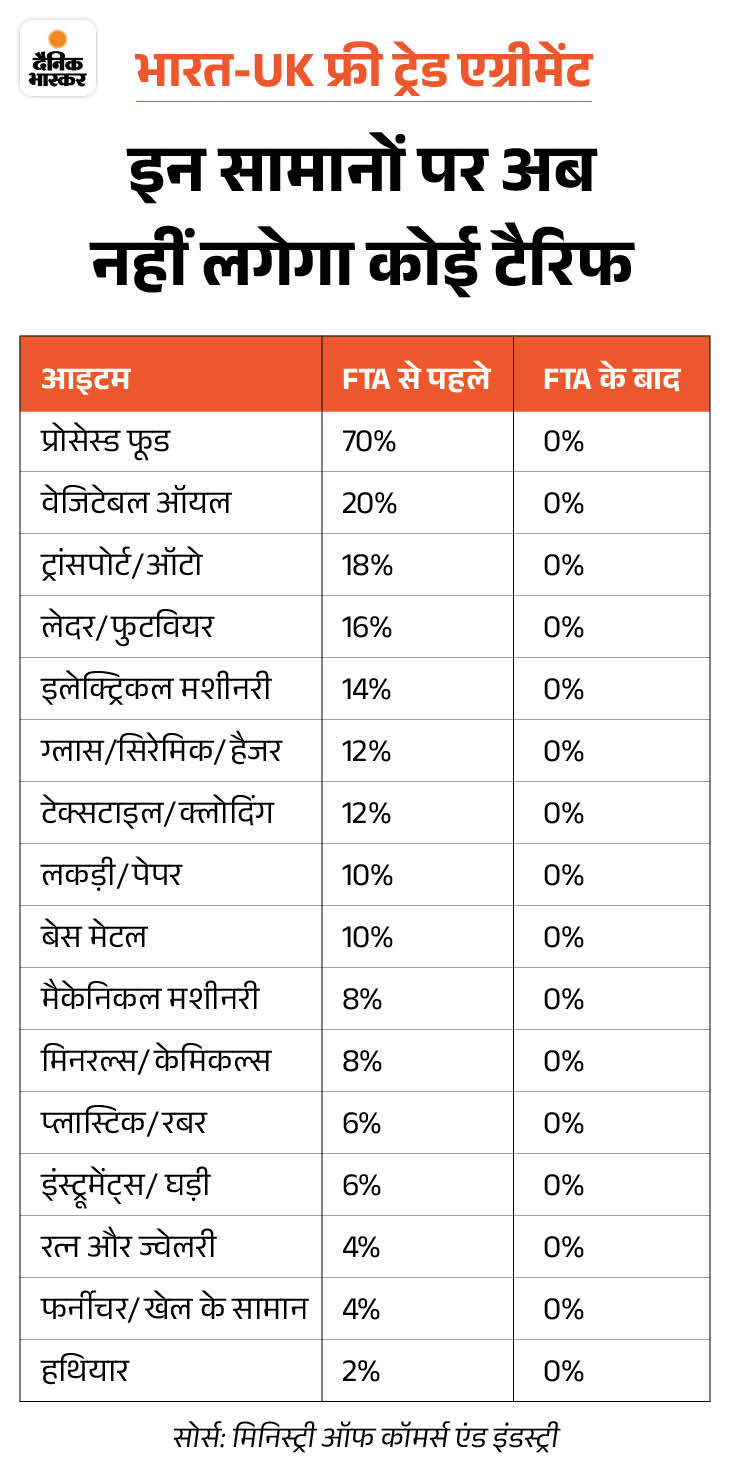
answer: The average tariff on goods imported from the UK will be reduced from 15% to 3%. 85% of goods will be completely tariff-free in 10 years. This will make many things cheaper:
- Whiskey and Gin: India’s tariff on Scotch whiskey and gin imported from the UK will be reduced from 150% to 75%. Later it will be reduced to 40% by the tenth year of the agreement. Example- Scotch bottle worth Rs 5000 will be available for Rs 3500.
- Luxury Cars: Tariffs on UK cars (e.g. Jaguar Land Rover, Rolls-Royce) will come down from 100% to 10% under the quota system. With this, these cars can become 20-30% cheaper.
- Food and Beverages: Tariffs on salmon, lamb, chocolate, biscuits and soft drinks imported from the UK will be reduced. This will make these products cheaper.
- Cosmetics and Medical Devices: Lower tariffs on UK cosmetics, medical equipment and aerospace parts will make these goods cheaper. Tariff will be reduced from 15% to 3%.
- fashion and clothing: Branded clothes, fashion products and homeware coming from Britain will also be cheaper. Furniture and electronics will also be available at lower prices.
Question 2: Which sectors of India will benefit?
answer: Sectors like textile, engineering, medical and chemical will benefit.
1. Textile Sector
In the UK, there was a tax of 8-12% on Indian clothes and home textiles like bedsheets and curtains, which will now be completely abolished. With this, our clothes will become cheaper and more competitive compared to countries like Bangladesh and Vietnam. Export hubs like Tiruppur, Surat and Ludhiana may see growth of up to 40% in the next three years.
2. Jewelry and leather goods
Now there will be no tax on jewelery and leather goods like bags, shoes going from India to UK. Small businesses (MSME) and luxury brands will benefit greatly from this. Also, India’s influence in Europe through UK will further increase.
3. Engineering Goods and Auto Parts
The UK has abolished import tax on Indian machinery, engineering tools and car parts such as auto parts. This will further strengthen the industrial supply chain of India, UK and Europe. Manufacturing hubs like Pune, Chennai and Gurgaon will benefit.
4. Medicines and medical devices
Indian pharma companies will get easier registration process for generic medicines in UK. With this, Indian medicines will easily reach the UK Health Service (NHS) and approval of medicines will also be available quickly.
6. Food items, tea, spices and sea products
UK import tax on basmati rice, sea products like prawns, premium tea and spices will be abolished. This will give a big boost to the export industry of areas like Assam, Gujarat, Kerala and West Bengal.
7. Chemicals and Specialty Materials
Reduction in taxes on agrochemicals, plastics and special chemicals will boost exports from major hubs like Gujarat and Maharashtra. Under this deal, India aims to double its chemical exports to the UK by 2030.
8. Green Energy and Cleantech
This agreement will open the way for joint ventures in renewable energy, including solar, green hydrogen and electric vehicle (EV) infrastructure. The UK will invest further in India’s clean energy sector, which will lead to co-development of new technologies.
Question 3: How will this deal benefit India’s economy?
answer: FTA is beneficial for India’s economy in many ways:
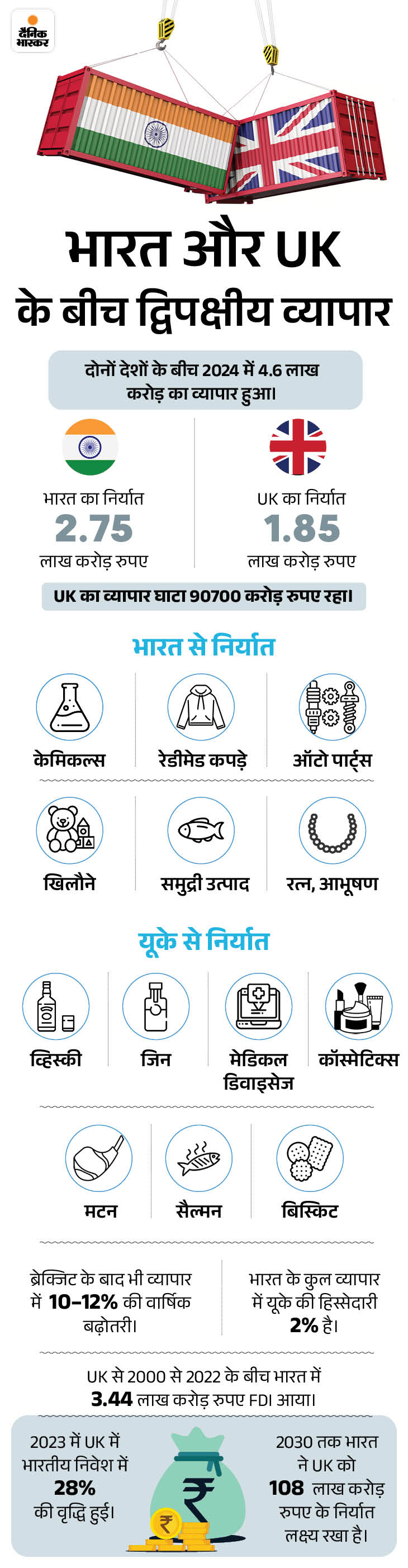
- Increase in exports: 99% of Indian goods will be exported to UK at zero tariff. This will benefit sectors like textiles, leather, gems and jewellery, marine products, and engineering goods. India’s exports to UK could reach $29 billion by 2030.
- Employment will increase: New jobs will be created in labor based sectors like textile and leather. Employment in the textile sector can double.
- Promotion of MSME: 6 crore MSMEs of India will benefit. These contribute to 40% of India’s exports. With this agreement they will get new markets and better margins.
- Increase in investment: UK companies will increase investment in IT, financial services and green technology in India. This will strengthen India’s manufacturing and service sectors.
- Economic Development: This deal will increase India-UK trade by 15% annually by 2030. It will help in achieving India’s trade target of $100 billion.
Question 4: When will this agreement come into force?
answer: This agreement has been signed on 24 July 2025, but it may take about a year to be implemented. This is because approval from the Union Cabinet of India and the UK Parliament is necessary. It has been approved by the Union Cabinet of India.
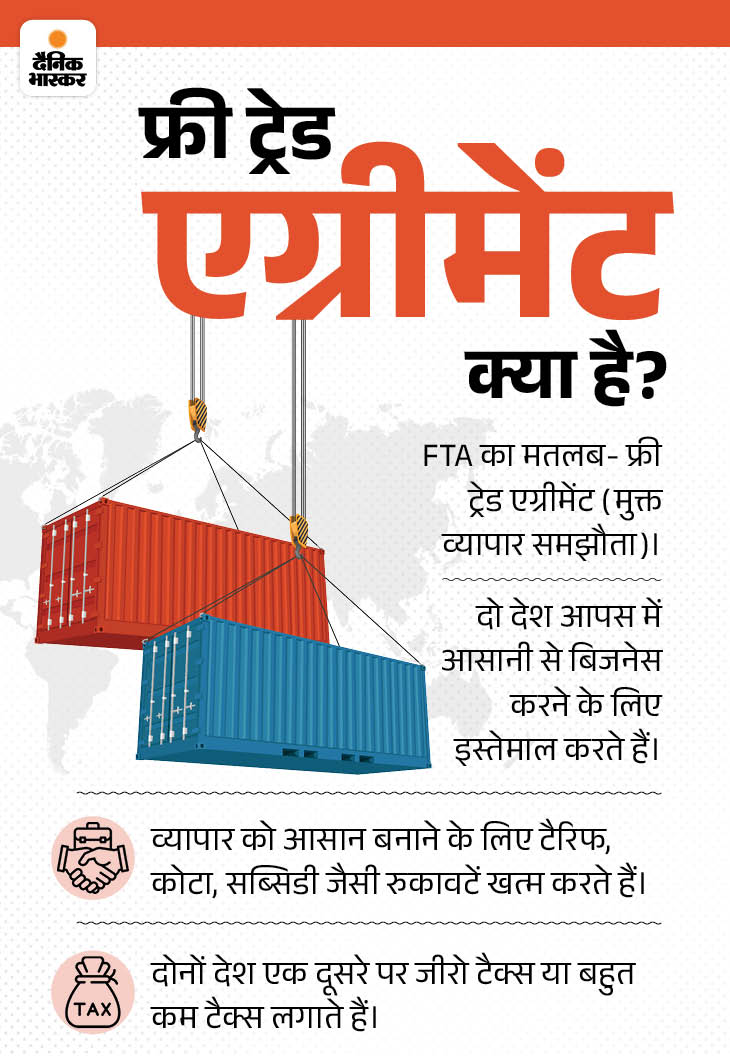
Question 5: When did the talks regarding the agreement between India and UK begin?
answer: Negotiations regarding the agreement between India and UK started on 13 January 2022, which was completed after about 3.5 years. Since 2014, India has signed 3 such free trade agreements with Mauritius, UAE, Australia and EFTA (European Free Trade Association). India is actively negotiating similar agreements with the European Union (EU).
Question 6: How many types of trade agreements are there?
answer: Free trade agreements are given different names according to their nature. These include PTA (Preferential), RTA (regional) and BTA (bilateral). WTO names all such economic engagements as RTAs.
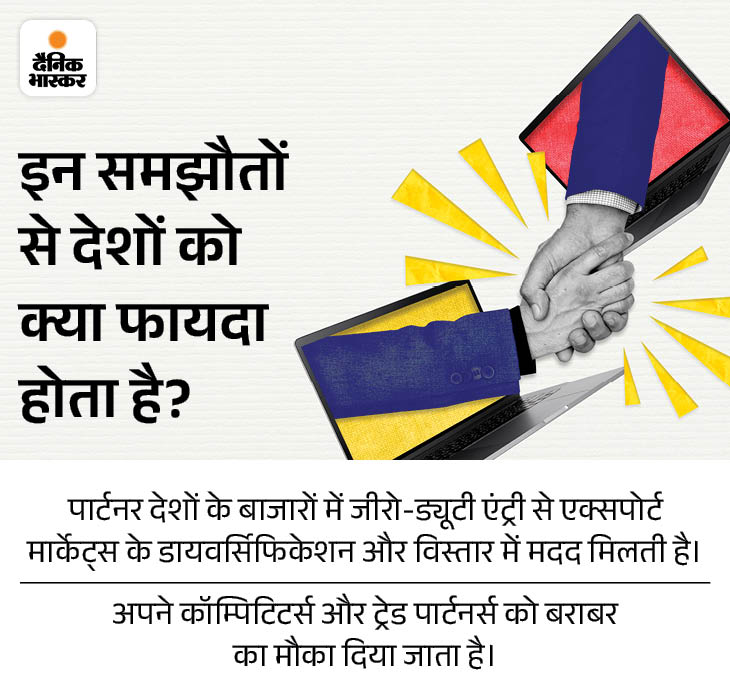
Question 7: With which countries has India signed these agreements?
answer: India has signed trade agreements with Sri Lanka, Bhutan, Thailand, Singapore, Malaysia, Korea, Japan, Australia, UAE, Mauritius, ASEAN and EFTA blocs.
According to the Global Trade Research Initiative (GTRI), India has shifted its FTA focus from the East (ASEAN, Japan, Korea) to Western partners after securing deals with major economies in Asia.
India is now giving priority to FTAs with EU and US to expand exports and strengthen trade ties with major economies of the West.

Source link
[ad_3]

