New Delhi41 minutes ago
- copy link
The Supreme Court has given a strict ultimatum to the Central Government and FSSAI on the warning labels of packaged food products. The court said that if the government is unable to take a decision on imposing front-of-pack warning labels warning of sugar, salt and fat on packaged food products – such as namkeen, biscuits, chips and cold drinks, then the judiciary itself will issue an order on it.
Understand this whole matter in question and answer…
1. Question: What did the Supreme Court say to the Central Government regarding packaged food warning labels?
answer: The Supreme Court bench comprising Justice JB Pardiwala and Justice K Vinod Chandran took a tough stand and said – ‘If you cannot implement it, we will issue an order.’
The court said that this matter is related to the health of the citizens of the country and especially the growing children. Therefore, no decision on this should be taken under the pressure of corporate companies.
2. Question: Why was this hearing held in the court and who had filed the petition?
answer: This hearing took place on a public interest litigation (PIL). The petitioner’s counsel presented the minutes of the March 7 meeting of the Food Safety and Standards Authority of India (FSSAI) before the court. It showed that the decisions taken by FSSAI were in direct contradiction to the previous directions of the Supreme Court.
The petitioner pointed out that FSSAI is relying only on the opposition of the food industry (companies), while ignoring the evidence presented by civil society in favor of warning labels for health safety.
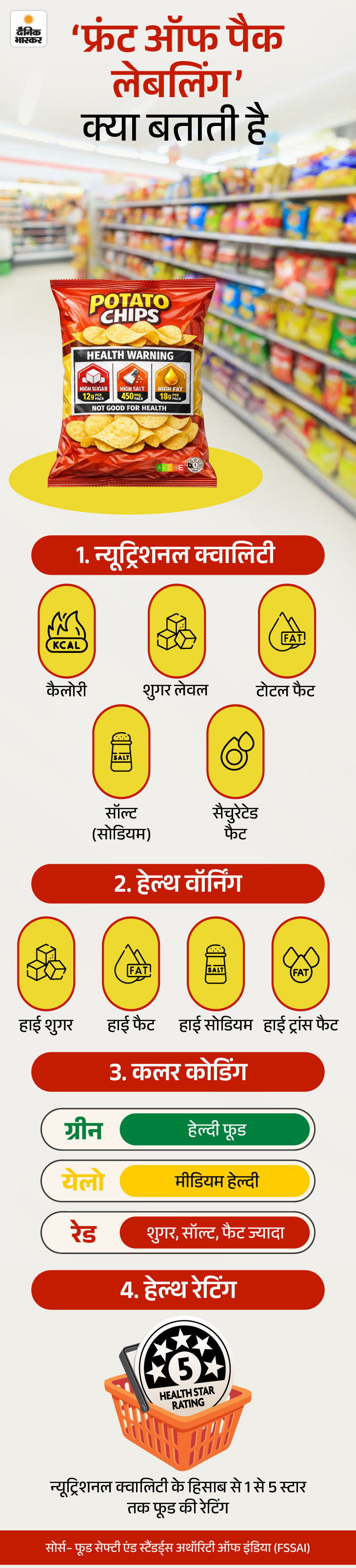
3. Question: What do FSSAI and companies have to say on this warning label?
answer: FSSAI told the court that the food industry is against putting strict ‘warning labels’ on the front of the packet. As an alternative, FSSAI has suggested a nutrition table showing the recommended daily allowance (RDA) of added sugar, saturated fat and salt.
Companies believe that the red warning mark on the front of the packet will adversely affect their business.
4. Question: What argument did the government give about Indian food and snacks in its argument?
answer: Additional Solicitor General (ASG) Brijender Chahar, representing the Central government, argued that traditional Indian food items (such as namkeen, bhujia and snacks) naturally have high levels of salt and fat. If the standards of developed countries are implemented then many traditional Indian food items will get ‘Red Warning Mark’.
5. Question: What did the court say on the government’s argument about ‘Indian salt’ and developed countries?
answer: The court rejected this argument of the government. The Supreme Court asked – ‘Should India always remain an underdeveloped country?’ The court asked whether the government does not want to ensure the health of its citizens and children? The bench said that manufacturers may not like it, but consumers have every right to know what they are consuming.
6. Question: Will the installation of such warning labels ban the sale of packed food?
answer: No, the court clarified that the purpose of the warning label is not to stop sales, but to make the customer aware. The bench said that manufacturers may think that this will affect their business, but after seeing the warning, the final decision will be with the customer whether he wants to buy the product or not. The role of manufacturers cannot be decisive in this matter.
7. Question: How much time has the Supreme Court given to the government in this matter?
answer: The Supreme Court has given 2 weeks time to the Central Government and FSSAI to comply with the warning label proposal. The court has given a clear warning that if steps are not taken within the stipulated time, the court will give its decision on the next hearing.
8. Question: What impact will this decision have on common consumers and the packed food industry?
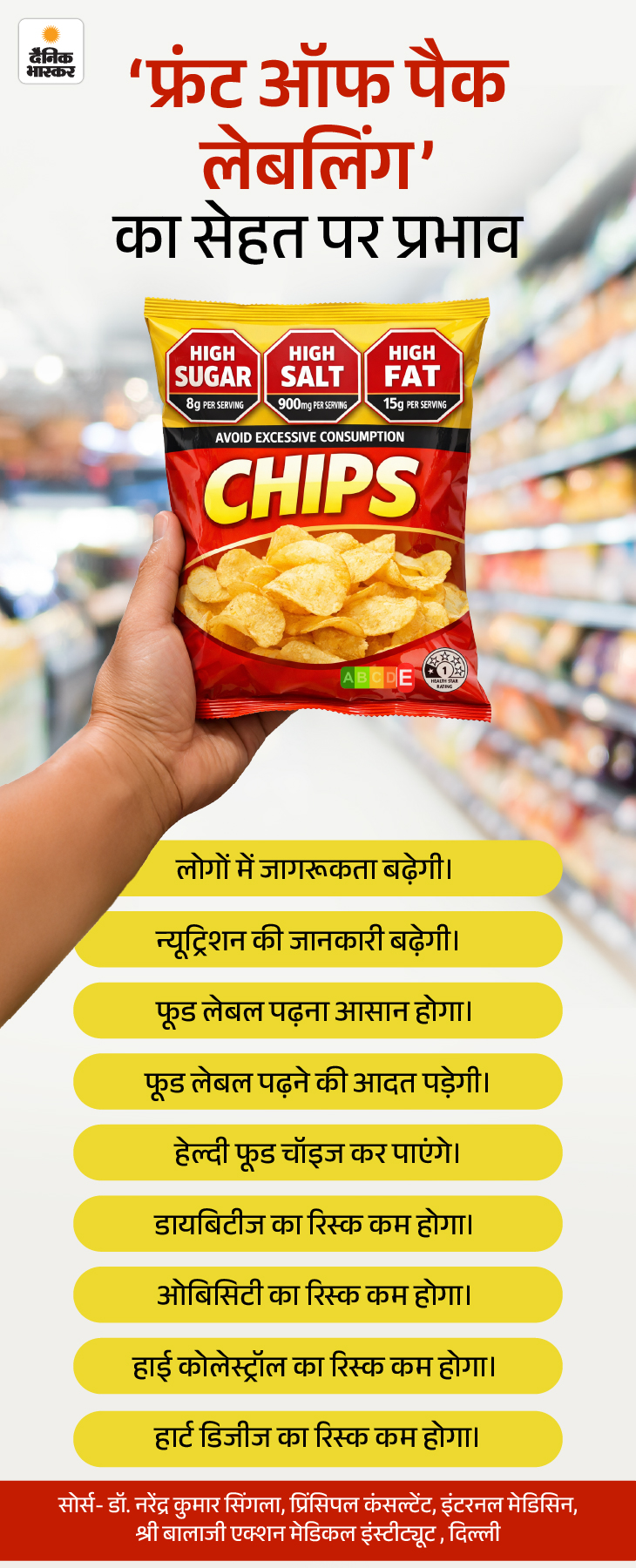
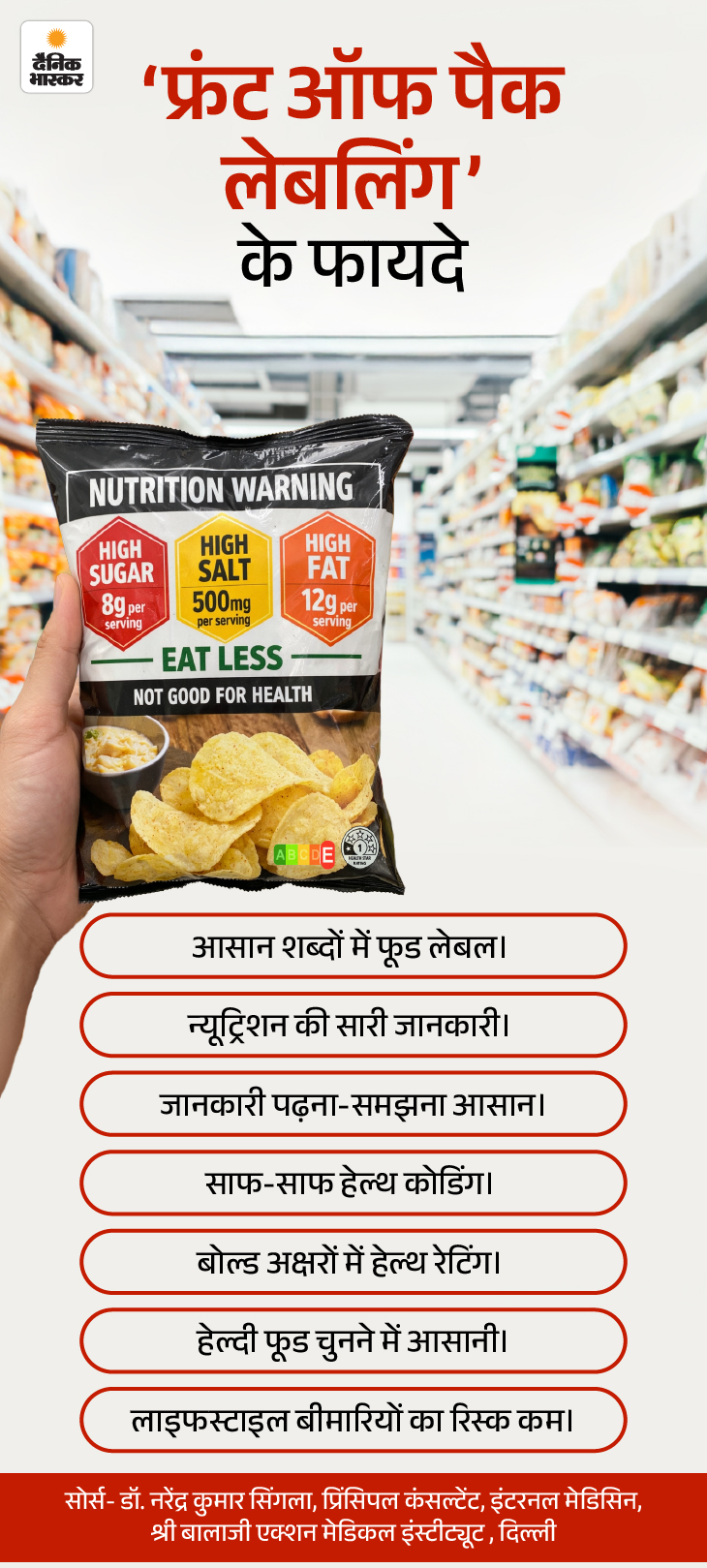
answer: If a ‘front-of-pack warning label’ is implemented, consumers will be able to clearly see on the front of the pack at the time of purchase whether the amount of sugar, salt or fat in the product exceeds the prescribed limits. This will make people more conscious about their eating habits and will also encourage companies to improve the nutritional level of their products.
What is a front-of-pack warning label?
Front-of-pack warning label (FoPL) is a simple visual symbol or colored label placed on the front of a package of food items. Its purpose is to easily convince the common consumer that the level of salt, sugar or fat in the product exceeds the safe limit.
Reader Tips: Don’t just look at ‘MRP’ and ‘expiry date’ while buying packed snacks, biscuits or namkeen. In the nutritional value, pay attention to the amount of sodium (salt) and ‘added sugar’. If it is too much than the required daily limit, then consume it in limited quantity only.

Source link
[ad_3]

