
New Delhi33 minutes ago
- Copy link
The Indian rupee has come at an all time low of Rs 88 per dollar for the first time on Friday (August 29). Experts say that this has fallen in the rupee due to America’s tariff on India.
During the trading, the rupee saw a decline of nearly 64 paise against the US dollar today and it came to the lowest level of Rs 88.29 per dollar.
However, till 2:10 pm, the Reserve Bank of India (RBI) sold the dollar and gave a little support to the rupee and started trading at around 88.12.
Rupee weakens 3% so far in 2025
Earlier in February, the rupee came at an all -time low of 87.95 per dollar. In 2025, the rupee has weakened 3% so far and has become Asia’s worst performing currency. On Friday, it also reached a record low compared to Chinese Yuan.
America imposed 50% tariff on India
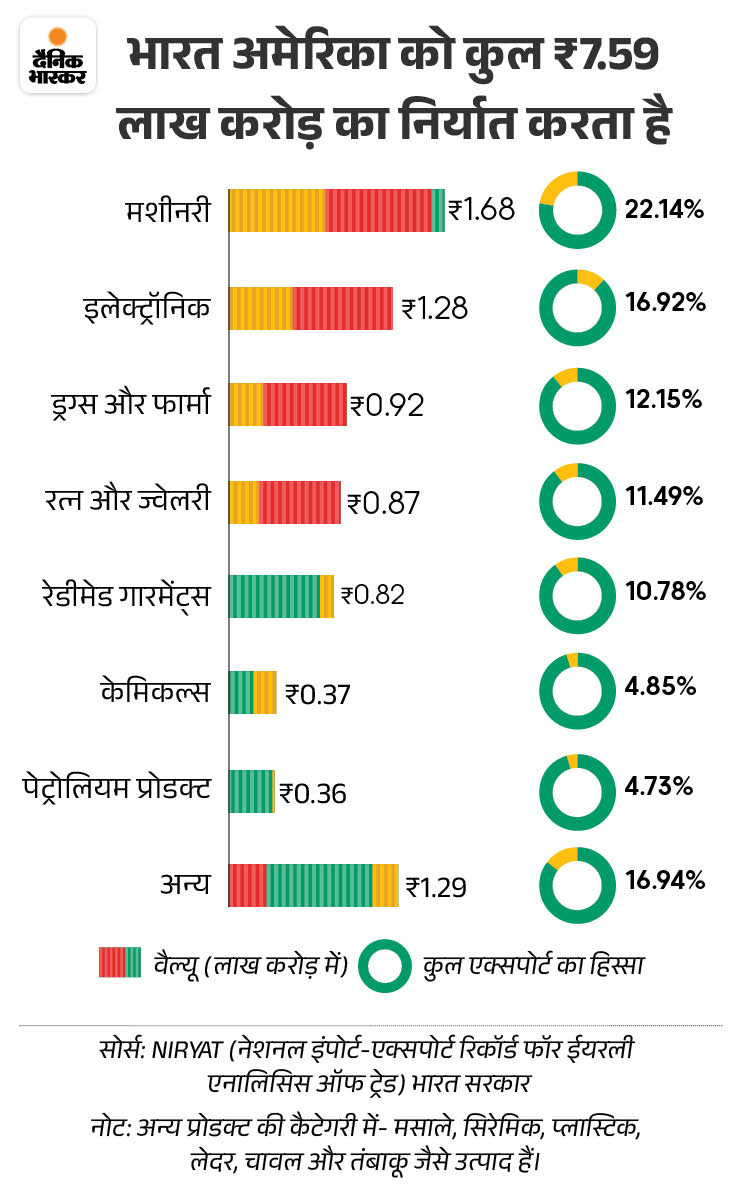
Experts say that heavy tariffs imposed on Indian goods in America will harm India’s economic growth and foreign trade. The US imposed 25% additional tariffs on Indian goods this week. Due to which India is facing total 50% tariffs.
The next important level of rupee is 89
Anindya Banerjee, the Foreign Exchange Research Head of Kotak Securities, said, “When the rupee reached the level of 87.60, many importers who did not hedge their purchases started to buy dollars fast.
Everyone hoped that RBI would intervene, but it did not happen. After the level of 88 crossed the stop loss order began to trigger. Now the next important level is 89.
GDP growth from tariff may decrease by 0.8%
Economist says that if this tariff remains in force for one year, then India’s GDP growth may decrease by 0.6% to 0.8%. There may be further pressure on the economy slowing down. RBI has estimated a 6.5% growth rate for the current financial year (till 31 March).
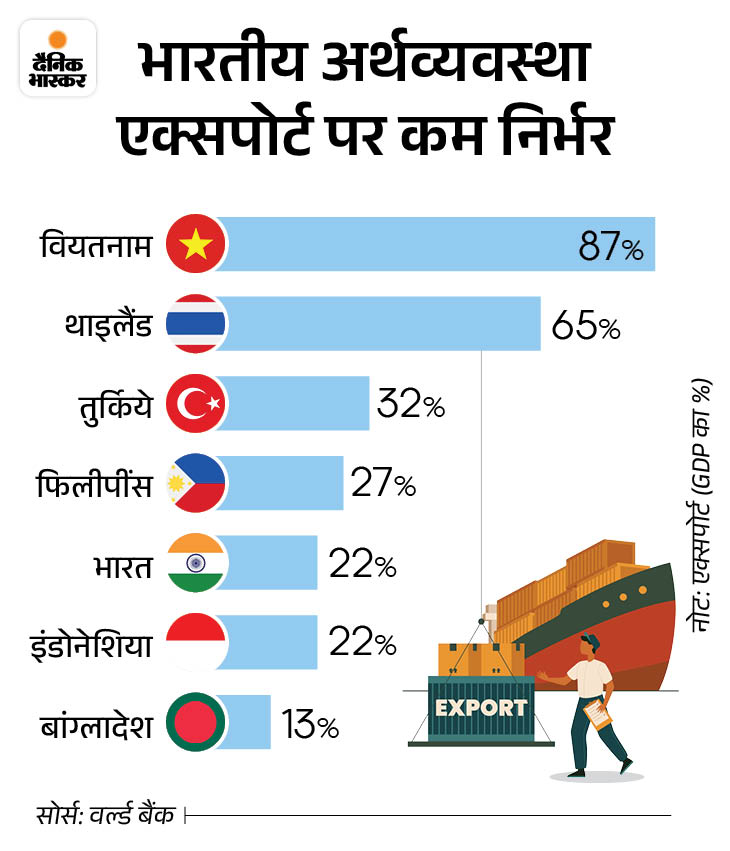
America to America 2.2% of GDP
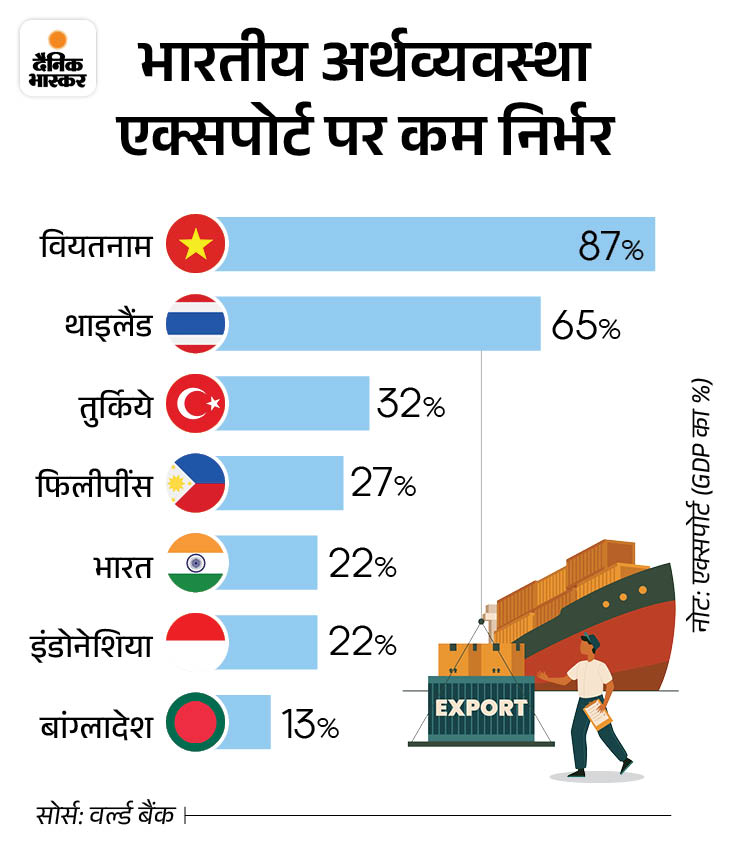
India has 2.2% of Export GDP to America. Due to tariffs, recession in labor-dominated sectors such as textile and jewelery can affect jobs, which will further increase economic losses.
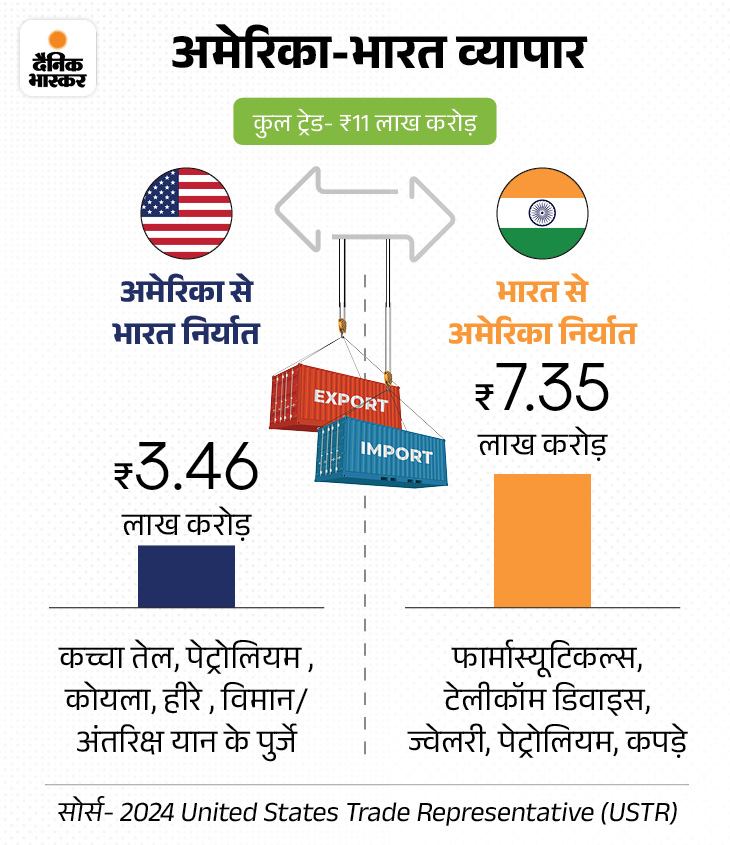
These tariffs can further increase India’s trade deficit. Especially when the trend of foreign investors is already weak. So far this year, foreign investors have sold $ 9.7 billion in Indian date and equity, or Rs 85,630 crore.
Tariff pressure on India’s trade balance
Hari Shyamsunder, Vice President of Franklin Templeton, said, “Export reduction due to tariff can put extra pressure on India’s trade balance.” Overall, American tariffs and weakness of rupee have further increased India’s economic challenges. Now everyone’s eyes are on what steps the RBI and the government take to deal with this situation.
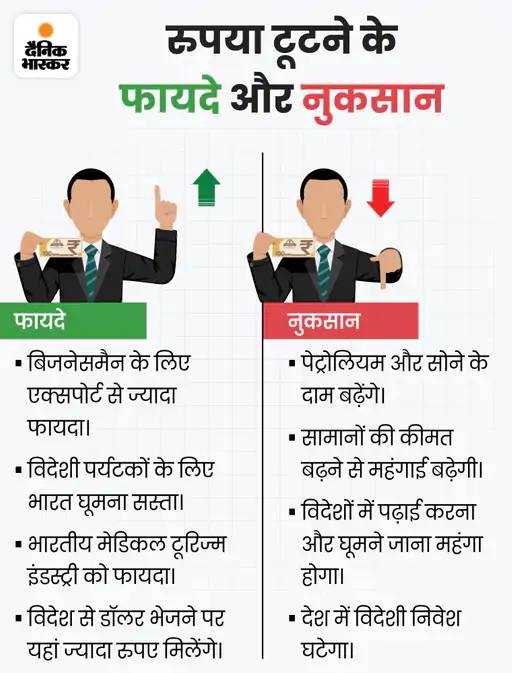
It will be expensive to import
The decline in the rupee means that the import of things is expensive for India. Apart from this, walking and reading abroad has also become expensive. Suppose when the value of the rupee was 50 against the dollar, then Indian students in America used to get 1 dollar for 50 rupees. Now students will have to spend 88 rupees for 1 dollar. This will make fees to stay and food and other things expensive.
How is the price of currency fixed?
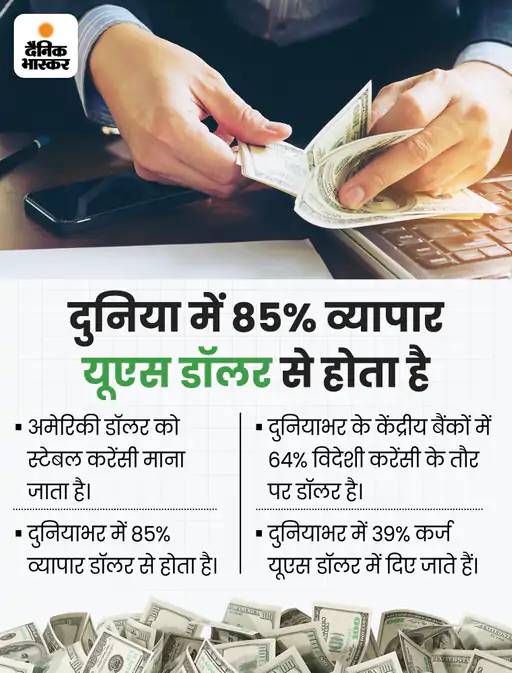
If the value of any other currency decreases compared to the dollar, it is called falling, breaking, weak. Currency deputy in English. Every country has a foreign currency reserve, from which it does international transactions. The effect of decreasing and increasing foreign reserve is seen at the price of currency.
If the dollar in India’s foreign reserve is equal to the reserves of America’s money, then the price of the rupee will be stable. If we have dollars, the rupee will be weak, if we increase, the rupee will be strong. This is called floating rate system.
Source link
[ad_3]

