
- Hindi News
- Business
- FSSAI New Rules: Analog Paneer Labeling Mandates & Starch Oil Disclosure
11 minutes ago
- copy link
There may be a ban on writing Paneer on packets of analog Paneer. FSSAI has issued a new draft regarding analog cheese. It has been proposed to tighten the rules for the sale and labeling of cheese and similar analog products.
Under this new proposal, there is a plan to ban the use of the word ‘cheese’ in the name, labeling or marketing of products that are made from ingredients other than milk, such as vegetable oil or starch.
The main objective of FSSAI is to provide consumers with transparent and accurate information about what they are actually purchasing from the market, thereby eliminating confusion between genuine and analog dairy products.
Suggestions and objections sought within 60 days
FSSAI has sought feedback on this draft proposal from all stakeholders, dairy industry representatives and the general public.
- Feedback time period: All parties can send their suggestions or objections to FSSAI within the next 60 days.
- Final Notification: The final notification of these rules will be issued only after considering the suggestions and objections received within the stipulated time limit. At present this is a proposed draft, but after approval it will be implemented in the entire country.
What is the new proposal of FSSAI and why was it needed?
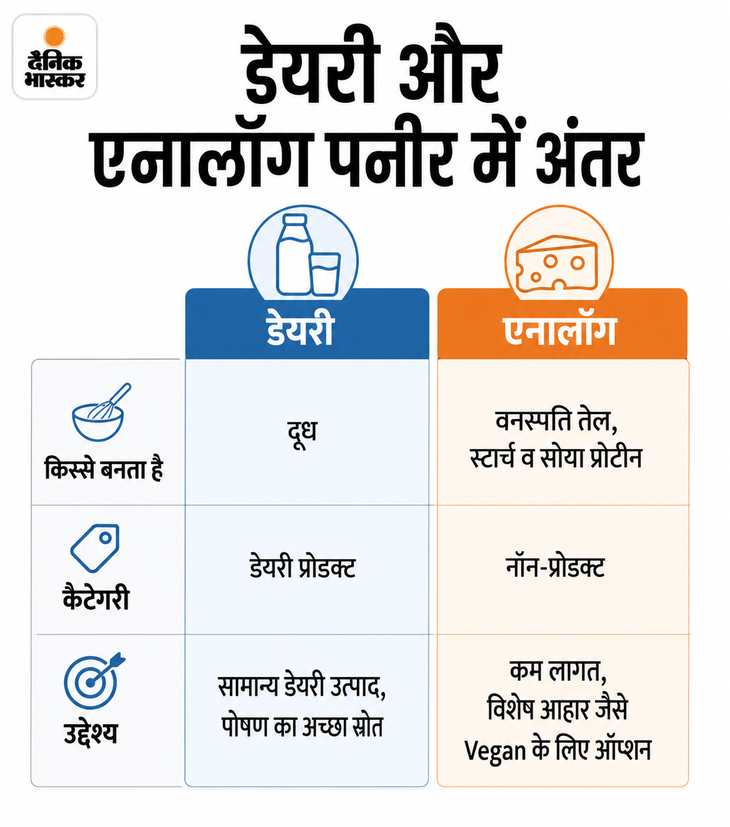
Presently, many such products are being sold in the market which are exactly like paneer in appearance and taste, but instead of milk or milk-based ingredients, non-dairy ingredients are used in making them. People buy them thinking that they are cheese made from real milk.
According to FSSAI’s draft rules, analog products sold in the dairy category will no longer be allowed to be promoted or sold under the name ‘Paneer’. If a product has vegetable fat, palm oil, starch or any other non-dairy element added in place of milk, then companies will have to clearly identify its correct identity and ingredients on the packet.
Is analog cheese dangerous for health?
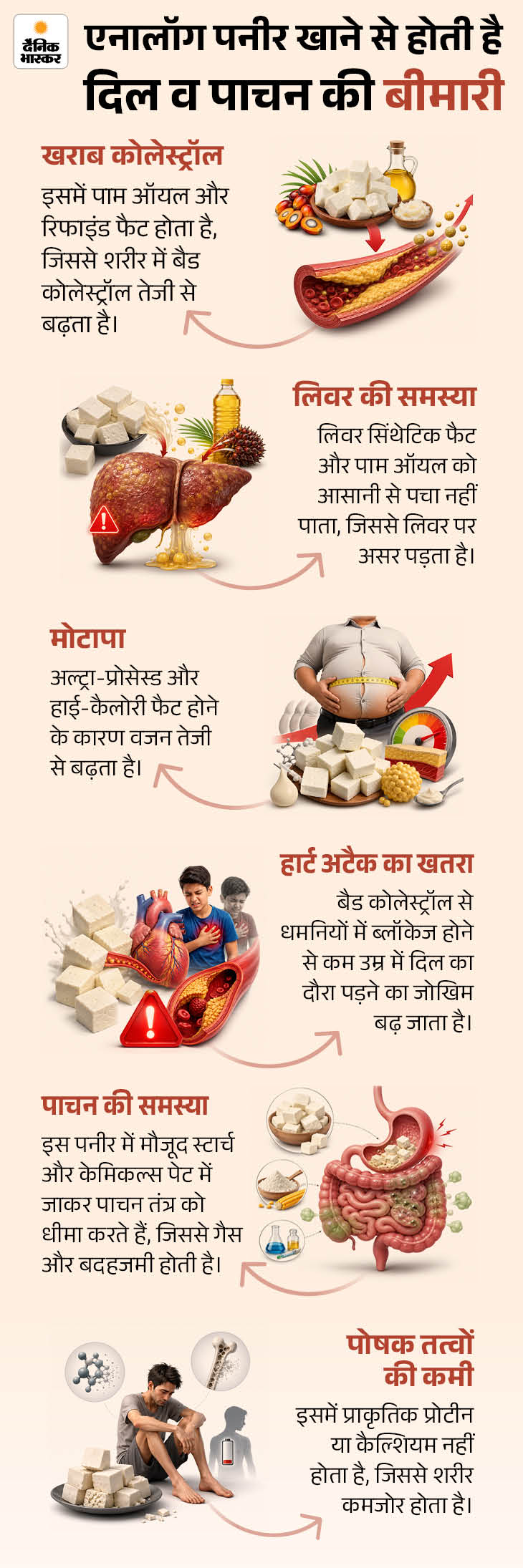
Just having analog cheese isn’t dangerous. The danger arises when low quality oil, excessive vegetable oil or raw material of lower quality than the prescribed standards is used in making it. If such cheese is eaten for a long time, it first affects the heart, stomach and the nutrition provided to the body.
According to dietitian Neha Sharma, the poor quality or highly processed oil used in it can increase bad cholesterol in the body. This can increase the risk of blockage in the heart veins and heart attack. The risk of diabetes can also increase; if you continue eating such food for a long time, it can put additional pressure on the liver and kidneys.
The earliest effect is seen on the digestive system. Real cheese is easily digested, but the starch and other substances found in analog cheese can cause problems like gas, flatulence, acidity or diarrhea in many people.
The biggest disadvantage is that people eat it for protein, but if the amount of milk in it is less and other substances are more, then the body does not get as much protein, calcium and other essential nutrients as it should get from real cheese.
Ban in many states including Uttar Pradesh and Chhattisgarh
Recently, the governments of Uttar Pradesh, Chhattisgarh, Maharashtra, Madhya Pradesh and Gujarat have banned the production, sale and distribution of ‘analog paneer’.
In fact, in many places in the states it was being sold as dairy cheese. Due to this, consumers were being cheated. In some cases, its quality, labeling and food safety standards were also being ignored.
How to identify real and analog cheese at home?
It can be identified in these 3 ways…
- Iodine Test: Boil a piece of cheese in water, cool it and add a few drops of iodine solution on it. If the color turns blue, it means starch (analog/adulterant) is present.
- Try it: When real cheese is crushed with hands, it breaks easily, whereas analog cheese stretches like rubber due to the presence of starch in it.
- Hot Water Test: Real paneer becomes soft when put in hot water, whereas from inferior analog paneer, the oil becomes visible.

Source link
[ad_3]

