
Last Updated:
India entered the nuclear club on May 18, 1974, after successfully conducting Operation Smiling Buddha at Pokhran, becoming the sixth nation to test a nuclear device.




A crater marks the site of the first Indian underground nuclear test conducted at Pokhran, Rajasthan, on 18 May 1974. (AFP file photo)
On this day in 1974, India achieved a defining moment in its scientific and strategic history by carrying out its first nuclear test at Rajasthan’s Pokhran test range. Codenamed Operation Smiling Buddha, the mission made India the sixth country in the world to successfully conduct a nuclear test.
The operation was overseen by Raja Ramanna, then director of the Bhabha Atomic Research Centre (BARC). The test took place on May 18, which coincided with Buddha Purnima, inspiring the codename “Smiling Buddha”.
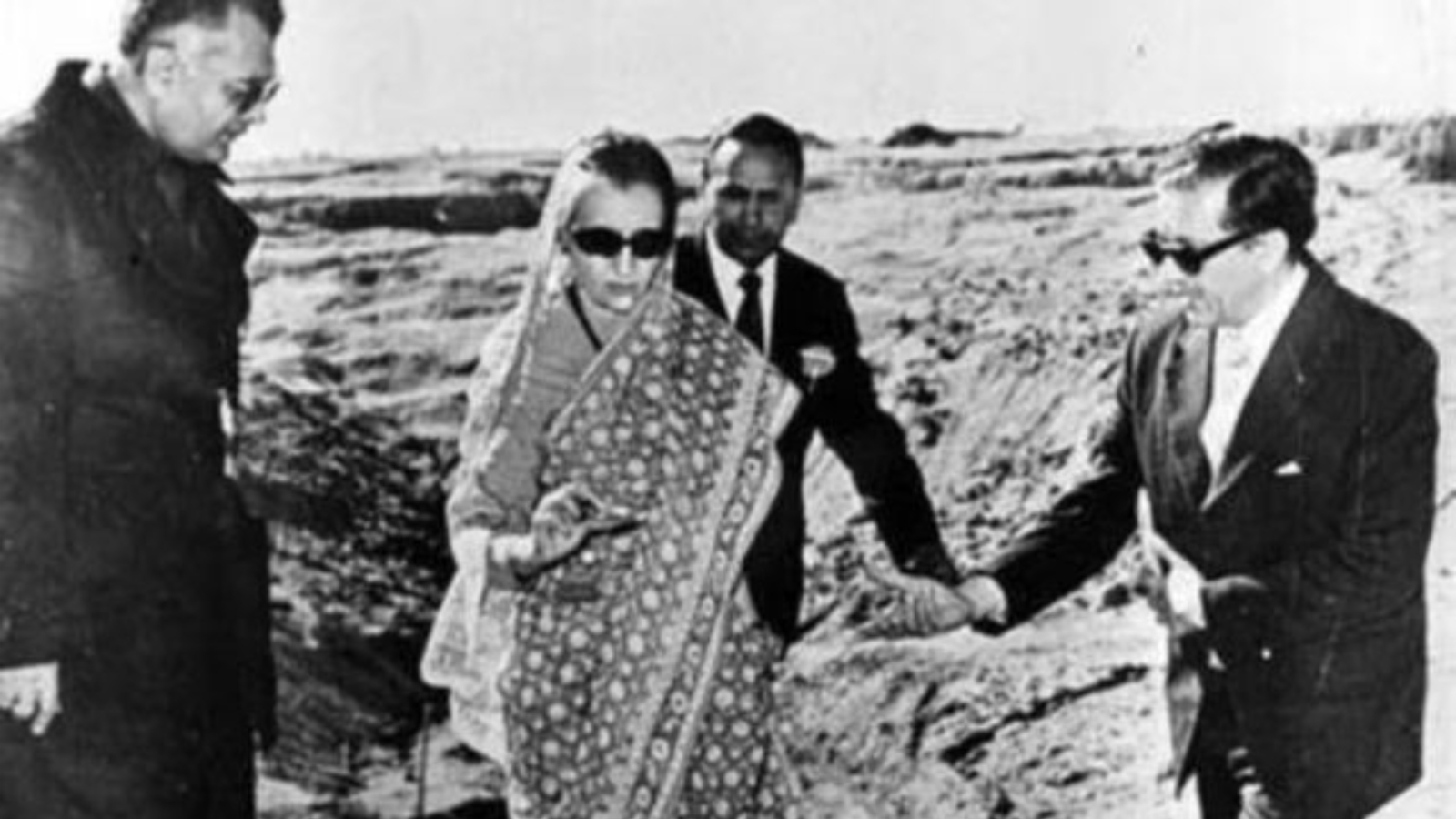
During the mission, India tested a nuclear device at the Pokhran firing range. While the exact yield has long remained debated, reports citing PTI have estimated it to be between 8 and 12 kilotons of TNT.
India conducted its first nuclear test on May 18, 1974, in Pokhran, Rajasthan, under the able leadership of Prime Minister Smt. Indira Gandhi, the Iron Lady of India.Codenamed ‘Smiling Buddha’, it was the first confirmed nuclear test by a nation outside the P5 of the United… pic.twitter.com/ur0iDn0of8
— Congress (@INCIndia) May 18, 2023
The successful detonation placed India among a select group of nations with nuclear capabilities. At the time, only the five permanent members of the United Nations Security Council – China, Russia, France, the United Kingdom and the United States – had previously conducted nuclear tests.
According to accounts from the operation, Raja Ramanna informed then Prime Minister Indira Gandhi of the success by saying, “The Buddha has smiled.”
Operation Smiling Buddha also stood out because the test was reportedly conducted without prior detection by the United States or other global intelligence agencies.
However, the development triggered strong international reactions. Several developed nations, including the US, imposed sanctions on India, citing concerns over nuclear proliferation following the Pokhran test.
The roots of the operation traced back to September 7, 1972, when Prime Minister Indira Gandhi authorised scientists to develop and detonate an indigenous nuclear device. Years later, India carried out another series of nuclear tests in Pokhran in 1998, with three tests on May 11 and two more on May 13.
Delhi, India, India
Read More
Source link
[ad_3]

