
- Hindi News
- Business
- Apple IPhone Success Story: Steve Jobs’ Vision, Tim Cook’s Rise & John Ternus’ New Era | IPhone 18 Launch
54 minutes agoAuthor: Shubhank Shukla
- copy link
Apple’s launching event will take place late tomorrow night. According to reports, the company can launch iPhone 18 Pro, Pro Max and Ultra in it. But before the new iPhone, let us know the story of that name and phone, which changed the mobile world in almost two decades.
You will be surprised to know that the name iPhone was not initially Apple’s. American networking company Cisco owned the trademark for this name.
After Apple launched the iPhone, Cisco also filed a case against the company. Later, an agreement was reached between the two companies and both got permission to use the iPhone name.
Another interesting thing is that the world’s most expensive iPhone was sold for about 1.5 crore dollars i.e. about ₹ 142 crore as of today. It was customized by British designer Stuart Hughes. It was studded with 135 grams of 24 carat gold and 600 white diamonds. The home button was replaced with a 24-carat black diamond.
But the story of iPhone is much bigger than a name and a very expensive model. Nearly two decades ago, Apple introduced a phone that changed the way we use mobile phones.
This is how the story of iPhone began
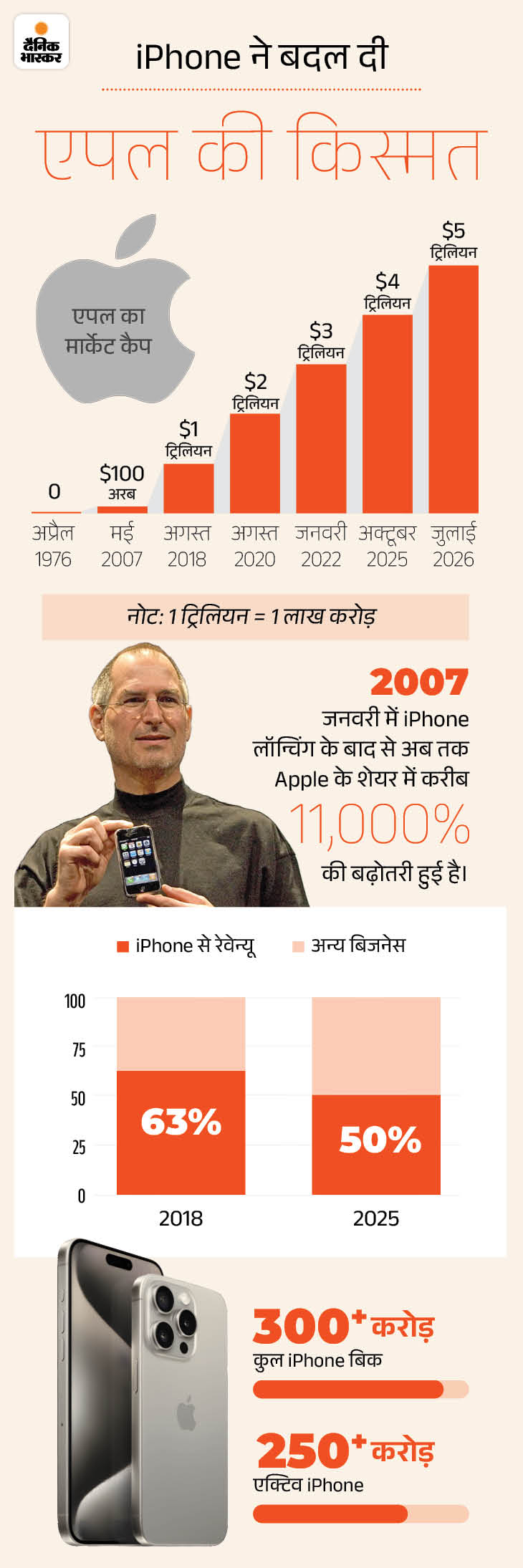
January 9, 2007, Steve Jobs stands on a stage in San Francisco. There was a new device in hand. Jobs described it as a combination of three things – a mobile phone, an iPod touch and an Internet communication device. This was the first iPhone.
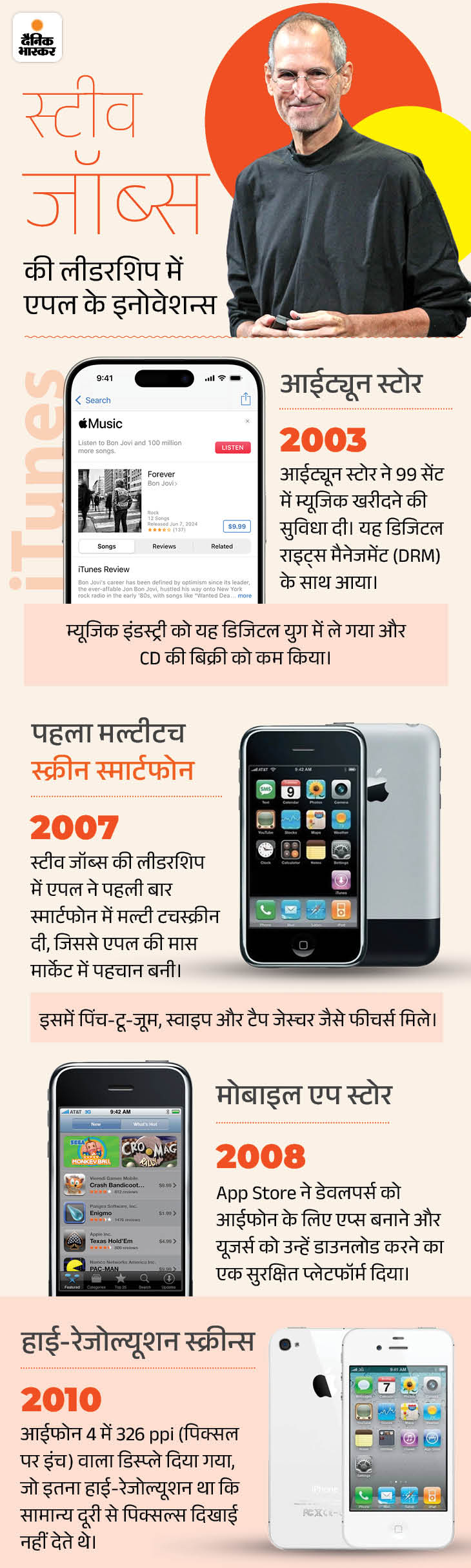
At that time it had neither 5G, nor App Store, nor Face ID, nor AI. But its 3.5-inch touchscreen changed the way phones were used. The phone started working with tap, swipe and pinch. The need for buttons and keypads is gone.
It also changed the way the Internet was used. Before the iPhone, the internet that ran on phones was called ‘WAP’. The websites in it looked very bad and fragmented. For the first time, with the help of its Safari browser, Apple showed the same real websites on mobile as they appeared on the computer.
The first iPhone hit the market in June 2007 and sold one million units in just 74 days. At that time perhaps no one would have thought that this small device would become Apple’s biggest strength in the coming years.
After almost two decades, the story of iPhone is now at another big turning point. There is no Steve Jobs. Tim Cook is also no longer the CEO. Now the command of Apple is in the hands of John Turnus. He was made the CEO of Apple on September 1, 2026. He has been working in Apple for almost 25 years.
Despite iPhones being very expensive, more than 300 crores have been sold in the world so far. Of these, more than 250 crore are active. In 2018 this number was around 130 crores. That means there was an increase of about Rs 120 crore in just 8 years. Apple’s launching event is tomorrow i.e. on 9th September.
Now the question is, which direction will the iPhone go in the era of Turns? To understand the answer to this question, we must first go back.
Chapter-1
Engineers suddenly started disappearing
In the year 2004-05, something strange was happening in Apple’s office. Some of the company’s most capable engineers suddenly started disappearing from their old jobs. Even the people working with him did not know where he was going and what he was doing.
Actually, Apple had taken a separate building in Cupertino and created a secret lab there. Selected engineers were sent to this lab. The doors remained closed. There was no fixed work shift. Engineers remained busy in this project day and night. Many times we would eat food there and sleep there too. The name of this entire project was- ‘Purple’.
This project was kept completely confidential for about two and a half years. Then came January 9, 2007… Steve Jobs took the stage at the Moscone Center in San Francisco. He took a new device in his hand and presented it to the world. Only then was the secret of the disappearance of those Apple engineers revealed. The project on which he was working day and night for so many years was- iPhone.
Chapter-2
When the phone is no longer just a phone
When Apple introduced the first iPhone in 2007, big names like Nokia and BlackBerry were already present in the smartphone world. Most phones used to have buttons and keypads.
Apple said- Why is keypad needed? The screen of the phone itself becomes a keypad and from here the story changed.
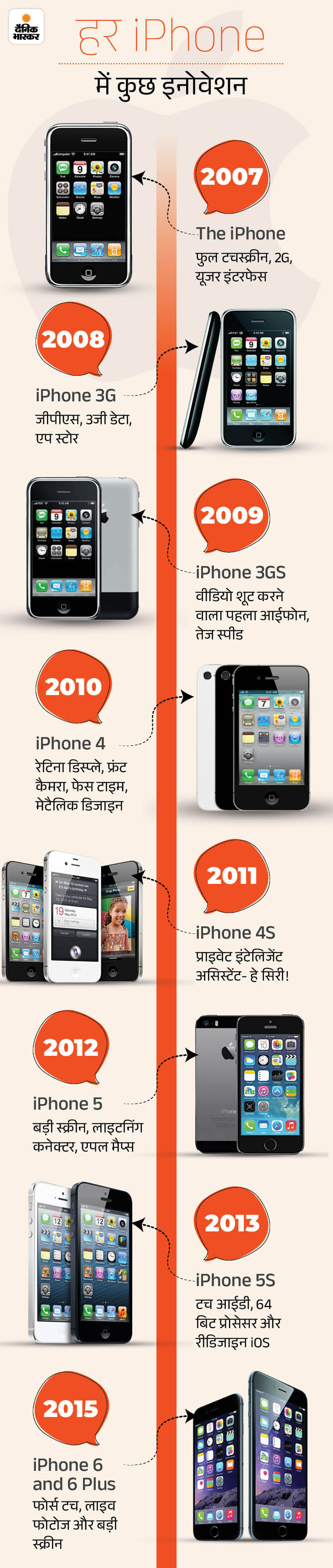
The first iPhone had a 3.5 inch touchscreen. It did not have a keypad, but had a 2 megapixel camera, WiFi, Bluetooth and internet connection. The special thing was that the entire screen became the way to operate the phone. Tap with a finger, swipe across the screen, and zoom in or out with two fingers.
Today these things seem absolutely normal to us, but at that time this way of using the phone was quite new. This was the first major innovation of the iPhone. The phone became a small computer controlled by our finger gestures. The 4GB model was priced at $499 and the 8GB model was priced at $599.
Chapter-3
App Store came for the first time, the screen became clearer
The biggest drawback of the first iPhone was that there was no App Store. You couldn’t download a new app of your choice. The iPhone 3G, which came in 2008, also removed this shortcoming. It came with 3G and GPS and an app store, which started with more than 800 apps.
It took 74 days for the first iPhone to sell 1 million units, but the iPhone 3G achieved this figure in just three days. Now the iPhone was not just a phone but had become a platform on which developers could create apps.
In 2010, Apple launched iPhone 4. Retina display came in it for the first time. The 3.5-inch screen had 960×640 pixels and a density of about 326 pixels per inch. That is, for the first time the phone screen started appearing so clearly that while reading it seemed as if the letters were printed on paper.
The iPhone 4 also came with a 5-megapixel camera, HD video recording, and Face Time for video calls. Its effect was also visible on sales. 17 lakh iPhone 4 were sold in just three days of launch.
Chapter-5
Steve Jobs passes away, command in the hands of Tim Cook
In 2011, Steve Jobs resigned as CEO of Apple and died shortly thereafter. Now the command of the company was in the hands of Tim Cook. At the time of Jobs, the question was – what new should be created? But the challenge before Cook was – how to make the iPhone reach millions of people in the world?
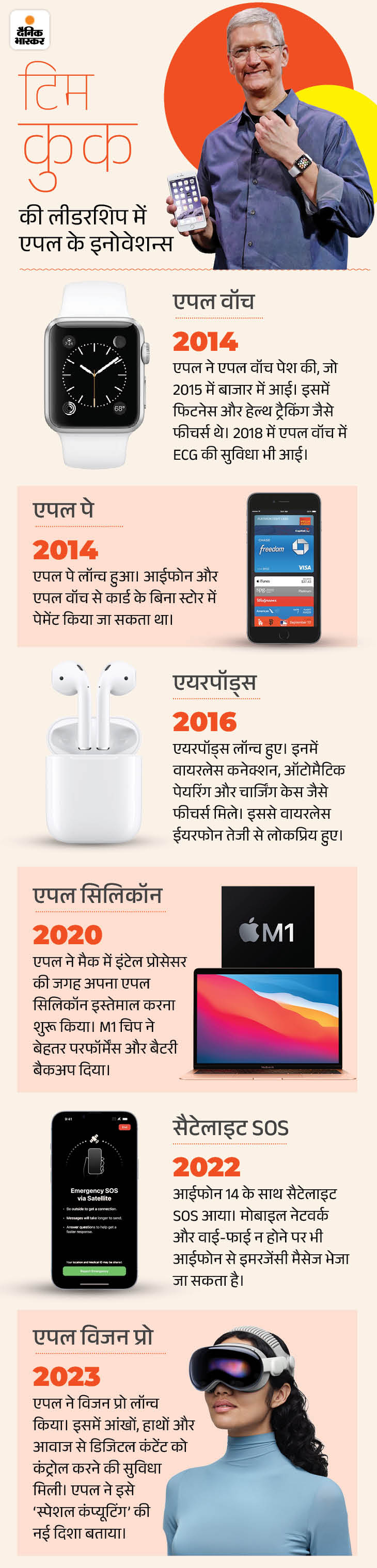
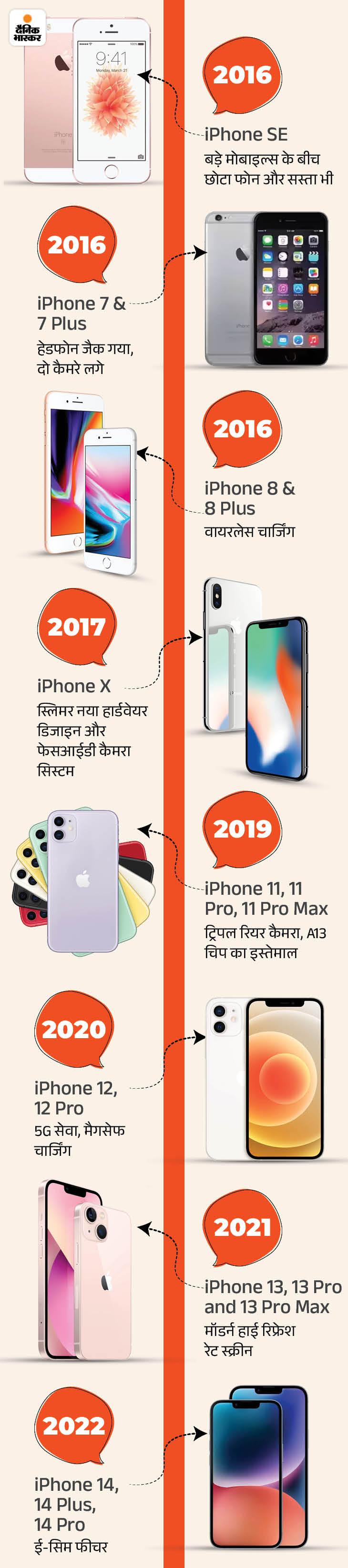
Cook strengthened Apple’s supply chain and production. Its biggest impact was visible in 2014, when Apple launched the large-screen iPhone 6 and iPhone 6 Plus for the first time. Along with this came Apple Pay, which means that iPhone is no longer just a phone but also a means of storing and paying money. The market immediately accepted this change. More than one crore units of both the models were sold in the first three days.
iPhone 6s, released in 2015, had features like 3D Touch and Live Photos. More than 1.3 crore units were sold in the first three days.
Chapter-6
Home button missing, camera becomes the new identity of the phone
Then came 2017, on the tenth anniversary of the iPhone, Apple launched the iPhone This time the company removed its oldest identity – the home button. It was replaced by a 5.8-inch OLED screen and the feature of Face ID came for the first time. Now there was no need to press the button to open the phone, one just had to look at the phone. For this, the TrueDepth camera used to create a 3D map of the face.
Now the next big battle of iPhone was regarding the camera. In 2019, iPhone 11 introduced night mode and ultra-wide camera. The phone was no longer just taking pictures with the camera, but its processor and software together were making the picture better.
In 2007, the iPhone said, “Make your phone like a computer.”
By 2019, he was saying – “Make the computer inside the phone so powerful that it can even replace the camera.”
Chapter-7
Entry into the world of 5G for the first time
Apple launched iPhone 12 amid the Corona epidemic in 2020. 5G came in iPhone for the first time. The internet got faster, video streaming and online gaming got better. But the real change was inside the phone.
It had A14 Bionic chip, which increased the speed of the iPhone. There was also a 16-core neural engine, which helped in doing tasks like AI and machine learning on the phone itself.
The iPhone was now faster. Powerful too. Now the question was – what can it do that no other phone has done before?
2022: With iPhone 14, Apple provided emergency SOS via satellite. Even in the absence of mobile network and WiFi, the iPhone could send messages to emergency services through satellite. For this, Apple invested $450 million in satellite infrastructure.
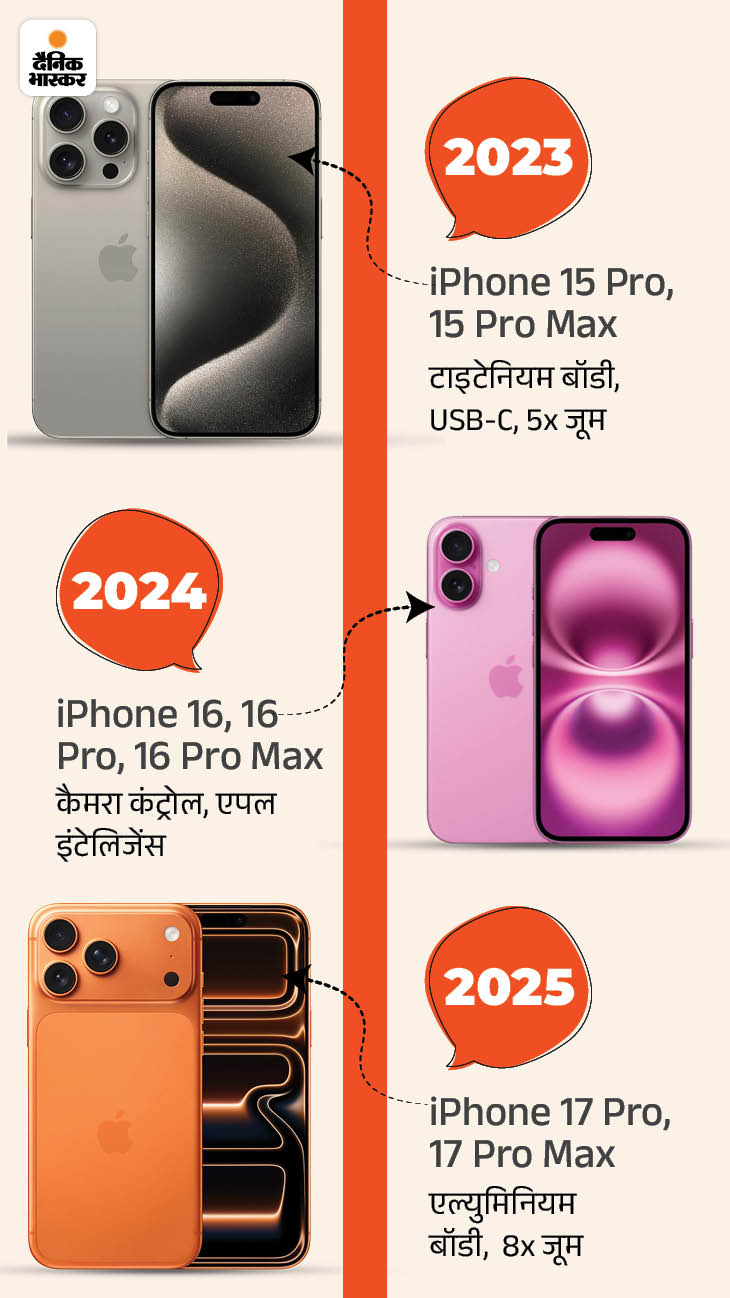
2023: In iPhone 15, Apple removed the Lightning port and replaced it with USB-C. Now iPhone, Mac and iPad could be charged with a single cable. The iPhone 15 Pro also came with a titanium body and A17 Pro chip, which made gaming and heavy tasks easier.
2024: The company introduced Apple Intelligence with iPhone 16. Features like A18 chip and camera control also came. Now the iPhone was not just a phone that obeys orders, but was moving towards helping you by understanding your needs.
2025: The iPhone Air that came with the iPhone 17 was only 5.6 mm thick. With the bigger screen and A19 Pro chip, Apple showed that its focus was now on fitting more technology in less space.
Now the further story of iPhone is in the hands of John Ternes.
John Ternes’ 25 year old relationship with Apple
John Ternes is a mechanical engineer who studied at the University of Pennsylvania. He joined Apple in 2001. Before joining Apple, he worked at ‘Virtual Research Systems’ for four years.
He started his career in Apple from a very basic level. After starting with Mac screen designing, he gradually became the biggest officer of the company’s hardware team. According to the company, under Ternus’ leadership, work was done on strength, better materials and easily repairable designs in Mac, iPhone, AirPods and other hardware. He has also seen Jobs’s stint at the company and worked with Tim Cook.
John Turnus will face four challenges
- Apple’s AI is far behind compared to companies like Google and Microsoft. Turnus will have to improve this and get back in the race.
- Questions are being raised on Apple’s business model in America and Europe. He is accused of violating monopoly rules. The company will have to be saved from this.
- Amid the Trump government’s dispute with China, it will have to overcome challenges such as properly shifting manufacturing to countries like India and Vietnam.
- Critics say that Apple no longer has the same innovation as before. Ternus will have to prove that the company is still the most innovative company in the world.
Graphics: Ankit Pathak
References and Further Readings…
- Steve Jobs Book by Walter Isaacson
- Jony Ive: The Genius Behind Apple’s Greatest Products
- Book by Leander Kahney
- Apple Newsroom
- https://www.youtube.com/watch?v=VQKMoT-6XSg

Source link
[ad_3]

