
- Hindi News
- Business
- Instagram Teen Safety Update | AI Age Verification & New Account Settings
California13 minutes ago
- copy link
Social media company Meta is now going to implement a new AI system worldwide for the safety of children and teenagers. With the help of this system, Instagram-Facebook app will automatically identify whether the user is a teenager or not.
After this, his/her account will automatically be converted to a teen account with strict security and privacy. The company has taken this step in view of the increasing strictness on the online safety of children by governments around the world.
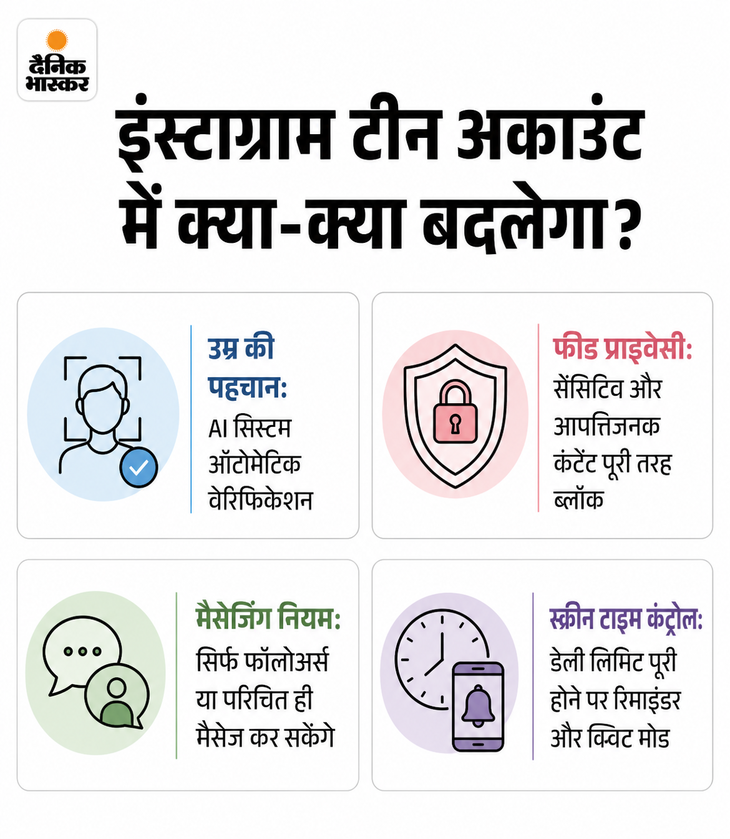
AI will detect fake age, safe settings will turn on automatically
Meta revealed in its official blog post that it is testing a new AI technology from April 2025:
- AI will catch the correct age: Even if a teenager has stated his/her age incorrectly while creating an account, the AI will still recognize his/her actual age from the way they use it.
- Ban on wrong content: As soon as the age is detected, the account will automatically change to teen settings, due to which bad or objectionable videos/posts will stop appearing on their screen.
- Guidance Video for Parents: Meta will also release special information videos to help parents understand how the safety system works.
Facebook-Instagram accused of stealing children’s data and creating addiction
In the last few months, Meta was facing serious allegations of messing with the safety of children and causing addiction to the app. Meta was accused that Facebook and Instagram were having a negative impact on the mental health of children and teenagers and the company hid this harm from the people. Meta is also accused of collecting personal data of children to train AI models.
A New Mexico court fined the company nearly ₹8,000 crore ($950 million) for giving false assurances of safety to children. At the same time, in another case related to platform addiction, Meta had to make a legal settlement of US $ 15.9 billion i.e. about Rs 1.49 lakh crore, after which the company had to take these strict steps.
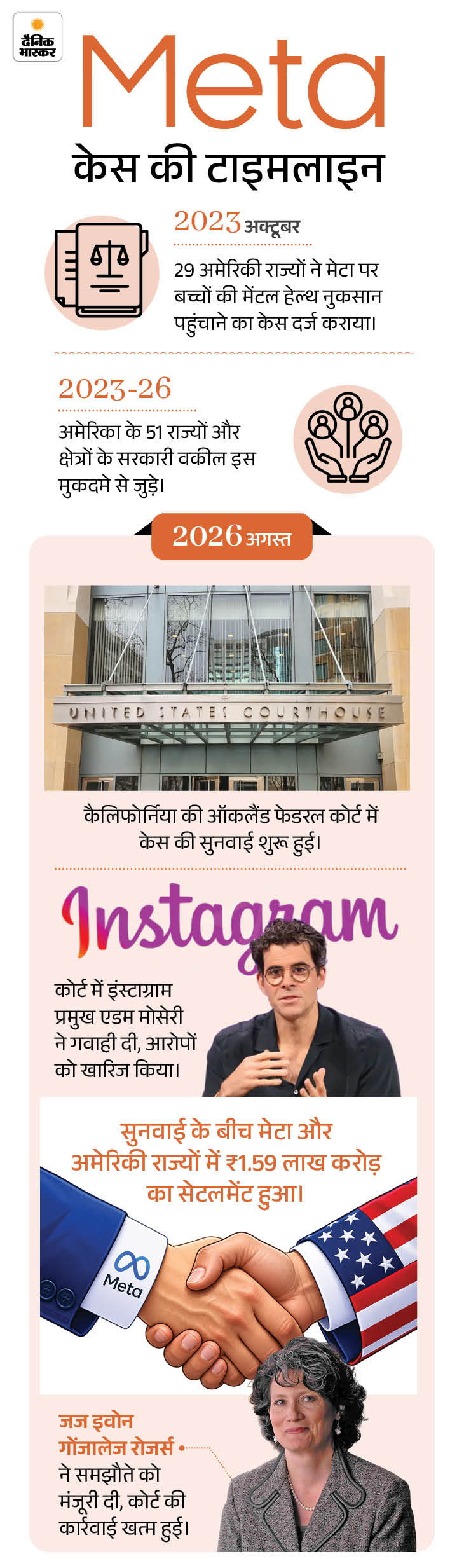
These rules will change from screen-time limit to quiet mode
After the legal agreement, Meta is bringing many new security features in its app. Now there will be a time limit for using the app daily for teenagers and ‘Quiet Mode’ will also be available to keep notifications off at night.
Also, strict privacy rules will be implemented to prevent communication with unknown people. Meta has also appealed to TikTok, Snapchat and YouTube to implement these safety rules.
Laws are becoming stricter around the world regarding social media
This initiative to tighten rules for teenagers is coming at a time when many countries are taking strict measures.
Australia has completely banned the use of social media for children under 16 years of age.
According to Meta, all these new features and the global AI edge verification process will start being officially implemented in January.
Facebook-Instagram was harming mental health in 5 ways
- Algorithms and Addiction: The apps were designed to keep children engaged in a cycle of notifications, auto-play and ‘like’ buttons. This affects the dopamine levels in their brain, causing them to lose control over screen time and become addicted to social media.
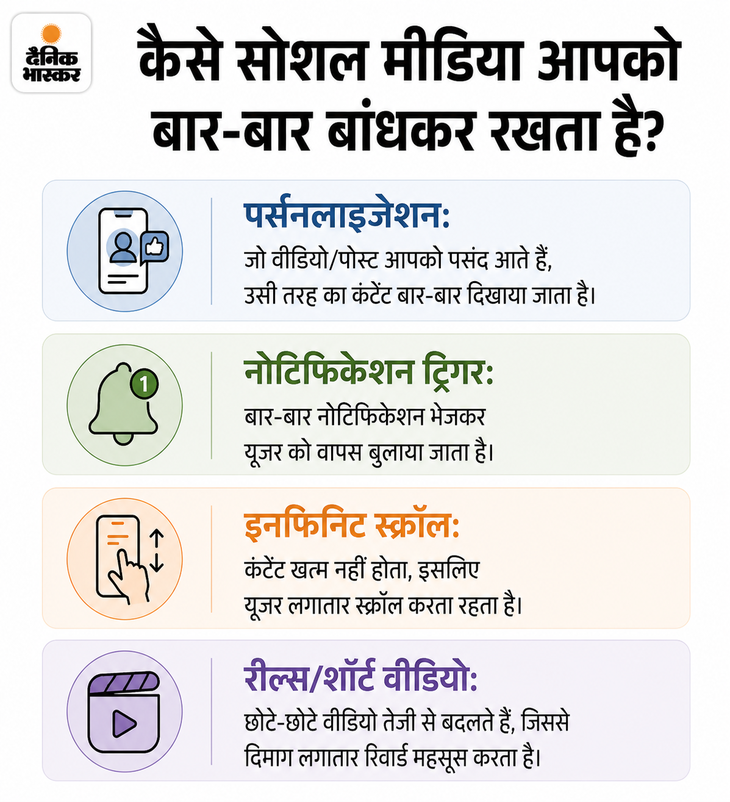
- Inferiority Complex: The filters and pictures of perfect life seen on Instagram create a habit in children of comparing their body with others. Meta’s own internal research found that Instagram increases dissatisfaction with their bodies and appearance among many teenagers.
- Lack of sleep and depression: Using apps late at night (night scrolling) completely disrupts the sleep cycle of children. This chronic lack of sleep later leads to deep anxiety, depression and lack of concentration in studies.
- Cyber Bullying and Comparison Pressure: Constantly comparing themselves to others on social media creates ‘FOMO’ i.e. fear of being left behind in children. Along with this, cyber bullying and trolling seriously harms the self-esteem of children.
- Access to inappropriate content: Due to lack of strict age verification system, children were exposed to content that was older than their age, mentally sensitive or disturbing.

Source link
[ad_3]
