
Mukul Sharma, GST Specialist25 minutes ago
- Copy link
Currently, 4 tax slabs in GST are 5%, 12%, 18% and 28%. After the improvement, two slabs will remain 5% and 18%.
The central government has prepared to respond to the US tariff. For this, there is a preparation to make major changes in the Goods and Services Tax (GST). It is named ‘GST 2.0 or Next Jane GST’. Its announcement was made by Prime Minister Narendra Modi on Friday on Independence Day. He called it a Diwali gift.
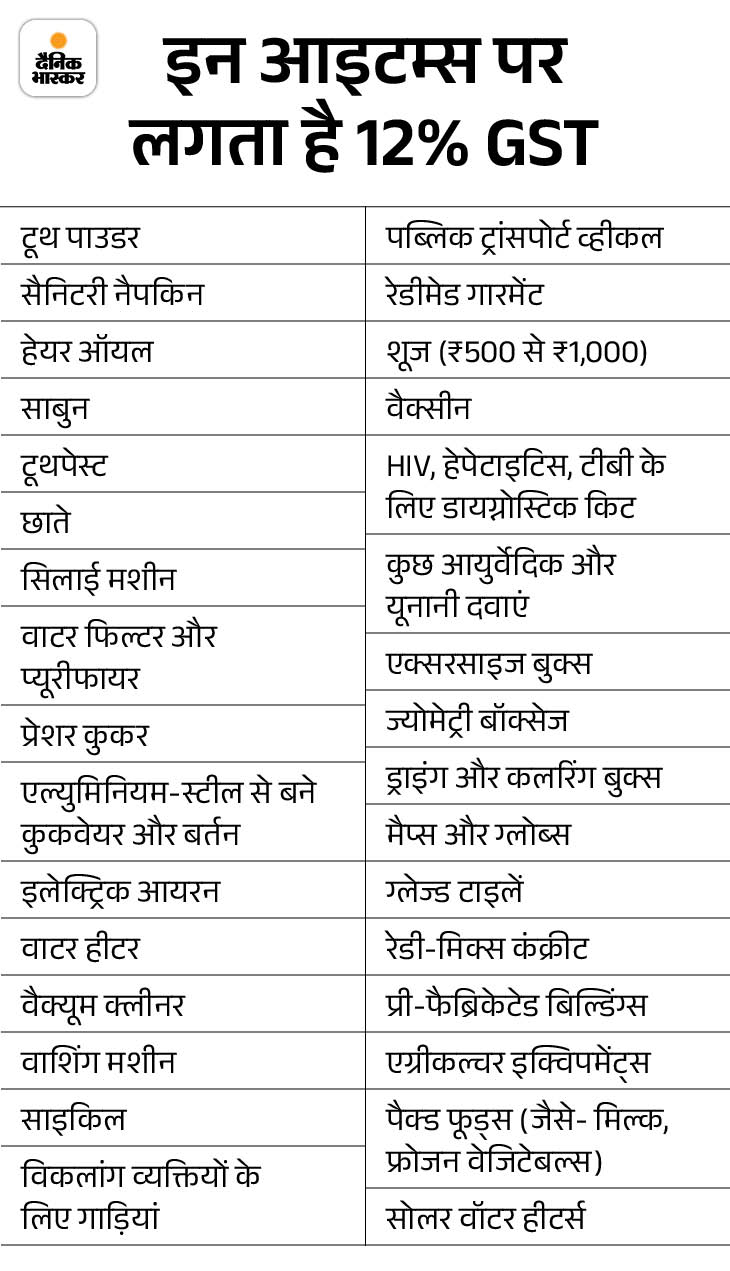
According to this, 4 tax slabs in GST are 5%, 12%, 18% and 28%. After the improvement, two slabs will remain 5% and 18%. With this, 99% of items like butter, fruit juice, dry fruits within the radius of 12% GST will come under 5%.
Simply put, these items will become 7% cheaper. Similarly, 90% of items like cement, AC, TV, fridge, washing machine within 28% tax will fall into the slab of 18%. That means cheap up to 10%. The government has taken this step to bring stability in tax rate and make the complex system of input tax credit easier.
There will be a uniform tax slab in 2047 According to Finance Ministry officials, there will be a uniform tax slab in 2047. Bringing two slabs in this direction is the first step. The government has sent this proposal of GST reform to a group of finance ministers of the states. The group will study this. Then it will be kept in the GST Council meeting to be held in September.
The Finance Ministry has clarified in a statement that GST reforms will have three major basis. First, structural improvement. The tax structure will be improved further. Second, rationalizing tax rates, so that the essential things can become cheaper. Third, new registration, making refund easy. This will balance the input and output tax rates and will reduce the deposit of input tax credit.
The fridge of 40 thousand will be 4 thousand and 80 thousand TV will be cheaper by 8 thousand There are more than 10 lakh items under the purview of GST. If you understand the announcement of Prime Minister Narendra Modi, then new reforms will directly benefit the common man. Cement sack of 350 rupees will be cheaper by 28 rupees, 80 thousand TV 8 thousand, 40 thousand fridge 4 thousand and 1000 kg sweets will be cheaper by 70 rupees.
These cheap: Tax on these will be 12% to 5% Dry fruits, branded salty, tooth powder, toothpaste, soap, hair oil, normal antibiotics, painkiller medicines, processed food, snacks, frozen vegetables, condensed milk, some mobiles, sewing machines, preresting cookers, gysers, geysers, geyser, no electrical iron, electrical iron, electrical iron, electrical iron, 1000 rupees, Readmade clothes, shoes with a range of 500-1000 rupees, most vaccine, HIV/TB diagnostic kits, bicycles, utensils, geometry boxes, maps, globes, glazed tiles, pre-fetriced buildings, vending machines, public transport vehicles, agricultural machinery, solar water heater.
- That is, all these products will become cheaper by 7%.
Tax on these will be 28% to 18% Cement, beauty products, chocolate, ready-mix concrete, TV, fridge, washing machine, AC, dishwasher, private aircraft, protein concentrates, sugar syrup, coffee concentrates, plastic products, rubber tires, aluminum foil, temporary glass, printers, razor, mangler kitted, dental kitte, dental kitte, dental floods.
- That is, all these products will become cheap by 10%.
All types of insurance premiums will decrease Right now there is 18% GST on life insurance and health insurance. Can do this 5%. If sources are to be believed, you can also do 0%. The Finance Ministry says that if the tax decreases, more and more people will be able to take insurance cover.
GST refund as easy as income tax return The process of GST refund can change completely. Will not have to apply for this. It will release automatically. The registration process will be online. That is, pre-field returns will also be used in returns filing, which will reduce mistakes and reduce manual work. Tax liability and business information will also be seen online in the return form.
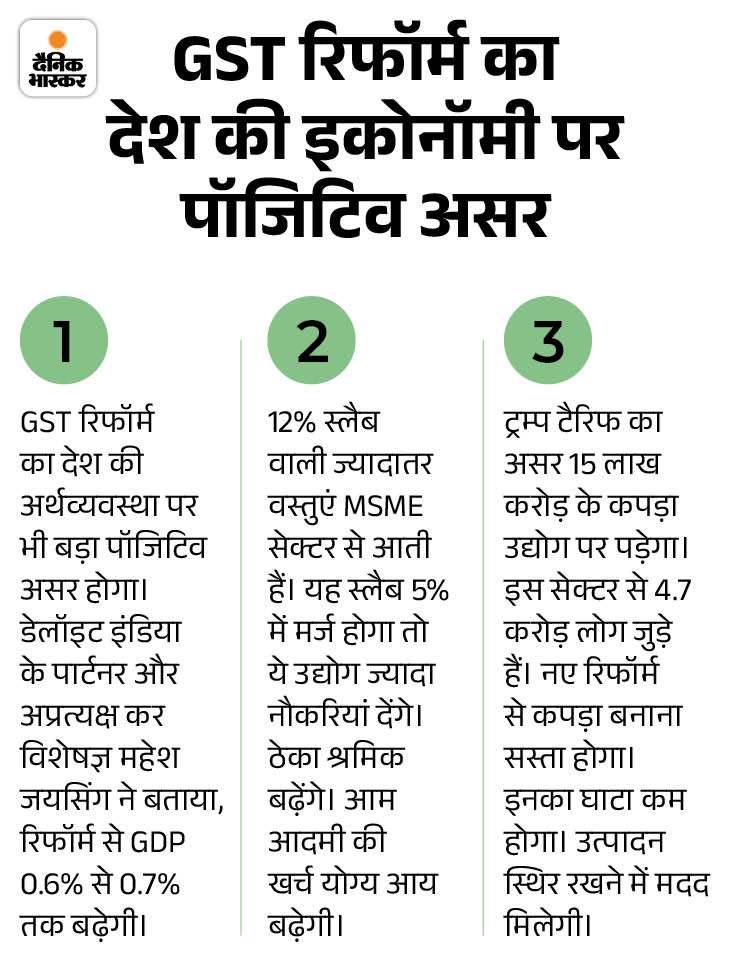
Textile industry will get great relief The government will improve inverted duty. This will make clothes, shoes and slippers and fertilizers cheap. Currently, 12% of the raw material of the fabric is charged 5% GST on the prepared costumes. After the reform, it will be 5% on both. This will reduce the cost of the textile industry.
The impact of $ 10 billion from Trump Tariff is only on the textile sector. The impact of the tariff was reduced due to the new reform. Similarly, the tax on input in fertilizer can be reduced from 18% to 5%. This will make it cheaper to buy fertilizer to farmers.
Companion cess will end Compantion cess is applied on ultra luxury items, which is 204%. It will end. Instead, a special rate of 40% will be applied to luxury, harmful goods, tobacco, online gaming.
Source link
[ad_3]

