
10 minutes ago
- copy link
Multinational financial services firm JP Morgan has warned that the prices of food items worldwide may increase rapidly in the year 2027.
According to the firm, the combination of fertilizer shortage, geopolitical tensions and a powerful El Nino will deepen the crisis. This will increase the subsidy burden on the government by Rs 3 lakh crore.
Global food inflation estimated to reach 5%
JP Morgan estimates that global food prices may increase by 5% in the first six months of 2027. If we compare this with the first half of 2026, at that time this figure was at 2.8%. This warning assumes more significance for India because the country is already struggling with the high cost of fertilizers.
Middle East and gas prices at the center of fertilizer crisis
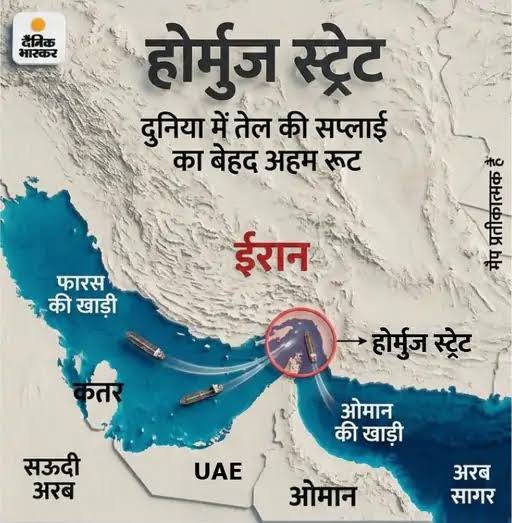
The Middle East plays a big role in the global fertilizer supply chain. According to statistics, the Middle East’s share in the world’s total urea exports is about 42% and in ammonia exports is 27%. In such a situation, any prolonged tension around the Strait of Hormuz can affect the supply and prices of fertilizers worldwide.
In addition, natural gas is the main raw material for making nitrogen fertilizers (such as urea). Due to increase in gas prices the production of fertilizer becomes expensive. If farmers use less fertilizer because it is expensive, crop production will be directly affected.
According to JPMorgan, affected fertilizer capacity may take 1 to 4 years to fully recover and some natural gas plants may take 3 to 5 years to return to normal.
Fertilizer subsidy bill may cross ₹3 lakh crore
India is one of the largest urea buyers in the world. Farmers in the country get a 45 kg bag of urea for only ₹ 266.50.
According to Bloomberg report, this price is less than one-tenth of the amount that the government paid in a tender in April.
The government itself manages this difference in prices through subsidy. According to a government official, India’s fertilizer subsidy bill could exceed nearly ₹3 lakh crore in the current financial year.
This bill may increase further if the Middle East crisis prolongs. In such a situation, the government will have a difficult challenge to keep fertilizer cheap or to motivate farmers to reduce its use.
81% chance of Super El Nino by end of 2026
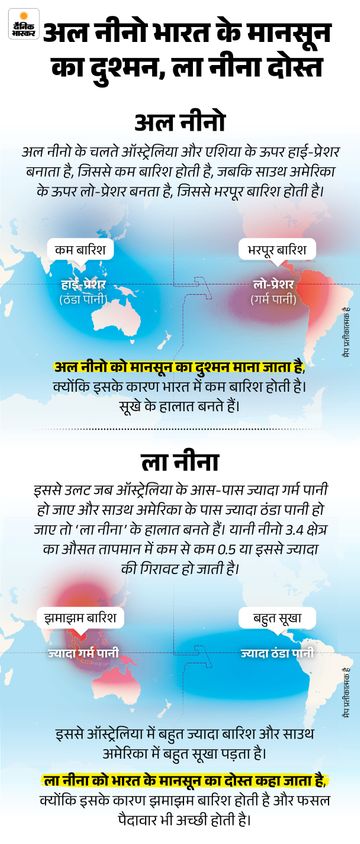
The second major reason for the crisis is the weather i.e. El Nino. JPMorgan has estimated that the chance of an extremely strong or super El Niño occurring by the end of 2026 is 81%. The probability of this continuing till 2027 is 97%.
Historically, tropical regions have seen an average decline of 3.5% in agricultural production due to El Niño. According to Morgan, a strong El Nino could add 0.7% points to global food inflation, which combined with higher energy prices could push it to 1.3% to 1.5% points.
Risk of damage to crops in India due to impact on monsoon
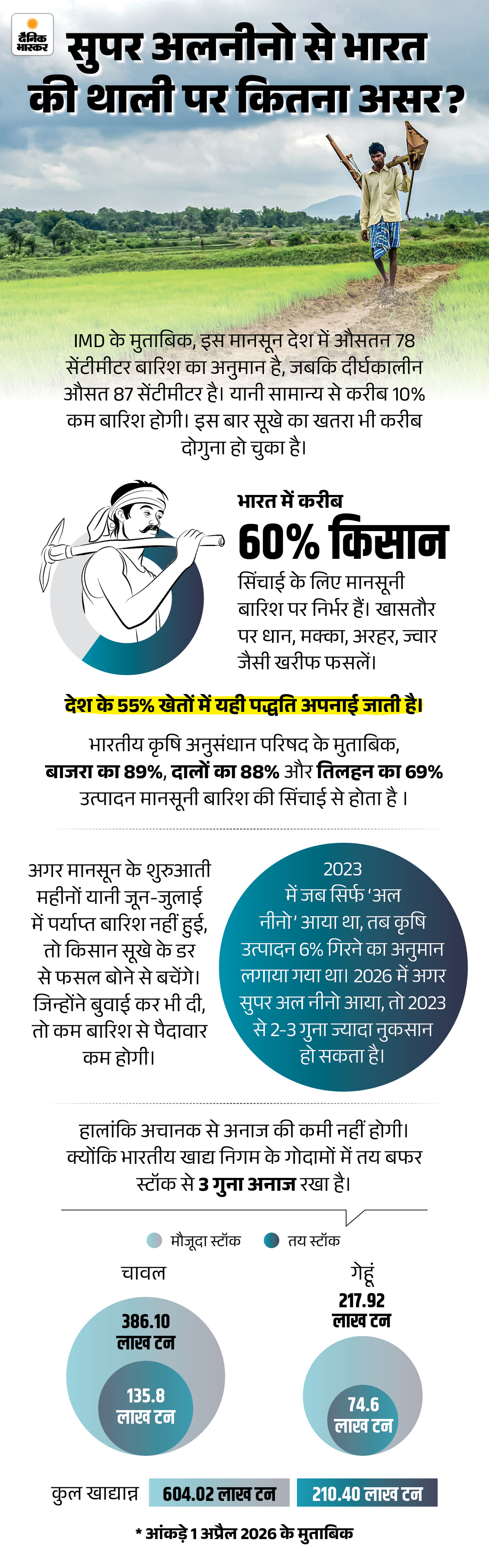
Indian agriculture is largely dependent on the south-west monsoon. El Nino is often associated with a weak monsoon, although this is not always the case.
For example, in 1997, despite a strong El Nino and other factors such as the Indian Ocean Dipole, India received 2% above normal rainfall.
—————
Read this news also
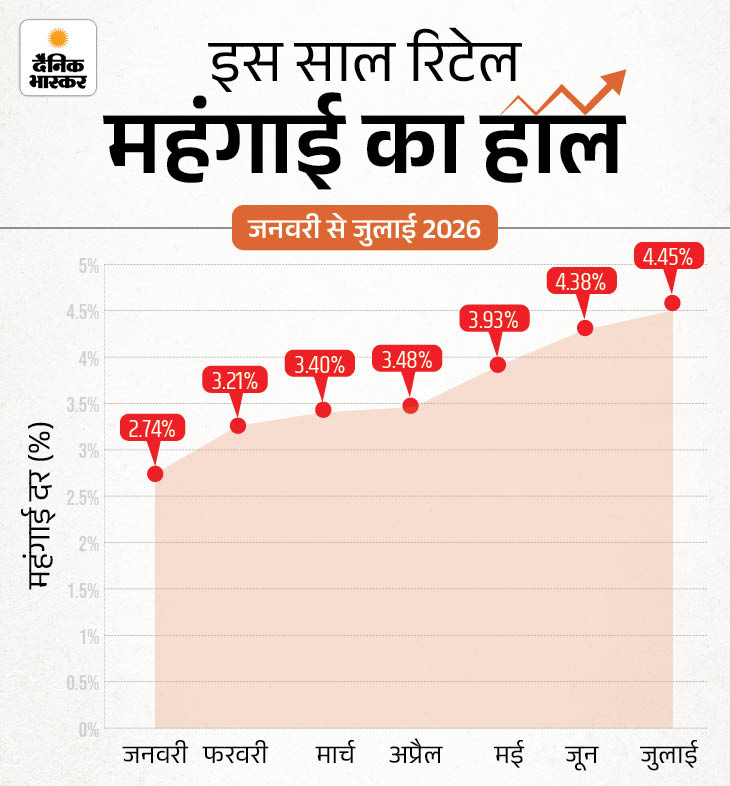
Retail inflation increased for the seventh consecutive month, food items became expensive: 4.45% in July, more than RBI’s estimate of 4% for the second month
Retail inflation has increased for the seventh consecutive month due to increase in prices of food items like potatoes and onions. In July it was 4.45%. A month ago in June it was at 4.38%. Retail inflation figures have been released today, August 12.
Food inflation has increased to 5.52% in July. In June this figure was at 5.32%.

Source link
[ad_3]

