
New Delhi11 minutes agoAuthor: M. Riyaz Hashmi
- Copy link
The Directorate General of Civil Aviation (DGCA) has implemented indigenous flight qualification rules.
There has been a historical change in the civil flyer system of India. The Directorate General of Civil Aviation (DGCA) has implemented indigenous flight qualification rules.
Now the security of air travelers in India is not based on Europe or international standards, but according to Indian conditions, technical needs. With this change, India will also be established as a rule maker nation.
According to the indigenous flight qualification Code, till now we had to get approval from the European Aviation Safety Agency (EASA) or Joint Aviation Recuity (JAR-21) for the design of the aircraft and its parts, but now only the standard India will decide the standard of engines and the parts. Factors will also be installed for their construction in the country.
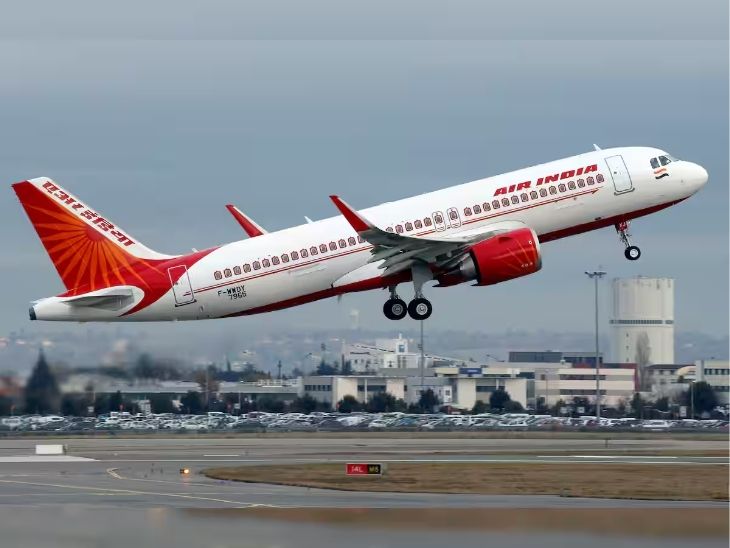
Any new engine or propeller will have to undergo at least 300 hours of fly testing before certification.
300 -hour fly testing required for certification
Any new engine or propeller will have to undergo at least 300 hours of fly testing before certification. The first EASA and JAR-21 could change the testing hours in the framework according to the aircraft type, configuration and risk category. But India has fixed it at a minimum of 300 hours.
It will be mandatory for the company to report to the DGCA within 72 hours if any aircraft or its part gets a malfunction or unsafe situation. The DGCA’s type certificate of any aircraft company will continue as long as it follows the Indian rules.
Now there are rules: Prototype of every aircraft will have to be made
- According to Indian rules, prototypes (samples) of every new aircraft have to be made. If there is a new aircraft, engine or propeller, the company will have to give a certification program to the DGCA.
- Special flights will be allowed only for test flights, delivery, export, air shows or repair work from factory to customer. Earlier this was not clear.
- Separate Rules for Electric Air Taxi or Passenger drone AEAC: 01-2024 applied. That is, Indian startups for their testing will be able to work on the basis of Indian certification without directly dependent on the standards of EASA and JAR.
- This will strengthen the concept of rapidly growing advanced air mobility (AAM) in the country. That is, in the coming years, air taxis will be easily started to avoid traffic jams in big metro cities like Delhi and Mumbai.
- If a drone, aircraft design is new or unique, DGCA can impose additional conditions.
What was the rule before
- Foreign approval had to be obtained in India before making or using planes and their parts.
- These approval used to give foreign agencies like European Aviation Safety Agency (EASA) or Joint Aviation Requirements (JAR-21).
- That is, the scale of design, quality and security of the aircraft and its engine-parts was based on Europe and international rules.
- India did not have complete exemption to change according to its situation or technical needs.
……………………….
Read this news related to DGCA …
DGCA audit found 100 disturbances related to Air India: 7 of these have very serious risk, the airline accepts the results, bid- will answer
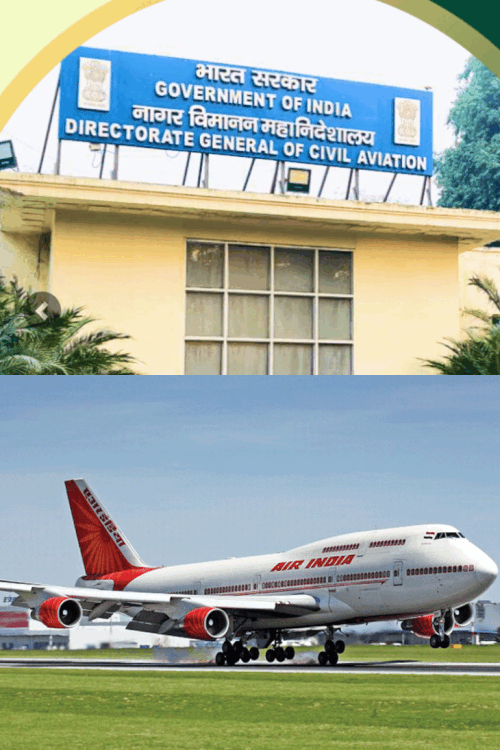
The Directorate General of Civil Aviation (DGCA), which is watching the safety of the aircraft, had caught several major flaws in the Tata Group’s airline Air India. These include pilots and cabin crew training, their rest and duty rules and standards related to flying and flying. However, according to Reuters, this number is 51. Read full news …
Source link
[ad_3]

