
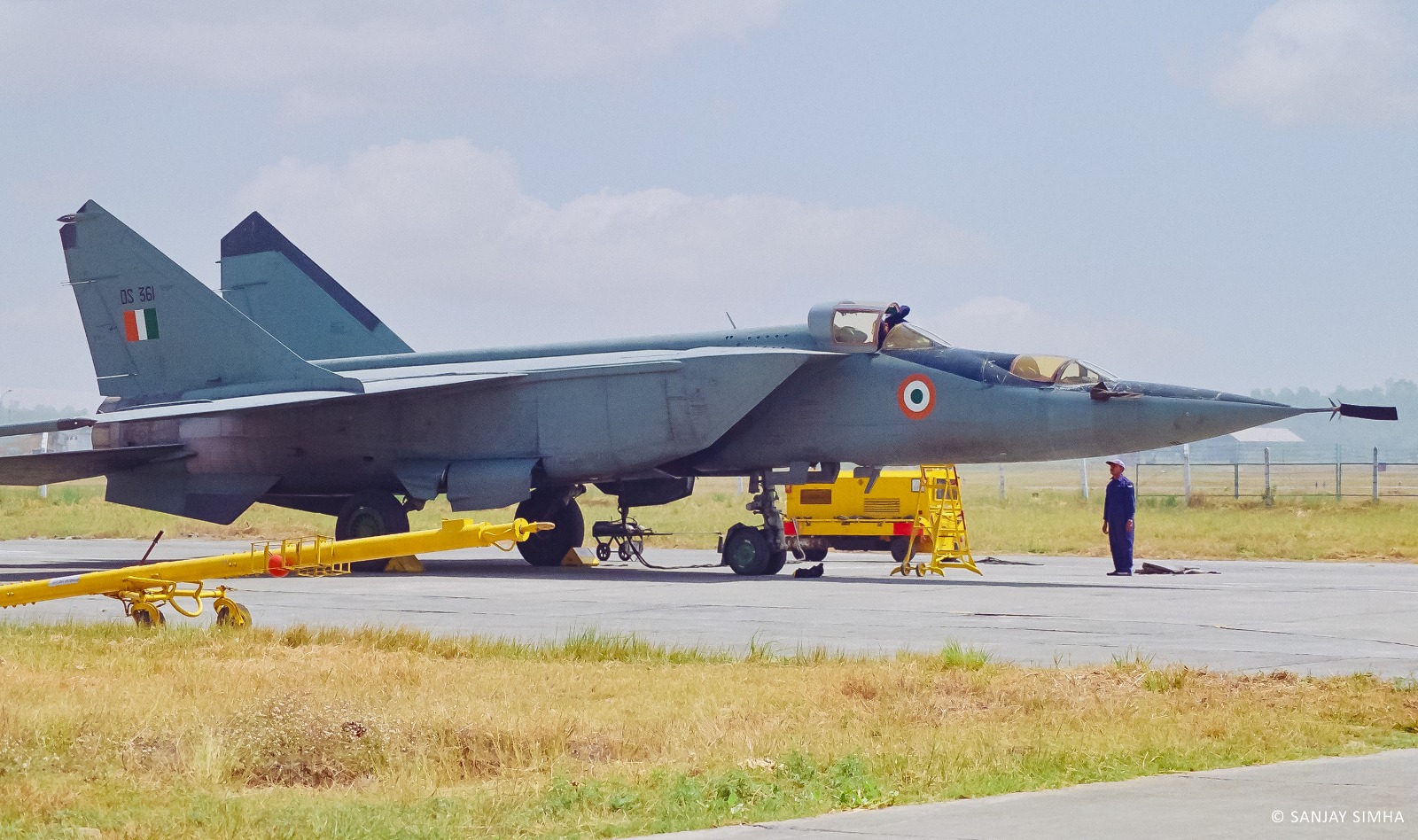
On May 27, 1997, a lone Indian MiG-25, which NATO had codenamed “Foxbat,” entered Pakistani airspace at 65,617 feet.
The MiG-25 wasn’t just any jet. Alongside the American SR-71 Blackbird, it was one of only two jet aircraft to fly operationally at close to Mach 3, three times the speed of sound.
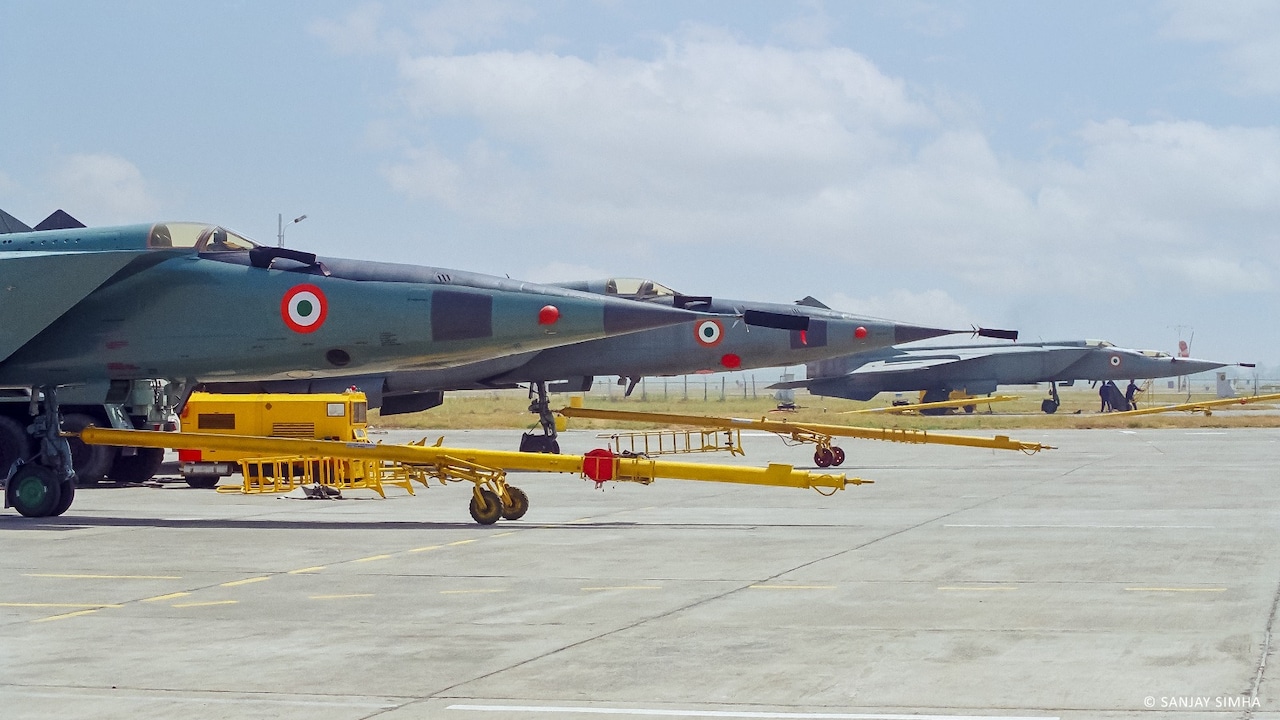
India had a small fleet of just 10 of the exquisite jets: eight MiG-25R single-seat reconnaissance jets and two MiG-25U twin-seat trainers, part of 102 Squadron, the Trisonics, based in Bareilly. These were, in simple terms, spy planes.
Advertisement – Scroll to continue
That day, residents of Islamabad heard what sounded like a series of explosions: sonic booms, the thunder-like bangs heard on the ground when an aircraft flying faster than the speed of sound drags shock waves of compressed air behind it. Pakistan said the “explosions” were heard in several cities and blamed an Indian MiG-25. Later retellings would claim windows had shaken, if not shattered.
A day later, India denied the incident. “No Indian military aircraft crossed the international border,” said a Defence Ministry spokesperson.
Except, one IAF MiG-25 did.
And the truth of that mission is now public.
“See, the major part of the story is correct … the aircraft went across,” says Wing Commander Pradeep Jaswant (PJ) Thakur (retired), who was in the Trisonics squadron at the time.
He remembers that mission like it was yesterday.
“So the 20 kilometres [65,617 feet]2.4 Mach, it did happen,” he said on NDTV’s #CtrlAltDefence podcast. “The sonic booms must have been heard. But saying that the MiG-25, just to thumb the Pakistanis, went supersonic, that is all [a] made-up story because you cannot be subsonic [in a MiG-25] at 20 kilometres.”
In other words, an Indian MiG-25 spy plane flying at Mach 2.4 (2,550 km/h) at 65,617 feet did fly over Pakistani airspace that day, on a filming run over sensitive military or infrastructure locations. Thakur did not identify what the jet was looking to film.
Advertisement – Scroll to continue
“Generally, before you hit the border, you were already at 20 kilometres, 2.4 Mach … So this window-breaking and other things are all somebody’s imagination. And just remember, at 20 kilometres, there is no way I can be subsonic. I will fall out of the sky.”
The Pakistan Air Force did detect the intruder, identifying it as “possibly” an Indian MiG-25 flying at an estimated 60,000 feet. Later accounts say PAF F-16 Fighting Falcons were scrambled, but the Foxbat was long gone before they could get anywhere near it.
“The fact of the matter is that there was nobody else flying in Pakistan at that time,” says Air Marshal Sumit Mukerji (retired), the senior-most MiG-25 pilot of his time, who commanded the Trisonics squadron in the mid-1990s. “There was nobody in that airspace, and this happened, and that is why [the story] has gone maybe out of proportion.”
That was the story of all Indian Air Force MiG-25 flights, whether over Pakistani or Chinese airspace. They were long gone before anyone could do anything.
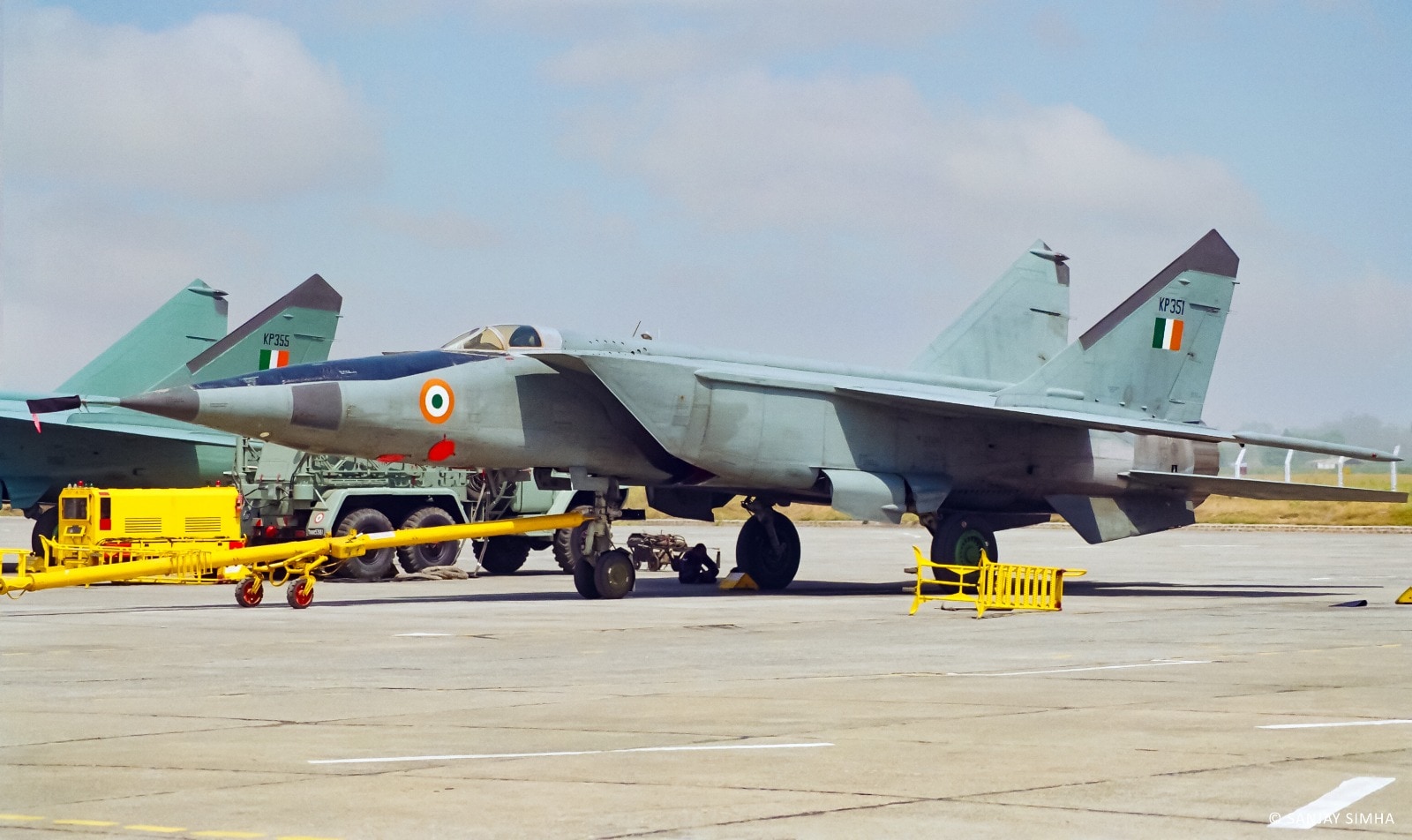
Cruising at around 20 km (65,600 feet) at Mach 2.4, or 2,550 km/h, the Foxbat flew above the effective reach of the fighters and missiles of the day and covered about 40 km a minute. An interceptor’s only chance was a precise head-on attack, and even that could be beaten with a gentle turn. “It just called for a five-degree alteration of course to spoil the whole equation,” said Wing Commander Thakur. Once the head-on chance was lost, the attacker was left chasing a far faster aircraft. Mukerji put it more simply. The jets carried no radar warning receiver, relying on controllers on the ground to call out any threat, yet “in my lifetime, I have not heard a radar tell me anything.”
IAF MiG-25s had only one operational role: to film Pakistani or Chinese areas of interest. The jet carried five cameras in its nose. Four pointed out to the sides, photographing a strip of ground up to 100 km wide. The fifth pointed straight down and recorded exact map coordinates, so strike pilots could later be told precisely where to attack. “The vertical camera… actually gave you the lat-long [latitude-longitude],” says Mukerji. The pilot switched them on over the target and off again afterwards. The equipment was huge: Thakur says the camera pack was “nearly as big as the sofa,” and Mukerji recalls film rolls 30 to 32 inches across.
Missions to overfly enemy territory were always top secret. Even crew members within the squadron would not know what was coming.
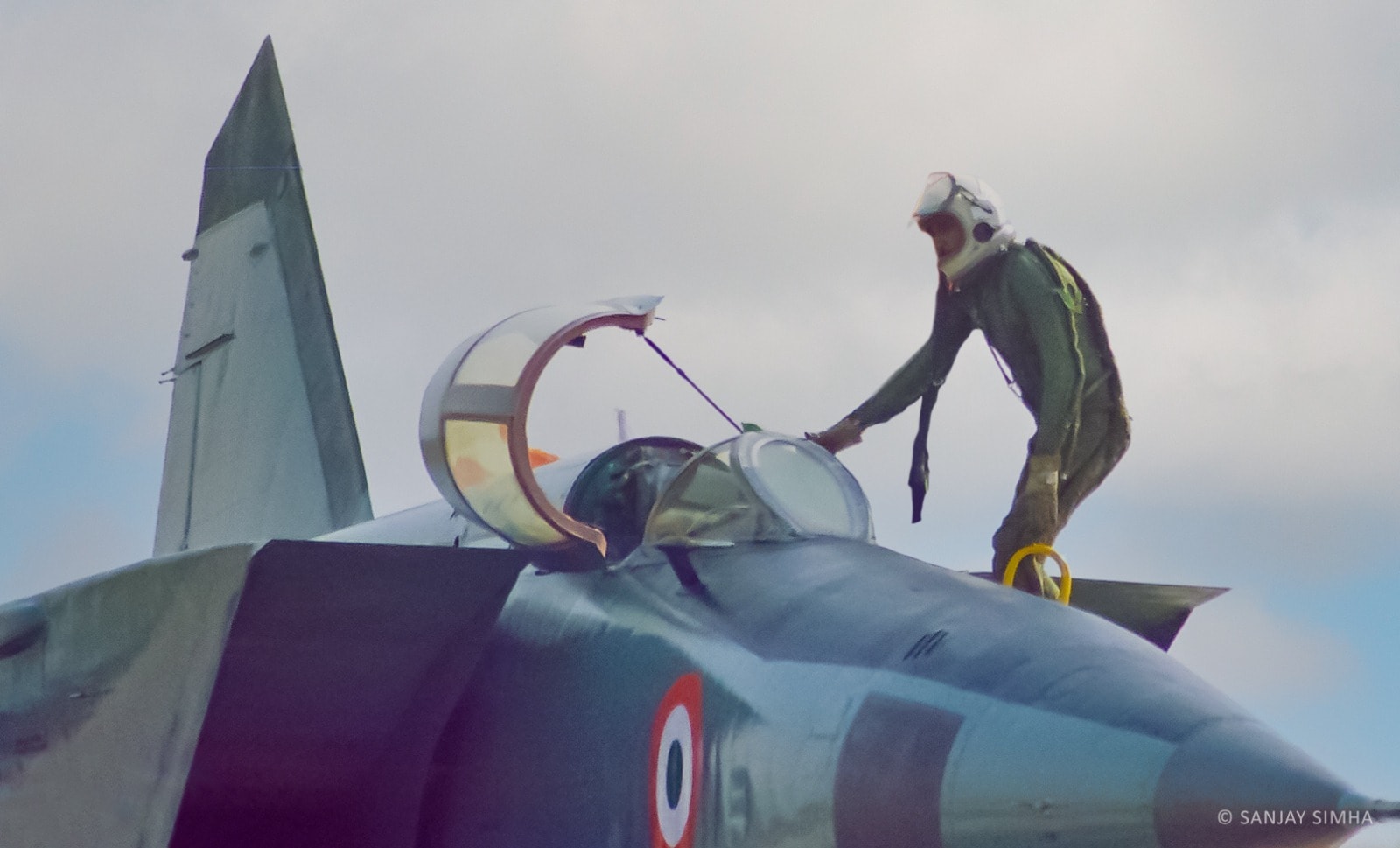
The orders never came on the phone. “You never got a tasking on the phone, because one was always worried as to anything getting leaked out,” says Mukerji. “So it was a person-to-person tasking, to say what targets they required. It’s not up to the squadron guys. All that we knew of was that the CO [commanding officer] would be called to headquarters, told that this is what it is, and he would come back, task one of the boys, give it to him, and he would do the planning, and he would not tell the other guys the story.”
The families of pilots assigned covert missions had no clue what was happening. “The families didn’t know… You just told them you’re going. How many days? I said, I don’t know. I’ll be back shortly.”
When a Foxbat took off on such an operation, other bases were told to be on standby to recover the aircraft, but never when it would take off or given any specifics. “When the MiG-25 flew, they were told that you are likely to expect something,” says Mukerji. “No times are given… Nobody should know when he’s getting airborne, when he’s going to enter, when he’s going to exit. After that, accept him wherever he comes.”
The areas filmed in China or Pakistan were usually “strategic targets”: nothing moving, such as industrial sites, railway networks and new constructions. Trips in and out of the border were few and far between.
The MiG-25 was deployed in a very different role during the Kargil War of 1999. Wing Commander Thakur was there.
When the conflict broke out, nobody thought of the MiG-25. The intruders were first assumed to be militants, and the Air Force itself was brought in late. Only after the IAF lost three aircraft did the problem become clear: strike pilots were being sent after targets they couldn’t find.
“I remember the Mirage guys [Mirage 2000 pilots],” says Wing Commander Thakur. “They would go to the coordinates, but they could not pick up the targets.” What they needed were precise positions, and that meant sending in the Foxbat, flown in a way it had never been flown before. From its usual 20 km altitude, Thakur says, picking out “nylon tents and bunkers built by stones would have been a near-impossible task.” So he came down to about 10 km (roughly 33,000 feet), around 5 km (16,000 feet) above the hilltops, cruising at Mach 0.95, or 1,020 km/h. He first flew three practice sorties to work out the camera settings and fuel use. The targets were some 400 km from his base, and at that height the jet burned more fuel than it did at Mach 2.4 at the edge of space.
Flying low and slow took away the MiG-25’s usual protection. Air Headquarters assigned Mirage 2000s to escort it and had MiG-29s fly top cover overhead, the first time fighters had ever escorted a Foxbat. “To move a strategic aircraft into an operational theatre… could have escalated things,” Thakur says. “So it was hush-hush.” After each sortie, he landed at Adampur, where a Dornier transport aircraft was waiting to rush the film to Bareilly for processing. “By night I had the processed film.” The images gave strike aircraft the exact coordinates they had been missing, and Thakur was mentioned in despatches for the missions. Typically modest, he says only that “it helped a lot.”
Air Marshal Sumit Mukerji has his own unique Foxbat story: chasing an eclipse at Mach 2.5.
On October 24, 1995, Mukerji, then a Group Captain, took a twin-seat MiG-25 into the stratosphere to chase a total solar eclipse for the Udaipur Solar Observatory. The scientists’ Hasselblad camera was “massive,” far too big for a fighter cockpit, so “we threw that camera on a twin-seater,” with Wing Commander Babu operating it from the front seat. Flying at Mach 2.5 at about 80,000 feet along the path of the eclipse, Mukerji had no gunsight to aim with. Instead, “I stuck graph paper on a little aluminium piece [that had been fabricated] and made a pinhole,” keeping the Sun in it throughout. On the ground in India, the total eclipse lasted 42 seconds; chasing the Moon’s shadow, he watched it for 2 minutes and 23 seconds. “They were very happy with the results,” he says. “And I think we did our job.”
The Foxbat’s end came not from an interceptor but from orbit. By the early 2000s, satellites were delivering what the MiG-25 once alone could. “Satellites had come in, and they were giving you fantastic pictures,” says Mukerji. “They were reaching at that time sub-metre resolutions on their cameras, which was working out better than ours. And it had lived its life.” The Americans had retired the SR-71 in the late 1990s. “We pushed it for another eight years,” he says. On May 1, 2006, after almost 25 years of service, the IAF retired its MiG-25s, and with them one of the most secret chapters in its history.
For the men who flew them, those missions over hostile territory were never as legendary as the world imagined.
Read | Inside Boeing 737 Simulator: NDTV Retraces flydubai’s Terrifying Seconds
“No, everything looks the same anyway,” says Thakur. “There is no border to see. So you’re just following your route.”
Mukerji puts it even more simply: “You plan a route, you fly it. That’s it.”
Source link
[ad_3]

