
Last Updated:
NFHS-6 report says Karnataka (26.4 percentage points); Tripura (23.1); Telangana (22.5); Tamil Nadu (22.3) and Chhattisgarh (22) have widest internet gender gaps




The findings suggest that rapid growth in internet access has not translated into equal access everywhere. (AI generated for representation)

India’s digital gender divide has narrowed, with 64.3% of women aged 15-49 reporting in 2023-24 that they had used the internet at least once, up from 33.3% in 2019-21. Three of India’s five widest internet gender gaps are in southern states, with Karnataka recording the largest divide in the country. According to the latest report from the National Family Health Survey (NFHS-6), Karnataka (26.4 percentage points); Tripura (23.1); Telangana (22.5); Tamil Nadu (22.3) and Chhattisgarh (22) were the five states with the widest internet gender gaps. The NFHS-6, for 2023-24, has gathered information from 6.79 lakh households, covering 7.16 lakh women and over one lakh men.
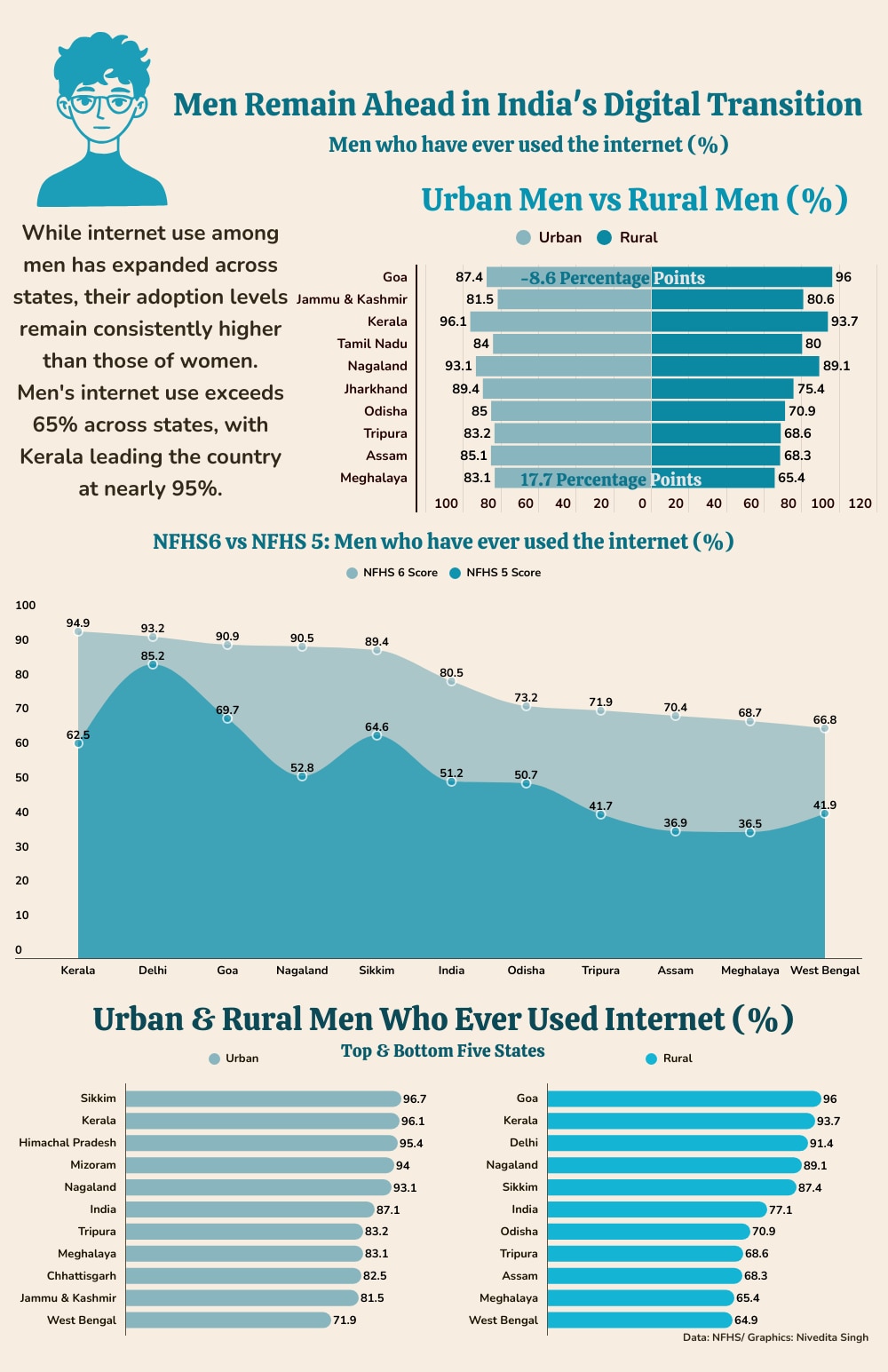
As per NFHS-6, at least 80 per cent of men aged between 15 and 49 have ever used the internet, up from 51% in 2019-21. Even after the sharp rise, women remained 16.2 percentage points less likely than men to report having ever used the internet, although the gap has narrowed from 17.9 percentage points in NFHS-5.
The data analysed by News18 show that internet use among both men and women has increased sharply across India between NFHS-5 and NFHS-6. The highest jump was reported among women in Andhra Pradesh – over three times – from 21% in NFHS-5 to 64% in NFHS-6. Bihar follows closely, with internet use among women rising from 20.6% to 58.4% between the two surveys.
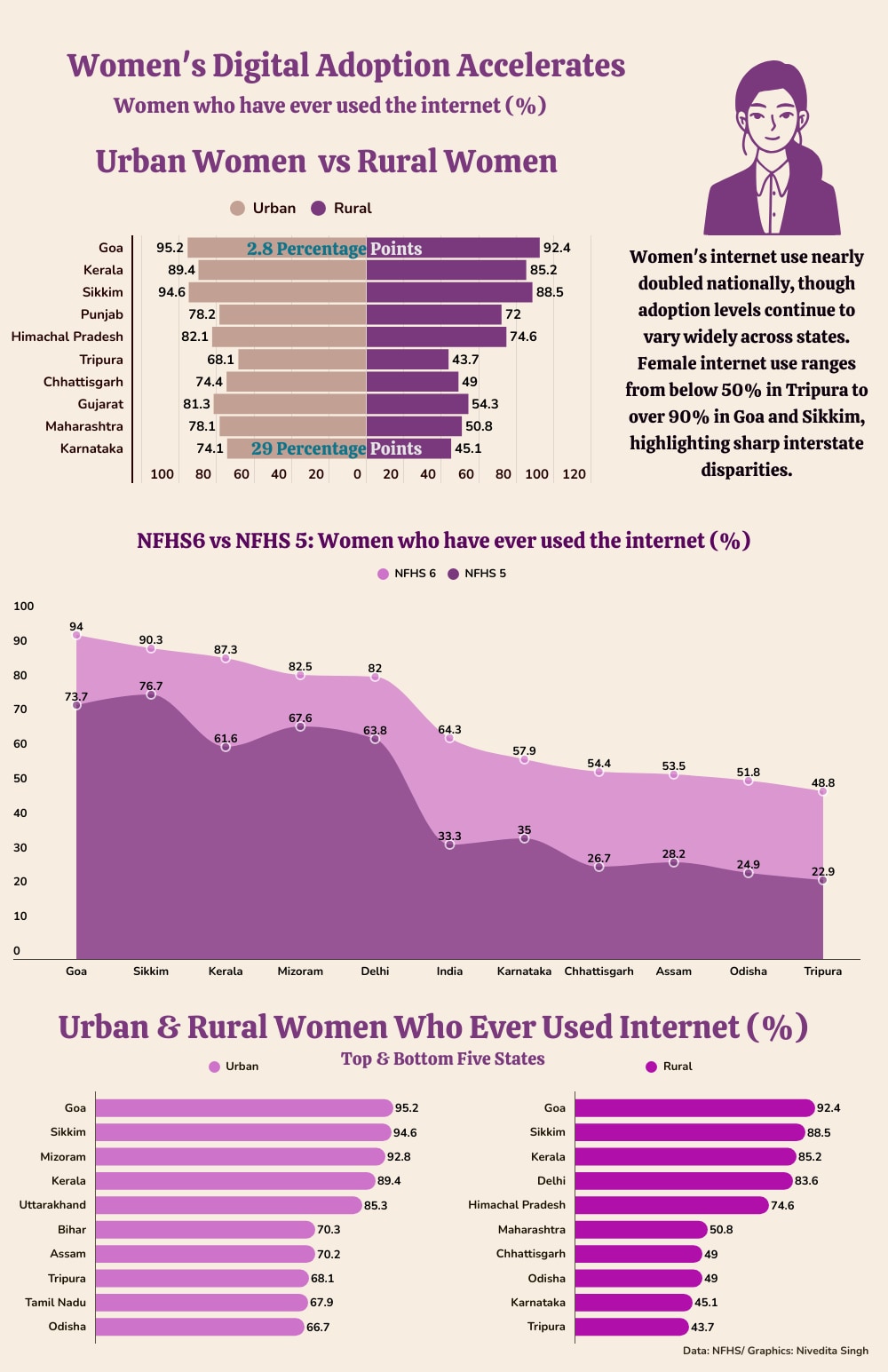
The proportion of women who had ever used the internet more than doubled in Telangana, West Bengal, Madhya Pradesh, Uttar Pradesh, Jharkhand, Gujarat, Tripura, Odisha and Chhattisgarh during the said period.
In the case of men, the share of men who had ever used the internet doubled in Bihar and nearly doubled in Andhra Pradesh, Assam, and Meghalaya.
STATES WITH HIGHEST GENDER GAP
In Karnataka, 84.3% of men reported having ever used the internet, compared with 57.9% of women, creating the country’s widest gender gap of 26.4 percentage points – much higher than the national gap of 16.2 percentage points.
Tripura followed with a 23.1-percentage-point gap, with 71.9% of men reporting internet use compared with 48.8% of women. At a 22 percentage point gap stood Telangana, Tamil Nadu and Chhattisgarh.
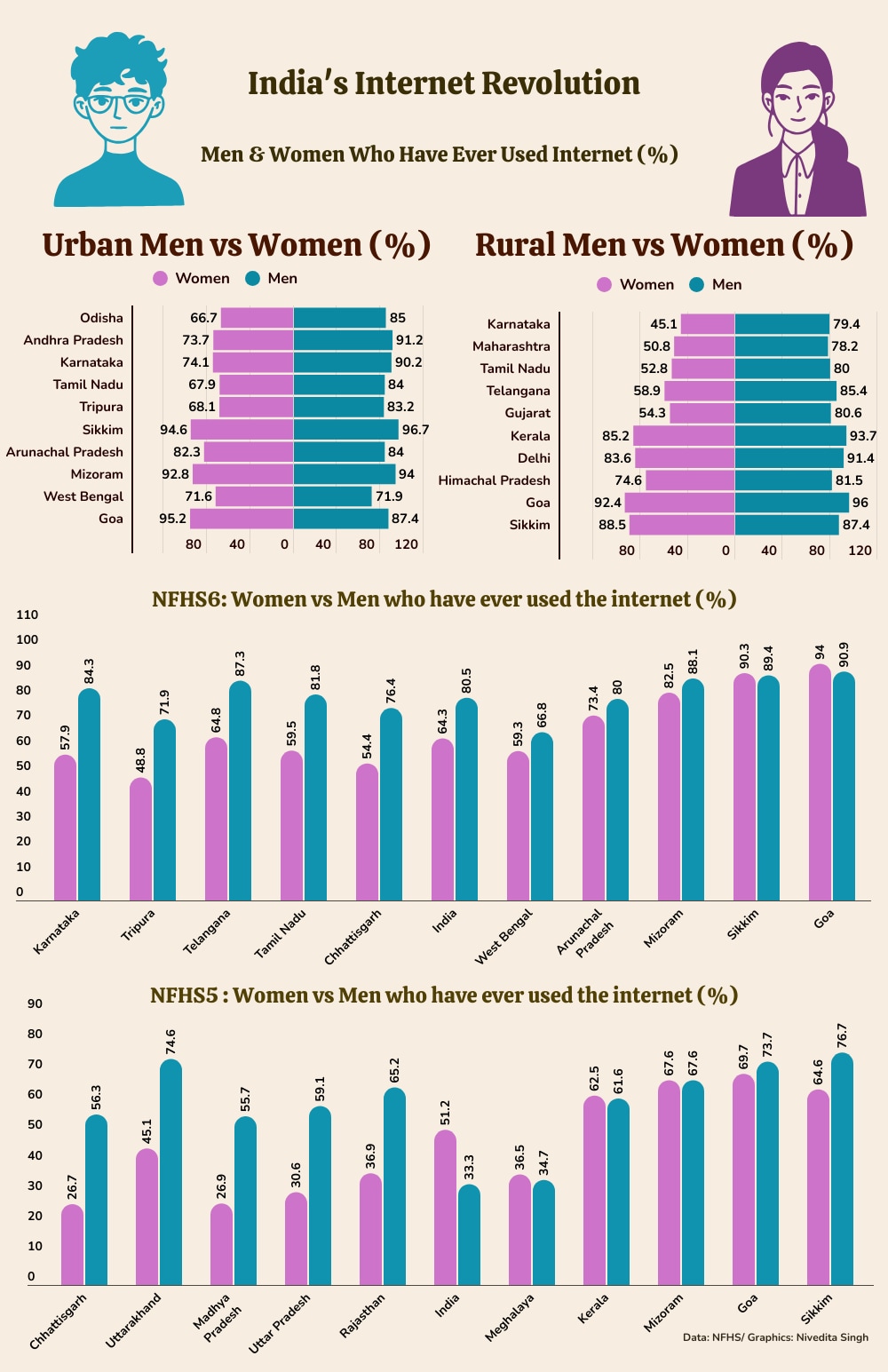
Odisha (21 percentage points), Andhra Pradesh (20), Maharashtra (20), Bihar (19.7), Gujarat (18), Jammu & Kashmir (17) and Assam (17) were also the states with gender gap higher than the national average.
Goa and Sikkim were the only states where women reported higher internet use than men.
Goa stands at the other end of the spectrum, recording the highest share of women who had ever used the internet. About 94% of women in the state reported having used the internet at least once, compared with 90.9% of men.
Sikkim is the only other state in India where the gender gap is negative. Over 90% of women have used the internet against 89% of men.
However, Kerala has the highest share of men who had ever used the internet at about 95%, while women’s share remains at 87%.
RURAL-URBAN DIVIDE
Karnataka also records the widest urban-rural divide in internet use among women. While 74.1% of urban women reported having used the internet, the figure drops to 45.1% among rural women — a gap of nearly 29 percentage points.
Among rural women, Karnataka ranks second last after Tripura. The gap suggests that rural women continue to be left behind despite rapid expansion in internet use.
Maharashtra is the second state with the highest urban-rural divide in internet usage among women – at over 27 percentage points. While 78% of urban women reported having used the internet, the figure falls to about 51% in rural Maharashtra.
Goa is the leading state in urban (95.2%) and rural (92.4%) as well. Among the states, Odisha has the lowest internet use among urban women at 66.7%, while Tripura records the lowest level among rural women at 43.7%.
Among men, West Bengal recorded the lowest internet use in both urban (72.1%) and rural (64.9%) areas among the states covered by NFHS-6.
The findings suggest that rapid growth in internet access has not translated into equal access everywhere, with several southern states continuing to report some of India’s widest gender gaps in internet use.
About the Author

Nivedita Singh is a data journalist and covers the Election Commission, Indian Railways and Ministry of Road Transport and Highways. She has nearly seven years of experience in the news media. She twe…Read More
Read More
Source link
[ad_3]

