
This time the voting in the first phase of West Bengal Assembly elections has surprised the election pundits and political parties. The voting figures that have come out in the first phase have destroyed all previous records. More than 92 percent voting was recorded in 152 seats, which may go up to 93 percent in the final figures.
If this happens, it will be about 10 percent more than the 83.2 percent voting in the first phase of the 2021 assembly elections. This increased voting has now become the biggest political question whether it went in Didi’s favor or is it becoming an opportunity for Delhi i.e. BJP?
In the last 45 assembly elections, wherever the voting percentage was less than the last time or the same as the last time, in most of the states the current government got the advantage. For example, in Madhya Pradesh the voting percentage was 75 to 76 percent and the BJP government remained in power there. In Uttar Pradesh, when 61 percent voting reduced to 60 percent, BJP was successful in making a comeback there too. And in Goa too, when voting decreased by 4 percent, the BJP government made a comeback there too.
There have been some exceptions to this. In states like Chhattisgarh, Rajasthan, Telangana and Punjab, either governments changed despite one-two percent less voting or governments changed despite one-two percent more voting. However, if we look at the big picture, the voting pattern says that when 7 percent or more voting takes place, it has two meanings. Either the people want to bring back the present government with full force or want to remove the present government with full force. Elections do not get stuck in such voting patterns. Rather, in such voting patterns the elections become clear and transparent.
What percentage of voting took place in 16 districts?
west bengal On Thursday, voting took place on 152 seats in 16 districts, out of which the voting percentage in 12 districts was 90 percent or more. Among these, the highest voting took place in South Dinajpur, where 94.4 percent people cast their votes. That is, you should understand that in South Dinajpur, about 95 out of every 100 voters came to the polling centers to cast their votes. There are a total of 6 assembly seats in South Dinajpur, where the population of Muslims is about 25 percent and the population of Hindus is 73.5 percent. That is, the maximum voting took place in the districts where Hindu voters are decisive.
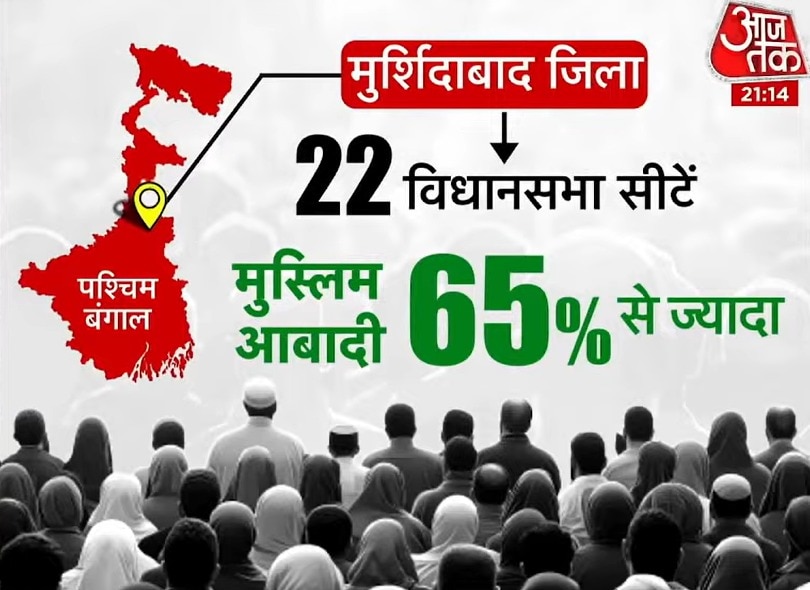
After South Dinajpur, 94 percent voting took place in Cooch Behar district, 93.2 percent in Birbhum, Jalpaiguri 92.7 percent in and Murshidabad Almost the same 92.7 percent voting took place in the district also. Murshidabad has 22 assembly seats in West Bengal. And Hindus are minority in this district. The population of Muslims here is more than 65 percent while the population of Hindus is only 33 percent and till now Chief Minister Mamata Banerjee’s TMC was the strongest in this district. But now Humayun Kabir has become a challenge for him.
Will Humayun Kabir become a challenge for TMC?
Humayun Kabir is the same leader who is building a Babri like mosque in Murshidabad and has contested the elections from his own party. If Humayun Kabir divides Muslim votes, the equations will change on at least 13 seats in Murshidabad. And in the fight between Humayun Kabir and TMC, BJP can benefit here. Now it is important to look at these figures to understand how Humayun Kabir can make an impact in Murshidabad.
Humayun Kabir is contesting from Rezinagar seat, where 85.5 percent voting took place in 2021, but this time 91.2 percent voting took place here. The name of the second seat from which Humayun is contesting is Nauda. Last time there was 86.2 percent voting on this seat, but this time also 93 percent voting has taken place here. Now the whole game in Murshidabad hinges on how much Humayun makes a dent in Mamata Banerjee’s Muslim vote bank and how much benefit BJP also gets from it.
Equation of Hindu-Muslim voters on first phase seats
Another special thing about the first phase of voting is that most of the seats where maximum voting took place are mixed. That means Muslims are in majority on these seats and Hindus are also in majority. like murshidabad Bhagwan Gola There was 96.5 percent voting in the seat, where 85 percent of the population is Muslims. Only 14.2 percent of the population is Hindus.
after this Raghunathganj 96.3 percent voting took place in Murshidabad and this seat also falls in Murshidabad, where 80 percent voters are Muslims. from Murshidabad only Lalgola 96 percent voting took place on the seat, here too Hindus are in minority and the population of Muslims is more than 80 percent. Farakka There was 95.7 percent voting in the seat, where the Muslim population is 67 percent and the Hindu population is 32 percent. Whereas Jangipur 94.8 percent voting took place in the seat, which has 62 percent Muslim population and 37 percent Hindu population.
There has been bumper voting on the seats where Hindus are in majority, but on an average, voting has decreased by 2 to 2 percent in Hindu majority seats as compared to Muslim seats. And therein lies the complete result of the first phase of voting. There is also a question here whether BJP’s chances have increased due to this bumper voting? Because till now BJP used to allege that due to fear of TMC, many people did not vote in the elections without any fear.
Will BJP benefit from fear-free voting?
But this time, the way 2 lakh 40 thousand Central Security Forces personnel were deployed and voting remained silent on most of the seats, the question is being asked whether the large number of people who came out to cast their votes voted without fear. And if this is fear-free voting, is BJP going to benefit from it?
This time the election morning of Bengal was different from many previous elections. Apart from sporadic squabbles, the noise of the ruckus was almost absent. There were no bomb blasts, no fear of booth capturing. The Election Commission converted Bengal into a cantonment and 2 lakh 40 thousand central forces made possible what seemed impossible till now. Due to this, violence has taken place on a large scale in previous elections. In the last assembly elections, there were 1300 violent incidents and 17 people were killed. But this time the incidents were limited. Many incidents were stopped.
The biggest discussion in the election corridors is about silent voters. Experts believe that when voting takes place without pressure and without fear, the ‘anti-incumbency’ wave is most vocal. If the common citizen of Bengal is pressing the button without any hesitation, then understand that the politics of Bengal is taking a turn. However, will this wave take BJP to the magical figure of majority? This suspense will open only on 4th May.
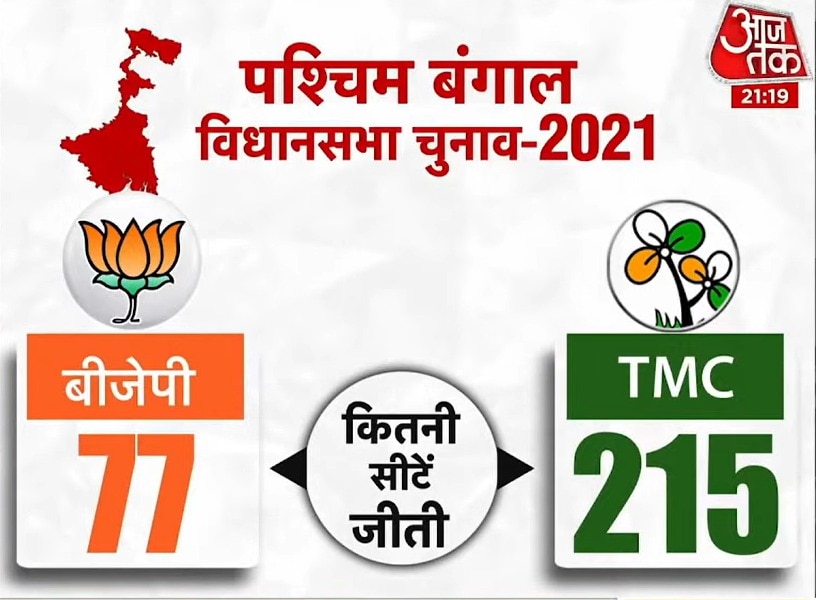
It is noteworthy that in the year 2021, BJP was reduced to 77 seats, then violence and fear were considered a decisive factor. But this first phase of 2026 has made the picture clear that the people of Bengal have either chosen change or a strong support. The deployment of security forces has provided the level playing field to the BJP, which it had been requesting for years. Now the only question is whether Didi’s impenetrable fort is about to collapse or will BJP’s hopes once again come to a halt at the threshold of power?
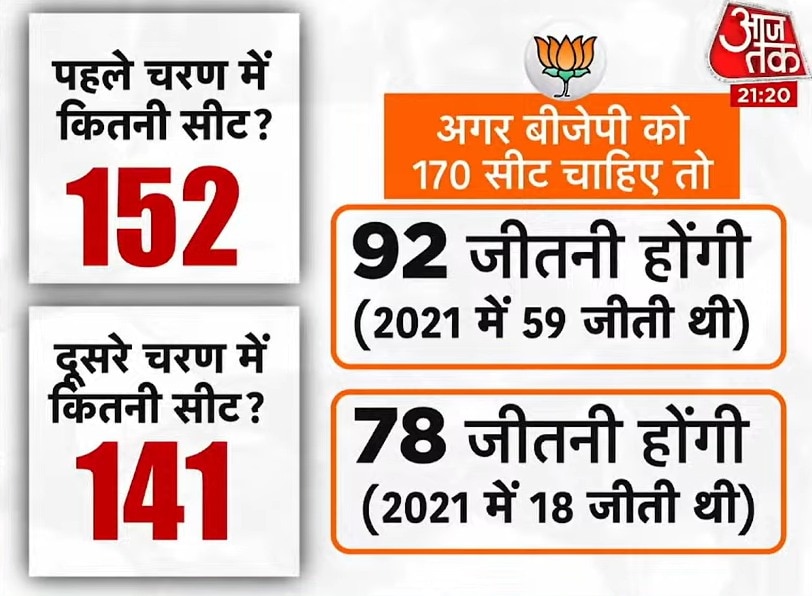
In the last elections, BJP had won 77 seats while TMC had won 215 seats. If these last election results are to be reversed then BJP will have to win about 100 more seats this time. And from the point of view of these 100 seats, the first phase of elections will become very important. Because, in the first phase, voting took place on 152 seats in 16 districts of West Bengal, out of which last time BJP had won 59 and TMC had won 92.
If BJP makes a big upset and this time it gets 92 seats and TMC gets 59 seats, then BJP can reach the figure of 170 seats. If this happens, it will have to win at least 92 seats in the first phase and 78 out of 141 seats in the second phase. And together these two will make a figure of 170 seats. However, this will not be easy for BJP.
—- End —-
Source link
[ad_3]

