
Dhaka43 minutes ago
- copy link
Interim Prime Minister of Bangladesh Muhammad Yunus. (file)
Doubt is looming over the general elections to be held in Bangladesh in February next year. Election preparations have come to a halt due to political instability, violence and army turmoil.
On one hand, Awami League (Sheikh Hasina’s party) is banned. On the other hand, amid preparations by the opposition BNP (Bangladesh Nationalist Party), Jamaat-e-Islami has warned of ‘not allowing elections to be held without reforms’. Now the crisis has gone from power to the army.
The arrest of 15 senior army officers on the orders of the International Criminal Tribunal has created a stir within the army. MES Building-54 located inside Dhaka Cantonment has been declared as a temporary jail, where these officers have been kept.
The biggest challenge for the government is that the tenure of Army Chief General Waqar-uz-Zaman is to end next year, and the government does not want any major conflict during his tenure. But the situation now seems to be out of control, and the February elections are currently stuck in limbo.
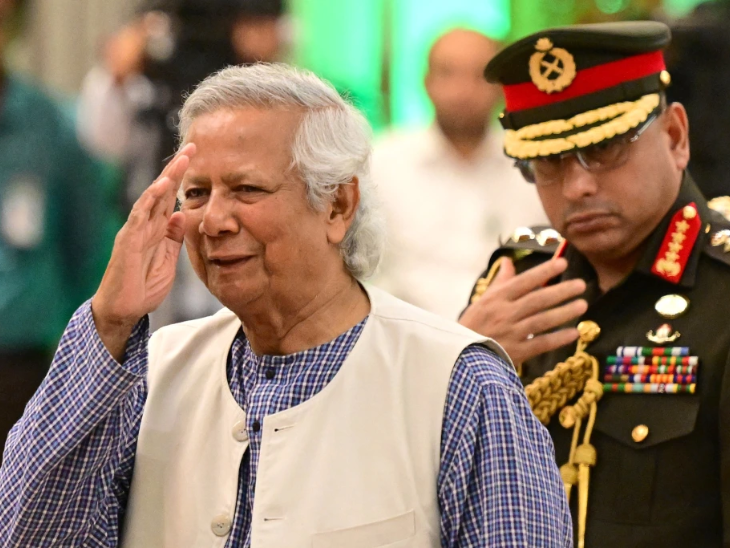
At the beginning of the year 2025, Yunus had said that elections can be held in Bangladesh by the end of 2025 or the first half of 2026.
Now pressure on government increases due to ban on Awami League
The registration of Bangladesh’s largest party, Awami League, was suspended by the Election Commission in May 2025. Despite the arrest of top leaders and ban on political activities, the party is holding rallies on the streets.
The government claims that ‘Awami League has become irrelevant’, but the ground reality is different. International analysts say that in such an environment the elections will be one-sided. External pressure is now increasing on the government to give a chance to the opposition.
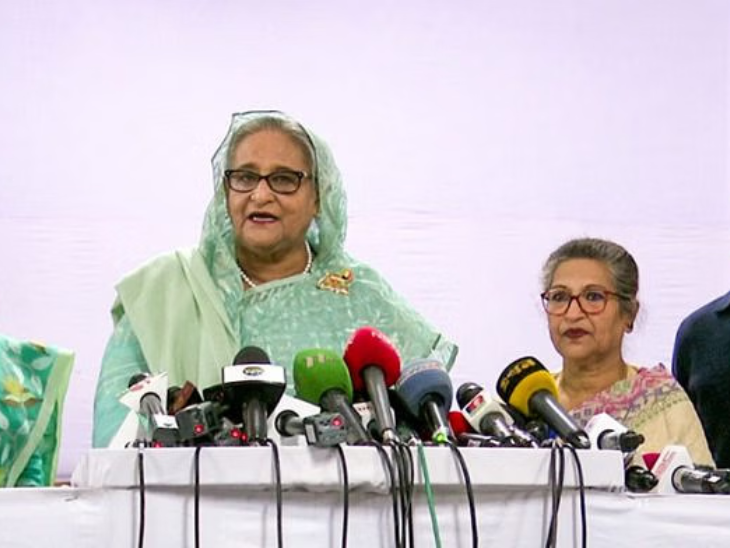
The Election Commission has banned former Prime Minister Sheikh Hasina’s party Awami League.
Violence and riots are not stopping, threat to voting
There were 253 mob attacks in Bangladesh in the last 10 months, resulting in 163 deaths and 312 injuries. Religious violence has also increased. Attacks on sites (temples, mosques) have increased, especially on Hindu minorities.
Non-governmental organizations say that ‘law and order in the country has broken down’. Clashes are continuing in Dhaka, Chittagong and Sylhet.
Bangladesh Police and Rapid Action Battalion had to take help from the army several times. In such circumstances, it is not only difficult to conduct fair voting, it has also become a big challenge for the election security agencies.
Lack of political consensus, controversy over July Charter
The demand for legal recognition of the “July National Charter” (democracy, reform and inclusion) emanating from the July 2024 revolution is intensifying. Parties like Jamaat-e-Islami, NCP (National Citizen Party), Islami Andolan Bangladesh say that they will not contest elections without implementing the charter.
NCP calls this the minimum condition of democracy. On the other hand, BNP says that ‘election preparations are complete’. This election without political consent can put Bangladesh’s democracy in deeper trouble.
Main demands:
- Proportional Representation (PR) System: Apportioning seats on the basis of votes, especially in the upper house of parliament (newly proposed). There is opposition to BNP in the lower house.
- Referendum: Incorporating the Charter into the Constitution by referendum in November 2025.
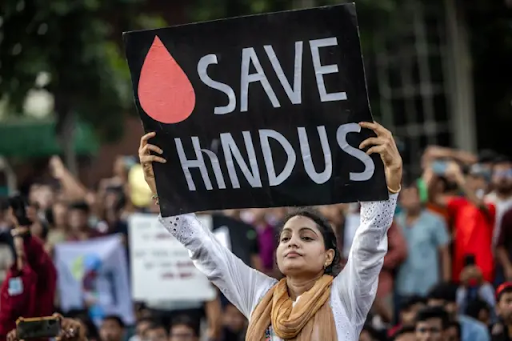
Attacks on Hindus have increased in Bangladesh in the last 10 months.
Bangladeshi army divided into two groups
15 senior military officers were arrested on the orders of the International Criminal Tribunal (ICT). He was accused of forced disappearance and torture during Hasina’s regime. They have been kept in temporary jail in MES Building-54 of Dhaka Cantonment.
After the action against the officers, factionalism within the army has come to the fore. One group, being called the ‘General Rahman Group’, stands with the government and believes that the army should follow the government’s decisions ‘for the sake of political stability’.
The second group, led by ‘Major General Arif Chaudhary’, is demanding to keep the army separate from politics. The same group is questioning the Army Chief as to why he did not interfere in the arrest of the officers.
Two factions in the army:
- ‘General Rahman Group’: Government supporter, believes the army should support the government for political stability.
- ‘Major General Arif Chaudhary Faction: Demand to keep the army away from politics. They are asking why the Army Chief did not intervene in the arrests.
Election process in Bangladesh is similar to Lok Sabha elections in India.
Bangladesh also has the same electoral process as India’s Lok Sabha elections. Here, members of Parliament are elected through the first-past-the-post system, just like in India. That means the candidate who gets even one more vote will win.
After the election results are declared, the MPs of the largest party or alliance elect their leader and he becomes the Prime Minister. The President administers the oath of office as the Prime Minister of the country.
There are a total of 350 seats in the Parliament here. Of these, 50 seats are reserved for women. There are no elections for reserved seats, whereas general elections are held every five years for 300 seats. Apart from the Lok Sabha, there is also the Rajya Sabha in the Parliament of India, but there is only one house in the Parliament of Bangladesh.
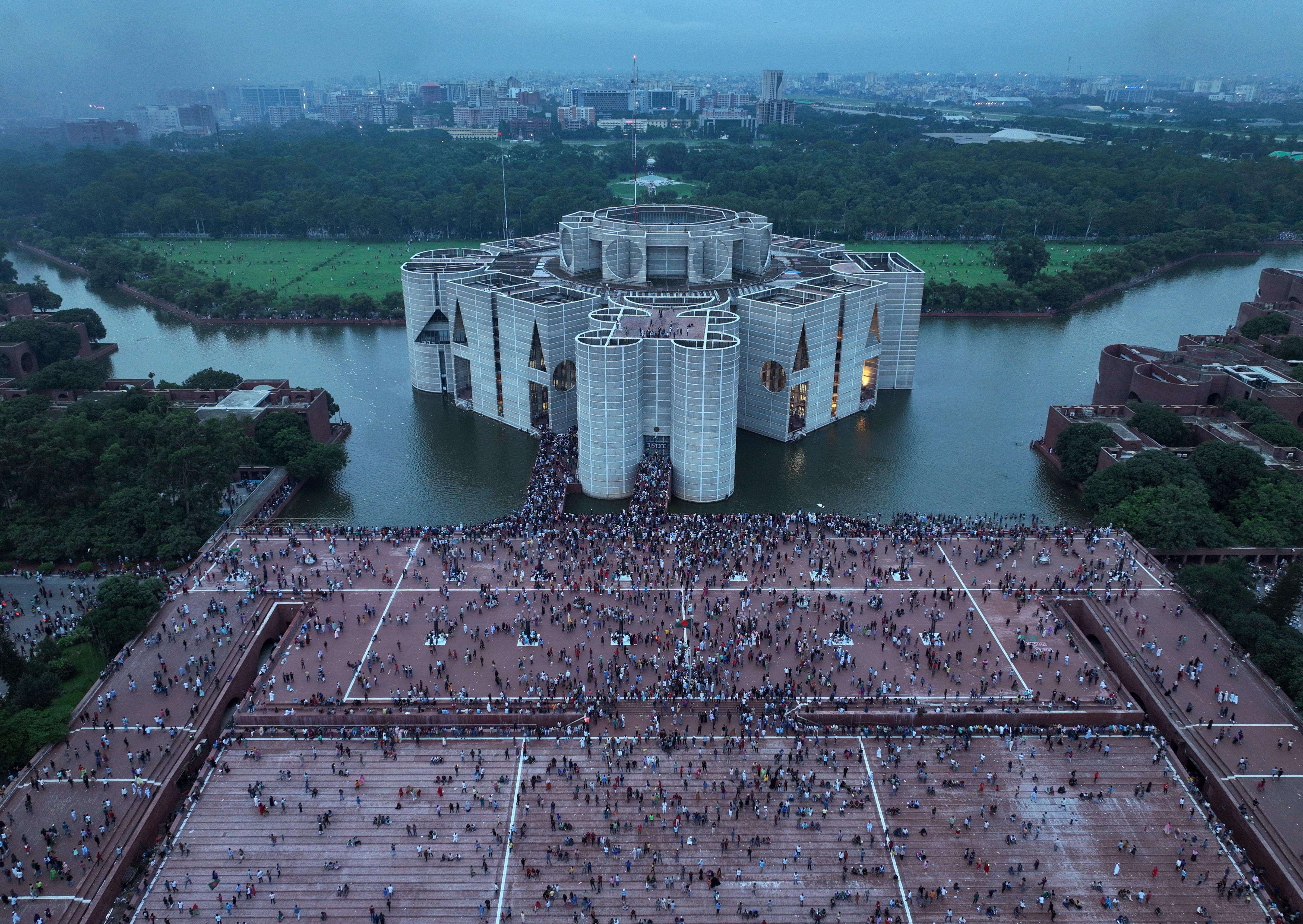
The Parliament of Bangladesh is called ‘Jatiya Sansad’ or House of the Nation. Its new building was completed on 15 February 1982.
Who is the head of government in Bangladesh?
Like India, in Bangladesh also the Prime Minister is the head of the government. The President is the head of the country, elected by the national parliament. In Bangladesh the President is only a ceremonial post and has no real control over the government.
Till 1991, the President was directly elected by the people here too, but later constitutional changes were made. Through this, the President started being elected by the Parliament. Sheikh Hasina was the Prime Minister of Bangladesh for 20 years.
Source link
[ad_3]

