
6 minutes agoAuthor: Nikita Agarwal
- copy link
“I had given Lahore to India, but then I realised that Pakistan did not have any big city. I had already given Calcutta to India. So I had to give Lahore to Pakistan.”
Cyril Radcliffe, who drew the line of partition between India and Pakistan, said this during an interview. India’s last Viceroy Lord Mountbatten first showed the partition plan to Jawaharlal Nehru in June 1947, about two and a half months before independence.
Nehru had brought the papers related to the plan to his room. He carefully read every word of every page of the document which contained the future of the country. His restlessness was increasing with every sentence. The India of his imagination was appearing in front of him in many pieces.
It was written in the plan that India’s 565 princely states could remain independent if they wanted. There would be no restriction on them joining India or Pakistan. Nehru went straight to his trusted colleague Krishna Menon. He threw the plan on Menon’s bed and shouted – everything is over. After this a new draft was made, which outlined the partition of India.
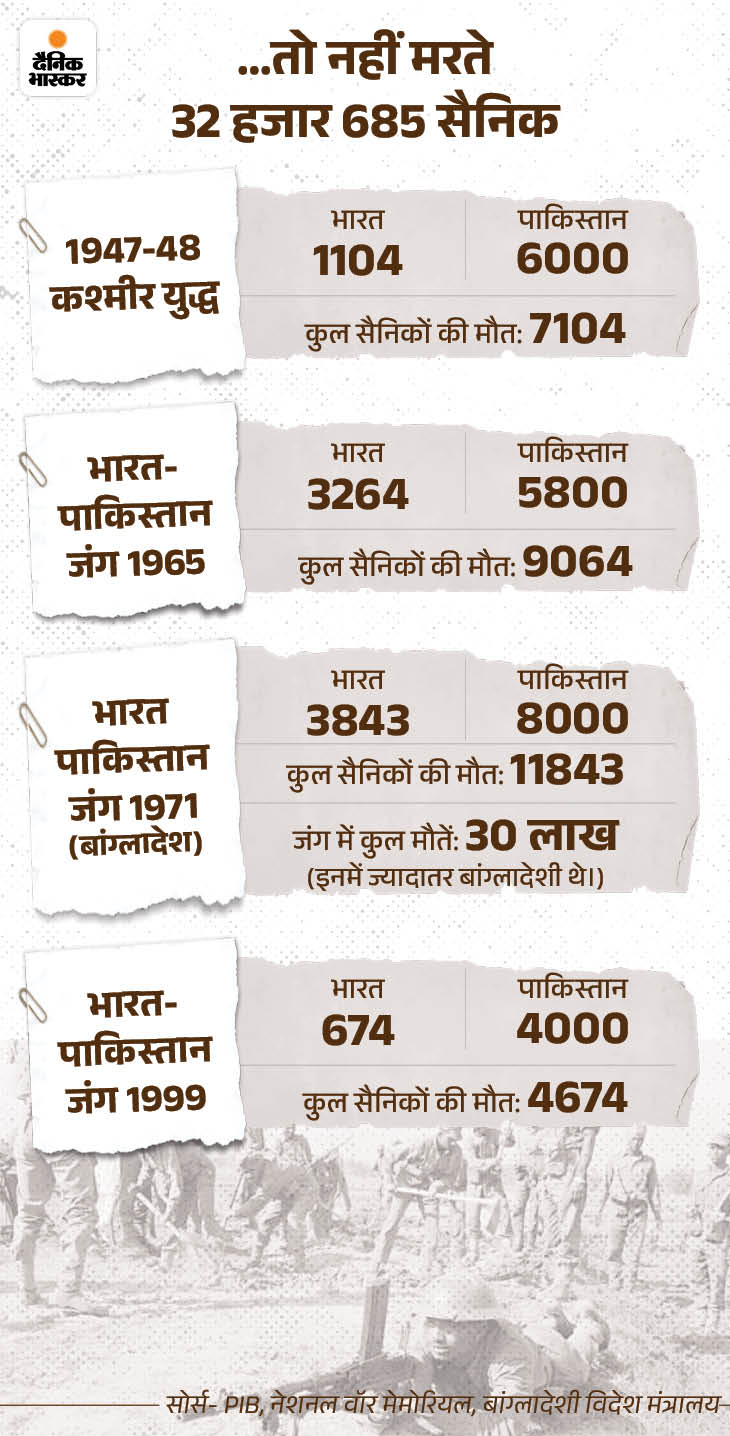
India and Pakistan were formed in 1947 after the partition of the country and Bangladesh was formed 24 years later in 1971 after separating from Pakistan. This partition was similar to the partition that happens between two brothers. Lands were divided and along with it household goods were also divided. This included everything from money to gold carriages and animals.
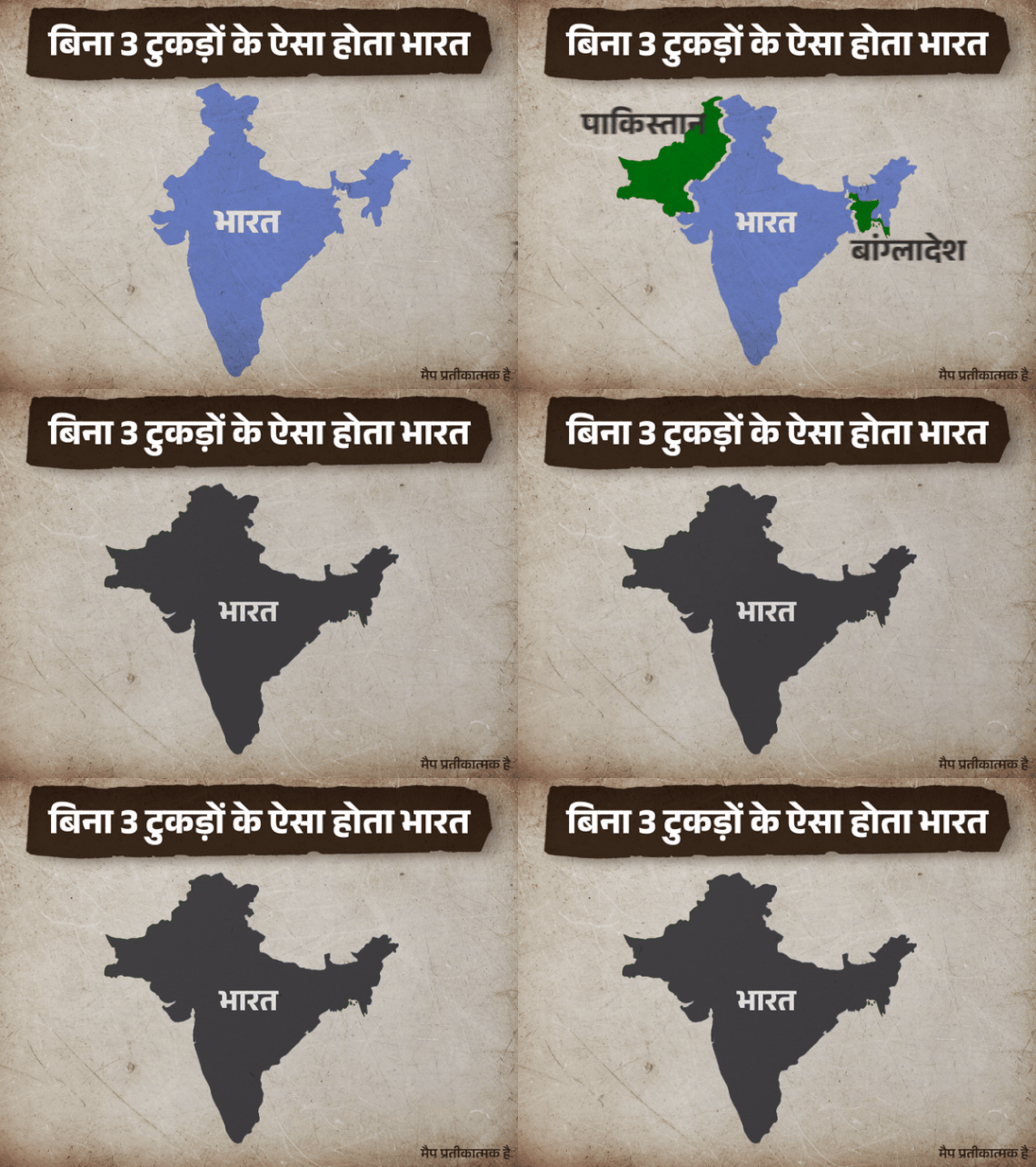
But if this partition had not happened, what would India be like today? 10 lakh people would not have died in the partition. Pakistan and Bangladesh would have been a part of India. In this story, we will know what undivided India would have looked like…
First of all see what the map of undivided India would have been like…
India has the largest Muslim population in the world
Had there been no partition between India and Pakistan, there would not have been such a big dispute between the two countries over Kashmir. In fact, Pakistan has always claimed that Kashmir, which has a Muslim majority population, is its part. When Jammu and Kashmir joined India, it was given the status of a special state in the form of Article 370.
This dispute between India and Pakistan has reached the doorstep of the United Nations Security Council. Pakistan repeatedly raises the issue of Kashmir in the UN. On the other hand, India advises all other countries to stay away from our internal matters. The Indian government also abolished Article 370 on 5 August 2019, which was strongly opposed by Pakistan.
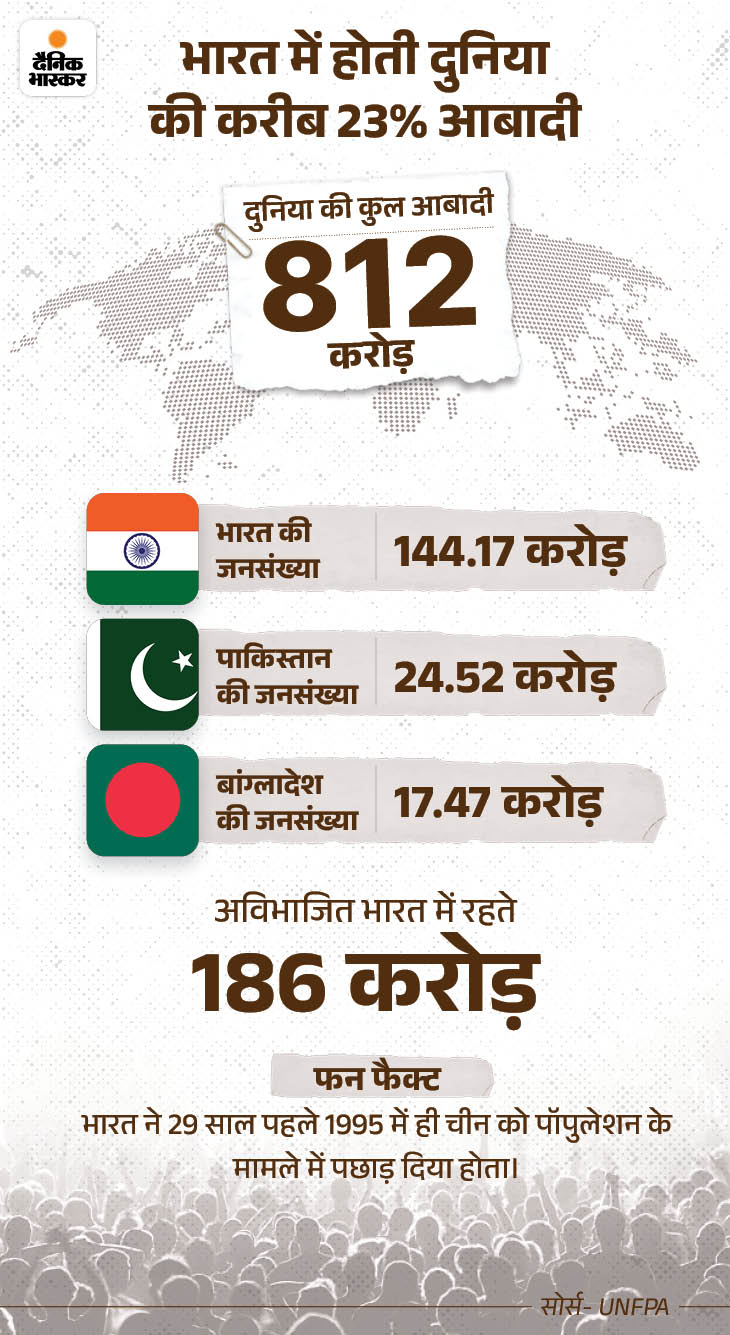
If the partition had not happened, Pakistan would not have become a stronghold of terrorists. After this, terrorist attacks like the 2001 Parliament attack and the 26/11 Mumbai attack would not have happened in India. India would have become the country with the largest Muslim population in the world. In fact, at present Indonesia is the country with the largest Muslim population with 24.25 crore people.
There are 24 crore Muslims in Pakistan, 20 crore Muslims in India and 15 crore Muslims in Bangladesh. If the partition had not happened, India would have had a Muslim population of 59 crores. With this, India would have left Indonesia behind.
India would have been the 15th largest country in the world with a sea area
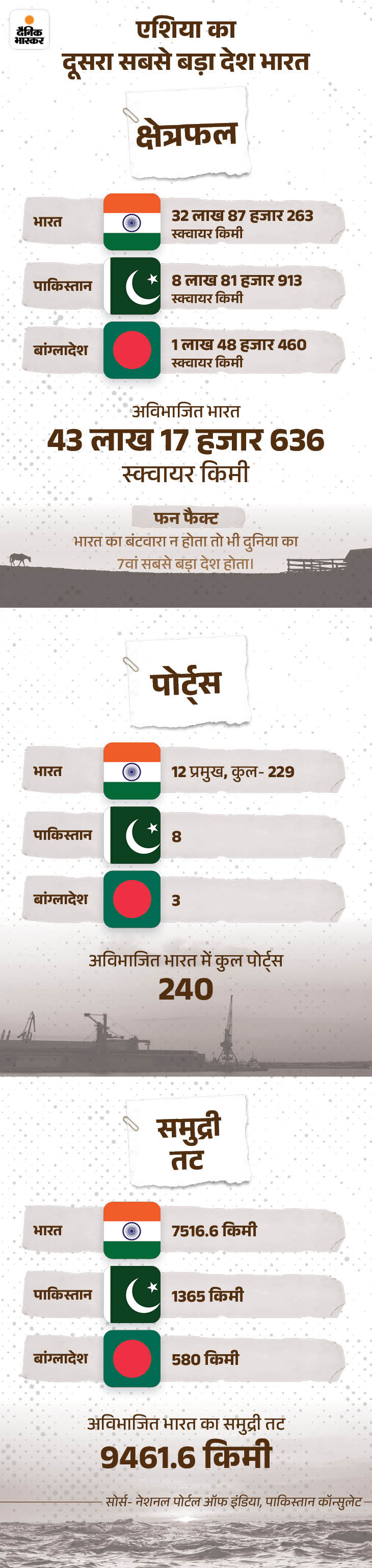
In India, from Gujarat to West Bengal, our border touches the sea. In such a situation, apart from the coastal border, the country also has a maritime border. This is about 370 km from the coast, which is called Exclusive Economic Zone i.e. EEZ. The country has the right over the water of this area and all the minerals found in it.
India has a maritime border in the Arabian Sea and the Bay of Bengal. India’s EEZ is 23.05 lakh square km. Pakistan has an EEZ area of 2.90 lakh square km in the Arabian Sea and Bangladesh has an EEZ area of 1.19 lakh square km in the Bay of Bengal.
If Pakistan and Bangladesh were in India, we would have the 15th largest EEZ in the world. Its area would be 27.13 square km. There are reserves of natural gas in the maritime border of Bangladesh. Apart from this, many heavy minerals like zircon, rutile, magnetite, monazite are also found here.
They are used in places like iron-steel industry, textile, plastic, aircraft manufacturing, engines, spacecraft etc. Along with this, the area within the maritime boundary also plays an important role in fulfilling the livelihood of fishermen. Fisheries account for 4% of Bangladesh’s GDP. It is the second largest industry in terms of export.
Many important minerals like zircon and rutile are also found in Pakistan’s EEZ. Apart from this, all the conditions necessary for the presence of oil and gas are also fulfilled in Pakistan’s sea area. However, due to technical difficulties, oil or gas reserves could not be discovered here. If India had not been divided, India would have had all the resources of Pakistan and Bangladesh’s EEZ.
Karachi contributes 25% to Pakistan’s economy
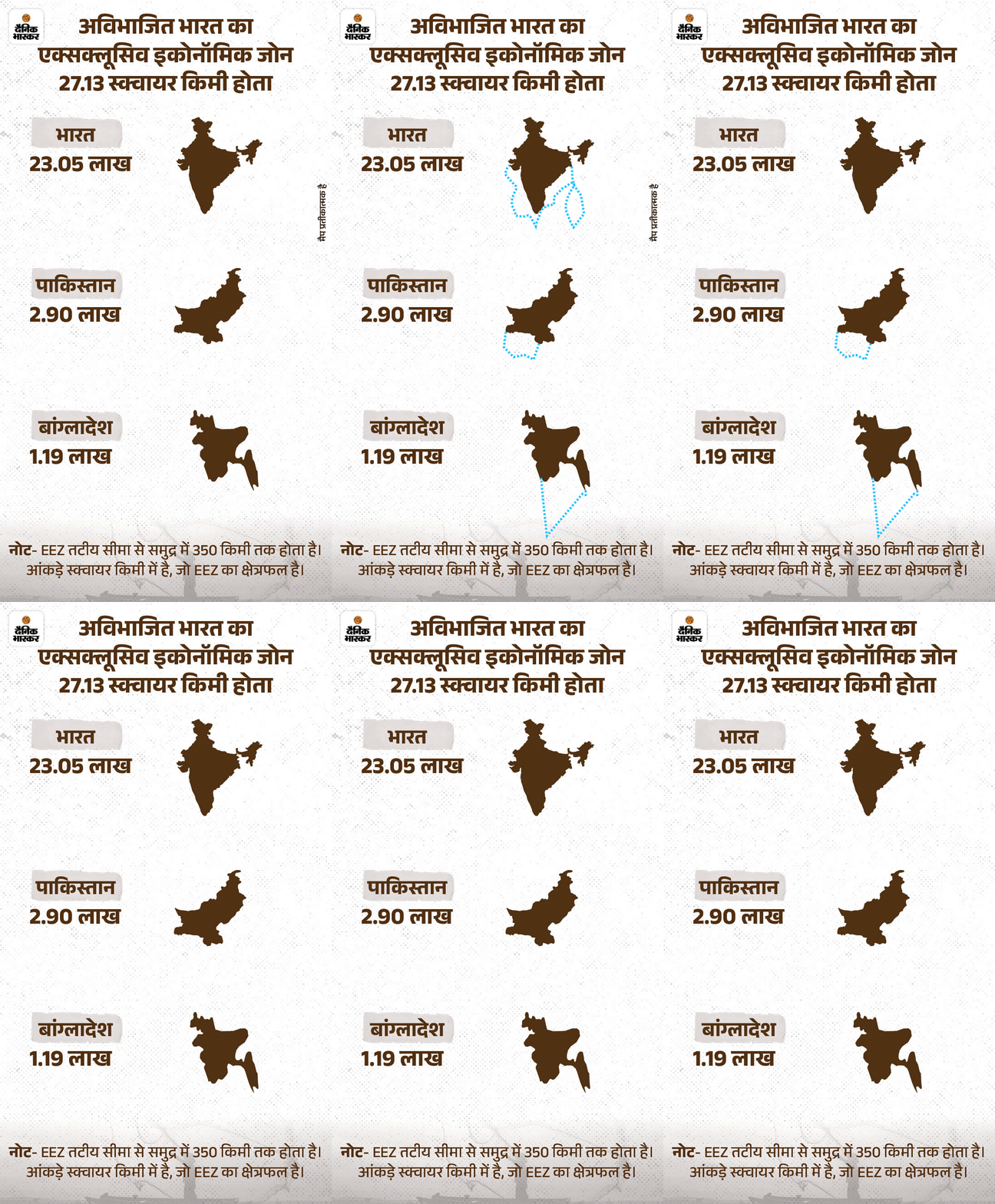
India is the fourth largest country in the world in terms of manufacturing output. According to data from Macrotrends, India’s manufacturing output value was $456.06 billion in the year 2022. At the same time, the manufacturing output value of Bangladesh was recorded at $100 billion and Pakistan at $51.62 billion.
In such a situation, the manufacturing output value of undivided India would have been around $607 billion. Talking about industries, Karachi, the economic capital of Pakistan, is the industrial center of the country. In 2021, Karachi’s GDP in terms of purchasing power (PPP) was $190 billion, which was about 25% of the country’s GDP.
Pakistan gets 35% of its tax revenue from Karachi. Karachi has Pakistan’s two biggest ports (Karachi Port, Port Qasim). 95% of the country’s trade takes place through these ports. Pakistan’s second largest city Lahore contributes 51% to the country’s economy. Lahore’s GDP is expected to reach $102 billion by 2025 with a growth of 5.6%.
Lahore has 9 thousand industrial units. In the last few decades, it has shifted from manufacturing to the service sector. 42% of Lahore’s workforce works in sectors like finance, banking and real estate. It is Pakistan’s largest software and hardware production city.
Reko Diq mine in Balochistan province of Pakistan is the 5th largest gold and copper reserve in the world. There are 5.9 billion tonnes of minerals here. It has a reserve of 0.41% metal i.e. about 11.76 lakh kg of gold and copper. This mine can be excavated for 40 years.
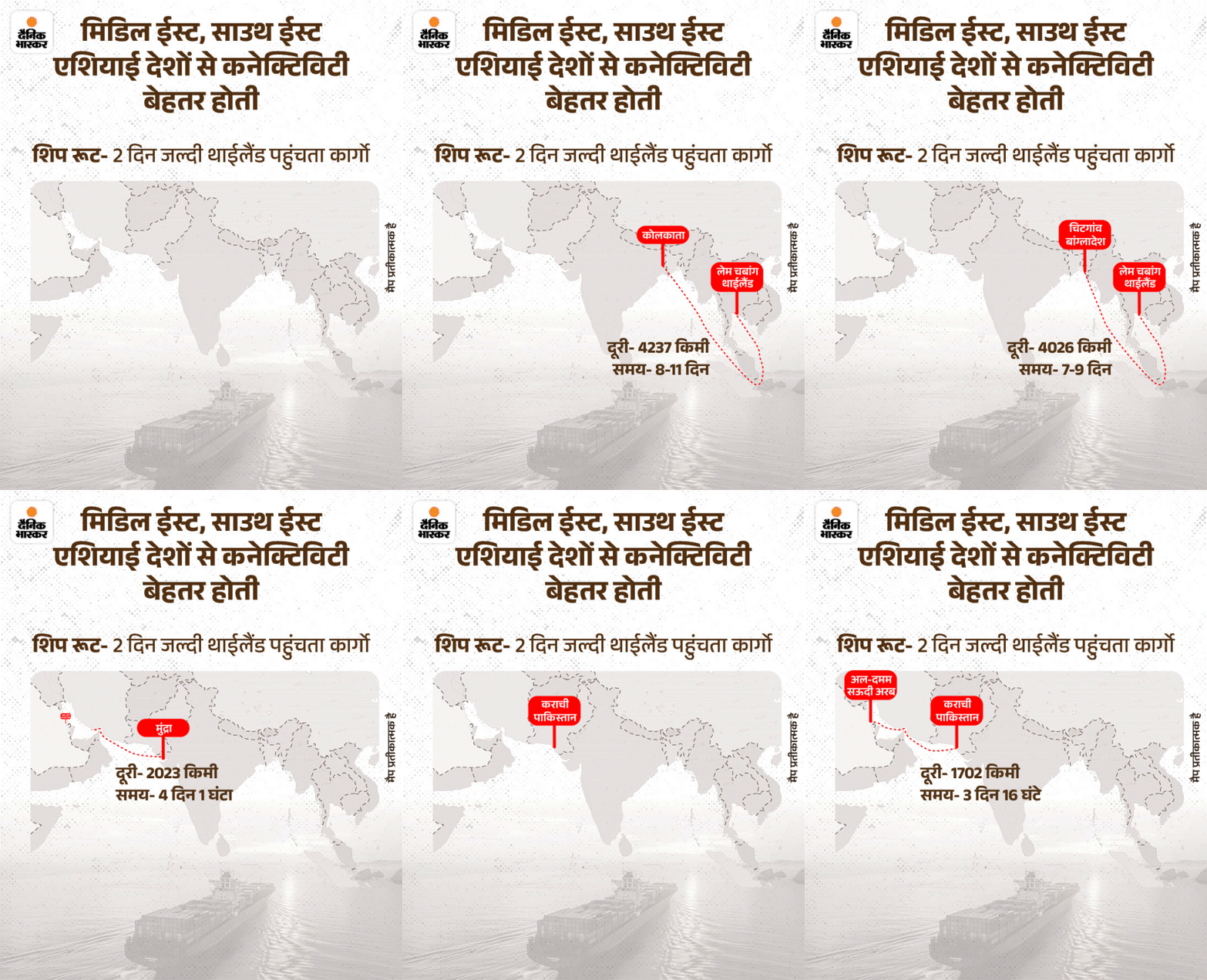
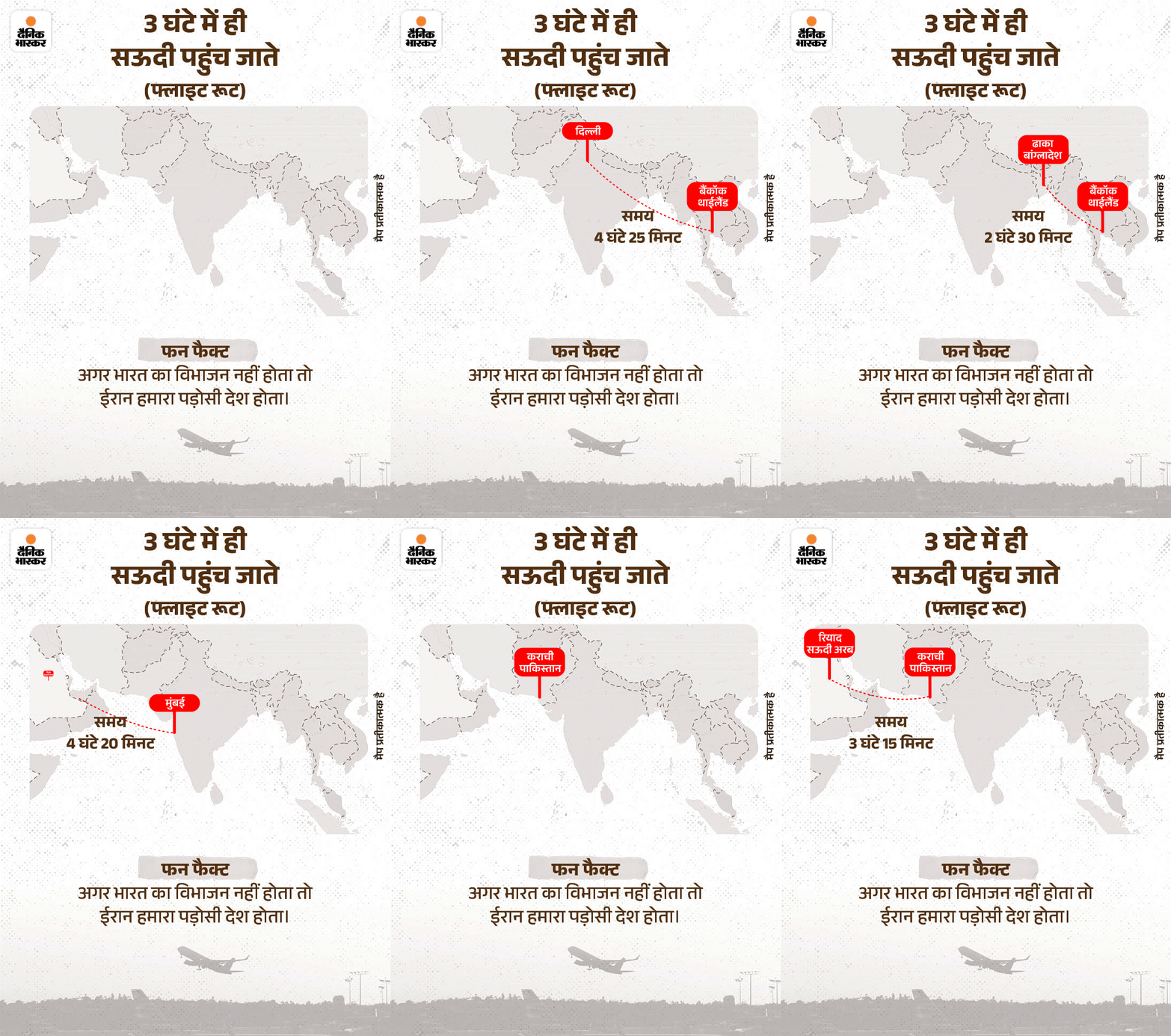
India would have the second largest textile industry in the world
After China, Bangladesh is the world’s second largest textile exporter. Bangladesh’s monthly apparel and textile export is Rs 30 thousand crore. At the same time, India is at number four with Rs 12 thousand 500 crore.
The textile industry has a major contribution to the economic development of Bangladesh. It exports textiles worth $35 billion every year. 84% of the total export earnings come from Bangladesh’s textile products. This sector contributes 13% to the country’s total GDP. The textile sector has provided employment to about 40 lakh people in Bangladesh.
Graphics- Anklesh Vishwakarma
Source link
[ad_3]

