
Relations between Pakistan and Saudi Arabia are decades old. Both the countries have been close to each other at religious, economic and military levels. The first security cooperation agreement was signed between the two in 1967. After the attack on the Grand Mosque of Mecca in 1979, Pakistani special forces helped Saudi Arabia. Thousands of Pakistani soldiers were deployed in Saudi under the 1982 protocol agreement.
At times in the 1980s and 1990s, 13,000 to 15,000 troops were present there. Even during the Gulf War PakistanThe army took part in the defense of Saudi borders and holy sites. Training, joint exercises and advisory roles continued. While Saudi supported Pakistan’s economy with financial help, Pakistan provided military expertise. This relationship later transformed into formal defense agreements.
Also read: Saudi Arabia lacks interceptor missiles, Crown Prince is hiding in bunkered palaces
of 2015 yemen Crisis and Pakistan’s categorical denial
In March 2015, Saudi Arabia led hooti Military operation against the rebels began. Saudi demanded Pakistan to send ships, aircraft and ground troops. The Government of Pakistan initially gave positive signals but there was a long debate in the Parliament from 6 to 10 April 2015.
On April 10, 2015, a unanimous resolution was passed in the joint session that Pakistan will remain neutral in the Yemen conflict so that it can play a diplomatic role. It was also said that if Saudi territorial integrity or holy places like Mecca-Medina are threatened, Pakistan will stand shoulder to shoulder.
This decision proved to dash Saudi’s hopes. Pakistan did not provide practical military assistance while continuing to provide rhetorical support. This was the first major example when the gap between promise and implementation was clearly visible.
New defense agreements and big promises for 2025-2026
Prime Minister Shahbaz Sharif and Saudi Crown Prince Mohammed bin Salman signed Strategic Mutual Agreement in Riyadh on 17 September 2025 defense Signed the agreement. It said that an attack on one would be considered an attack on both. On 7 August 2026, the Mecca Joint Defense Agreement was signed between Pakistan, Saudi Arabia and Türkiye in Mecca. There is a rule of collective defense in this.
Also read: 7 feet wingspan, bear-like claws… this dangerous eagle can even catch monkeys and sloths.
on 5th October 2026 Riyadh An emergency meeting was held in which the three countries decided for immediate deployment of military forces and capabilities. Defense Minister Khawaja Asif said that Pakistan will use every means available to protect Saudi Arabia. ISPR chief Lieutenant General Ahmed Sharif Chaudhary said around 18 September 2026 that Pakistan will go to any extent for the security of Saudi and this commitment is unconditional.
Shahbaz Sharif spoke to the Crown Prince after the Houthi attacks in July 2026 and expressed full solidarity. Even in September and October 2026, there were repeated statements that Pakistan was standing shoulder to shoulder.
Increasing series of Houthi attacks and Pakistan
Houthi attacks intensified in 2026. In July 2026, Saudi oil tankers were attacked in the Red Sea. Dozens were injured in attacks on civilians and energy facilities in September 2026. In October 2026, attacks at Riyadh airport and elsewhere resulted in deaths and hundreds of injuries.
Pakistan’s Foreign Ministry, Prime Minister and military spokesperson condemned these attacks. On 9 and 11 October 2026, Shahbaz Sharif made statements that Pakistan is firm on Saudi sovereignty, territorial integrity and security. Pakistan also reiterated Saudi’s support in the United Nations Security Council. But every time the emphasis was on the fact that the help would be defensive.
Military deployment figures and actual role
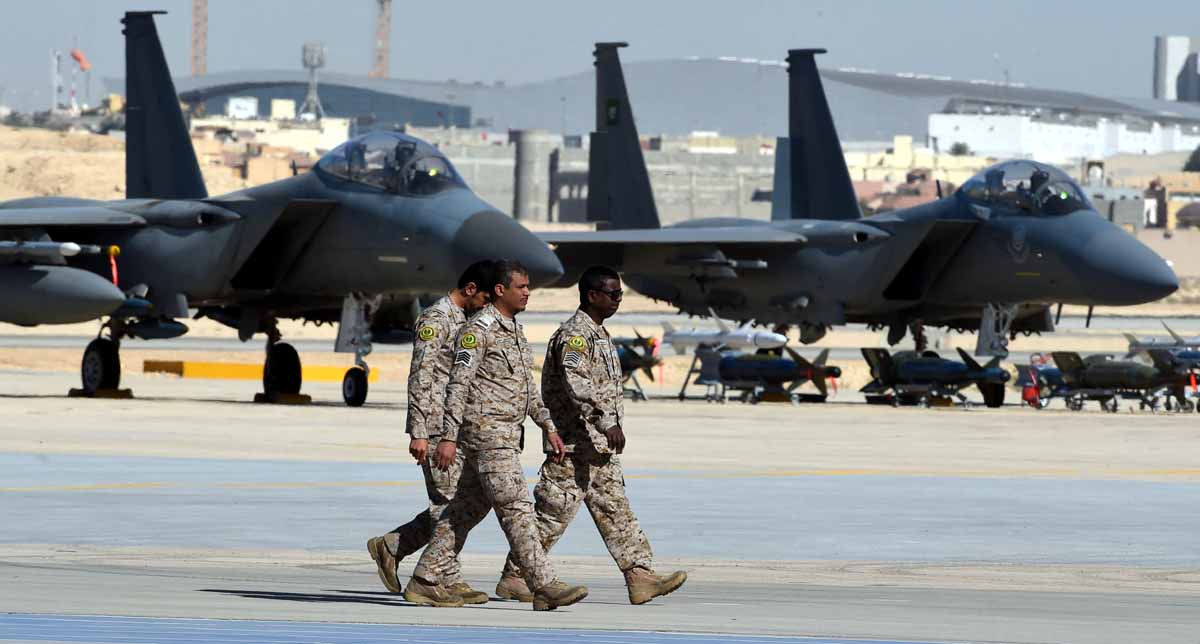
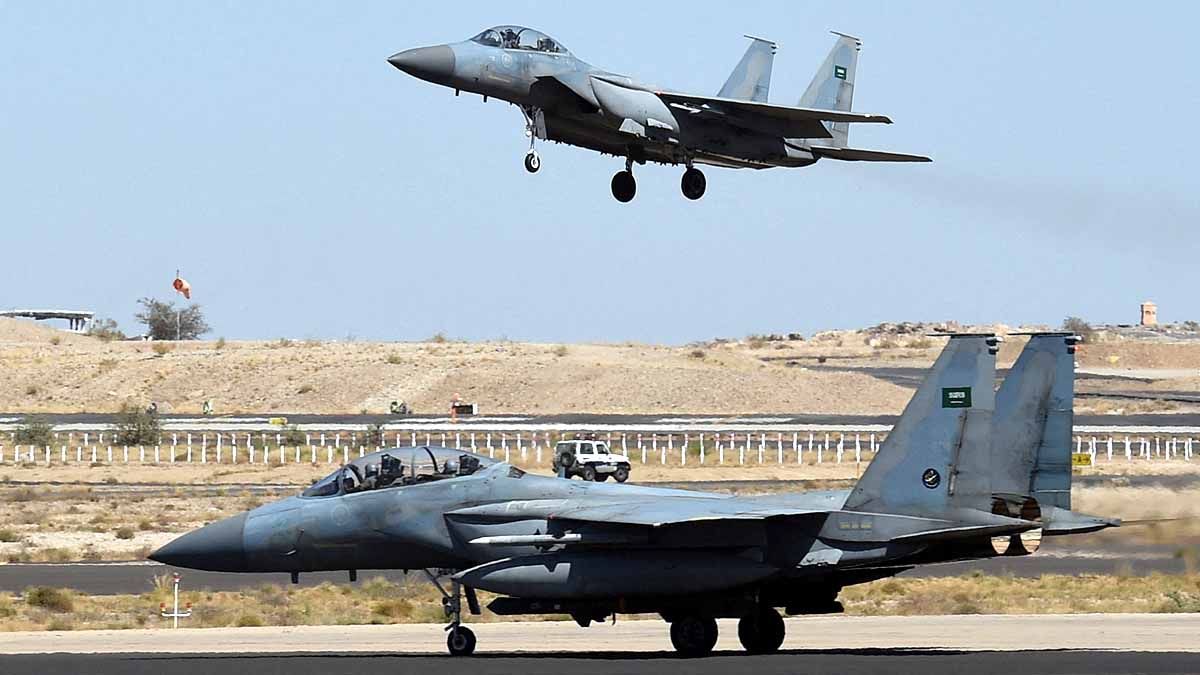
Pakistani soldiers have been present in Saudi for decades. According to reports in 2026, about 8,000 troops, a squadron of JF-17 fighter aircraft (about 16), a drone squadron and Chinese HQ-9 air defense systems were sent. In some reports this number was said to be 15,000 or more. Saudi bears these expenses.
Also read: Last month, 50 thousand Russian people were killed in fighting with Ukraine, NATO revealed.
Lieutenant General Chaudhary told CNN in October 2026 that Pakistani forces are already present in many capacities. Defense Minister Asif said that the role of Pakistan and Türkiye is supporting – like intelligence and surveillance, while the war is mainly being fought by Saudi forces.
Pakistan clearly said that troops will not enter Yemen. They will only protect Saudi territory. The use of Pakistani jets was mentioned in reports like New York Times but Pakistan rejected it.
allegations of incomplete assistance
In 2015, Parliament chose the path of neutrality. In 2025-2026, big agreements were made and rhetoric intensified but in the practical fight, Pakistan kept drawing its limits. Houthi attacks continue, pressure on Saudi is increasing, yet Pakistan’s role seems limited to advisory, training and internal defense.
Words like ‘shoulder to shoulder’ and ‘to any extent’ came repeatedly from Shahbaz Sharif and Asim Munir, but their abstinence from active fighting or aggressive role in Yemen is clear. Economic dependence, security concerns on the Indian border and the compulsion to maintain regional balance prevent Pakistan from progressing.
Also read: IAF kept 712 out of 2850 Agniveers of the first batch in regular service.
The Saudis had hoped that old relations and new agreements would provide solid military support, but so far the help appears incomplete. The rhetoric is strong but full commitment is not visible on the field. This situation raises questions of trust in the relationship between the two countries.
Pakistan-Saudi relations remain strong but the gap between promise and implementation in security cooperation has repeatedly emerged. The 2015 neutrality decision and defensive boundaries in 2026 show that Pakistan is avoiding jumping into a major conflict altogether. If the Houthi threat is increasing, Saudi needs more concrete cooperation.
Pakistan will have to strike a balance between its economic interests, military capabilities and regional politics. If only the verbal bombardment continues, the old friend’s claim to preserve his honor will continue to weaken. Both the countries need to increase practical cooperation so that promises do not remain just on paper.
—- End —-
Source link
[ad_3]

