
Is the human brain just a biological processor or the physical form of the ancient Vedas?
In modern neurology, the brain is understood in terms of electrical signals and chemicals. But a new scientific thinking says that our body and nervous system are the image of the creation of the Vedas. This is not a poem, but a blueprint of natural laws. Modern physics tells us that everything in the universe is made of vibrations and frequencies. Particles are just waves of energy. Vedas are also sound-based maps which explain these natural laws.
What does Dr. Tony Nadar say?
Dr. Tony Nadar, Harvard University And he is a neuroscientist who has taken training from MIT. They aajtak.com Told that there is a deep connection between the human nervous system and the Vedas. His PhD is from MIT. They understand the depth of life in a scientific manner.
Also read: If the sun shines so brightly then why is the night sky so dark?
Dr. Nadar says that the ancient sages used the nervous system as a sensitive receiver. They tuned into natural vibrations. In science this is called transducer effect – like a microphone converts sound into electricity. The nervous system is also the physical form of the same rules. Vedas are knowledge recorded in voice, whereas the mind is the living format of the same knowledge.
How does the mind mirror the Vedas?
Both are made from the same basic rules. The nervous system is the medium to understand the universe, hence its structure matches the Vedas. This is called isomorphism – two different things have the same form because they follow the same rules. Vedas are music and mind is instrument. Dr. Nadar’s research shows that the system of the brain matches the category of Vedic knowledge.
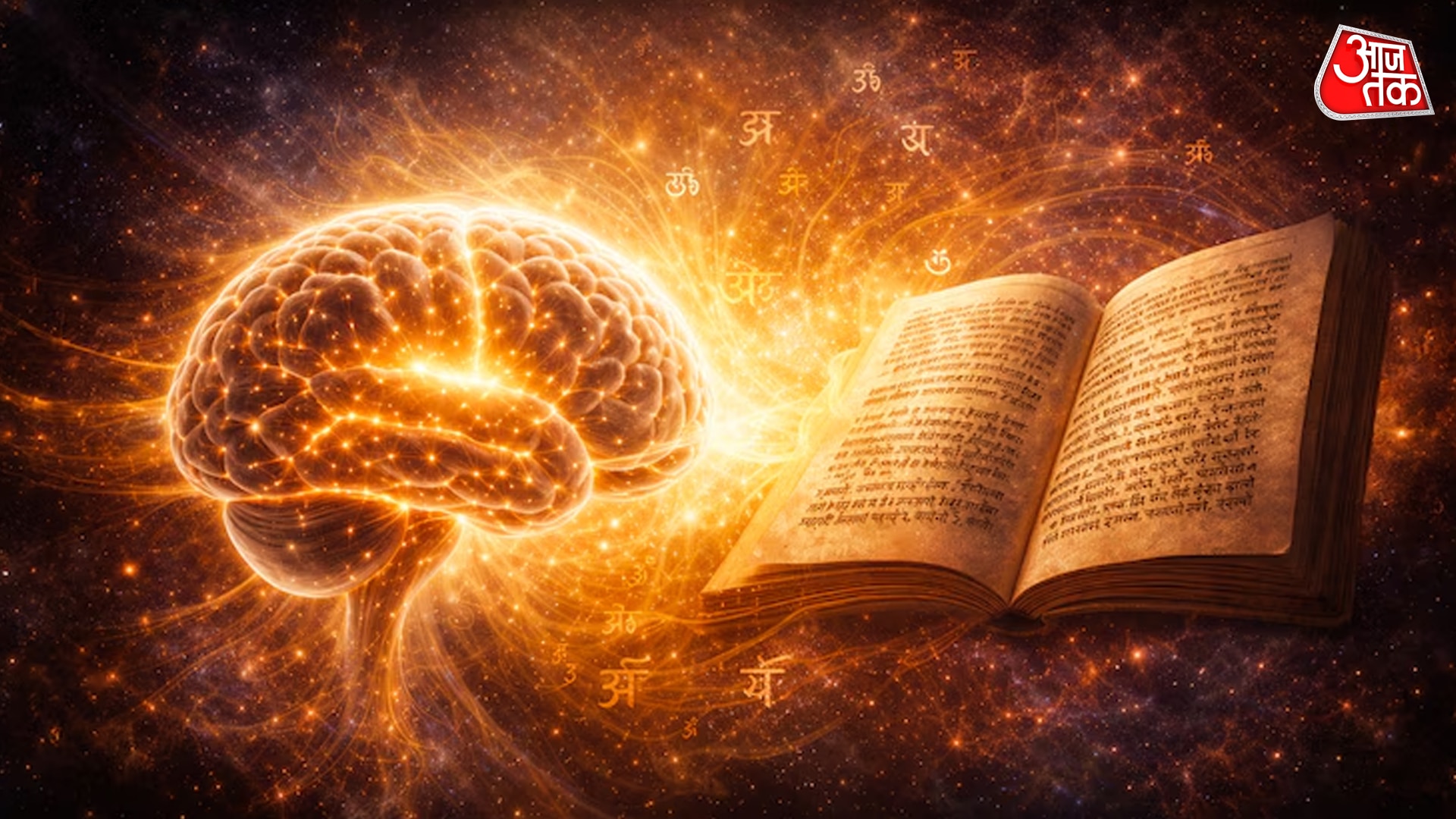
40 systems of human body and Vedic knowledge
There are 40 aspects of knowledge in Vedic literature which are related to 40 functional systems of the human body. Example: The idea of yoga comes from the joining of fibers in the brain. Patanjali’s Yoga Sutras are divided into four chapters, just as the human brain is divided into four lobes (frontal, parietal, temporal, occipital). These lobes combine different sensory inputs to create an integrated experience. This is the biological definition of yoga.
Also read: Why does the color of the sky keep changing?
How does Vedic knowledge explain our internal clock?
Modern science tells about circadian rhythm. Vedic routine manages these chakras. Our body is connected to nature. Molecular clocks in cells are triggered by light and temperature. Ancient routines kept us in sync with nature, keeping hormones and metabolism in order.
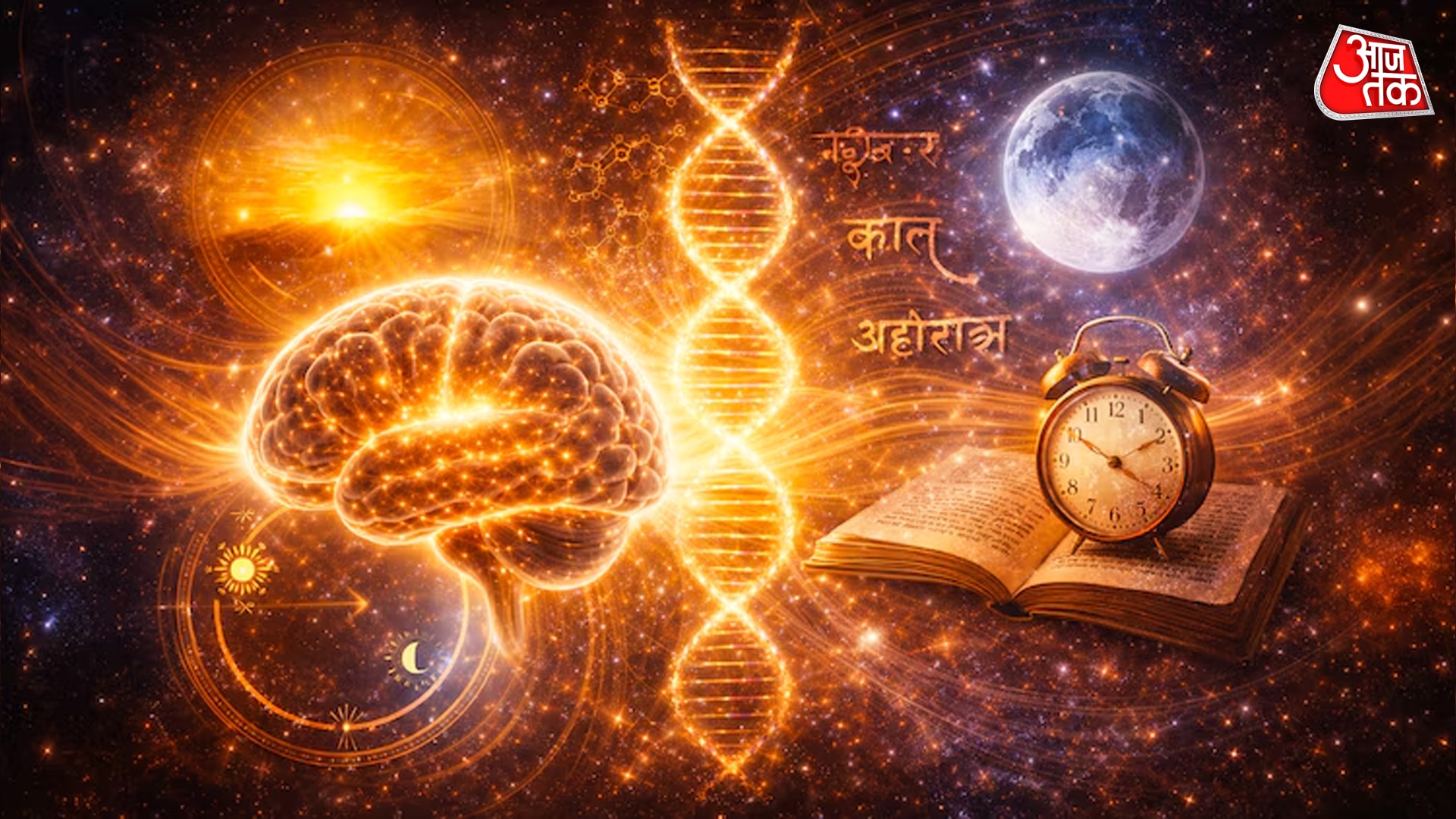
Gut-brain axis mentioned in Vedas?
Modern medicine focuses on the gut-brain axis. Vedic texts explain this link related to digestion. Good digestion creates Ojas, which gives mental clarity. Today we know that there are millions of neurons in the gut. 95% of serotonin is made here. Ancient texts said thousands of years ago that what we eat affects the brain. A healthy gut is essential for a healthy mind.
Vedic name of neurotransmitter?
There are no names like dopamine or serotonin, but there are functional counterparts like soma. Dr. Nadar says that the chemistry of the brain is an orchestra, not a solo. Health comes from the balance of the entire system. Modern medicine is now moving towards an integrated approach, which is based on the holistic thinking of the Vedas.
This discovery of Dr. Nadar shows that the Vedas are not just spiritual but also a scientific blueprint of the structure of the body. It connects old and new science. Tells that consciousness and body are one and the same.
—- End —-
Source link
[ad_3]

