
- Hindi News
- National
- AI Models Used To Detect Monsoon Details Instead Of Supercomputers Indian Government
New Delhi29 minutes ago
- copy link
The picture is AI generated.
For the first time this year, the Indian government used Artificial Intelligence (AI) based weather models instead of traditional supercomputer models. Through these models, information related to monsoon was given to 38 lakh farmers.
AI models not only predicted the exact time of arrival of monsoon rains 30 days in advance, but also warned of rain stopping for 20 days in between, which traditional models could not catch. Farmers said that based on these forecasts they took decisions regarding sowing and crop selection.
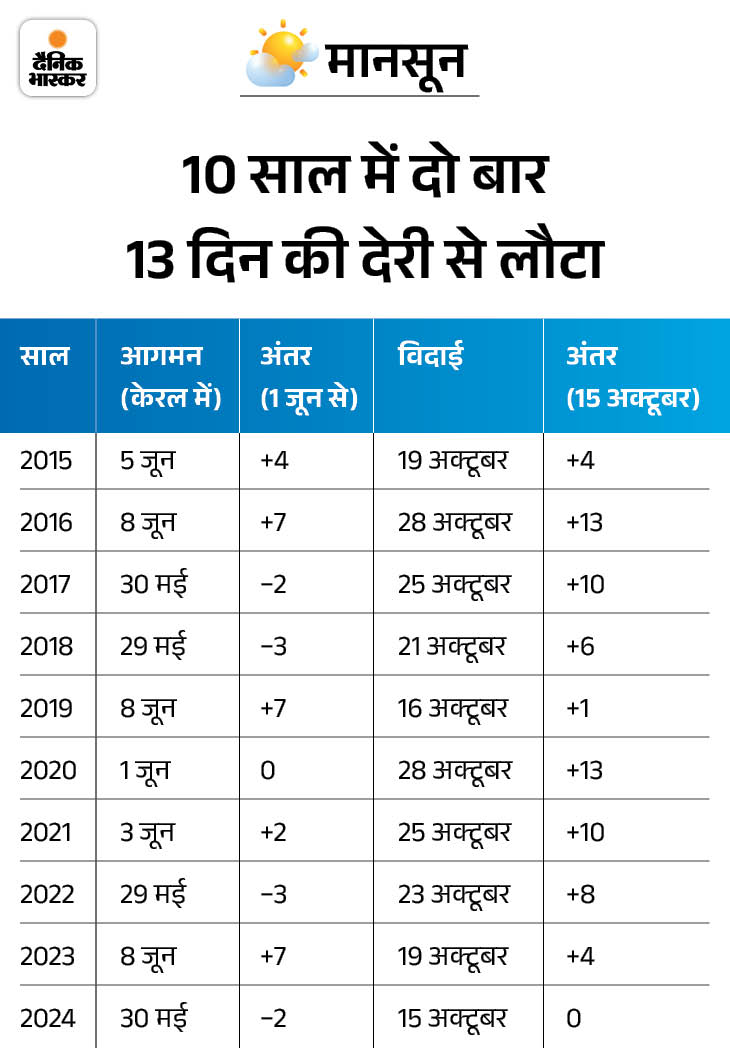
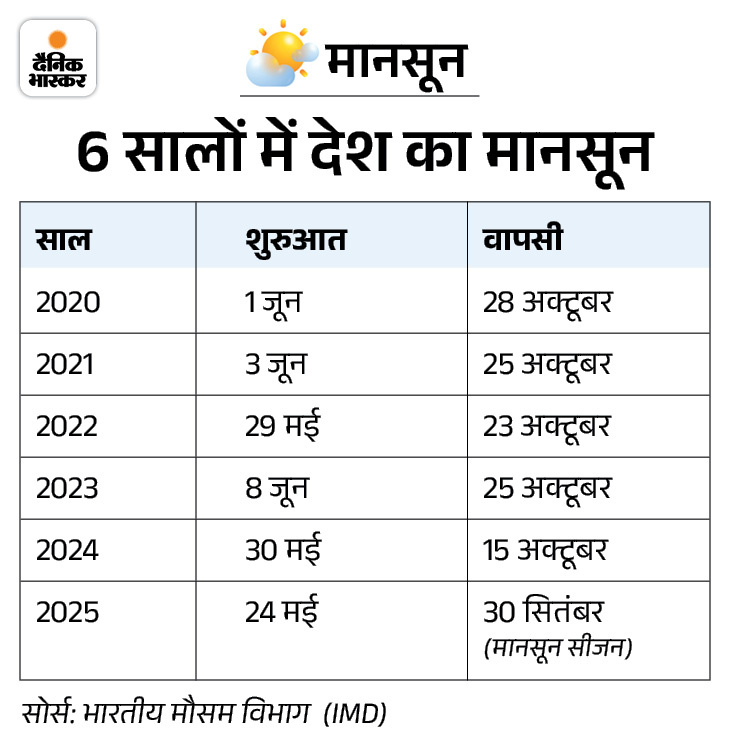
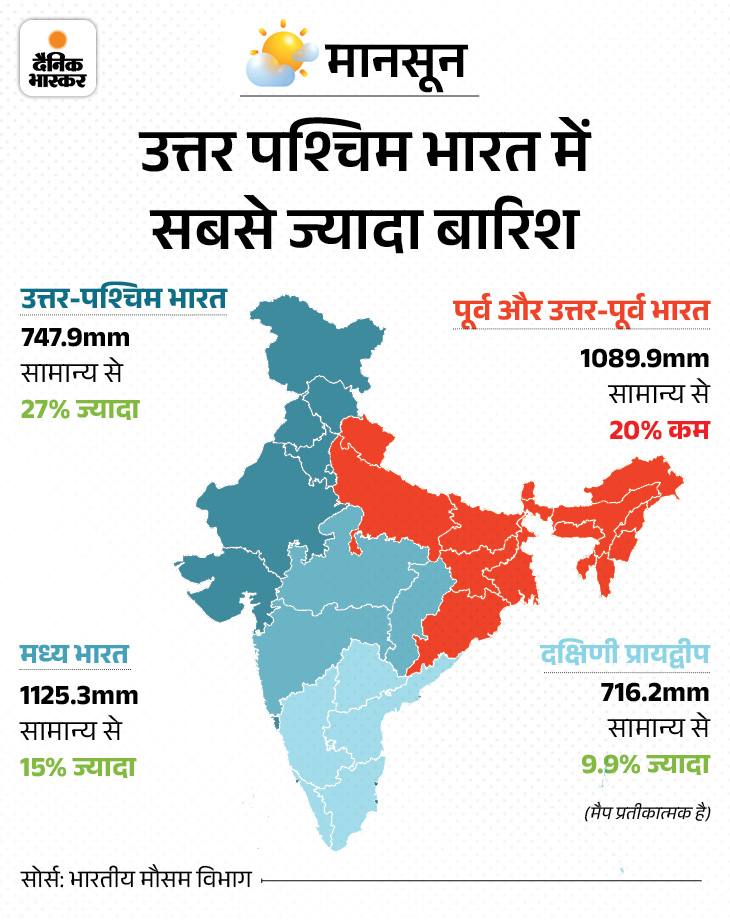
Monsoon arrives in the country via Kerala on 2nd June, but this time it had arrived 8 days earlier on 24th May. Monsoon withdrew on 11 October. This monsoon season (June-September) 937.2 mm rainfall was recorded, which was 8% more than the normal rainfall of 870 mm.
ECMWF, NeuralGCM, these two models were used
AI models make predictions by recognizing patterns in past weather data. This enables them to make accurate predictions with less resources and time. This time, two major models – ECMWF and Google’s NeuralGCM – were jointly used in India.
Better results were achieved by balancing traditional natural weather processing and AI. The project was led by the Human-Centered Weather Forecasts Initiative (HCIF). It received funding from the Gates Foundation and the United Arab Emirates (UAE).
HCIF is also implementing it in countries like Africa, Bangladesh, Chile, Ethiopia and Kenya. Its specialty is that it does not require a supercomputer. These can also run on ordinary laptops. With this, even poor countries can get accurate and timely weather information.
Provides accurate data of storm and rain for a week in just two seconds
- How are AI models different from traditional models? Traditional models mathematically estimate data such as temperature, pressure and wind speed. This requires a supercomputer. At the same time, AI models recognize patterns in old weather data and guess what happened in similar conditions in the past. This allows them to make accurate estimates with less resources and time.
- How were AI based weather models developed? In 2022, American company Nvidia launched an AI weather model called FourCastNet. It was trained on decades of weather data and could accurately predict storms and rainfall up to a week in advance, in just two seconds.
- Can AI models be completely trusted? No, there are some limitations. These models are not based on the laws of physics, so can sometimes give unrealistic results. They are weak in predicting rare or extreme weather events because they lack such data.
- How did India make such accurate estimates this year? India achieved good results by combining both ECMWF and Google’s NeuralGCM with traditional software.
- How are these useful for countries with less resources? Its specialty is that once trained, they can be run even on high-end laptops.
- What was HCFI’s role in the project? HCFI coordinates the project. This inspires governments to adopt AI-based weather models.
- What is data assimilation, what progress has been made in it? Earlier only agencies of rich countries could do this work. Now ECMWF has announced to provide the latest data for free.
………………………. Read this news also…
PM Modi launches 3 Param Rudra supercomputers: Said- Our government is promoting science-technology, we will have a space station by 2035
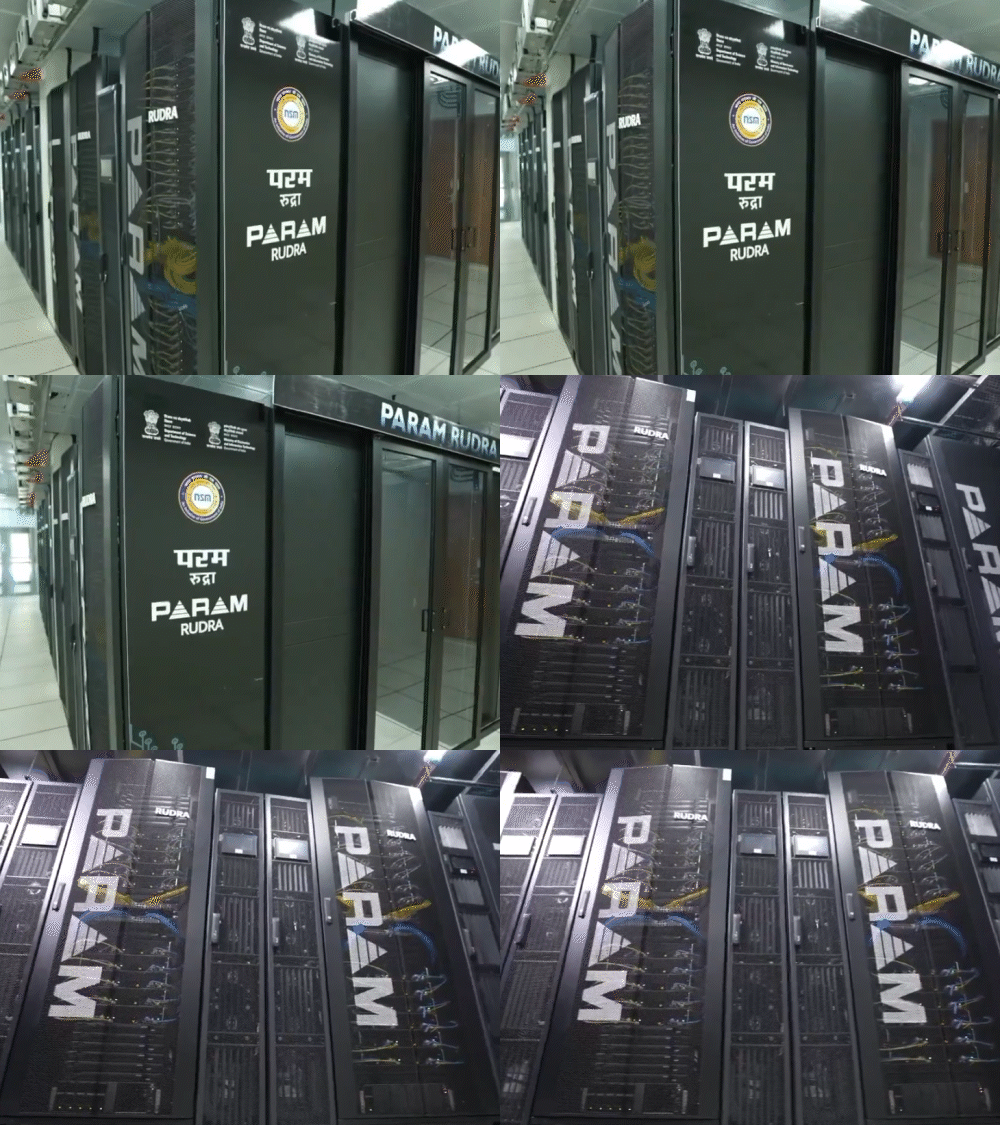
Prime Minister Narendra Modi had launched three Param Rudra supercomputers and a high performance computing system for weather and climate research in 2024. The PM said that a country can aim at big achievements only when it has a big vision. Upgrading technology should be done to empower the poor. Read the full news…
Source link
[ad_3]

