
Dhaka37 minutes ago
- copy link
Amid tensions with Pakistan, the Taliban government of Afghanistan has asked traders and industrialists to find other avenues of business. Afghanistan’s Deputy Prime Minister Mullah Abdul Ghani Baradar said that trade has come to a standstill due to the closure of the border with Pakistan.
He told that due to this, there is a loss of about 200 million US dollars (about Rs 1,700 crore) every month. Baradar termed the border closure as ‘economic war’. He also criticized the poor quality of medicines coming from Pakistan.
Also, 3 months time has been given to complete the transaction. At the same time, Trade Minister Nooruddin Azizi appealed to businessmen to turn towards Central Asian countries.
Azizi said, “Pakistan has often created obstacles, especially during the fruit export season. These obstacles are without any fundamental or logical basis, and they are detrimental to both countries.” Five major crossings between the two countries, including Torkham and Spin Boldak, have been closed for more than a month.

Products like fruits, vegetables, meat, dairy are sent to each other.
Deputy Prime Minister said – Afghanistan would have been targeted
Deputy Prime Minister Baradar said Afghanistan is often targeted under political pressure. Trade relations and the difficulties of refugees are used to serve political ends.
He stressed that it cannot be denied that all countries are interdependent in terms of trade. Pakistan exports cement, medicines, flour, steel, clothes, fruits and vegetables to Afghanistan, while it imports coal, soapstone, dry fruits and fresh fruits from across the border.
Afghan leader asked for guarantee from Pakistan
Baradar said that if Pakistan intends to reopen trade routes, it will have to give firm guarantees that the borders will not be closed again for any reason or under any circumstances.
This statement has come amid the ongoing tension between the two countries. Which has increased further due to the clashes on the border in recent weeks. Despite three rounds of talks to resolve disputes related to terrorist activities here, the ceasefire is in force.
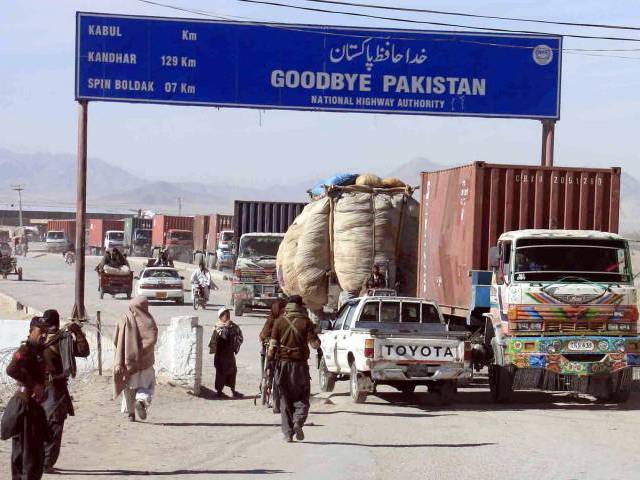
Afghan Deputy Prime Minister has demanded guarantees from Pakistan for reopening of trade routes.
Afghanistan is developing alternative trade routes
The Taliban government of Afghanistan has decided to develop three alternative trade routes to Central Asia to avoid losses due to the closure of the border with Pakistan.
The first and most important route is from Uzbekistan, which runs by rail and road from Afghanistan’s northern city of Hairtan to Termez in Uzbekistan, from there goods can be transported to Russia, Kazakhstan and Europe.
It is an old Soviet-era railway and there are plans to double its capacity by 2026. The second route is from Turkmenistan, where rail runs from Torgundi border to Turkmenistan port, then crosses the Caspian Sea and reaches Azerbaijan and Turkey.
Compared to Pakistan route, these routes are shorter in distance and more expensive.
The alternative trade route will also connect to Iran’s Chabahar port and provide faster delivery of fruits and vegetables. The third route is from Tajikistan, which goes from Shir Khan Bandar via Tajikistan via Kulma Pass (4,300 meters high) to Kashgar in China.
It is useful for mineral export, but is closed by ice in winter and road improvements are underway. Compared to the Pakistan route, these routes are shorter in distance (800–1,000 km) but more expensive in time (10–15 days) and cost (30–40% more), but do not suffer from political pressure and frequent closures.
The Taliban aims to expand 50% of exports through the Uzbekistan route by 2025, complete the Caspian connection to Turkmenistan in 2026 and keep the Kulma Pass open year-round by 2027.
13% decline in trade between Pakistan and Afghanistan
Trade between Pakistan and Afghanistan has been badly hit by border closures, political tensions and security issues. This business is headed for further decline in 2025. Annual volume has declined from $2.5 billion earlier to around $1-1.5 billion.
Total trade was $1.8-2.5 billion in 2022-23, but fell to $1.6 billion in 2024. It stood at $1.1 billion in the first half of 2025, slightly less than $1.117 billion last year. $475 million in July-September 2025 (Q1 of FY 2025-26) (down 6% from $502 million last year). A 13% decline was recorded on an annual basis in September 2025.
——————————————
Source link
[ad_3]

