
After weeks of high-voltage campaigning, Tamil Nadu is going to the polls tomorrow in a closely watched contest. The election results will decide not only the state’s political direction but also the future of its economy.
The DMK returned to power in 2021 after the AIADMK’s two consecutive terms in office. To assess the state’s performance and the challenges ahead for the next government, we examined key economic indicators.
Income and employment
Tamil Nadu remains one of India’s strongest state economies, and this shows most clearly in income. The state’s per capita income is now about 68 per cent higher than the national averageup from 24 per cent two decades ago. In simple terms, for every Rs 100 earned nationally, Tamil Nadu now earns about Rs 168.
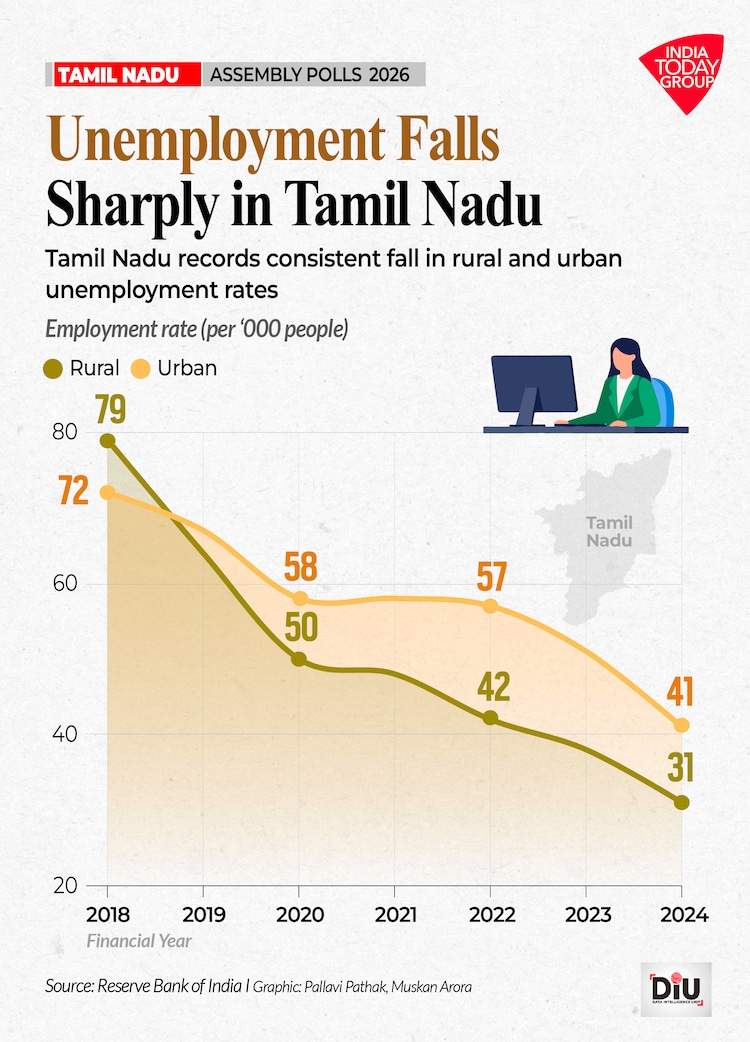
Rural unemployment has declined sharply from 79 per thousand in 2017–18 to 31 per cent in 2023–24. Similarly, urban unemployment has also declined, though slowly, from 72 to 41 per thousand in the same duration.
Investments, subsidies, and fiscal responsibility
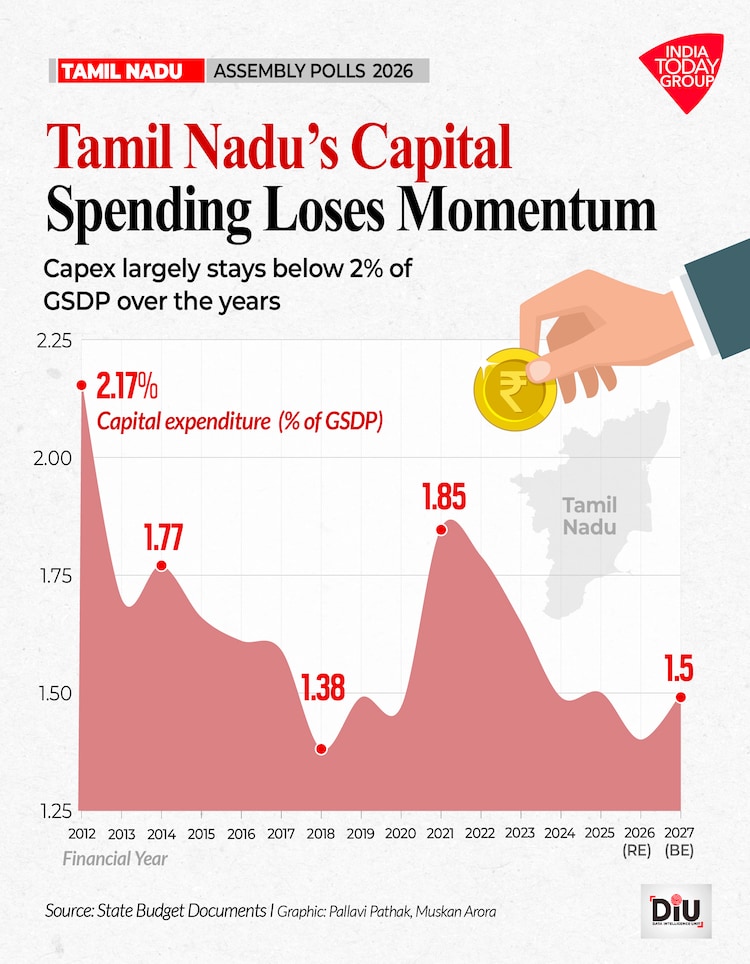
Government spending on infrastructure has increased significantly over the past decade. Capital outlay has risen from Rs 17,803 crore in 2014–15 to over Rs 57,000 crore in 2025–26 (budget estimates). The increase has been particularly strong after the pandemic.
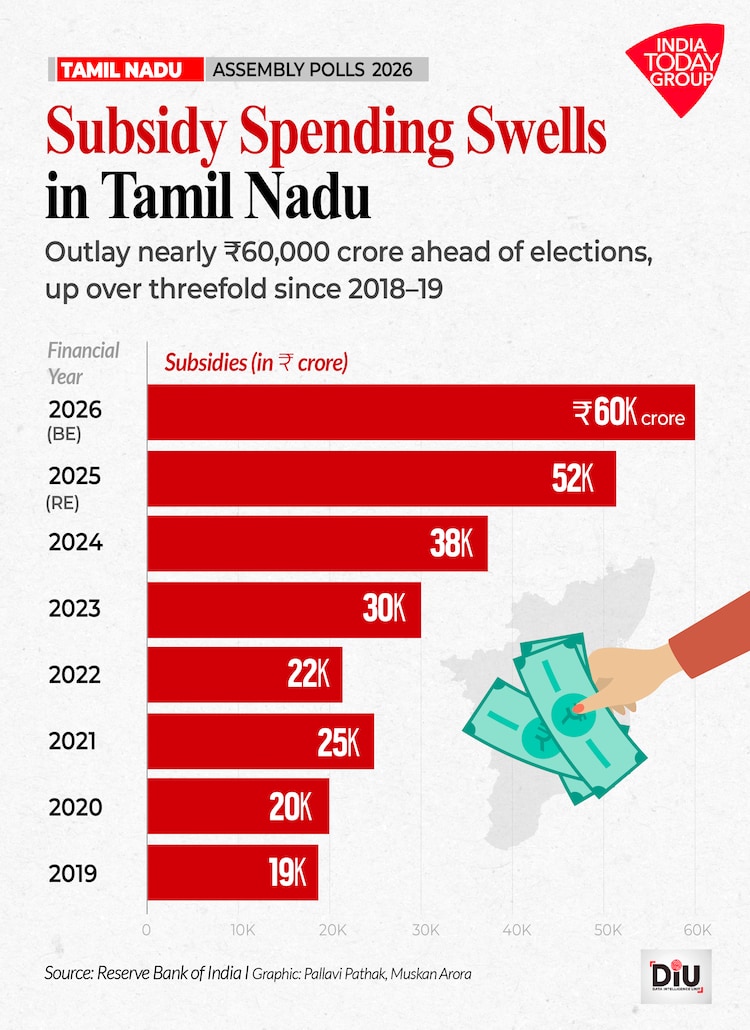
At the same time, Tamil Nadu’s subsidy bill has grown rapidly. Subsidies more than tripled from Rs 18,922 crore in 2018–19 to nearly Rs 60,000 crore in 2025–26.
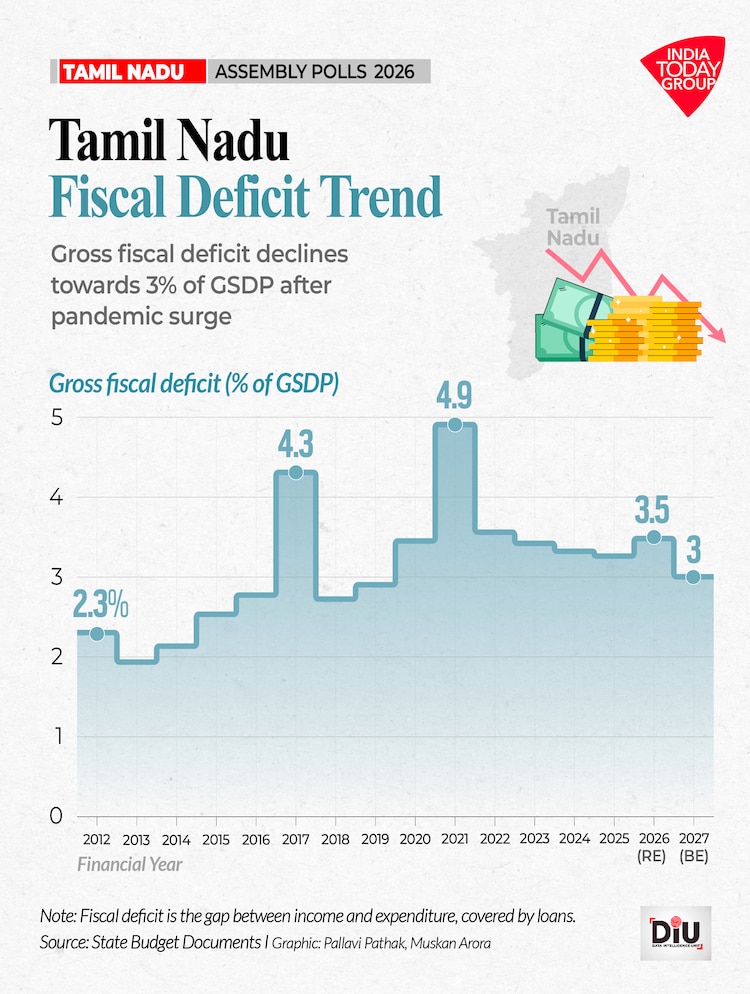
The fiscal deficit remains close to the limits set by the Fiscal Responsibility and Budget Management Act. The rise in spending has pushed the state’s fiscal deficit above Rs 1 lakh crore in recent years.
As a share of the economy, the deficit has largely remained above three per cent. It rose sharply to 4.31 per cent of GSDP in 2016–17 and again to 4.91 per cent in 2020–21 during the pandemic. While it has moderated since, it still stands at 3.32 per cent in 2023–24 and is estimated at 3 per cent in 2025–26.
As the state votes, the key question is not if this model has delivered, but whether the next government can sustain this balance without putting further pressure on the state’s exchequer.
– Ends
Tune In
Source link
[ad_3]

