
New Delhi16 minutes ago
- copy link
Petrol and diesel in the country have become costlier by 90 paise per liter from Tuesday, May 19. This is the second increase in fuel prices in less than a week. Earlier, on Friday, May 15, the prices of petrol and diesel were increased by Rs 3 each per liter.
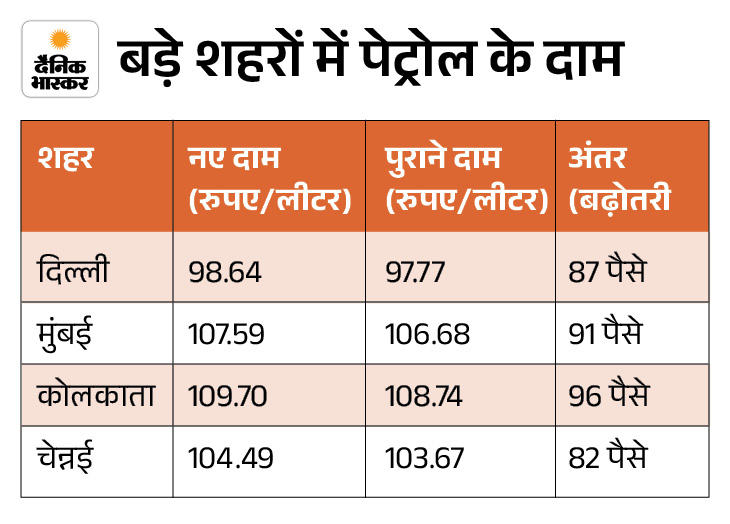
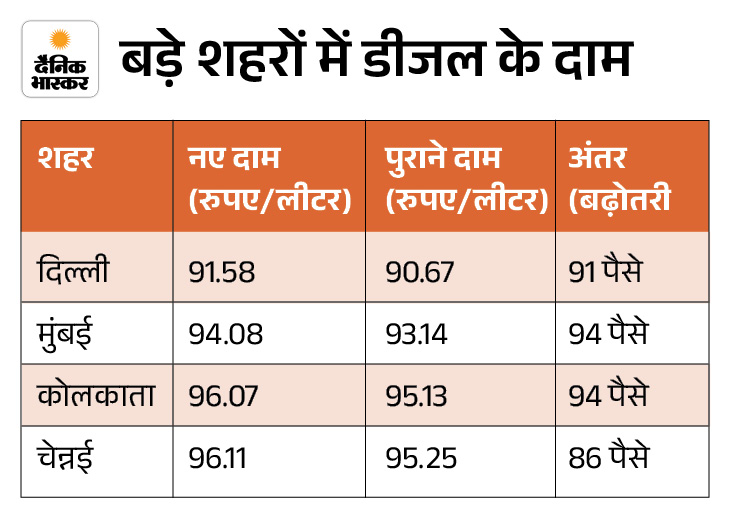
Prices of other things may also increase…
- Freight will increase: Truck and tempo fares will increase, due to which vegetables, fruits and ration coming from other states will become expensive.
- Cost of Farming: Farmers will have to spend more to run tractors and pumping sets, which will increase the cost of grains.
- Bus-Auto Fare: There may also be an increase in the fares of public transport and school buses.
Why did the prices of petrol and diesel increase?
The main reason for this increase is the fluctuations in crude oil prices in the international market. Before the start of the war between Iran and America, the price of crude oil was $ 70, which has now increased to beyond $ 100 per barrel.
Oil companies were under pressure due to rising crude prices. Therefore, companies have taken this step to compensate for the losses. If the prices of crude oil continue to rise for a long time, the prices of petrol and diesel may increase further.
Price increases up to four times the base price
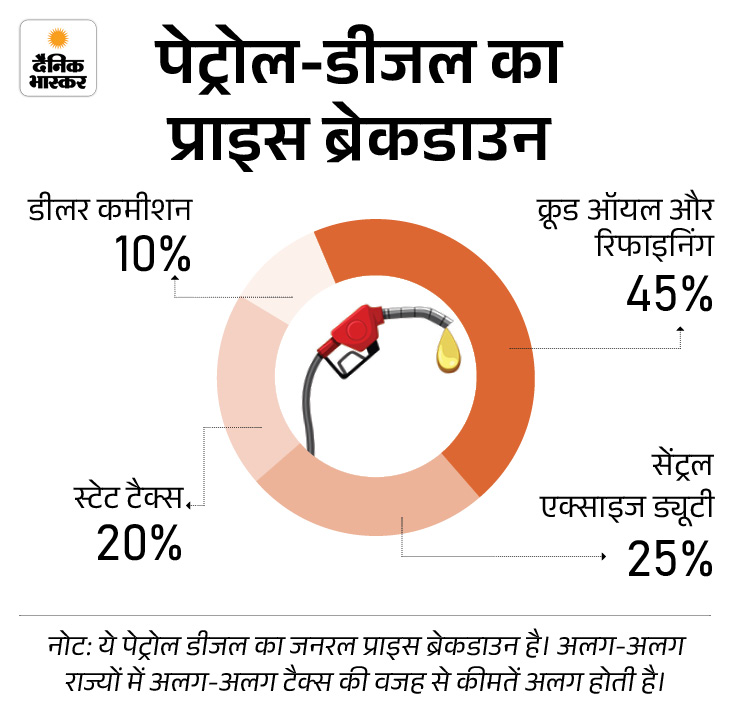
Fuel prices in the country are decided based on the prices of crude oil in the international market and the position of the rupee against the dollar. Government oil companies update new rates every day at 6 am under ‘Daily Price Revision’ i.e. Dynamic Pricing System. Many types of taxes and expenses are added to the oil prices before reaching the consumer, which we can understand in simple language:
1. Crude Oil Price (Base Price): India imports about 90% of its crude needs from abroad. The price per liter of oil is decided according to the barrel purchased from the international market.
2. Charges of Refining and Companies: Crude oil is refined into petrol and diesel in the country’s refineries. This includes refining costs and margins of companies.
3. Central Government Excise Duty: After leaving the refinery, the central government imposes excise duty (excise duty) and road cess on it. It is the same for all states across the country.
4. Dealer Commission: In the rate at which oil companies sell fuel to petrol pump owners (dealers), the dealers’ own fixed commission is added, which is different for petrol and diesel.
5. State Government VAT: Lastly, state governments impose VAT or local sales tax as per their discretion. Since VAT rates are different for every state, fuel prices also vary in different cities like Delhi, Mumbai, Kolkata and Chennai.
Prices increased in neighboring countries, now increased in India
The government had till now argued that global oil prices had risen due to the West Asia war. Due to this, the prices of petrol and diesel in neighboring countries like Pakistan, Nepal and Sri Lanka increased by 15% to 20%, but the burden was not passed on to Indian consumers.
Prices had not changed since 2024, there was a cut before the elections.
Petrol and diesel prices in the country had remained stable since March 2024. Just before the Lok Sabha elections 2024, the government had given relief to the public by reducing the prices by ₹ 2 per liter. Although technically fuel prices in India are regulated and companies can change rates every day based on the 15-day average price of international crude, these were not changed for a long time due to political sensitivity.
Oil companies were incurring losses of Rs 30 thousand crores every month.
According to the government, government companies like Indian Oil, Bharat Petroleum and Hindustan Petroleum were incurring losses due to high prices of crude oil in the international market.
According to Sujata Sharma, Joint Secretary of the Petroleum Ministry, companies are incurring a loss of about ₹ 30,000 crore every month on the sale of petrol, diesel and LPG.
Excise duty on petrol and diesel was reduced by Rs 10 each.
Earlier, to keep the prices of petrol and diesel stable, the government had reduced the special excise duty by Rs 10 each. Duty on petrol was reduced from ₹13 per liter to ₹3, while that on diesel was reduced from ₹10 to zero. A total excise duty of Rs 21.90 was collected by the Central Government on one liter of petrol.
After reduction in special additional excise duty, it came down to Rs 11.90. Similarly, the total central excise duty on one liter diesel was reduced from Rs 17.8 to Rs 7.8.
This decision of the government was to keep the prices of petrol and diesel stable. Due to this decision the prices of petrol and diesel did not increase. Read the full news…
PM Modi had said- reduce fuel use
Prime Minister Narendra Modi, during an event in Telangana on Sunday, had suggested cautious use of petroleum products in view of the geopolitical situation in West Asia.
The PM had said that today the need of the hour is to use petrol, gas and diesel very sparingly. We should use imported petroleum products only as per requirement. This will not only save foreign exchange, but will also reduce the adverse effects of war.

Source link
[ad_3]

