
Last Updated:
From the historic unification of Kannada-speaking regions in 1956 to its global achievements today, discover Karnataka’s rich heritage, cultural pride and inspiring future.




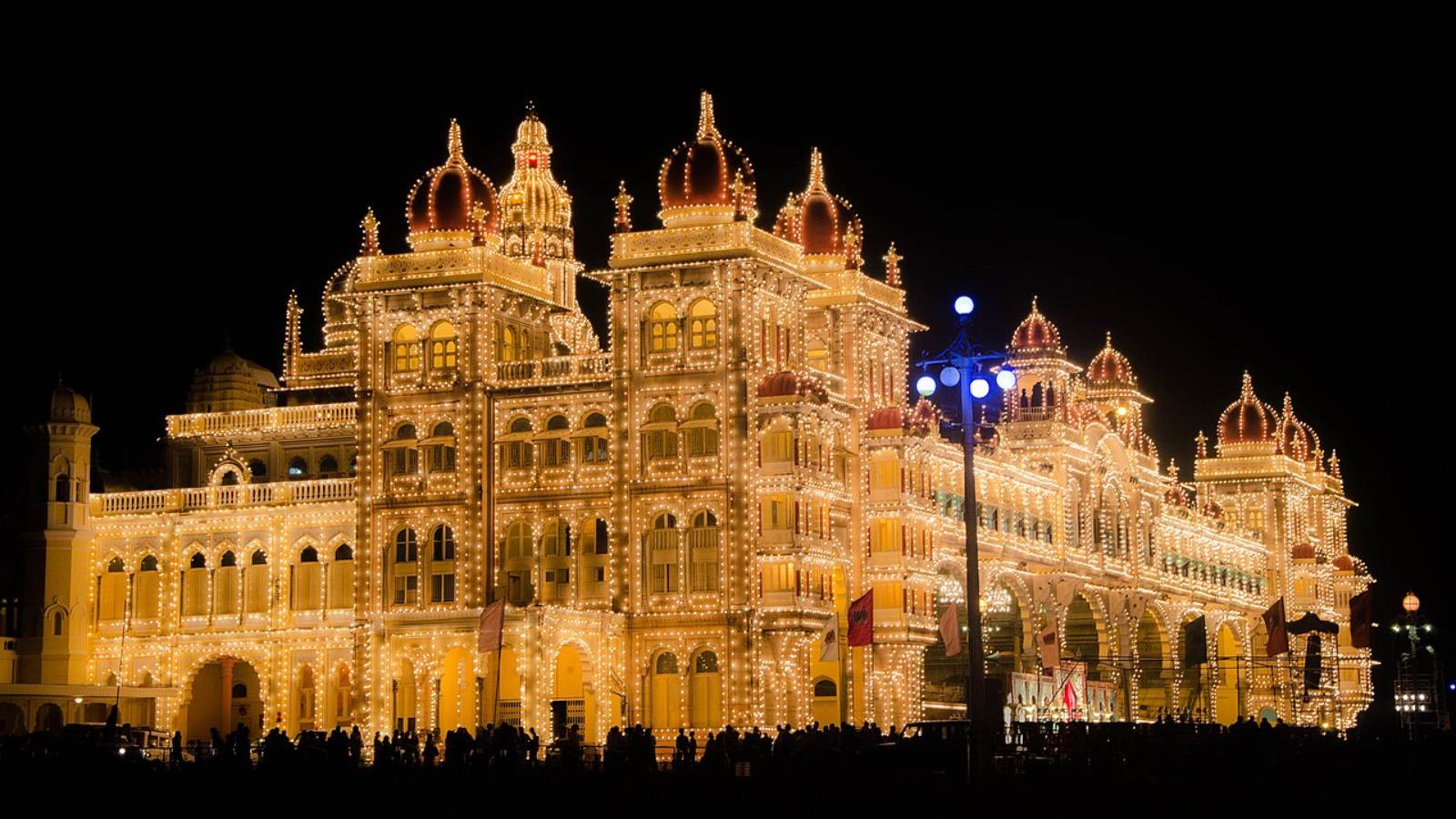
Namma Karnataka: Celebrating the state’s historic formation, rich Kannada heritage, cultural diversity and inspiring journey towards the future. (Image: Shutterstock)
Karnataka Rajyotsava 2026: Every year on November 1, Karnataka comes alive in shades of red and yellow as people celebrate the formation of the state. Known as Karnataka Rajyotsava or Kannada Rajyotsava, the occasion commemorates the historic unification of Kannada-speaking regions in 1956. It is more than a day of festivities; it is a celebration of language, identity, culture, heritage and the collective aspirations of millions of people.
Karnataka is a land where ancient traditions coexist with modern innovation, where magnificent temples stand alongside contemporary skyscrapers, and where centuries-old literary traditions continue to inspire a generation of technology leaders, entrepreneurs, artists and thinkers.
As the state celebrates another Rajyotsava, the theme ‘Namma Karnataka – Celebrating Our Past, Inspiring Our Future’ reminds us of the importance of understanding our roots while working towards a progressive and inclusive tomorrow.
Karnataka Rajyotsava: Remembering A Historic Beginning
The story of modern Karnataka is closely connected with the movement for the unification of Kannada-speaking regions.
At A Glance
Karnataka Rajyotsava is celebrated annually on November 1 to commemorate the historic unification of Kannada-speaking regions in 1956.
The state was officially renamed from Mysore to Karnataka on November 1, 1973.
Bengaluru has emerged as India’s primary destination for information technology, startups, research, and innovation.
Karnataka possesses a rich architectural and cultural legacy shaped by dynasties such as the Chalukyas, Hoysalas, and the Vijayanagara Empire.
Before Independence and the reorganisation of Indian states, Kannada-speaking communities were spread across different administrative territories, including the erstwhile Bombay Presidency, Madras Presidency, Hyderabad State and the princely state of Mysore.
The demand for bringing these Kannada-speaking regions together under one administrative identity grew stronger over the years. The movement was driven by a shared sense of linguistic, cultural and regional belonging.
A historic milestone was achieved on November 1, 1956, when the States Reorganisation Act came into effect. Kannada-speaking regions from neighbouring administrative units were brought together with the erstwhile Mysore State to form a larger state.
Initially, the newly reorganised state retained the name Mysore. On November 1, 1973, it was officially renamed Karnataka, reflecting the broader identity of the Kannada-speaking people.
Today, November 1 is celebrated as Karnataka Formation Day, popularly known as Karnataka Rajyotsava. The occasion honours the vision of those who worked towards linguistic unity and reminds every generation of the importance of preserving a shared cultural identity.
Kannada: The Soul and Identity of Karnataka
Language is more than a means of communication. It carries the memories, traditions, values and collective experiences of a community. For Karnataka, Kannada represents this cultural continuity.
With a literary history spanning centuries, Kannada has made remarkable contributions to Indian literature, philosophy, poetry and performing arts. It is a classical language of India and has been enriched by generations of poets, writers, scholars and social reformers.
The works of Pampa, Ranna and Ponna laid important foundations for Kannada literature. Later, literary icons such as Kuvempu, D. R. Bendre, Masti Venkatesha Iyengar and Shivaram Karanth expanded its literary horizons.
Kuvempu’s contribution remains particularly significant. His vision of Karnataka as a land that embraces humanity and universal brotherhood continues to resonate with people. His poem ‘Jaya Bharata Jananiya Tanujate’ is celebrated as the state anthem.
Kannada literature is not confined to books and classrooms. It lives through folk songs, theatre, cinema, conversations, local traditions and everyday expressions.
Rajyotsava is an opportunity to encourage children to learn Kannada, support regional literature, celebrate local artists and ensure that the language continues to thrive in a rapidly changing world.
A Cultural Treasure: The Many Colours of Karnataka
One of Karnataka’s greatest strengths is its cultural diversity. Every region has its own traditions, cuisine, art forms, dialects and celebrations, contributing to the state’s distinctive identity.
From the coastal traditions of Dakshina Kannada and Udupi to the royal heritage of Mysuru, from the historical monuments of Hampi to the vibrant folk traditions of North Karnataka, the state offers an extraordinary cultural landscape.
Traditional art forms such as Yakshagana, Dollu Kunitha, Veeragase, Kamsale and Bhootha Kola reflect the creativity and spiritual traditions of different communities.
The architectural legacy of Karnataka is equally remarkable. The magnificent temples of Belur and Halebidu showcase the extraordinary craftsmanship of the Hoysala period. Hampi, the celebrated capital of the Vijayanagara Empire, stands as a reminder of Karnataka’s historic political, cultural and commercial influence.
The royal palaces of Mysuru, the cave temples of Badami, the monuments of Aihole and Pattadakal, and the historic structures of Bijapur further demonstrate the state’s architectural richness.
Festivals such as Mysuru Dasara, Ugadi, Makara Sankranti, Karaga and Kambala bring communities together and preserve traditions that have been passed down through generations.
Karnataka’s cuisine is another expression of its diversity.
From Mysore Masala Dosa, Bisi Bele Bath and Ragi Mudde to Dharwad Peda, Udupi cuisine and North Karnataka Jolada Rotti, every region contributes its own culinary identity.
This diversity is what makes Karnataka special. It is not a single cultural experience but a beautiful coming together of many traditions under one shared identity.
Karnataka’s Glorious Past: A Legacy of Great Empires
Karnataka’s history stretches far beyond its modern formation.
The region has witnessed the rise and influence of several powerful dynasties and empires, including the Kadambas, Chalukyas, Rashtrakutas, Hoysalas, Vijayanagara rulers and Wadiyars of Mysuru.
Each dynasty contributed to the development of architecture, administration, literature, religion, trade and artistic traditions.
The Chalukyas of Badami left behind extraordinary architectural achievements. The Rashtrakutas contributed to art and literature, while the Hoysalas became renowned for their intricately carved temples.
The Vijayanagara Empire transformed Hampi into a flourishing centre of trade, architecture, culture and political power. Its legacy remains one of the most celebrated chapters in South Indian history.
The Wadiyar dynasty played a significant role in shaping modern Mysuru through contributions to education, public infrastructure, administration, music and the arts.
These historical achievements are not merely reminders of a glorious past. They provide an understanding of Karnataka’s resilience, creativity and enduring contribution to India’s cultural heritage.
From Garden City to Technology Powerhouse
While Karnataka takes immense pride in its history, it is equally recognised for its contribution to India’s modern economic and technological growth.
Bengaluru, often called India’s Silicon Valley, has emerged as a major destination for information technology, startups, research, aerospace, biotechnology and innovation.
The city is home to leading technology companies, research institutions, educational establishments and a thriving startup ecosystem. Its contribution to India’s digital economy has helped position the country prominently on the global technology map.
However, Karnataka’s growth story extends well beyond Bengaluru.
Mysuru has emerged as an important centre for education, manufacturing and technology.
Mangaluru contributes to trade, education, healthcare and port-led economic activity.
Hubballi-Dharwad, Belagavi, Kalaburagi and other urban centres have their own growing economic and industrial importance.
Karnataka also has a significant presence in aerospace and defence manufacturing, biotechnology, electronics, renewable energy and research.
Its educational institutions and scientific organisations have contributed to the development of talent across multiple disciplines.
The challenge ahead is to ensure that this progress reaches every region, creating opportunities for young people while supporting agriculture, rural entrepreneurship, infrastructure and sustainable development.
The People Who Shape Karnataka’s Identity
A state’s greatness is not measured only by its monuments, economic achievements or geographical boundaries. It is also reflected in the contributions of its people.
Karnataka has produced extraordinary personalities across literature, music, science, education, sports, social reform and public life.
Literary figures such as Kuvempu, D. R. Bendre and Shivaram Karanth enriched Kannada’s intellectual and cultural traditions.
Musicians such as Bhimsen Joshi and Gangubai Hangal helped popularise Hindustani classical music, while the Carnatic music tradition also flourished through Karnataka’s rich artistic environment.
Social reformers and thinkers such as Basavanna championed equality, dignity, social responsibility and progressive thought. His teachings continue to inspire conversations around social justice and humanity.
Scientists, educators, entrepreneurs, artists and sportspersons from Karnataka have also made valuable contributions to India’s progress.
Their achievements remind us that Karnataka’s greatest resource is its people and their ability to innovate, create, lead and inspire.
The Road Ahead: Building A Progressive Karnataka
As Karnataka celebrates its formation, the occasion also presents an opportunity to reflect on the challenges and responsibilities that lie ahead.
Economic growth must be accompanied by inclusive development. Rural communities need better infrastructure, access to quality education, healthcare and sustainable livelihood opportunities.
Agriculture continues to be important to the state’s economy and social fabric. Supporting farmers through technology, water conservation, better market access and climate-resilient agricultural practices will be essential for long-term prosperity.
Urban development also requires attention. Bengaluru and other growing cities must balance economic expansion with efficient public transport, affordable housing, environmental protection and improved civic infrastructure.
Preserving Karnataka’s natural resources is equally important. The Western Ghats, forests, rivers, coastlines and biodiversity represent an invaluable ecological heritage that must be protected for future generations.
The state also needs to create more opportunities for its young population through skill development, research, entrepreneurship, innovation and quality employment.
Above all, progress must remain inclusive, ensuring that people across regions, languages, communities and economic backgrounds have an opportunity to participate in Karnataka’s growth story.
Preserving Kannada in a Digital World
One of the most important responsibilities of the present generation is to ensure that Kannada remains relevant in an increasingly digital world.
Technology has transformed how people communicate, learn and access information. Digital platforms, artificial intelligence, online education and social media provide new opportunities to promote regional languages.
Kannada content creators, publishers, educators, developers and entrepreneurs can play an important role in expanding the language’s digital presence.
Encouraging Kannada literature, supporting regional journalism, developing digital learning resources and creating technology products in Kannada can help make the language more accessible to younger generations.
Preserving a language does not mean resisting change. It means ensuring that the language evolves with society while retaining its cultural and historical significance.
A progressive Karnataka is one where people can embrace global opportunities without losing their connection to their linguistic and cultural roots.
Rajyotsava: A Celebration of Unity and Shared Responsibility
Karnataka Rajyotsava is celebrated with enthusiasm across the state and by Kannadigas living in different parts of India and around the world.
The red and yellow colours associated with Karnataka’s identity adorn public spaces, educational institutions and community celebrations. Cultural performances, Kannada poetry recitals, music programmes, flag-hoisting ceremonies and public gatherings mark the occasion.
The presentation of the Karnataka Rajyotsava Awards is another important feature of the celebrations, recognising individuals who have made notable contributions to the state and its people.
Yet the significance of the day goes beyond ceremonies and festivities.
It is a reminder that a shared identity comes with shared responsibilities. Respecting linguistic diversity, protecting cultural heritage, supporting local communities and contributing to social progress are essential to building a stronger Karnataka.
Being proud of Karnataka also means respecting the many languages and cultures that make India diverse and vibrant.
Namma Karnataka: A Legacy to Celebrate, A Future to Create
Karnataka’s journey from the historic unification of Kannada-speaking regions in 1956 to its emergence as a major centre of technology, education, culture and innovation is a story of transformation and determination.
Its magnificent history provides inspiration, its language gives people a shared identity, and its cultural diversity reflects the strength of its communities.
As we celebrate Karnataka Rajyotsava, the message of ‘Namma Karnataka – Celebrating Our Past, Inspiring Our Future’ becomes particularly meaningful.
The responsibility of carrying Karnataka’s legacy forward belongs to every citizen. Whether it is preserving Kannada, protecting historical monuments, supporting local artisans, promoting education, encouraging innovation or contributing to sustainable development, every effort matters.
Let us celebrate the land that has given us a rich cultural heritage, remarkable achievements and countless reasons to take pride in our identity.
Huttidare Kannada Nadalli Huttabeku.
May Karnataka continue to grow as a land of knowledge, opportunity, compassion, cultural pride and progress.
Jai Karnataka! Jai Kannada! Happy Karnataka Rajyotsava!
Quick Answers
 Ask News18
Karnataka Rajyotsava commemorates the historic unification of Kannada-speaking regions on November 1, 1956, when the States Reorganisation Act came into effect.
Ask News18About the Author

Nibandh Vinod is a seasoned journalist with nearly three decades of experience. He specialises in covering events and festivals and in driving SEO-focused content for News18.com. Tech-savvy and collab…Read More
October 31, 2026, 17:14 IST
Read More
Source link
[ad_3]

