
- Hindi News
- Business
- Indian Aviation Crisis 2026: ATF Up 6%, Rupee Fall & Geopolitical Tensions Hit Airlines
New Delhi55 minutes ago
- copy link
Jet fuel is the biggest expense for airlines. Its share in total operating expenses is 30% to 40%.
The Indian aviation industry is once again going through difficult times. The rise in Aviation Turbine Fuel (ATF) prices, falling rupee against the dollar and ongoing tensions in the Middle East have increased the pressure on the profitability of airlines.
Although there has been relief from the reduction in the number of grounded aircraft, the expenses of the airlines have increased due to cancellation and change of routes on international routes.
Jet fuel became costlier by 6% in March, operating costs increased
Fuel is the biggest expense for airlines. Its share in total operating expenses ranges from 30% to 40%. The average price of ATF in the 11 months till February 2026 was Rs 91,173 per kiloliter (KL), but it has increased by 6% to Rs 96,638 per KL in March 2026.
If compared with the pre-Covid (FY20) level, then the price was Rs 64,715 per KL. That means prices still remain at a very high level. Due to tension in the Middle East and Iran-Israel war, crude oil prices remain volatile, which is a big risk for airlines.
Rupee weakens by 9% in FY 2026
The Indian Rupee has weakened by about 9% in FY 2026. Today, the Indian Rupee has fallen to a record low of 92.05 against the US Dollar. Many major expenses of airlines are in dollars, such as…
- aircraft lease payment
- Maintenance cost of engine-aircraft
- purchase of spare parts
- Salary of foreign crew members
- loan repayment
The burden of all these expenses has increased due to falling rupee. Experts say this is like a double whammy for loss-making airlines amid low margins.
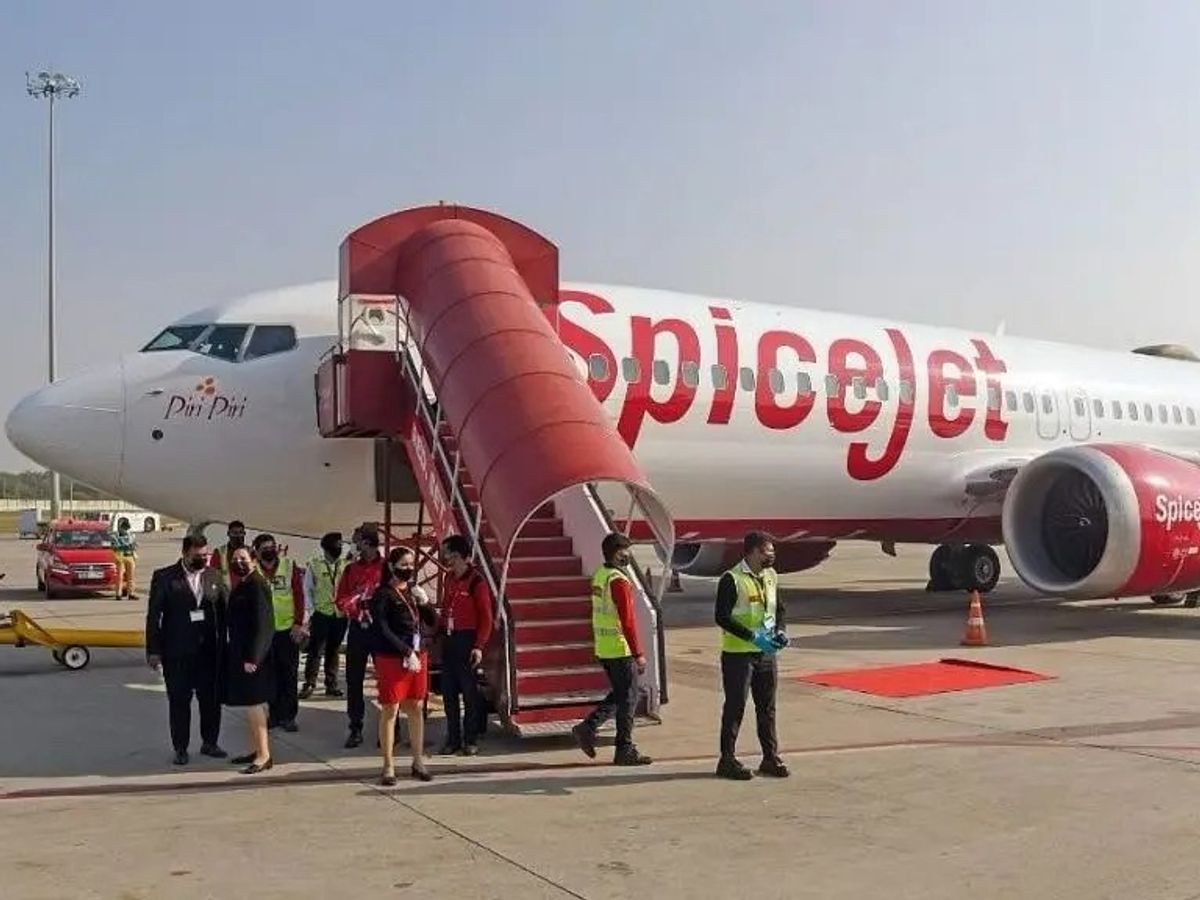
The Middle East crisis is having the biggest impact on international flights of Air India, SpiceJet and Indigo.
Expenses increased due to Iran-Israel war and closure of Pakistan airspace
Due to tension in the Middle East and continuous closure of Pakistan airspace, Indian airlines are having to change their international routes. According to the report of MK Global, due to change in route, flight time has increased and fuel consumption is also increasing due to this.
Although airlines will try to recover some part of this increased expense from passengers, it will be difficult to increase fares too much due to increasing competition in the domestic market.
Impact on capacity of Air India and Indigo
According to HSBC report, the Middle East crisis is having the biggest impact on international flights of Air India, SpiceJet and Indigo…
- Air India: More than 40% of the capacity affected.
- SpiceJet: Impact on about 32% capacity.
- Indigo: Capacity may be affected up to 20%.
Flights have had to be canceled on many routes in Europe and the Middle East, due to which the revenue of airlines is decreasing.
The number of grounded aircraft decreased
A good news for the industry is that the situation of grounded aircraft is improving. According to Kinjal Shah, Senior Vice President of ICRA, 20-22% of aircraft were grounded in September 2023 due to engine failure and supply chain problems.
By February 2026, it has come down to 13-15%. At present only about 117 aircraft are grounded in the country. As new aircraft join the fleet, the match between supply and demand will improve.
Read this news also…
Rupee hits record low, hits 92.05 for the first time: Impact of Israel-Iran war and rising crude oil prices, foreign goods will be expensive

Due to increasing tensions in the Middle East and rising crude oil prices, the Indian Rupee fell to a record low of 92.05 against the US Dollar today on March 4. Earlier in January, the rupee had fallen to a low of 91.98.
Experts say that until the war subsides, pressure on the rupee may remain. The rupee has fallen by more than 2% so far this year. Due to this, it has become one of the worst performing currencies of the world’s emerging markets in 2026. Read the full news…

Source link
[ad_3]

