
Mumbai18 minutes ago
- copy link
The Reserve Bank may announce a reduction in repo rate by 0.25-0.5% in the coming months. Inflation has remained subdued due to reduction in food prices and the impact of the recent GST cut. For this reason, RBIU will get an opportunity to liberalize monetary policy to support economic growth. This possibility has been expressed in the report of Kotak Securities.
The report said that despite the challenges related to tariffs and trade, falling inflation is creating scope for cutting rates to increase the pace of economic activity (growth). Retail inflation based on Consumer Price Index (CPI) had declined to 1.54% in September due to falling prices of food items.
When repo rate decreases, banks get cheaper loans The rate at which Reserve Bank of India i.e. RBI gives loans to banks is called repo rate. When RBI reduces the repo rate, banks get cheaper loans, and they pass this benefit on to the customers. That is, in the coming days, loans like home and auto can become cheaper by up to 0.50%.
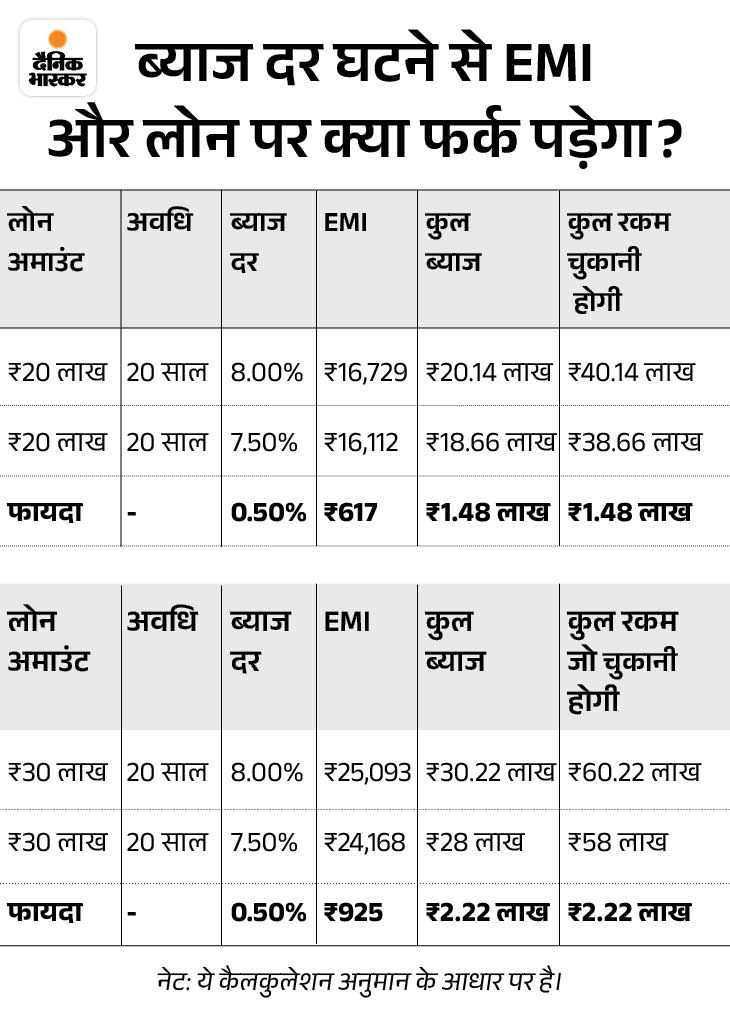
After the possible deduction, the EMI on a loan of ₹20 lakh for 20 years will reduce to Rs 617. Similarly, on a loan of ₹30 lakh, EMI will reduce to Rs 925. Both new and existing customers will benefit from this. You will get a benefit of around Rs 1.48 lakh in 20 years.
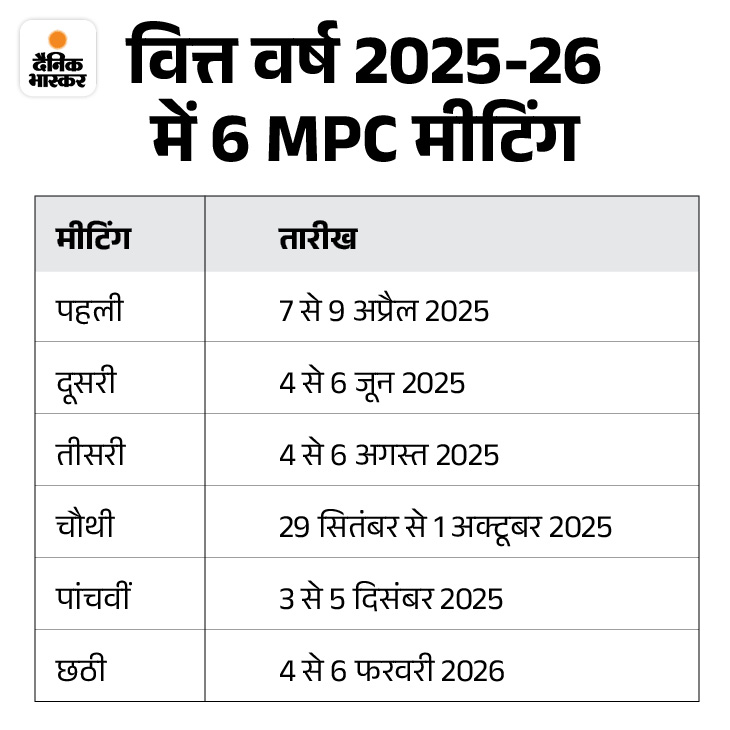
Repo rate reduced 3 times this year, cut by 1% RBI had reduced the interest rates from 6.5% to 6.25% in the meeting held in February. This cut was made by the Monetary Policy Committee after about 5 years.
For the second time in the meeting held in April, the interest rate was reduced by 0.25%. In June, the repo rate was reduced by 0.5% to 5.50%. That is, the Monetary Policy Committee has reduced interest rates by 1% this year.
Why does the Reserve Bank increase and decrease the repo rate? Any central bank has a powerful tool to fight inflation in the form of the policy rate. When inflation is very high, the Central Bank tries to reduce money flow in the economy by increasing the policy rate.
If the policy rate is high then the loan that banks get from the Central Bank will be expensive. In return, banks make loans costlier for their customers. This reduces money flow in the economy. If money flow decreases, demand decreases and inflation decreases.
Similarly, when the economy goes through a bad phase, there is a need to increase money flow for recovery. In such a situation, the Central Bank reduces the policy rate. Due to this, the loan received by the banks from the Central Bank becomes cheaper and the customers also get the loan at a cheaper rate.
Source link
[ad_3]
