
- Hindi News
- Business
- India Orders Refiners To Boost LPG Production Amid Middle East Crisis | Emergency Measures 2026
New Delhi10 minutes ago
- copy link
The Government of India has invoked emergency powers in view of the possible shortage of LPG (LPG) in the country. According to Reuters report, amid the ongoing tension in the Middle East and disruption in the supply chain, the government has used emergency powers to direct all oil refiners to increase the production of domestic LPG.
The report said that according to the government order issued late on Thursday night, refiners will now have to use the propane and butane available with them only to make cooking gas.
Preparation to deal with supply chain disruptions
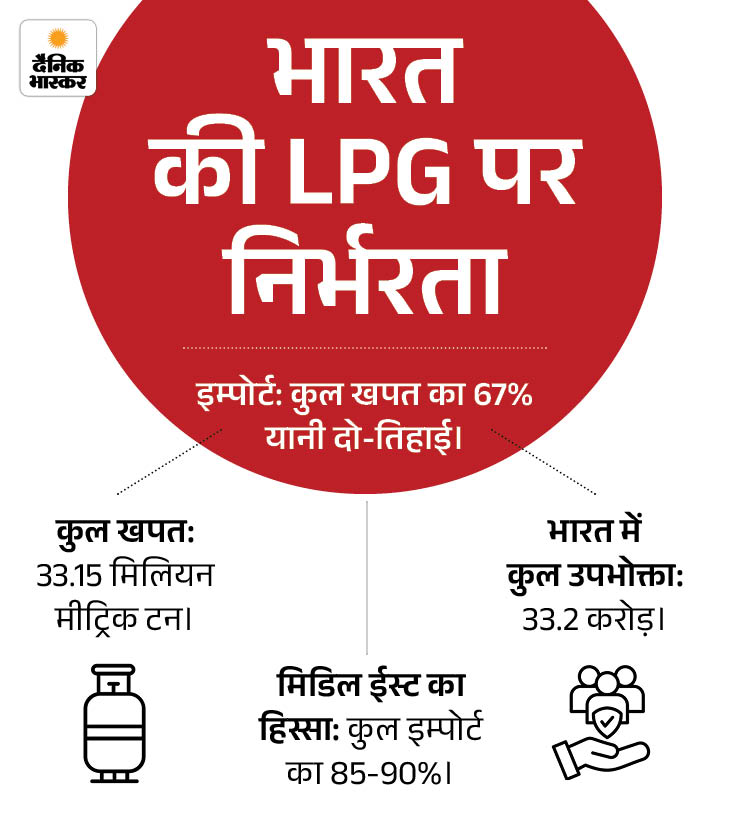
- India is the second largest LPG importer in the world. Last year, about 33.15 million or 3.31 crore metric tonnes of cooking gas was consumed in the country.
- India imports about two-thirds of its needs from abroad, out of which 85% to 90% of the supplies come from the Middle East countries alone.
- There is a possibility of impact on supply due to the ongoing crisis in the Middle East, to deal with which the government has decided to increase domestic production.
Government companies will get priority
According to the order, all the companies will have to supply propane and butane to the government oil companies – Indian Oil Corporation (IOC), Hindustan Petroleum (HPCL) and Bharat Petroleum (BPCL).
Its objective is to ensure that the country’s approximately 33.2 crore active LPG consumers continue to get gas cylinders without any interruption.
Reliance’s exports and petrochemical production will be affected
This decision of the government can have a direct impact on private sector companies, especially Reliance Industries (RIL). Diversion of propane and butane will reduce the production of alkylates, which are used to improve the grading of petrol.
Last year, Reliance exported an average of four alkylates cargoes every month. Apart from this, the government has also made it clear to the refiners that they should not use these gases for petrochemical production at present.
Companies’ profits may be hit
Industry experts and trade sources say that using propane and butane instead of petrochemicals to make LPG will affect the margins of companies.
Actually, petrochemical products like polypropylene and alkylates are sold in the market at better prices than LPG. In such a situation, this order of the government may affect the profits of petrochemical companies.
What is LPG, propane and butane?
LPG: It is liquefied petroleum gas, which is mainly a mixture of propane and butane.
Propane/Butane: These are hydrocarbon gases, which are released during refining of crude oil. They are used in both plastic making (petrochemicals) and fuel.
Gas production stopped in Qatar, 40% supply reduced in India
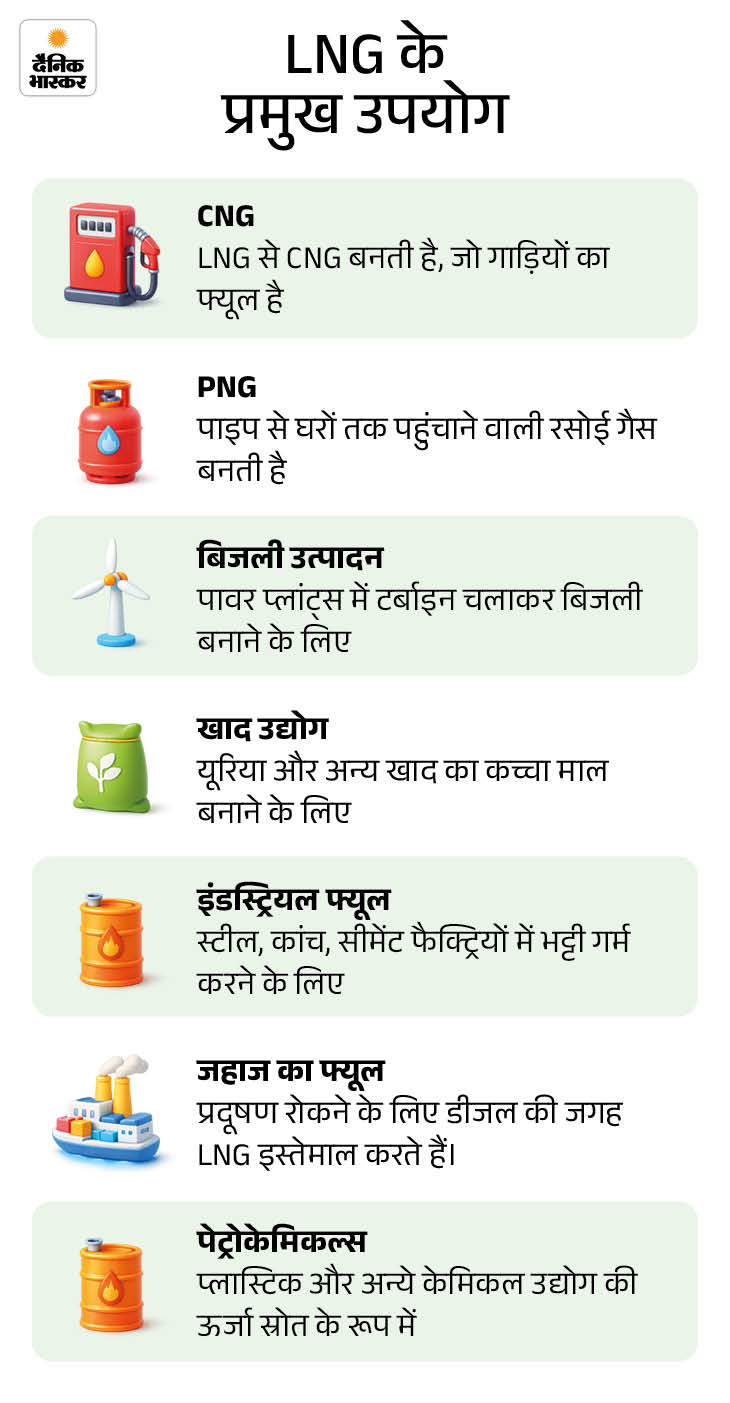
According to media reports, due to the ongoing war in the Middle East, the prices of CNG (Compressed Natural Gas) and PNG (Piped Natural Gas) may also increase in India. After Iran’s drone attack, Qatar, the largest country supplying gas to India, has stopped the production of its Liquefied Natural Gas (LNG) plant.
Due to this, the movement of ships coming to India has stopped and there has been a huge reduction of up to 40% in the supply of gas in the domestic market. India imports 40% of its requirement of LNG (Liquefied Natural Gas) i.e. about 27 million tonnes annually from Qatar.
CNG and PNG are supplied only by converting the LNG coming from abroad into gas. Due to stoppage of its supply, City Gas Companies (CGD) have warned that if the situation does not improve soon, the prices of CNG and PNG may increase.
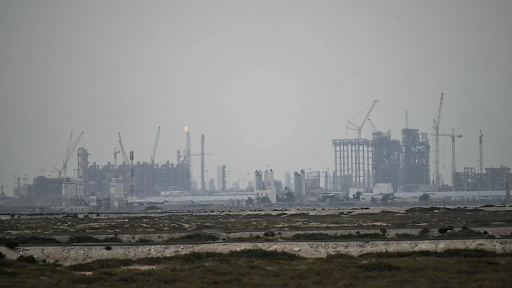
Smoke seen rising after the Iranian attack on 1 March 2026 in the industrial area of Doha, the capital of Qatar.
Oil and gas supply route almost closed
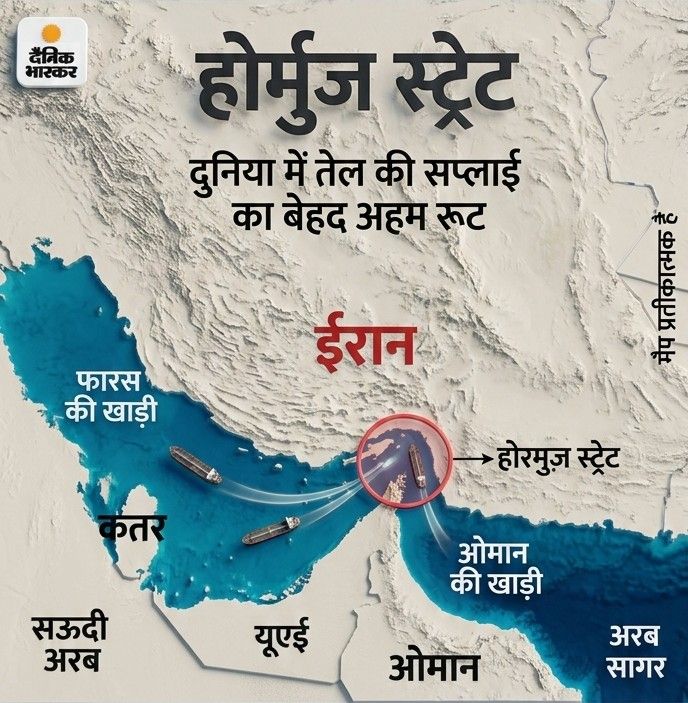
The biggest challenge for India is the almost closure of the ‘Strait of Hormuz’. This is a narrow sea route through which countries like Qatar and UAE export their oil and gas. Due to the war between Iran and Israel, this route is no longer safe.
- Number of ships decreased: On February 28, 91 ships passed through this route, which has now reduced to only 26.
- Dependencies of India: India sources 50% of its crude oil and 54% of its LNG requirement through this route. Petronet’s three big ships – Disha, Rahi and Asim – are currently unable to reach Qatar’s Ras Laffan Port.
Drone attack on plant, production of LNG halted
According to Qatar-Energy, Iran had attacked the plants located in ‘Ras Laffan’ and ‘Mesaieed’ Industrial City of Qatar with drones. Due to security reasons, the company has currently stopped the production of LNG.
Last week, America and Israel had launched a strike on Iranian bases, in response to which Iran has targeted American bases and ports in countries like UAE, Qatar, Kuwait and Saudi Arabia.
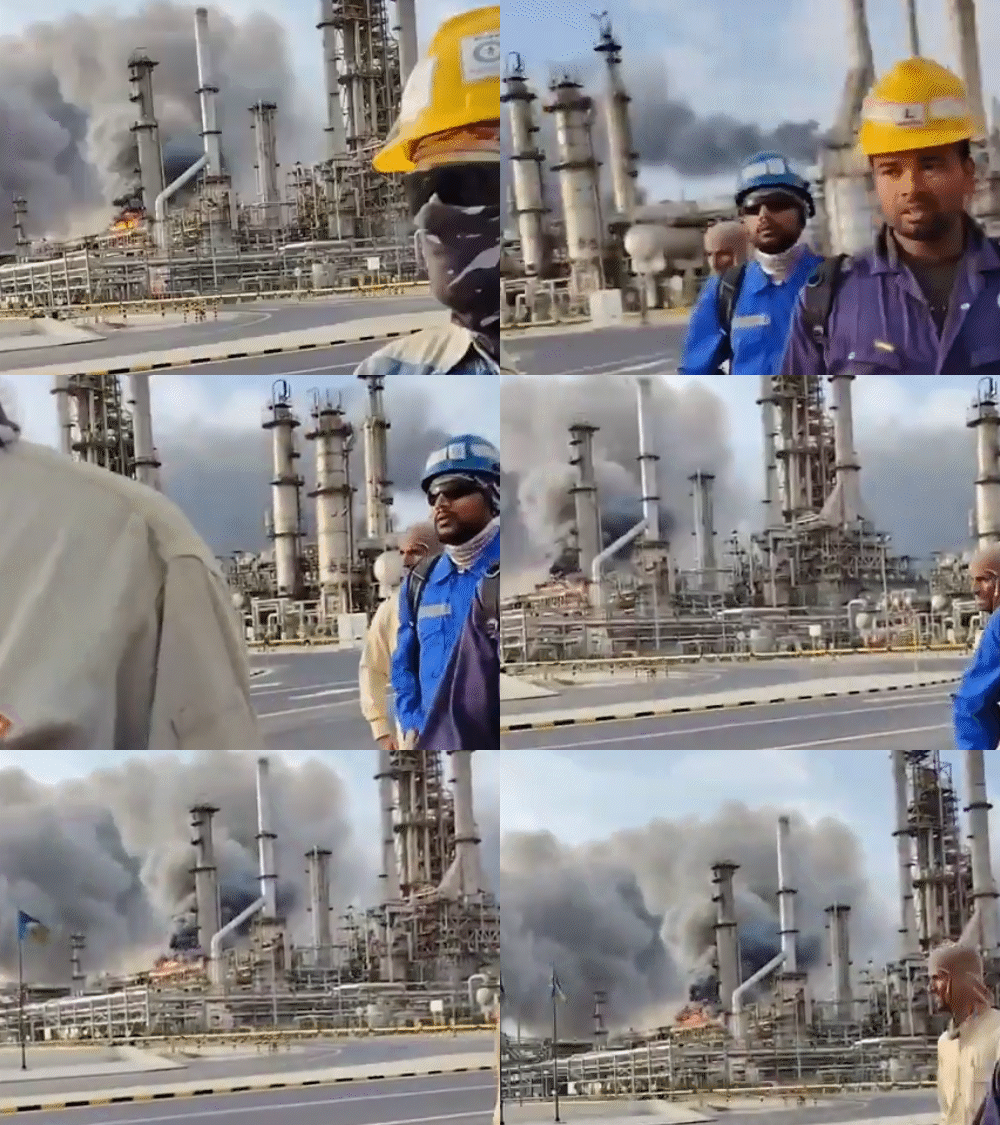
Iran had attacked the plant located in ‘Ras Laffan’ of Qatar with a drone. Due to security reasons, the company has currently stopped the production of LNG.
There is also a threat to fertilizer and electricity production
Imported LNG in India is not only used in homes and vehicles, but also in electricity generation and urea (fertilizer) production.
- Electricity will be expensive: If gas shortage continues, electricity generated from gas-based power plants will become expensive.
- Shortage of fertilizer: Gas is a main raw material for the fertilizer sector, reduction in supply can also affect fertilizer production.
CNG companies wrote a letter to the government, warning of crisis
In view of the shortage of gas, the ‘Association of CGD Entities’ (ACE) has written a letter to the government company GAIL seeking clarity. Companies say that if they do not get cheap gas coming from Qatar, they will have to buy expensive gas from the ‘spot market’.
- Price difference: The price of gas in the spot market has currently reached $25 per unit, which is more than double the price of contract gas.
- People will shift towards EV: Companies fear that if CNG prices increase too much, people will permanently shift to Electric Vehicles (EV), which will cause huge losses to the gas sector.
Petronet LNG issues ‘force majeure’ notice
India’s largest gas importing company Petronet LNG has sent a ‘force majeure’ notice to Qatari company Qatar-Energy. Force majeure means that due to some major reason like war or crisis, the company is not able to supply gas as per the agreed agreement.
The company has also issued force majeure notice to companies like GAIL, Indian Oil (IOC) and Bharat Petroleum (BPCL) informing them that the supply of gas to them will be less. The company has also made it clear that there is no insurance cover on business losses caused due to war.
——————————
Read this news also… Claim- India has only 25 days of oil left: Import route closed amid Israel-Iran war; Government is looking for new suppliers
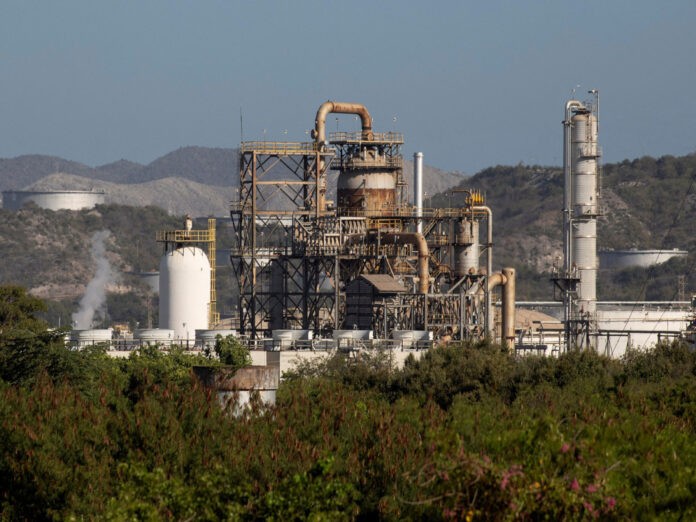
Amidst the increasing tension in West Asia and the Iran-Israel war, it is being claimed that India now has only 25 days of crude oil and refined oil stock left.
News agency ANI has given this update regarding the energy security of the country according to government sources. However, the government will not increase the prices of petrol and diesel yet. Read the full news…

Source link
[ad_3]

