
Last Updated:
Hemant Srivastava and his father employed aeroponics, an advanced soil-free farming method to recreate Kashmir’s climate and light conditions, overcoming geographical barriers and setting a new benchmark for agricultural innovation
Hemant Srivastava traded his high-flying career for an agrarian dream and successfully cultivated saffron at his 300-square-feet lab in Lucknow. (News18)
Once a techie settled in Silicon Valley, Hemant Srivastava, who traded his high-flying career for an agrarian dream, has successfully cultivated saffron — India’s most prized spice — at his 300-square-feet lab in Lucknow, Uttar Pradesh, far beyond the cool confines of Kashmir.
The 38-year-old-techie achieved the ground-breaking feat by employing aeroponics, an advanced soil-free farming method in which he recreated Kashmir’s climate and light conditions, overcoming geographical barriers and setting a new benchmark for agricultural innovation.
“I never thought this could happen as I was told that saffron plants are most sensitive and a slight mismatch or odd conditions can spoil the crop. But I am happy that our efforts yielded positive results and we could manage to facilitate the first bloom in Lucknow far from its native soil,” Srivastava told News18 while discussing the challenges he and his father, a retired judge, faced while embarking upon their project.
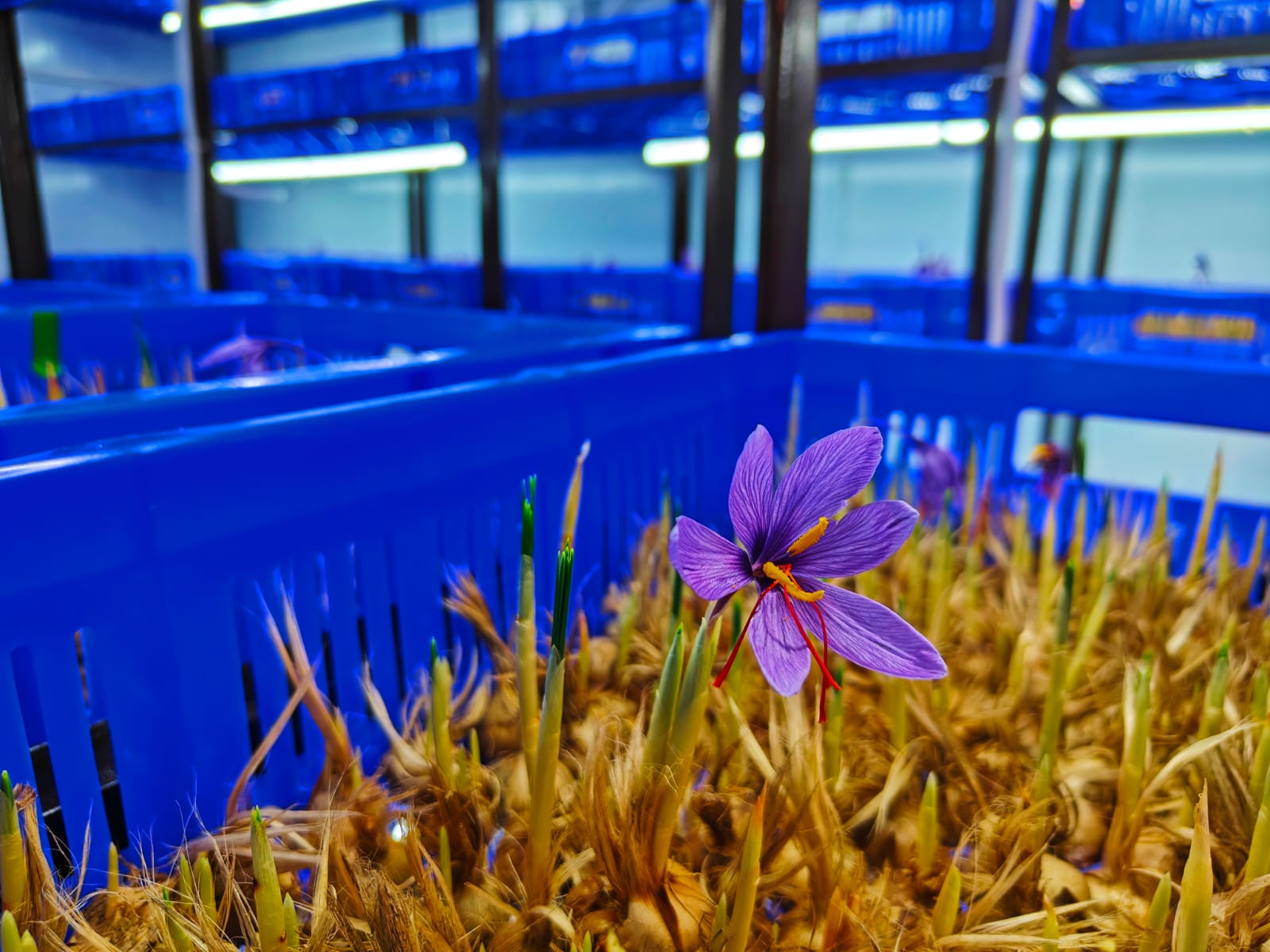
The father-son duo’s journey, which began with the decision to cultivate the prized spice, was a challenging task. Right from learning the craft from traditional saffron farmers in Kashmir to setting up advanced machinery in their Lucknow-based lab, sourcing 1,000 kilograms of saffron bulbs, and patiently nurturing them until the first bloom, every step demanded unwavering effort and commitment.
The beginning
Almost a year ago, Srivastava, settled in Silicon Valley with his techie wife, decided to return to India to care for his aging parents. “Like any family, we had financial needs, and something had to be done,” Srivastava recalled. He engaged in endless discussions with his father, determined not to rejoin the corporate world. “I didn’t want a job in India that would keep me away from home again, defeating the purpose of my return,” said Srivastava.
“Hence, I needed something that could be done within our own space. Since my father has a keen interest in farming, I wanted to combine technology with agriculture and after exploring various options, we finally zeroed in on saffron farming, which perfectly suited our criteria,” he added.
Implementation A Challenge
Implementing the idea was challenging, Srivastava admitted. While online videos provided initial guidance, he sought a more concrete foundation for the venture. This led him to Kashmir, where he and his father spent days with traditional saffron farmers, learning intricate farming techniques and understanding the challenges involved. “The time spent with the farmers was invaluable,” he said.
What is aeroponic technique?
Other than taking lessons from saffron farmers, Srivastava said they also visited experts and trainers to learn aeroponics techniques. He said aeroponics is an innovative, soil-free farming technique where plants are grown with their roots suspended in air and misted with a nutrient-rich solution. This method eliminates the need for soil, allowing plants to absorb nutrients and oxygen more effectively, resulting in faster growth and higher yields.
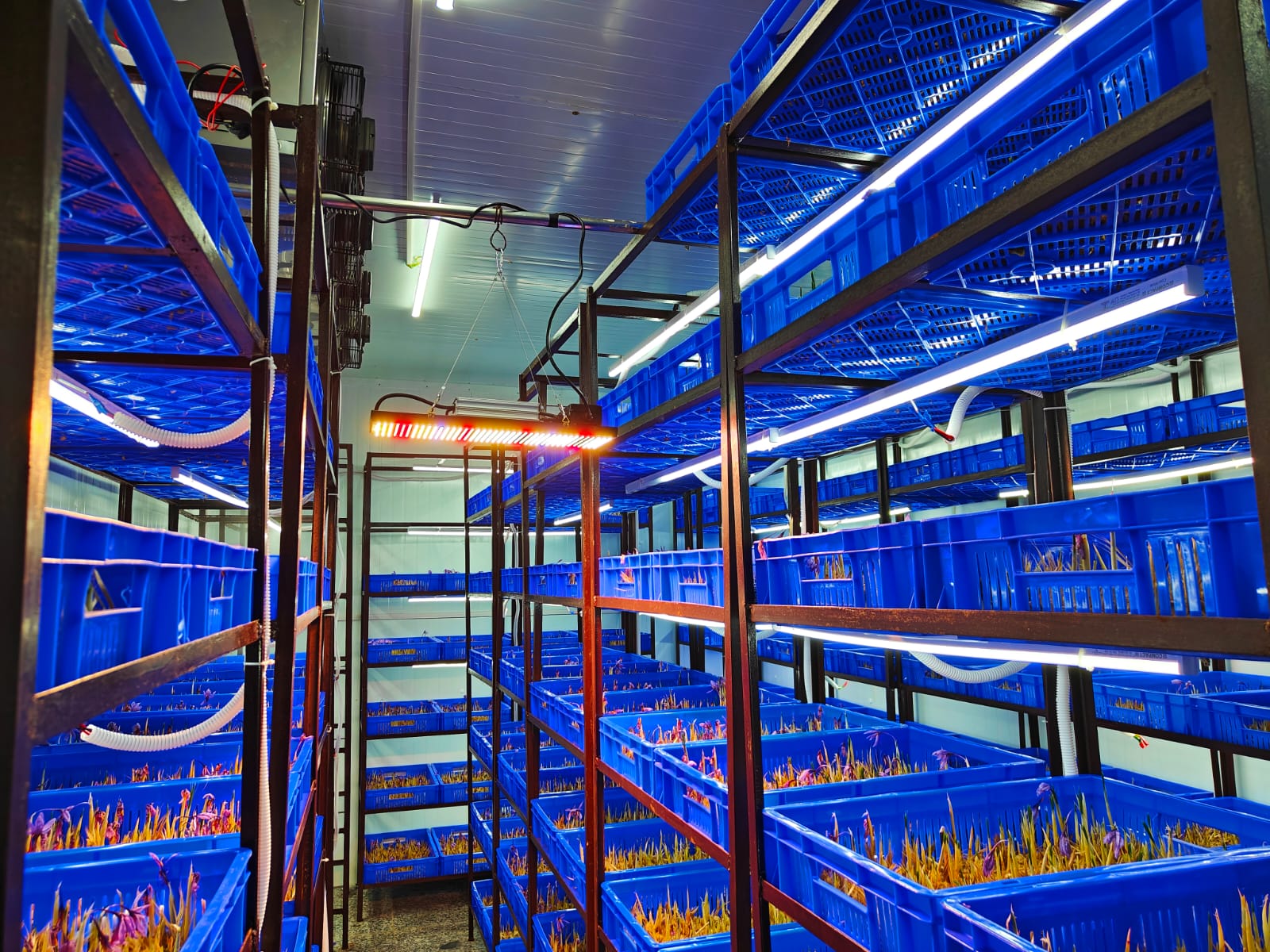
The system operates in a controlled environment, enabling precise regulation of temperature, humidity, and nutrient delivery. Aeroponics is highly efficient, using up to 95 per cent less water than traditional farming methods and significantly fewer nutrients, making it an eco-friendly and sustainable solution.
It is particularly suited for growing high-value crops like saffron, herbs, lettuce, and strawberries. The absence of soil minimises the risk of pests and diseases, while the compact design is ideal for urban and vertical farming. Aeroponics not only enhances productivity but also addresses the challenges of land and resource scarcity, offering a modern approach to sustainable agriculture.
The Mechanical Hustle
Srivastava transformed two rooms of his house into a 300-square-foot space dedicated to saffron farming. To create the ideal environment, he reached out to a renowned refrigeration company, explaining his requirements. Based on these, the company converted the rooms into a ‘Mini Kashmir’, replicating the region’s climatic conditions, including temperature, humidity levels, sunlight exposure, and other crucial factors for saffron cultivation.
“The entire set-up cost around Rs 30 to 40 lakh,” he shared, adding that it took nearly a year of meticulous planning and adjustments before they could finally reach the implementation stage. This detailed effort and investment have allowed him to successfully grow saffron outside its traditional Kashmir habitat.
But can sunlight be imitated?
Srivastava explained that sunlight exposure can be imitated by using special grow lights. These lights are designed to emit wavelengths similar to natural sunlight, which plants need for photosynthesis. By installing these lights in the converted space, Hemant was able to replicate the sunlight conditions that saffron requires for optimal growth. The grow lights ensure that the plants receive the necessary light energy for photosynthesis, even in a controlled indoor environment, overcoming the lack of natural sunlight.
He said initially he had procured 1,000 kilograms of saffron bulbs, which cost him around Rs 10 lakh. The techie said if all goes well and as per plan, he will be able to extract more than one kilogram of pure saffron. Srivastava said he is yet to estimate the selling price, which he said could be between Rs 4 to Rs 5 lakh per kilogram.
Purest form of saffron
Srivastava is confident that the quality of his lab-grown saffron will surpass that of the saffron grown in Kashmir. “In our lab, we are replicating the exact environmental conditions — particularly temperature and humidity — required for saffron to thrive, and we maintain these conditions 24×7,” he said.
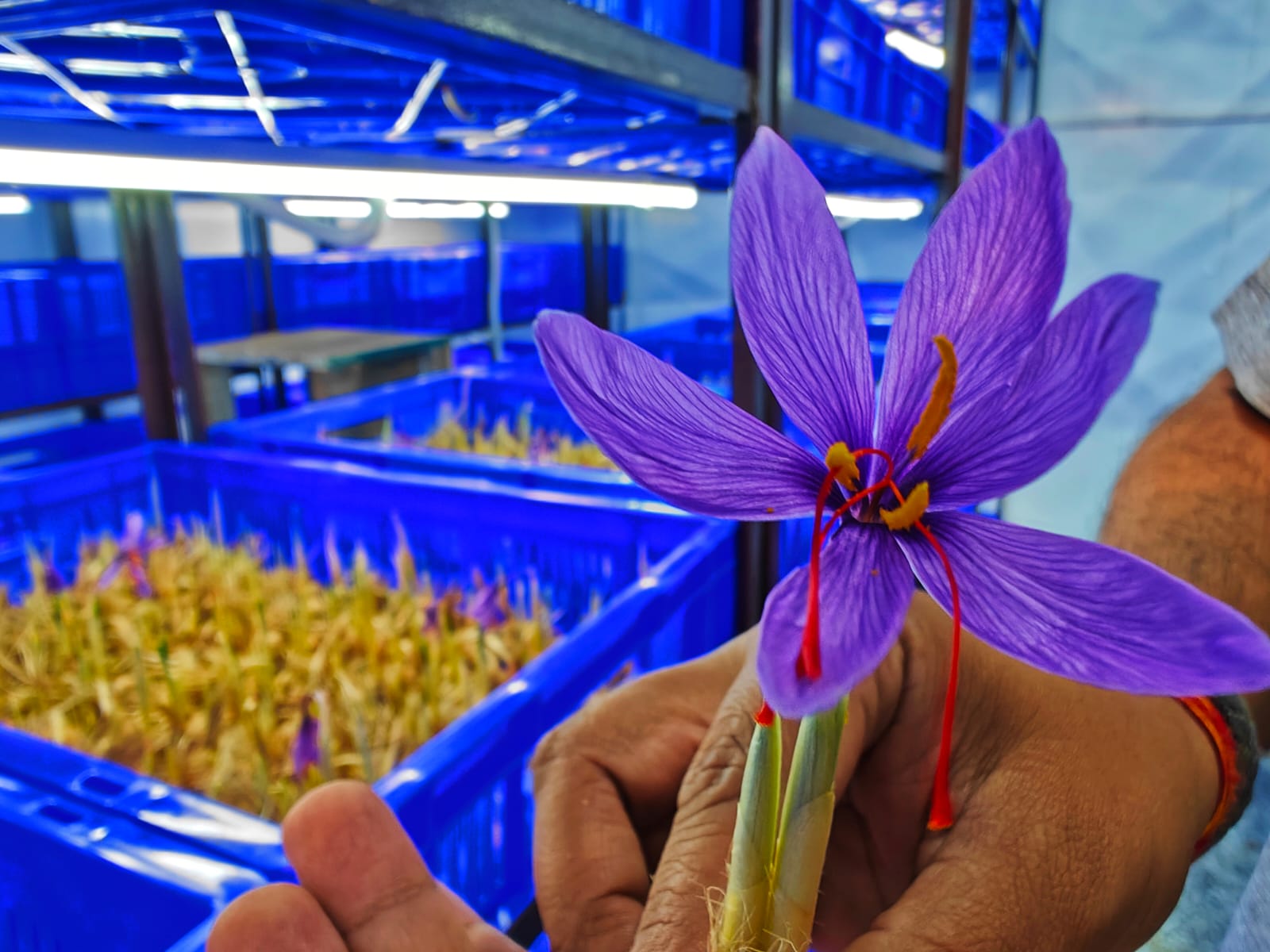
He said no pesticides or fertilisers are used in his farming process. “We use Reverse Osmosis (RO) water for hydration and to maintain high humidity levels, ensuring a pristine growing environment. Unlike traditional soil farming, our aeroponic method eliminates the need for fertilisers or chemicals, making our saffron the purest form available,” he explained.
Srivastava’s lab-grown saffron, expected to debut in the market next month, marks a pioneering step. He believes this innovative approach will not only redefine saffron cultivation but also pave the way for agricultural advancements, opening new avenues for farmers and entrepreneurs to embrace technology-driven and sustainable farming practices.
Source link
[ad_3]

