
Last Updated:
Investigators say Zubair Hangargekar, held for alleged Al-Qaeda links, mirrors the profile seen in recent doctor arrests tied to J&K modules, a worrying white-collar terror trend.

AQ-linked networks have largely migrated to closed Telegram clusters, multi-layered channels, and foreign-hosted servers that obscure early detection. (Representational image)
Al-Qaeda’s India network is shifting decisively towards a slow-burn, digitally driven radicalisation model, intelligence sources have told CNN-News18emphasising that the group is increasingly prioritising ideological influence over immediate operational violence. India’s massive smartphone penetration, large youth population, and the openness of online discourse are being leveraged as part of this long-term strategy.
The Pune Arrest That Flagged A Larger Trend
In October 2025, the Pune Anti-Terrorism Squad ATS arrested 35-year-old software professional Zubair Ilyas Hangargekar under the Unlawful Activities (Prevention) Act (UAPA) for alleged links to Al-Qaeda and its South Asian arm, Al-Qaeda in the Indian Subcontinent (AQIS). Investigators say Hangargekar’s digital footprint—encrypted communications, archived propaganda material, and behaviour across multiple closed groups—indicated deep ideological radicalisation.
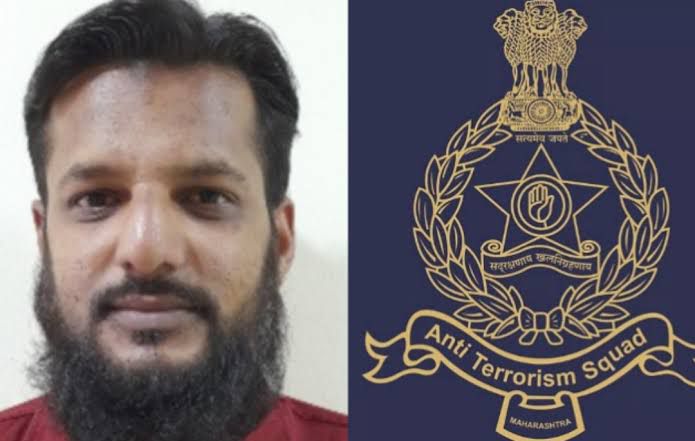
According to officials, Hangargekar came under the scanner through routine digital monitoring of AQ-aligned online ecosystems. His account was flagged as part of a cluster of high-risk Telegram groups, with behaviour patterns matching those typically associated with AQ online handlers and recruiters. Repeated downloads of banned content, archiving of long-form ideological material, and sustained engagement across various restricted forums strengthened suspicion.
Authorities also discovered he was using specialised tools and foreign IP routing, some traced to Afghanistan and Hong Kong, prompting deeper forensic analysis. Based on these findings, Pune ATS placed him under discreet surveillance before the arrest.
On Thursday, a UAPA court remanded Hangargekar back into ATS custody till 3 January 2026. In its remand plea, ATS told the court it needs custodial interrogation to examine 102 Telegram groups, communication channels, and foreign-linked IP addresses recovered from his devices.
‘White-Collar Terror’: The Profile Al-Qaeda Prefers Now
Top intelligence officers say Hangargekar’s profile mirrors a concerning pattern seen in other recent arrests, including doctors linked to J&K-origin terror modules. Both sets of cases highlight the rise of a “white-collar, digitally radicalised” recruit—educated, respectable, with no prior criminal record, and operating below traditional counter-terror surveillance thresholds.
Agencies say this is no coincidence. Al-Qaeda is deliberately gravitating towards individuals with professional legitimacy, credibility, and network access. These recruits are seen as less likely to draw suspicion, more capable of discreet communication, and more effective at transmitting ideological content to closed circles.
Al-Qaeda’s New Modus Operandi In India
Sources outline three pillars of this shift:
- Encrypted Ecosystems: AQ-linked networks have largely migrated to closed Telegram clusters, multi-layered channels, and foreign-hosted servers that obscure early detection.
- Ideological Conditioning Over Training Camps: Recruitment focuses on sustained online influence—reading lists, long sermons, private classroom-like sessions—rather than physical handling of weapons or travel to conflict zones.
- Leveraging India’s Digital Landscape: AQ sees India’s combination of mobile Internet penetration, youth demographic, and vibrant free-expression environment as ideal for stealth radicalisation without triggering financial or logistical red flags.
India Central To AQ’s Long-Term Plan?
According to intelligence inputs, Al-Qaeda views India not for immediate operational exploitation but as a long-term ideological theatre, where it can shape narratives, seed sympathisers, and gradually create insulated online communities.
This approach allows the group to:
- avoid early detection
- build influence through slow ideological reinforcement
- cultivate recruits who appear outwardly “normal” and socially integrated
- rely on white-collar credibility rather than overt militancy
The Road Ahead
With cases like Hangargekar’s reinforcing this new understanding, India’s counter-terror strategy must increasingly focus on digital behavioural forensics, long-term surveillance of extremist ecosystems, and early detection of ideological drift among online users with no criminal history.
Al-Qaeda, sources warn, is attempting to create low-noise, high-impact ideological networks that grow quietly and surface only when strategically activated. The Pune case may be just one visible point in a much larger shift.
December 26, 2025, 1:56 PM IST
Read More
Source link
[ad_3]

