
32 minutes ago
- copy link
Many people make ‘settlement’ with the bank if they do not repay the entire loan. At that time, it seems that the financial burden is over, but in the future, when a new loan or credit card is required, then there may be problems. Banks may reject your application.
What is the difference between ‘Settled’ and ‘Closed’ status?
When a customer repays the entire loan amount including interest, the bank marks the account as ‘closed’. This means that the customer has fulfilled his responsibility completely.
On the other hand, when a customer is unable to repay the loan in full and the bank agrees to close the account for less money than the original outstanding amount, it is marked ‘settled’.
In simple words, settlement means that the bank has settled the matter by accepting its loss.
How is it affected on new loan applications?
In future, whenever you apply for a new loan or credit card, the first thing banks check is the ‘Account Information’ section of your credit report.
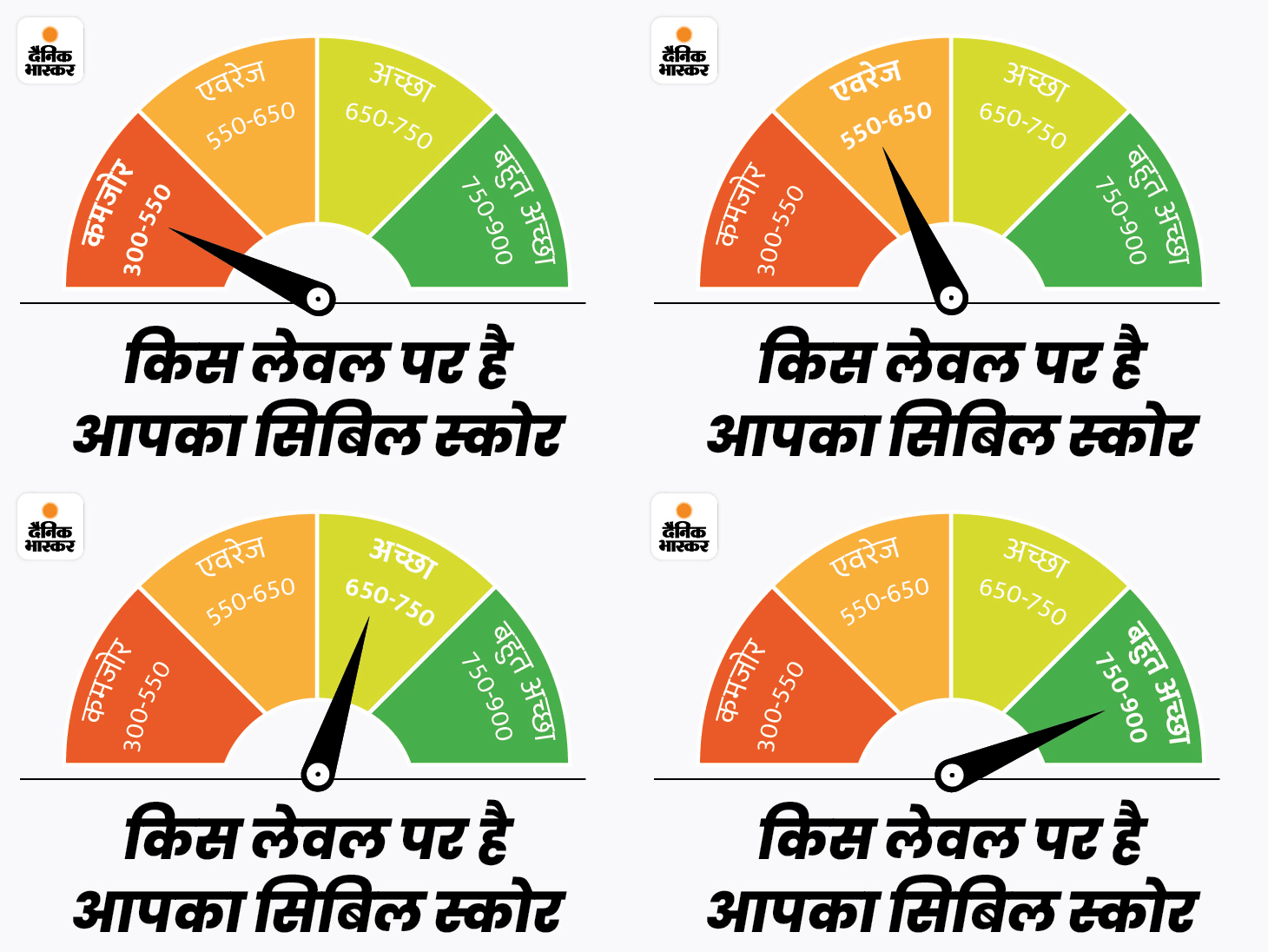
If ‘settled’ is written there on an old loan, then banks consider you a ‘high risk’ customer. Due to settled status, CIBIL score also remains low. Banks feel that a customer who has not made full payment earlier may do so again. For this reason home loan or personal loan applications are immediately rejected.
Understand how it works with an example
Suppose a person took a personal loan of ₹ 5 lakh for a trip to Europe. For some time, EMI was paid on time, but later due to some reason could not repay the remaining ₹ 3 lakh.
After negotiations, the bank agreed to cancel the loan on a settlement of ₹1.5 lakh. The customer thought his liability was over, but when he applied for a home loan a few years later, his application was rejected. The reason was the ‘settled’ status recorded in the CIBIL report.
How to change ‘settled’ to ‘closed’?
If your financial condition has become better than before and you want to improve your credit profile, follow these steps:
- Deposit the remaining amount: First of all, go to your old bank and tell them that you want to repay the money that was waived off at the time of settlement. Deposit the outstanding money to the bank.
- Take No Objection Certificate: After paying the full amount, take ‘No Dues Certificate’ or NOC from the bank. This is proof that the bank no longer owes you anything.
- File complaint on CIBIL: Go to the official website of CIBIL and click on the option to lodge a complaint. Fill the information about the NOC received from the bank there.
- Status will change in 30 days: CIBIL will contact your bank and check everything. As soon as you get the green signal from the bank, ‘Closed’ will be written in your report instead of ‘Settled’.

Source link
[ad_3]

