
Last Updated:
Satya Niketan, originally developed as a low-rise resettlement colony, has evolved into a densely populated student hub with multi-storey buildings, PGs, rented accommodation.




Satya Niketan Building Collapse Site
The deadly Satya Niketan PG collapsewhich claimed seven lives, has once again exposed the vulnerability of buildings across the national capital. The search-and-rescue operation, which continued for more than 24 hours, has now concluded after teams searched through the rubble for survivors. But this is not just about one building collapse.
According to Delhi Fire Service data, the city recorded 1,133 collapse-related incidents between 2022 and 2024, resulting in 98 deaths. The number of incidents increased each year, from 349 in 2022 to 371 in 2023 and 413 in 2024.
The trend has remained a concern in 2026 as well. Between January 1 and July 31, the Delhi Fire Service received 233 collapse-related calls, in which 17 people died and 101 were injured.
These figures refer to collapse-related calls or incidents reported to the fire service and should not be interpreted as the number of buildings that completely collapsed.
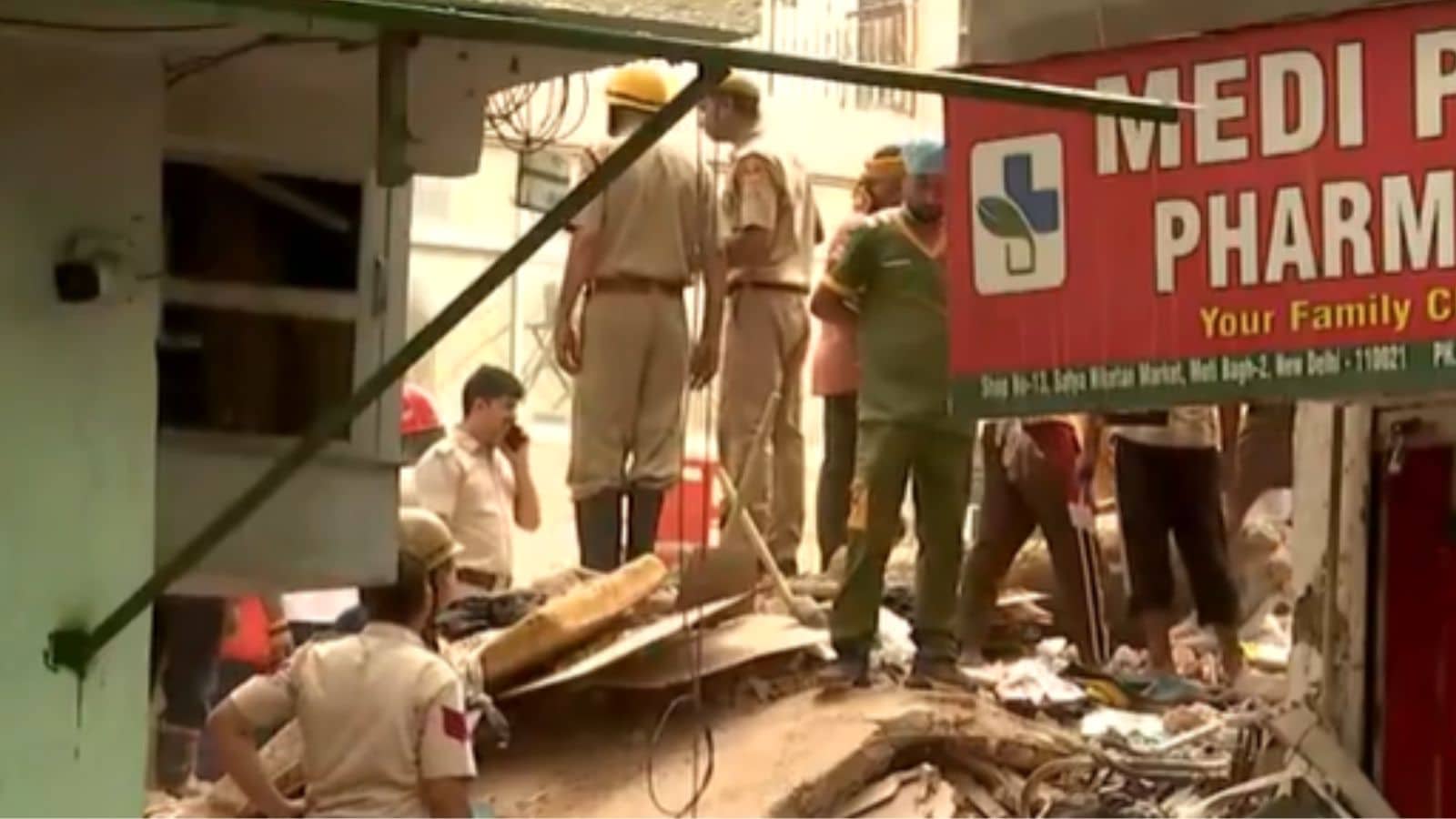
Satya Niketan: No Sanctioned Plan, No Fire NOC
The latest tragedy has raised particularly serious questions over regulatory violations at the collapsed PG.
According to senior MCD officials, the five-storey structure had no sanctioned building planwhile construction in its basement was unauthorised. Officials also said the fifth floor was not permitted under Floor Area Ratio (FAR) regulations. The MCD’s preliminary assessment has also flagged the absence of a record of any previous booking or sealing action against the property.
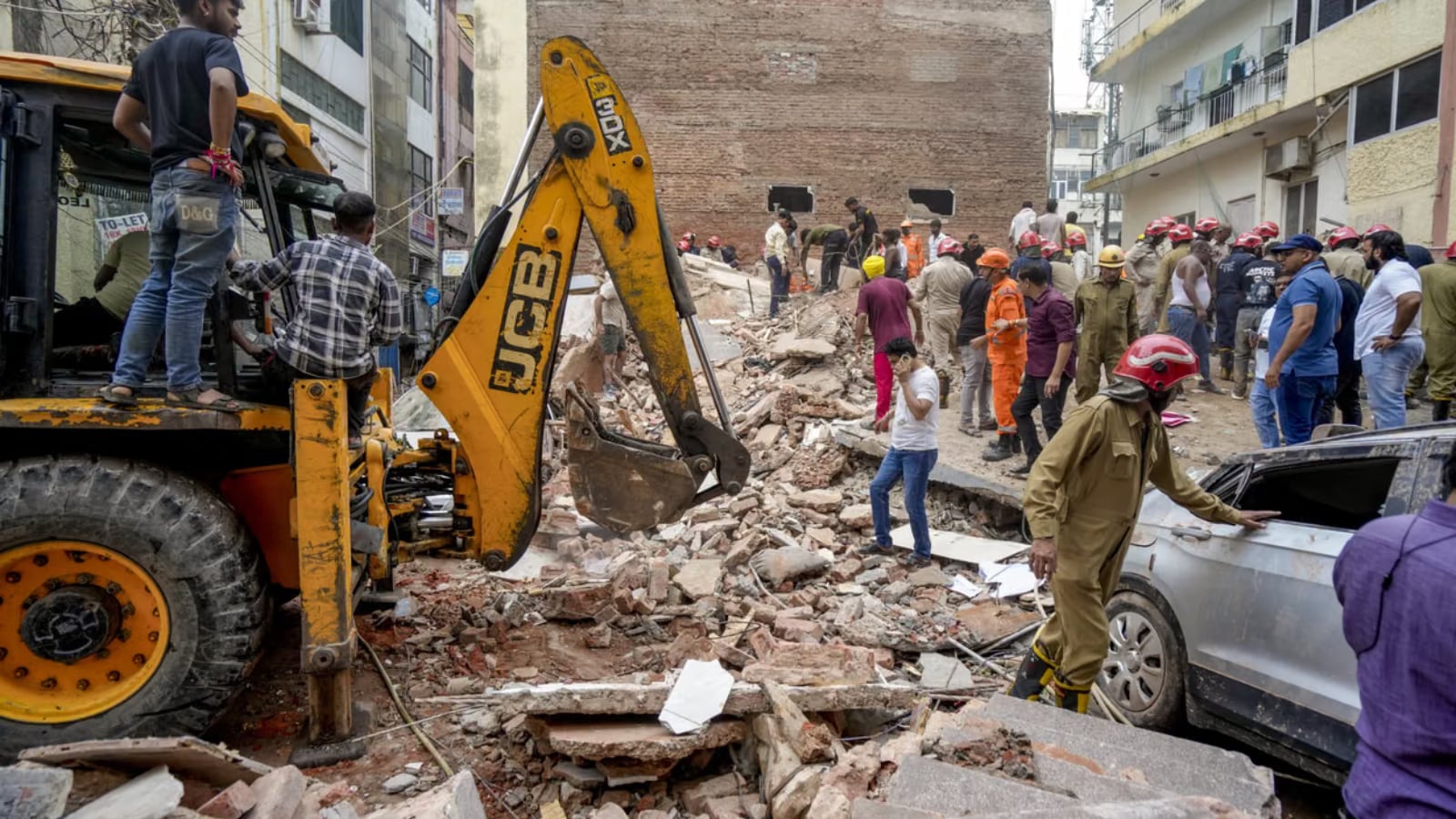
The building also reportedly did not have a fire No Objection Certificate (NOC). According to officials, PG buildings above nine metres housing more than 20 students require a fire NOC under the applicable rules.
The absence of such approvals is particularly significant because the structure was being used as a PG accommodation housing students.
1,133 Incidents, But Where Is The Prevention?
Delhi recorded 349 collapse-related incidents in 2022, in which 43 people died and 315 were injured. In 2023, the number rose to 371 incidents, with 23 deaths and 171 injuries. In 2024, the city recorded 413 such incidents, resulting in 32 deaths.
The figures show a year-on-year increase in reported collapse-related incidents between 2022 and 2024. But they represent calls or incidents reported to the Delhi Fire Service, not necessarily completely collapsed buildings.
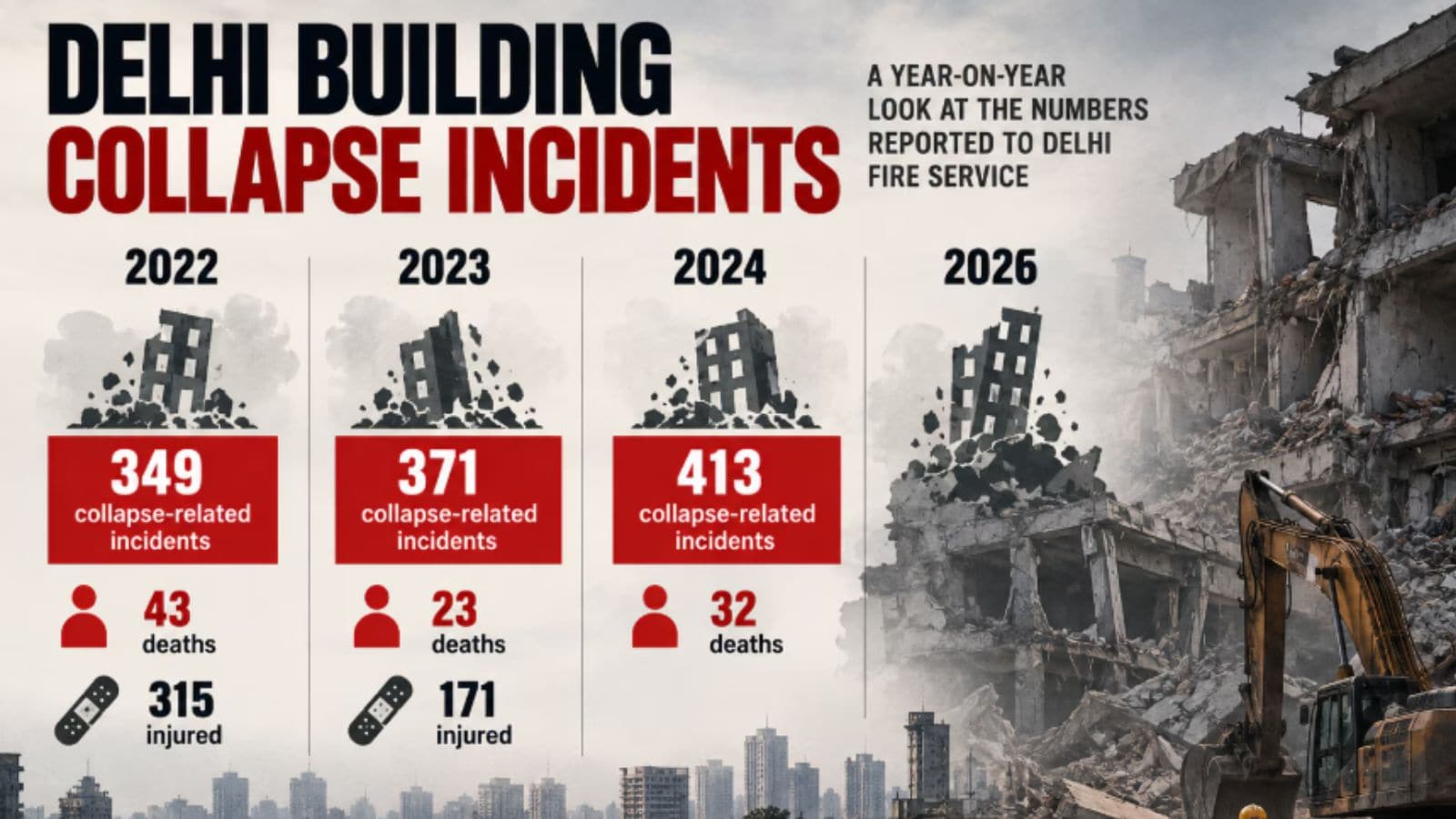
The first seven months of 2026 have added another 233 collapse-related calls, with 17 deaths and 101 injuries. While the 2026 figure covers only part of the year and therefore cannot be directly compared with the full-year figures for 2022-24, it shows that the problem has continued.
A Crowded City, Growing Pressure On Buildings
Delhi’s building-safety problem also has to be viewed against the pressure on its limited urban space. The capital had a population of 1,67,87,941 and 33,40,538 households, according to 2011 Census figures cited in the Delhi government’s Statistical Abstract. Spread across 1,483 sq km, that translates to a population density of 11,320 people per sq km.
That density becomes particularly significant in neighbourhoods located close to universities and other educational hubs. Areas such as Satya Niketan have increasingly become centres for PGs, private hostels and other high-occupancy accommodation, driven by demand from students and limited institutional hostel capacity.
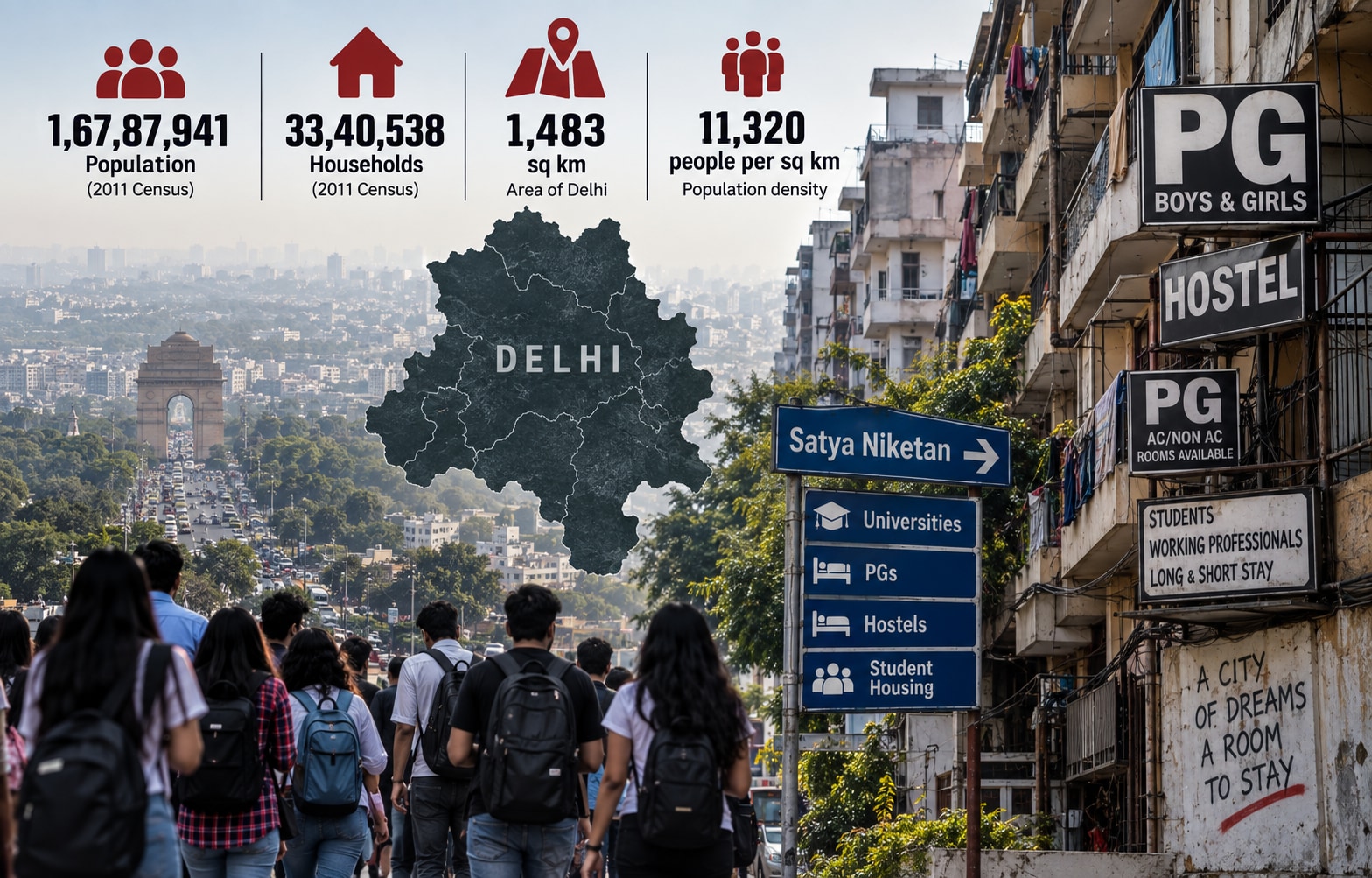
Satya Niketan, originally developed as a low-rise resettlement colony, has evolved into a densely populated student hub with multi-storey buildings, PGs, rented accommodation, eateries and other commercial establishments.
The result is greater pressure on buildings that may originally have been designed for fewer occupants or a different use. The expansion of structures, unauthorised alterations and conversion of residential properties into high-occupancy PG accommodation have consequently become part of the wider safety debate.
Satya Niketan Shows How That Pressure Plays Out
The collapsed property, identified by the MCD as P-14 Satya Niketan, stood on a plot of around 55 square yards. MCD officials said there was no sanctioned building plan for the structure and that construction in the basement was unauthorised. The building also lacked a fire NOC, according to officials.
Police have arrested the building’s owner, Hariram Guptahis wife, Urmila, and their son, Mahesh. Five MCD officials have also been suspended following the collapse.

From Isolated Collapses To A Systemic Safety Crisis
Delhi’s challenge is not simply its high population density but the growing pressure on accommodation, with residential buildings in several areas increasingly being used for more intensive purposes such as PGs and private hostels.
And that brings the question back to the larger pattern: If more than a thousand collapse-related incidents have been reported in three years, at what point does a series of “isolated” tragedies become a systemic building-safety crisis?
Quick Answers
 Ask News18
Delhi recorded 1,133 collapse-related incidents between 2022 and 2024, resulting in 98 deaths. The number of incidents increased each year, from 349 in 2022 to 413 in 2024. These figures represent calls or incidents reported to the Delhi Fire Service, not necessarily completely collapsed buildings.
Ask News18About the Author

Anushka Vats is a Sub-Editor at News18.com with a passion for storytelling and a curiosity that extends beyond the newsroom. She covers both national and international news. For more stories, you can …Read More

September 07, 2026, 6:22 PM IST
Read More
Source link
[ad_3]

