
- Hindi News
- Business
- Petrol Diesel Price Hike India | Fuel Costs Rise Rs 7.5; Food Prices To Increase
New Delhi1 hour ago
- copy link
Amid rising prices of crude oil in the international market, oil companies in India can increase the price of petrol diesel by up to Rs 2.5. Currently, the prices of petrol and diesel in the country have increased by about ₹ 7.5 per liter since May 15.
Rating agency CRISIL claimed in its report on Tuesday (June 2) that, if crude oil prices continue to rise in the global market, then oil companies can take the total increase to ₹ 10 per liter in the coming days to reduce their losses.
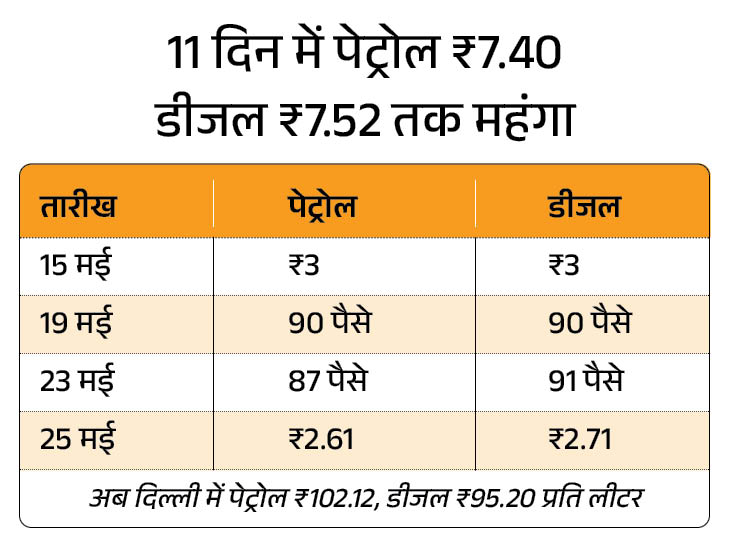
Retail inflation will also increase due to fuel becoming expensive
According to the report, this increase of ₹7.5 per liter in fuel prices may directly add about 36 basis points (0.36%) to retail inflation. At the same time, if this increase reaches ₹ 10 per liter, then its impact on inflation will increase to about 48 basis points (0.48%).
According to the report, due to costlier fuel, transportation, logistics and manufacturing costs will increase, whose direct impact will be visible on food items and everyday consumer goods in the coming months.
Kitchen budget will deteriorate due to increase in freight charges
About 71% of freight movement in India is carried by road transport and fuel (diesel) accounts for about 42% of the total operating expenses of transporters. Due to retail fuel becoming expensive, transportation costs will increase which will affect the entire supply chain. According to CRISIL, food categories dependent on transportation will be most affected.
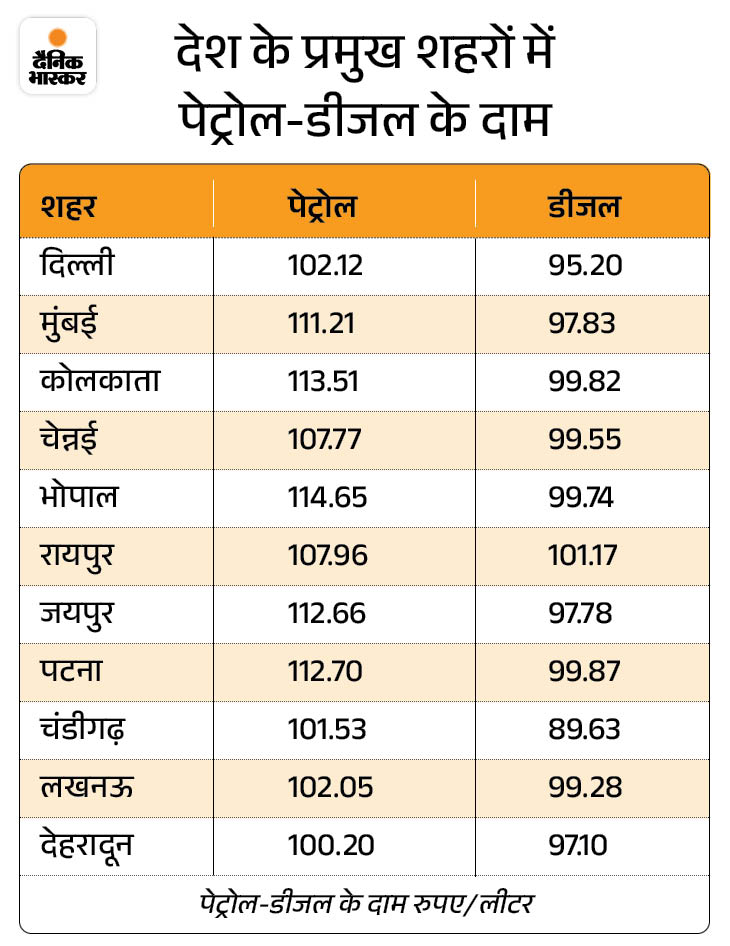
Most likely to increase prices of these things
- Dairy products (milk, curd, cheese)
- tea and coffee
- Fresh Fruits and Pulses
- Spices, Eggs, Meat and Fish
Cement, clothes and electronics may also become expensive
Due to increase in fuel prices, not only food but also core inflation (non-food and non-energy inflation) will increase. The manufacturing sector is already struggling with high prices of crude oil, petroleum products and natural gas.
CRISIL said textiles, consumer electronics, wood products and construction materials like cement and ceramics are the most transport-intensive industries. Due to stable demand, companies can directly pass the burden of rising costs on to customers or can adopt the path of reducing the packet size while keeping the price the same. Apart from this, input cost of products related to chemicals, coal and metal will also increase.
Some relief from GST cut, but crude crosses $112
The report notes that the GST cut by the government on mass-consumption items like electronics, automobiles, clothes and FMCG in September 2025 will definitely provide some relief to customers, but this relief will not be able to completely neutralize the shock of expensive oil.
The average crude oil price in the first two months of the current financial year (FY27) has been $112 per barrel, which is much higher than CRISIL’s full year estimate ($95 per barrel). Although the current headline inflation is below the RBI target of 4%, CRISIL expects it to trend upwards.
Still, it will remain within the RBI’s tolerance band of 2-6%. The central bank will keep a close eye on this supply-side pressure as well as the risks of poor monsoon and El Nino.
Why did the prices of petrol and diesel increase?
The main reason for this increase is the fluctuations in crude oil prices in the international market. Before the start of the war between Iran and America, the price of crude oil was $ 70, which has now increased to beyond $ 100 per barrel.
Oil companies were under pressure due to rising crude prices. Therefore, companies have taken this step to compensate for the losses. If the prices of crude oil continue to rise for a long time, the prices of petrol and diesel may increase further.
The price increases by three-four times the base price
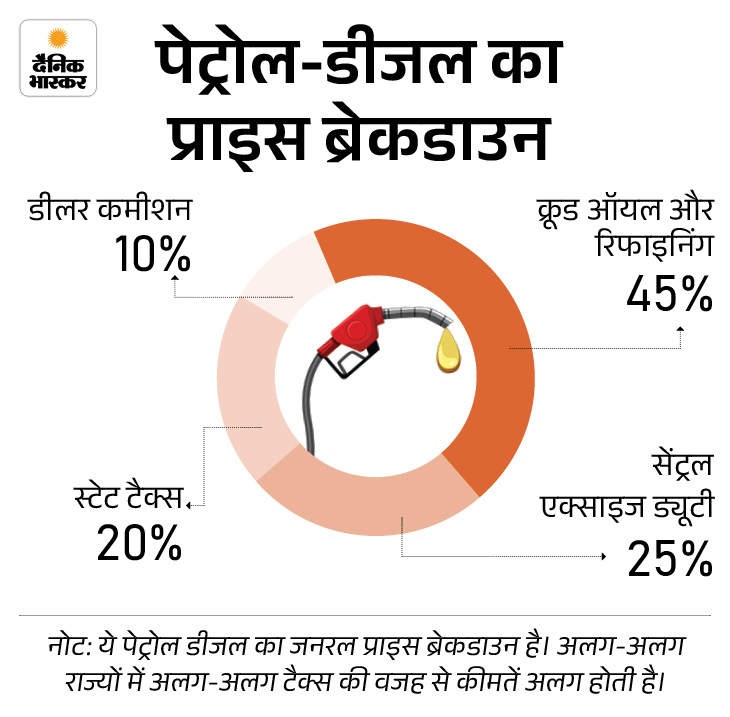
Fuel prices in the country are decided based on the prices of crude oil in the international market and the position of the rupee against the dollar. Government oil companies update new rates every day at 6 am under ‘Daily Price Revision’. A number of taxes and expenses are added to oil prices before it reaches the consumer:
- 1. Crude Oil Price (Base Price): India imports about 90% of its crude needs. The price per liter of oil is decided according to the barrel purchased from the international market.
- 2. Charges of Refining and Companies: Crude oil is refined into petrol and diesel in the country’s refineries. This includes refining costs and margins of companies.
- 3. Central Government Excise Duty: After leaving the refinery, the central government imposes excise duty (excise duty) and road cess on it. It is the same for all the states across the country.
- 4. Dealer Commission: The dealers’ own fixed commission is added to the rate at which oil companies sell fuel to dealers, which is different for petrol and diesel.
- 5. State Government VAT: Lastly, state governments impose VAT or local sales tax as per their discretion. Since VAT rates are different for every state, fuel prices also vary in different cities like Delhi, Mumbai, Kolkata and Chennai.
Excise duty on petrol and diesel was reduced by Rs 10 each.
On March 27, the government had reduced the special excise duty by ₹ 10 each to keep the prices of petrol and diesel stable. Duty on petrol was reduced from ₹13 per liter to ₹3, while that on diesel was reduced from ₹10 to zero. A total excise duty of ₹ 21.90 was collected by the Central Government on one liter of petrol.
After reduction in special additional excise duty, it came down to ₹ 11.90. Similarly, the total central excise duty on one liter of diesel was reduced from ₹17.8 to ₹7.8.
This decision of the government was to keep the prices of petrol and diesel stable. Due to this decision the prices of petrol and diesel did not increase. Read the full news…
PM Modi had said- reduce fuel use
Prime Minister Narendra Modi, during an event in Telangana on May 10, had suggested cautious use of petroleum products in view of the geopolitical situation in West Asia.
The PM had said that today the need of the hour is to use petrol, gas and diesel very sparingly. We don’t have big oil wells. Today we have to take a pledge that no matter what the program is, we will not buy gold for the next one year. Read the full news…

Source link
[ad_3]

