
Last Updated:
CJP’s Ashutosh Ranka, Saurav Das sent to five-day judicial custody for Jantar Mantar trespass: What are the charges? What is the punishment? News18 explains.




Cockroach Janta Party (CJP) chief spokesperson Saurav Das, national spokesperson Ashutosh Ranka, and other supporters inside a police van.
Cockroach Janta Party (CJP) leaders Saurav Das and Ashutosh Ranka were on Wednesday sent to five-day judicial custody and lodged in Tihar Jail for allegedly violating their peace bonds and trespassing into Jantar Mantar, which was denotified as a protest area.
What are the charges? What is the punishment? News18 explains.
THE ARREST
Fourteen CJP leaders were detained early Tuesday after they allegedly breached barricades and entered the Jantar Mantar area without authorisation, raising slogans demanding Chief Election Commissioner Gyanesh Kumar’s resignation. Police had registered a case against the CJP activists on charges including trespassing, violation of prohibitory orders, breach of a peace bond and obstructing a public servant from discharging official duties.
Das and Ranka had signed bonds to maintain peace for a year after being detained during a protest on Saturday, they said.
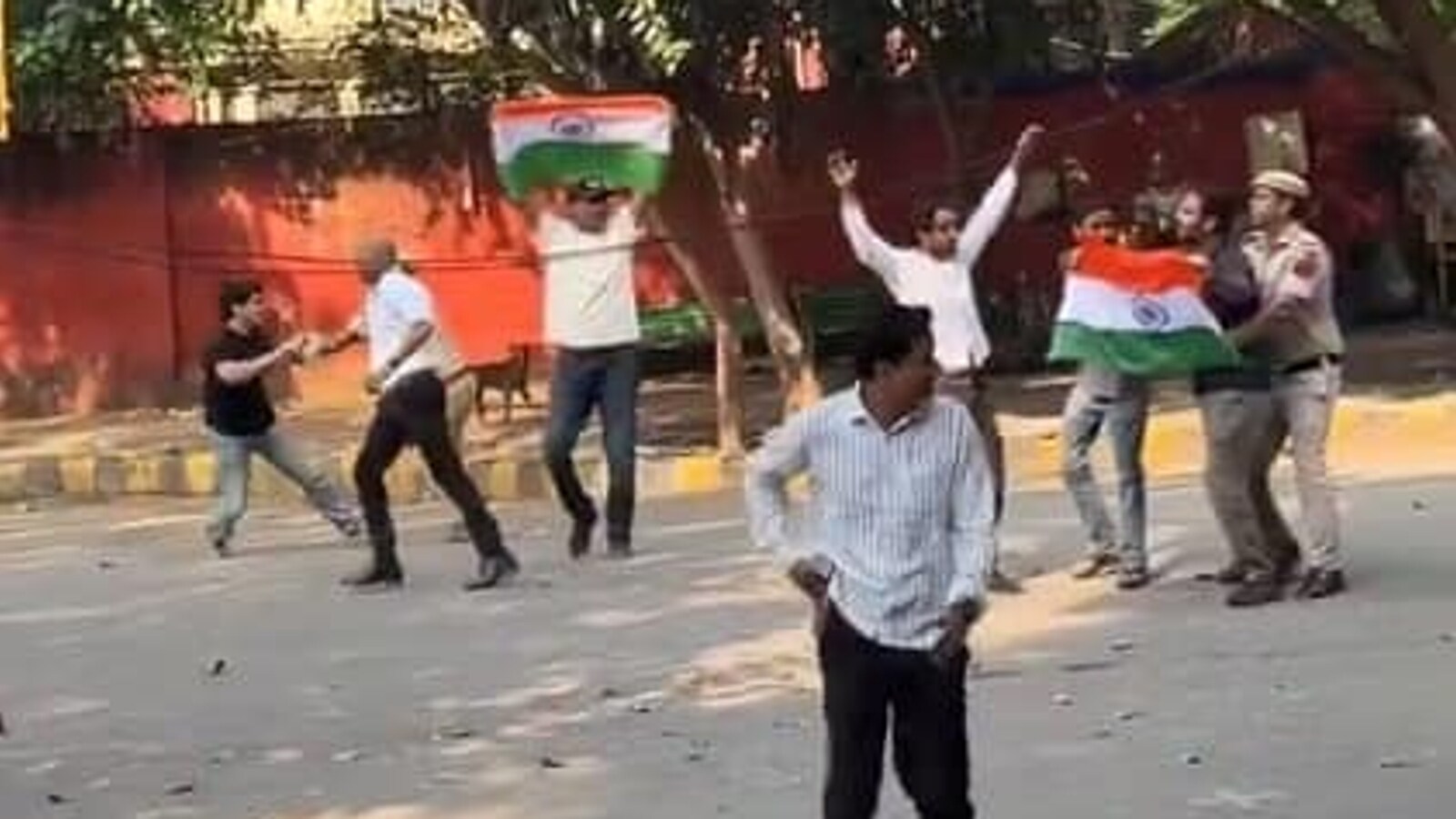
The 11 volunteers were bound down and released, while Das, Ranka, and Shinde were placed under preventive arrest. The three were produced before the Executive Magistrate again on Wednesday morning.
At A Glance
Cockroach Janta Party leaders Saurav Das and Ashutosh Ranka were remanded to five days in judicial custody at Tihar Jail.
Fourteen CJP leaders were detained on Tuesday after entering the Jantar Mantar area without authorisation.
Ajinkya Shinde was released after signing a fresh personal peace bond of 5000 rupees.
Section 132 of the BNS carries a punishment of imprisonment up to 5 years for assault or criminal force to deter a public servant.
The action comes amid heightened security in the national capital following a series of protests by the CJP and other organisations against Chief Election Commissioner Gyanesh Kumar and alleged irregularities in the Special Intensive Revision (SIR) of electoral rolls.
THE CHARGES INVOKED AGAINST RANKA AND DAS
According to the Delhi Police statement, two FIRs were registered on October 13 in connection with the incident. FIR No. 289/26 was registered at Connaught Place police station under Sections 223(a), 332 and 61(2). FIR No. 128/26 was registered at Parliament Street police station under Sections 221, 115(2), 132, 121(1) and 3(5).
Under the specific sections invoked by the Delhi Police against the Cockroach Janta Party (CJP) leaders, the legal punishments carry a mix of prison terms and fines. As a result of these invoked charges, a Special Executive Magistrate (SEM) court remanded Saurav Das and Ashutosh Ranka to five days in judicial custody at Tihar Jail, while Ajinkya Shinde was released after signing a fresh personal peace bond of ₹5,000.
Because these cases were registered following the transition from the legacy Indian Penal Code (IPC), the punishments are governed under the Bharatiya Nyaya Sanhita (BNS) and the Bharatiya Nagarik Suraksha Sanhita (BNSS):
CONNAUGHT PLACE POLICE STATION FIR: Sections 223(a), 332, and 61(2)
Section 223(a) – Disobedience to order duly promulgated by a public servant: This applies when an individual willfully disobeys a lawful restriction (such as an order prohibiting assembly).
Punishment: Simple imprisonment for a term up to 6 months, a fine up to ₹2,500, or both.
Section 332 – House-trespass to commit an offence: The penalty depends entirely on the gravity of the intended offence once inside:
To commit an offence punishable with imprisonment: Up to 2 years imprisonment and a fine.
If the intended offence is theft: Up to 7 years imprisonment and a fine.
To commit an offence punishable by life imprisonment or death: Up to 10 years imprisonment (or life imprisonment under clause ‘a’) and a fine.
Section 61(2) – Criminal Conspiracy: This establishes joint accountability for planning a crime.
Punishment: If conspiring to commit a major offence (punishable with death, life imprisonment, or rigorous imprisonment of 2+ years), the punishment is the same as abetment of that offence. For any other conspiracy, it carries up to 6 months imprisonment, a fine, or both.
PARLIAMENT STREET POLICE STATION FIR: Sections 221, 115(2), 132, 121(1), and 3(5)
Section 221 – Obstructing public servant in discharge of public functions
Punishment: Imprisonment for a term up to 3 months, a fine up to ₹2,500, or both.
Section 115(2) – Voluntarily causing hurt: This is the general penal provision for physically causing minor bodily pain or injury.
Punishment: Imprisonment for a term up to 1 year, a fine up to ₹10,000, or both.
Section 132 – Assault or criminal force to deter public servant from duty.
Punishment: Imprisonment for a term up to 5 years, a fine, or both.
Section 121(1) – Voluntarily causing hurt to deter public servant from duty: Specifically deals with causing minor physical injuries to an officer to prevent them from executing their legal orders.
Punishment: Imprisonment for a term up to 5 years, a fine, or both.
Section 3(5) – Joint Liability / Common Intention: This is a foundational legal principle rather than a standalone crime. It states that when a criminal act is done by several people in furtherance of a shared purpose, each person is liable as if they did it alone.
Punishment: There is no separate penalty; the accused individuals face the exact punishment designated for the primary substantive crimes they collectively executed.
Preventive Actions & Bond Violations (BNSS)
Breach of Peace Bond (Section 126 / 170): These are preventive procedural mechanisms rather than standalone punitive terms.
Punishment/Consequence: Because Saurav Das and Ashutosh Ranka breached their prior ₹50,000 bond signed on October 11, the Special Executive Magistrate (SEM) court immediately exercised its powers to revoke bail and remand them to 5 days of judicial custody in Tihar Jail to prevent repeated violations. Furthermore, the financial amount of the prior surety bond can be legally forfeited to the State.
Quick Answers
 Ask News18
Saurav Das and Ashutosh Ranka were sent to five-day judicial custody at Tihar Jail for allegedly violating their peace bonds and trespassing into Jantar Mantar, which was denotified as a protest area.
Ask News18About the Author

At the news desk for 20 years, the story of her life has revolved around finding pun, facts while reporting, on radio, heading a daily newspaper desk, teaching mass media students to now editing speci…Read More
October 14, 2026, 12:30 IST
Read More
Source link
[ad_3]

