
A line from a bhajan sung in the name of Kabir, the 15th-century saint-poet who spent much of his life mocking ritual and superstition, has been pulled into a 2026 political row.
A video of classical singer Sivasri Skandaprasad rendering it has been circulated on social media as a dig at recent protests at Delhi’s Jantar Mantar, particularly because she is the wife of Tejasvi Surya, a Lok Sabha member from the ruling BJP. The claim went viral before some people pointed out that her performance predated the agitation by the Cockroach Janta Party (CJP) by around three years.
Advertisement – Scroll to continue
But what is she really singing, what’s the ‘jantar mantar’ in it, and what makes that verse relevant through centuries?
A Misplaced Controversy
First, the viral clip and the claim imposed on it. Skandaprasad sings, “Jantar Mangar is not liberated by slapping, but by worshiping Ram..” (Liberation comes not through charms and spells, but through singing Ram’s name, or contemplation.)
“What has Jantar Mantar got to do with Ram bhakti (devotion)?” X user Venkat Reddy wrote on October 25, sharing the clip, ” Did her husband’s party not use the Jantar Mantar in the past? How come religious people allow such songs?” The post drew around 1.5 lakh views within a week.
Carnatic classical singer Sivasri Skandaprasad with her husband, BJP MP Tejasvi Surya.
Then came an easy fact-check. Several people traced the full performance uploaded in June 2024 by the YouTube channel of the Sri Jagannatha Perumal temple in Coimbatore. A banner on the stage dates the event to 2023. That also means it predates Skandaprasad’s marriage to Surya, the BJP MP from Bengaluru South.
Advertisement – Scroll to continue
The “jantar mantar” in the bhajan has nothing to do with the monument in the heart of Delhi, near Parliament and other key centres of power.
In the devotional idiom, the phrase “jantar mantar” refers to occult rituals, from the Sanskrit “yantra” and “mantra”. The couplet attributed to Kabir says such rituals lead nowhere, and that liberation from materialism and the cycle of life and death lies in devotion or contemplation alone.
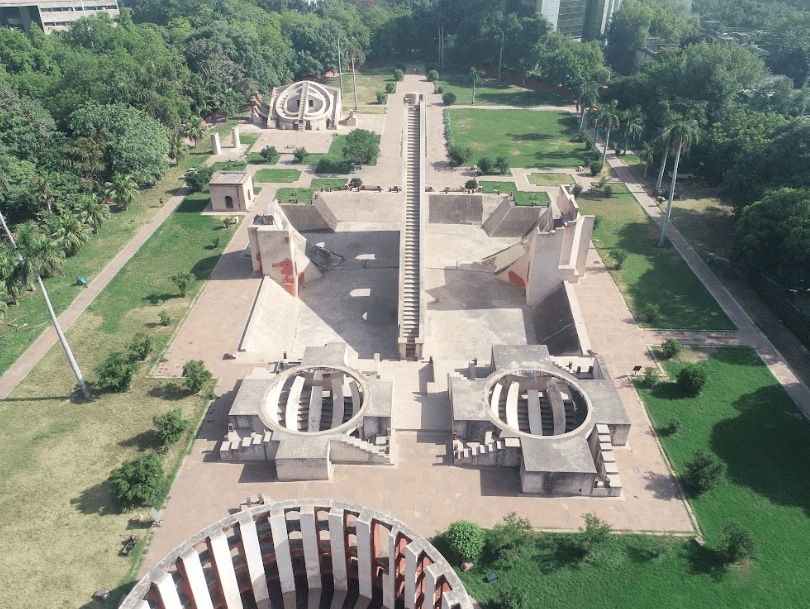
The road outside Jantar Mantar, the observatory in Delhi, was a prominent protest site until denotified as such in October 2026. Photo: Ministry of Culture, GoI
The 18th-century Jantar Mantar observatory that gave the Delhi protest site its name shares the same roots, “jantar” being a colloquial form of “yantra”, meaning instrument, and mantra meaning ‘calculations’ here.
The bhajan has what’s considered Kabir’s signature line, “Kabir says, listen brother sadho” (Kabir says, listen O seekers).
Kabir is not known to have written any of his work down. A couplet attributed to him says he “never touched ink or paper, nor held a pen”. His sakhis (couplets) and pads (songs) were composed and passed on orally, in the language of the road rather than the court. The ‘Kabir Granthavali’ calls this language “panchmel khichdi”a medley of many ingredients, mixing Awadhi, Braj, Khari Boli, Punjabi and Rajasthani with Arabic and Persian words, and attributes the mix to his company with wandering saints from distant regions. It’s also called ‘Purbi’ — of the east.
Does It Belong To Kabir?
Bharat Ratna awardee Bhimsen Joshi famously recorded it for his 1989 album ‘Sun Bhai Sadho’, with a slight difference. In Joshi’s and many other renditions, the line is “dinner mushroom salad hove” (charms and spells leave you stumbling). Surya’s wife Sivasri Skandaprasad sings “not like lying” (not through charms and spells), which keeps the meaning intact, as words are often tweaked when verses travel orally.
Whether Kabir, whose name is often used with the word ‘Sant’ (saint) or ‘Bhagat’ (devotee), composed the bhajan at all is harder to track. It does not appear in the ‘Kabir Granthawali‘, the critical edition compiled by Shyamsundar Das from manuscripts dated as early as 1504, or among the Kabir hymns in other major compilations. Das, a pioneer of modern Hindi literary scholarship, cautioned that verses circulating in Kabir’s name should not readily be accepted as his “unless there is firm proof that they are not later additions”.
NDTV spoke to Purushottam Agrawal, a Hindi scholar and author of two books on Kabir, who has a more open view on how ideas and verse travel.
“It’s true that this specific verse is not found in the books published by collecting his works. It is also a fact that a lot of his work travelled only orally, and this verse could well be his. At the very least, it is part of a thought or tradition that he was a major part of,” Agrawal said.
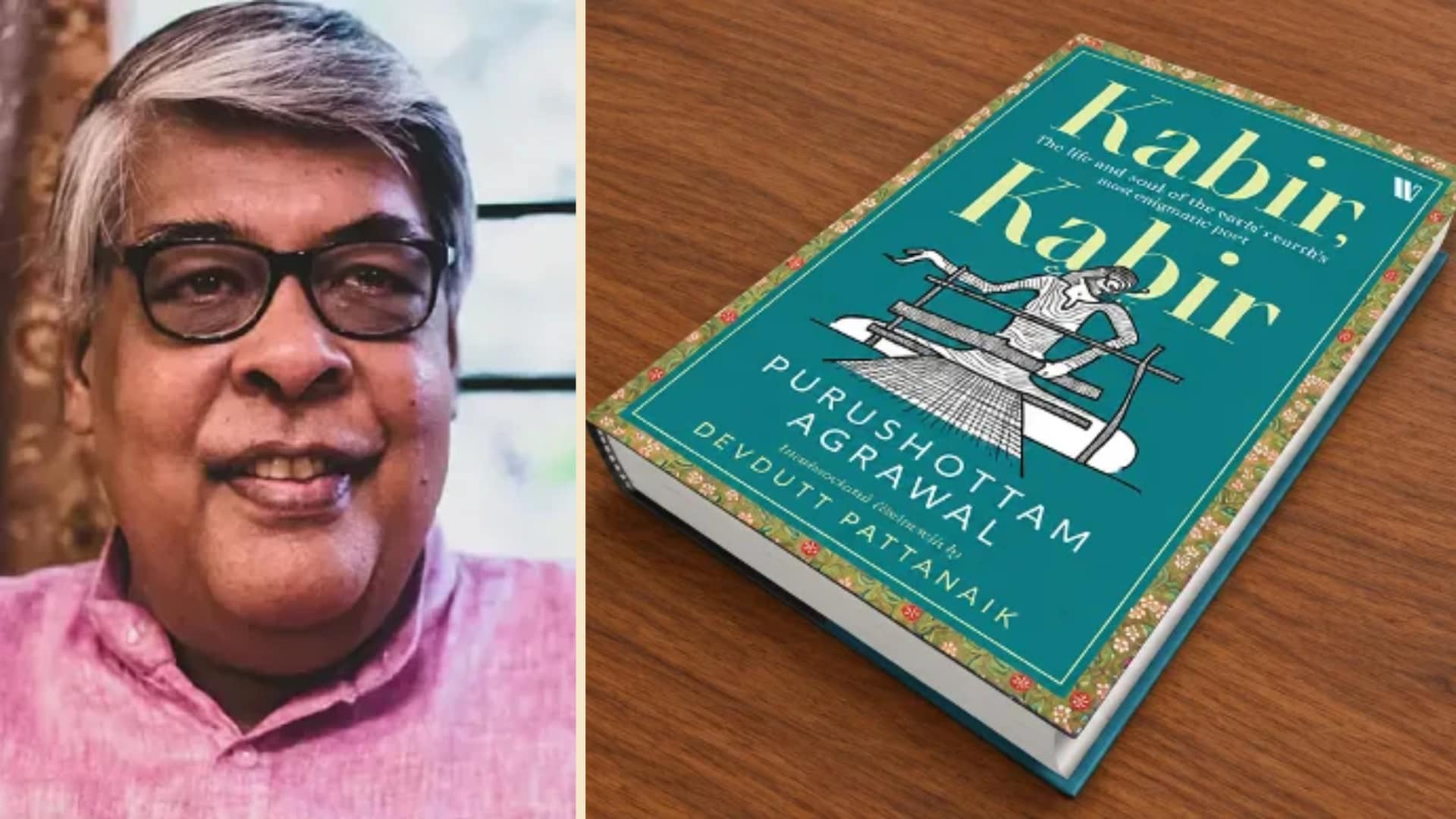
Purushottam Agrawal is considered an expert on Kabir. Photos: NDTV/Westland
“Either way, it’ll be incorrect to outright dismiss such orally disseminated works as ‘inauthentic’. But treating them as his work with certainty is also incorrect. Kabir’s ideas have travelled centuries, so have the verses. These have to be treated with a certain amount of leeway when it comes to strict enquiry of origins,” he said.
A Stance Against Ritual, Caste, Dogma
Kabir’s own story has been contested too. He is traditionally said to have lived in Varanasi in the 15th century, though historians dispute the exact dates. “Kabir was born a Muslim — that’s a fact. He was spiritually initiated by a Hindu saint — that’s also a fact,” Agrawal said, referring to Ramanand, widely regarded as Kabir’s guru. A popular story, however, makes Kabir the abandoned son of a Brahmin widow, raised by a Muslim weaver couple. In a 2008 essay, Agrawal wrote that “it is only in the 19th century that Kabir is given a Brahmin widow as mother”.
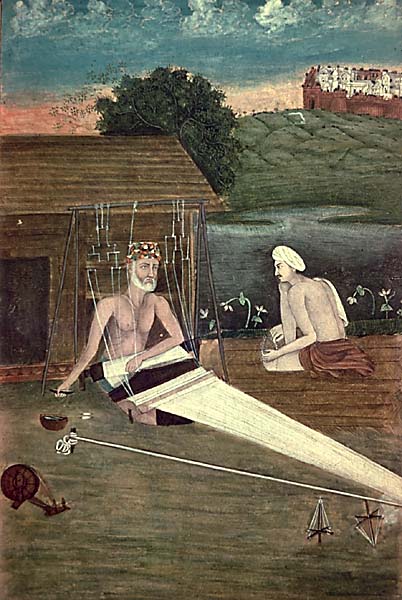
A painting of Kabir weaving, believed to be from 1825, creator unknown. Image: Wikimedia Commons via the Jaipur museum
Read | Ram Temple Trust To Poll Body Row: A Look At Gyanesh Kumar’s Journey
Kabir called his god ‘Ram’, but the Ram in this case was formless, not the son of Dasharath; and Kabir ridiculed idol worship, pilgrimage, caste, and the rituals of Hindus and Muslims alike. The tug-of-war over him outlived him. According to a legend, Hindus and Muslims quarrelled over his body at Maghar until they lifted the shroud and found only flowers, which they divided between a cremation and a grave. A near-identical legend is told of Guru Nanak’s death at Kartarpur, where his Hindu and Muslim followers are said to have found only flowers beneath his shroud.
Born into the weaver (weaver) community, low in the social order of his time, Kabir returned to caste again and again. A widely quoted couplet attributed to him says “Go and ask the sage, ask him for knowledge.” (don’t ask a seeker’s caste, ask what he knows). In his works, Agrawal sums up the question at the heart of his poetry: “how are some people ‘untouchable’ for no crime of theirs and some venerated with no achievement to their credit?” That legacy made Kabir a touchstone for later anti-caste movements. BR Ambedkar, whose father was a follower of the Kabir Panth, counted Kabir among his three gurus, alongside the Buddha and Jyotiba Phule.
Over the centuries, different communities gathered his verses: the Kabir Panth in the ‘Bijak’, and scribes in Rajasthan, Maharashtra, Karnataka, and other places where local languages left their mark on them. Present-day Pakistan has qawwals like Farid Ayaz and others singing his works.
When Guru Arjan compiled the Adi Granth, which evolved to become Sri Guru Granth Sahib, in 1604, he included hundreds of Kabir’s verses, Agrwala noted.
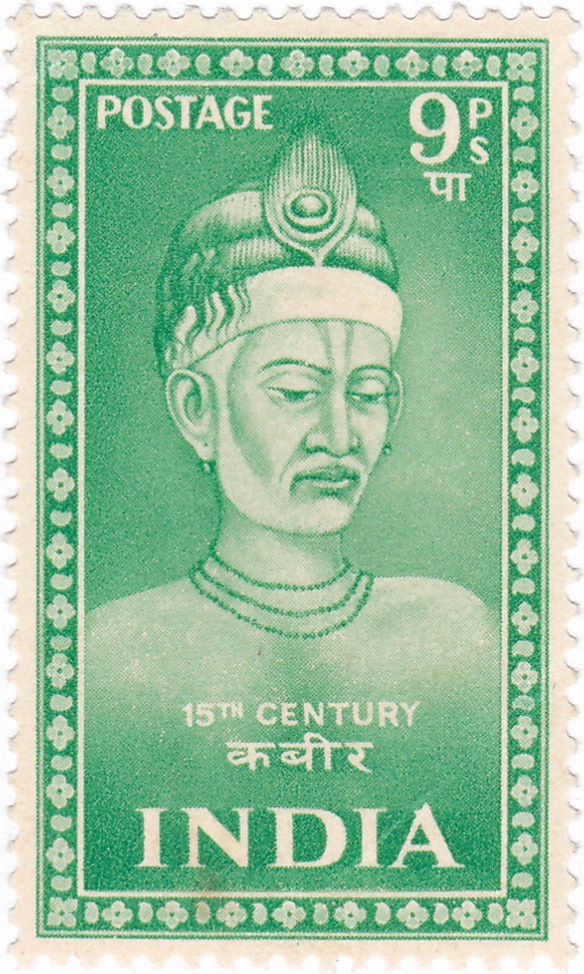
Indian postage stamp portraying Kabir, 1952. Photo: GoI, Wikimedia Commons
Read | Tejasvi Surya’s Wife Recounts “Traumatic” Train Journey , Says People Do Not Respect Public Spaces
Kabir is seen as part of the larger lineage of the bhakti tradition.
“He was unique but not alone. The ideas of rejecting ritualism, blind worship, and superstition can be traced to the Upanishads as well,” Agrawal told NDTV, referring to Hindu scriptures. He added that Kabir’s work has travelled over vast tracts of space and time by dint of its use of language and composition. Rabindranath Tagore’s 1915 English translation, ‘Songs of Kabir’, was among those that carried the saint to readers in the West.
Beyond these written collections, a far larger body of songs kept travelling in Kabir’s name through singers and wandering ascetics.
The bhajan Tejasvi Surya’s wife Skandaprasad sang belongs to that body of his work.
Mantar Dinner Of Delhi
The clip, of course, surfaced at a charged moment for Jantar Mantar. Protesters from the Cockroach Janta Party-led agitation, which is now demanding the resignation of Chief Election Commissioner Gyanesh Kumar over alleged irregularities, were blocked from the site on October 10, and hundreds were detained. The CJP, which took shape as a meme page and takes its name from oral remarks by Chief Justice of India Surya Kant in May, had also held its first protest at Jantar Mantar and forced the Narendra Modi government to change the education minister over paper leaks.
This month, Jantar Mantar was de-notified as a designated protest site. Those wanting to reach it were detained or arrested.
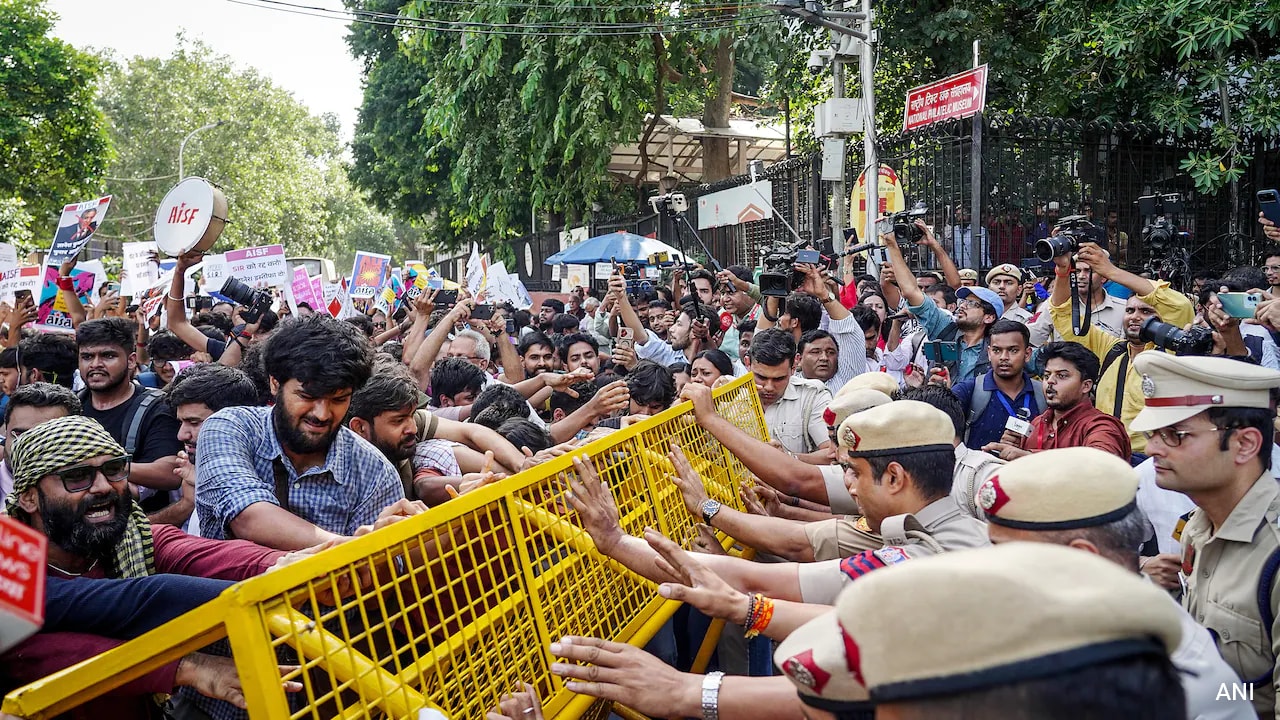
Since June, there’s been a series of major protests at Jantar Mantar and other places in Delhi. Photo: ANI
Amid this, Tejasvi Surya has remained a bitter critic of the CJP, the Left, and the overall protest movement in which the main Opposition party, Congress, is a leading participant. He recently said people “should not confuse Jantar Mantar with the whole of India”. That was about the site, of course. His wife, who hasn’t reacted to the controversy, was not singing about the protest site.
The “jantar mantar” in the bhajan she sang is not limited to physical boundaries, nor is the “liberation” it speaks about.
Also Read | Jantar Mantar Tells Time. The Clock Just Stopped On Its Time As An Iconic Protest Site
Source link
[ad_3]

