
Last Updated:
Md Saidur Rahman and Umme Marufa, Bangladesh’s new India-based press appointees, are under scrutiny over past social media posts containing strong anti-India rhetoric.




Umme Marufa and Md Saidur Rahman.
Is Tarique Rahman’s government appointing press secretaries in India who harbour deep anti-India sentiments? The question has come into focus after Bangladesh announced the appointment of journalist Md Saidur Rahman as its Press Minister at the Bangladesh High Commission in New Delhi. Sources have also told News18 that Dhaka has nominated Umme Marufa as its First Secretary (Press) at the Bangladesh Deputy High Commission in Kolkata. So what’s the issue? Both are known for their rabid anti-India views.
The year was 2024, when Sheikh Hasina was ousted from power in Dhaka and took refuge in New Delhi.
On December 16, Bangladesh celebrates Victory Day, or Bijoy Dibos, marking the surrender of the Pakistan Armed Forces in 1971 – a victory made possible with the decisive intervention of the Indian Armed Forces. Like every year, Prime Minister Narendra Modi shared a social media post remembering the “selfless dedication” and “sacrifices of the brave soldiers who contributed to India’s historic victory in 1971.”
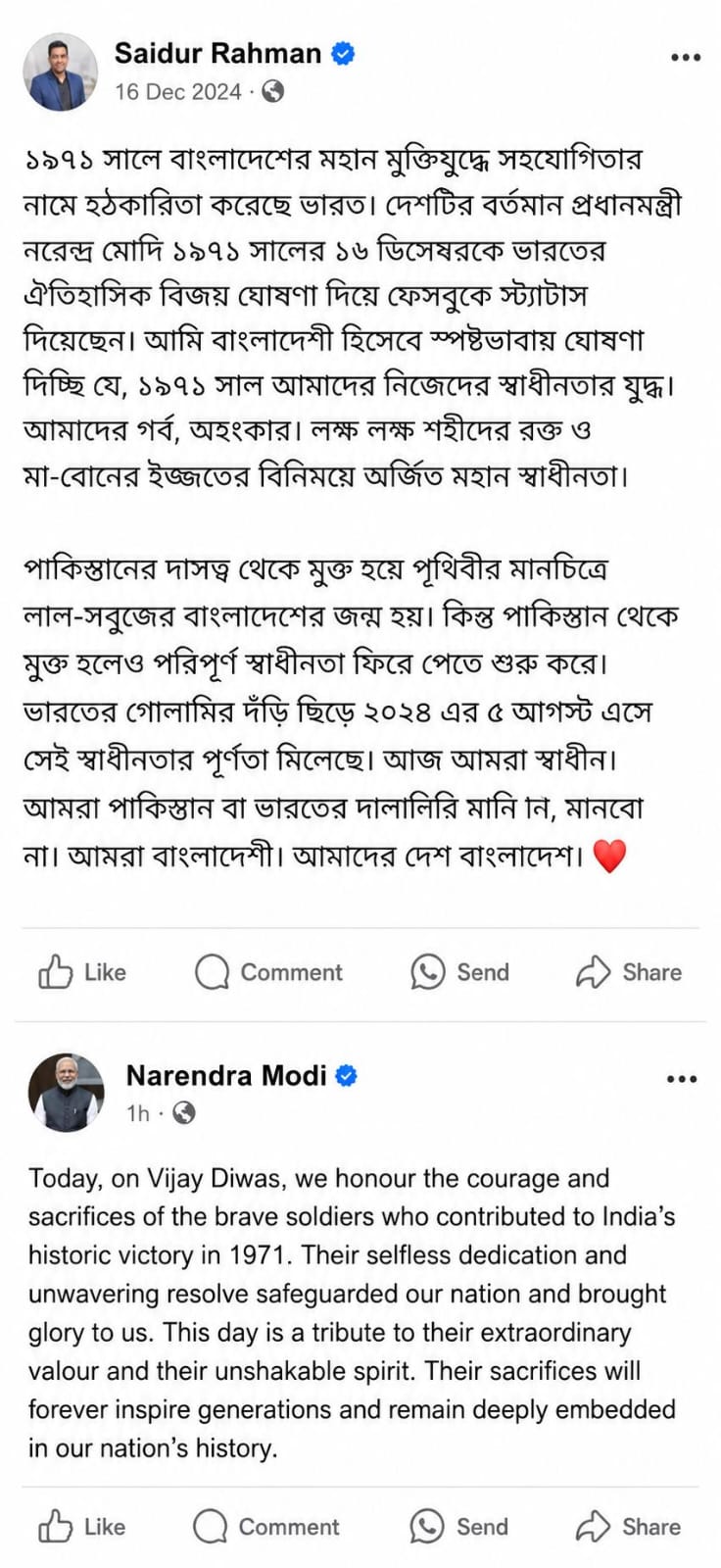
Rahman used that message to belittle the sacrifices made by the Indian Armed Forces, calling India’s intervention “rashness”.
Belittling Prime Minister Modi, he wrote: “The country’s current Prime Minister Narendra Modi declared December 16, 1971 as India’s ‘historic Victory Day’ and gave a status on Facebook. As a Bangladeshi, I am declaring clearly that 1971 was our war of independence. Our pride, our honour.”
Rahman went on to claim that although Bangladesh was liberated from Pakistan in 1971, “the struggle to regain complete independence” began immediately afterwards, suggesting that the country came under India’s “colonial grip”. Leaving little to the imagination, he wrote on Facebook: “Breaking free from India’s grip, that complete independence was achieved on August 5, 2024.”
Sheikh Hasina had fled Gana Bhaban on August 5, 2024. Less than a year later, on July 19, 2025, the same Md Saidur Rahman was appointed Press Minister in New Delhi through a notification issued by Bangladesh’s Ministry of Public Administration.
“Mr Md Saidur Rahman has been appointed as Minister (Press) in the Press Wing of the Bangladesh High Commission, New Delhi, India Mission for a period of one year from the date of joining…,” the notification said.
Now, if sources in the Bangladesh government are to be believed, the person being nominated as the First Secretary (Press) at Bangladesh’s Deputy High Commission in Kolkata – whose appointment is yet to be formally announced – is even more radical.
Umme Marufa, a journalist with the Bengali news channel News24, has deleted most of her controversial social media posts since news of her nomination surfaced. However, screenshots accessed by News18 show the extent of her anti-India rhetoric, which appears even more extreme than Rahman’s.
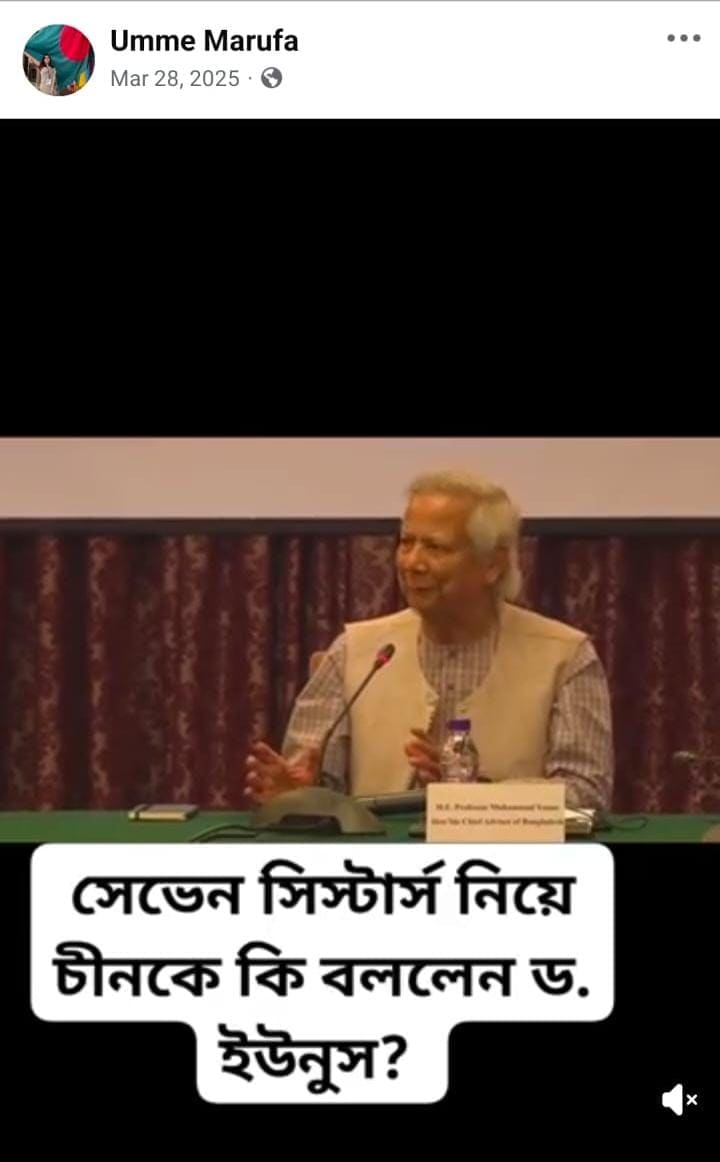
On March 28, 2025, she shared Chief Adviser Muhammad Yunus’s controversial remarks about India’s “Seven Sisters” – the country’s seven northeastern states.
During his visit to China, which concluded on March 28, 2025, the Nobel laureate-turned-Bangladeshi leader had said Bangladesh was the “only guardian” of the ocean while highlighting the landlocked status of India’s northeastern states.
“The seven states of eastern India – the Seven Sisters – are landlocked. They have no access to the ocean. We are the only guardians of the ocean,” Yunus had said.
At the time, Sanjeev Sanyal, a member of Prime Minister Narendra Modi’s Economic Advisory Council, reacted to the remarks on X.
Sharing the video, he wrote: “Interesting that Yunus is making a public appeal to the Chinese on the basis that 7 states in India are land-locked. China is welcome to invest in Bangladesh, but what exactly is the significance of 7 Indian states being landlocked?”
On December 12, 2025, Sharif Osman Hadi – a spokesperson and leading figure of Inqilab Moncho, a youth-oriented political platform and a vocal critic of Sheikh Hasina – was shot in Dhaka. He later succumbed to his injuries in Singapore on December 18, 2025. Hadi was known for his strong anti-India views.
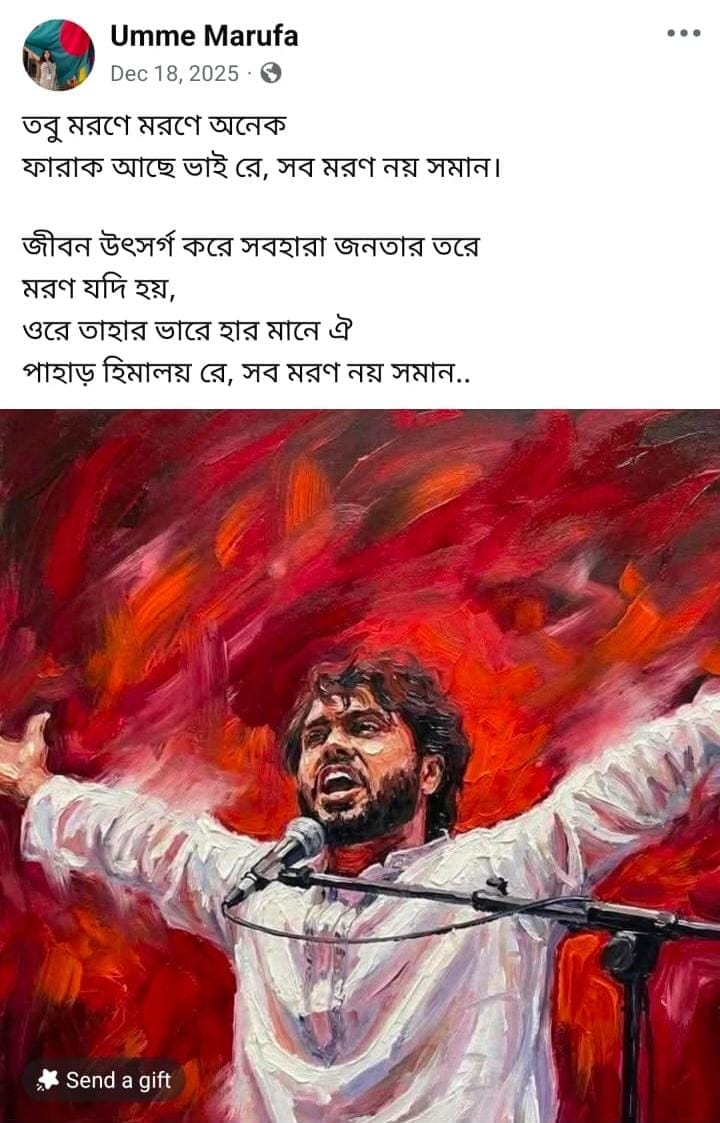
On the day of his death, Umme Marufa – who is set to play a key role in shaping Bangladesh’s media outreach from Kolkata – hailed his death on Facebook, writing: “There is a difference in deaths, my brother; all deaths are not the same.”
The appointments of Md Saidur Rahman and Umme Marufa as Bangladesh’s press appointees in India are under scrutiny due to past social media posts containing anti-India rhetoric. Rahman reportedly belittled Indian sacrifices in the 1971 war and criticized Prime Minister Modi.
About the Author

Anindya Banerjee, Associate Editor brings over fifteen years of journalistic courage to the forefront. With a keen focus on politics and policy, Anindya has garnered a wealth of experience, with deep …Read More
Read More
Source link
[ad_3]

