
New Delhi24 minutes ago
- copy link
After Amul, Mother Dairy has also increased the prices of milk by Rs 2 per liter on Wednesday. The new prices of both the companies will be applicable from Thursday (May 14). Amul and Mother Dairy have increased prices on major variants and packs of milk.
According to Gujarat Cooperative Milk Marketing Federation, the decision was taken due to increasing cost of animal feed, packaging and fuel. Amul says that this increase is between 2.5% to 3.5%.
Amul has increased the prices of milk for the first time after May 2025. Whereas Mother Dairy had earlier increased the prices of milk in April 2025.
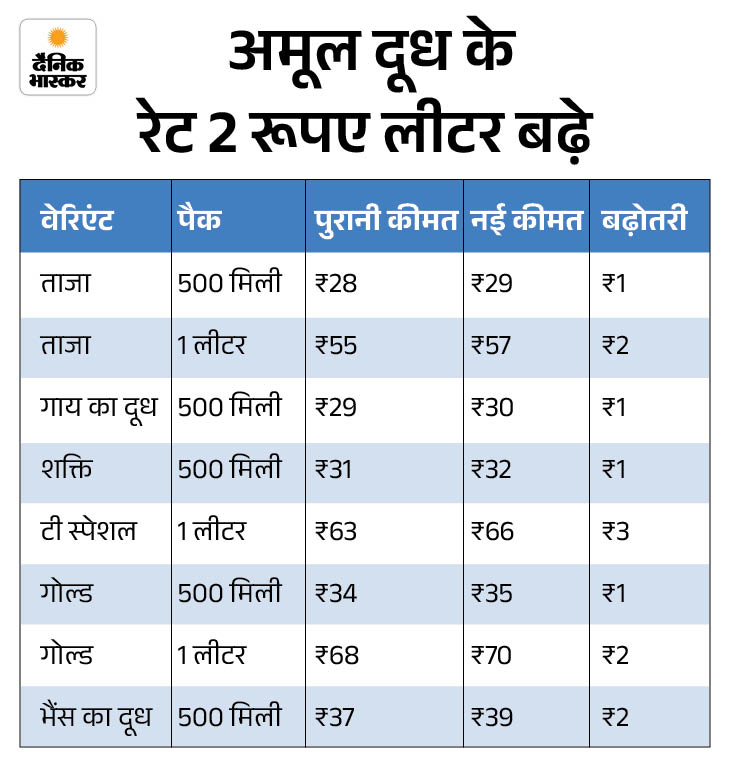
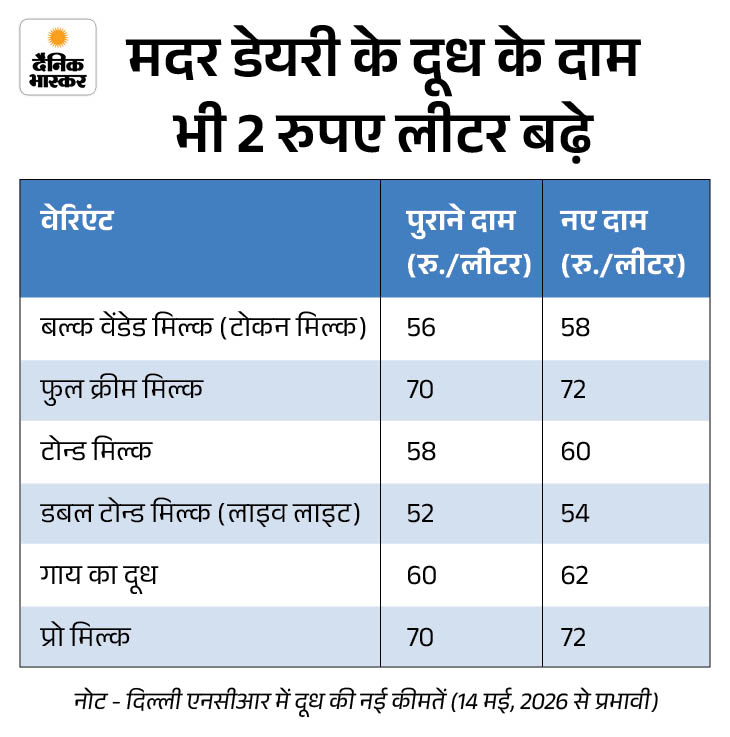
Production and operational expenses are continuously increasing
According to the co-operative, milk production and operational expenses are continuously increasing. Due to rising price of animal feed and increasing transportation cost, milk prices have to be changed from time to time. In the last few years, the pressure of input costs on the dairy industry has increased considerably.
Prices increased by Rs 2 per liter in May 2025
Earlier on May 1, 2025, the price of all types of Amul milk was increased by Rs 2 per liter in Gujarat and other states. Earlier, on June 4, 2024, the prices of all variants were increased, even then the price was increased only by Rs 2 per liter.
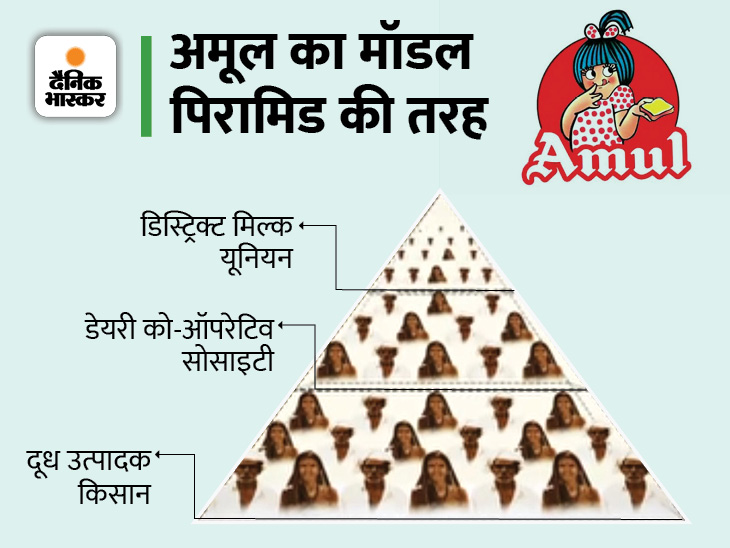
Amul’s model works at three levels:
1. Dairy Co-operative Society
2. District Milk Union
3. State Milk Federation
- All the farmers of the milk producing village are members of the Dairy Co-operative Society. These members elect representatives who together manage the District Milk Union.
- The district union processes milk and milk products. After processing, Gujarat Co-operative Milk Marketing Federation Limited works as a distributor and delivers these products to the market.
- Professionals are hired to manage the supply chain. About 15 lakh people get direct and indirect employment in milk collection, processing and distribution.
- Amul’s model has become a case study in business schools. In this model the dairy remains under the control of the farmers. This model shows how profits reach the bottom of the pyramid.
How are millions of liters of milk collected?
- There are 18,600 milk co-operative societies and 18 district unions in 33 districts of Gujarat. More than 36 lakh farmers are associated with these societies, who produce milk.
- The rush to collect milk starts as early as 5 in the morning. Farmers milk the cattle and fill it in cans. After this the milk is brought to the collection centre.
- By around 7 in the morning, there is a long line of farmers at the collection center. Society workers measure the quantity of milk and the fat content is also measured. This system is completely automated.
- The milk output of every farmer is saved in the computer. Farmers’ income depends on the quantity and fat content of milk. Payment is made to farmers on a fixed date every month.
- An app has also been made for farmers, in which they get information ranging from milk quantity and fat to payment. Payment is transferred directly to the bank accounts of the farmers.
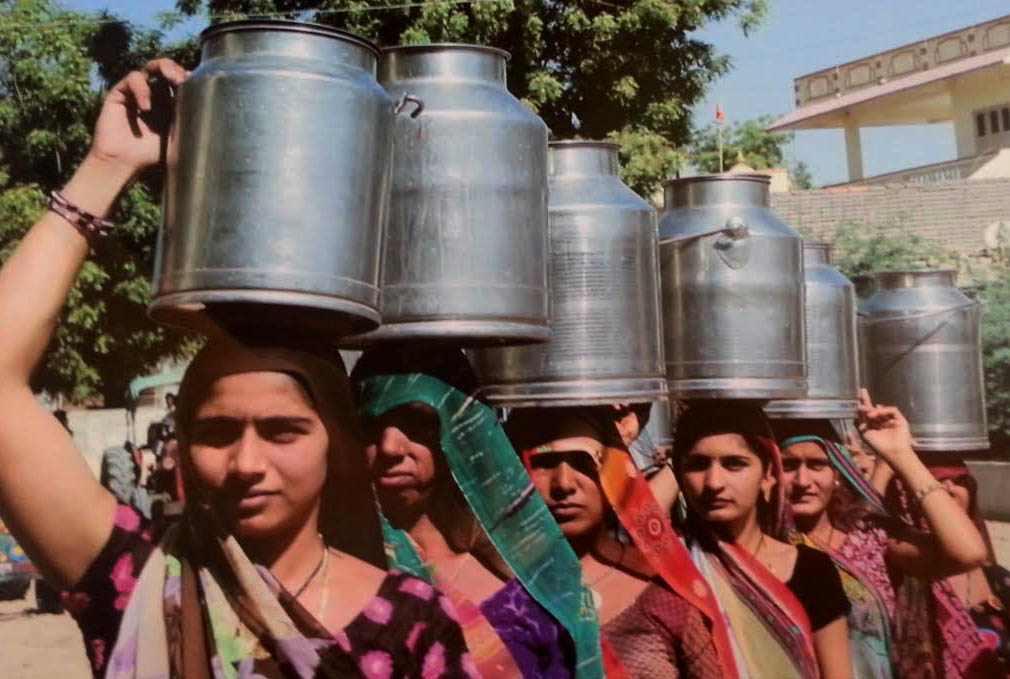
After filling the milk of cattle in cans, it is transported to the collection center.
Other facts related to Amul
- Milk producers come at the bottom of Amul’s pyramid model. Out of every rupee spent, about 86 paise goes to its members and 14 paise is kept for running the co-operative business. Due to high quantity, this amount becomes very big.
- The head of the District Milk Union is the Chairman, who holds meetings every month. Here these people take stock of the co-operative business. In this, issues like expansion plan, purchasing new machinery and giving bonus to members are discussed.
- To improve productivity, it is also important to take care of the health of cattle. Therefore, free training is provided to the co-operative member. In this, how to take care of cattle and other things are told. Training programs help farmers a lot.
- The cattle are given fodder and nutrients three times a day. Cattle feed plants have been installed here. Fodder for cattle is made by mixing protein, fat and minerals. The machinery of the fodder manufacturing plant has been imported from Denmark.
- There is also a facility of super specialty hospital for farmers. The co-operative provides subsidies to farmers to purchase new equipment. For example, an automatic milk extracting machine costs Rs 40,000. Its price is halved due to subsidy.

Source link
[ad_3]

