
A Photo That Tells A Heartbreaking Story
Some wildlife photos capture a beautiful moment, while others reveal a side of nature that is hard to understand. One such image shows an elephant carrying a dead calf, raising questions about grief, memory and animal feelings. The powerful black-and-white photograph has won one of the world’s top wildlife photography awards for 2026. The image caught the attention of judges and viewers alike, showing that animal behaviour can hold deep meaning and tell stories that go far beyond what we see. (Photo Credit: Federico Veronesi via The Natural History Museum; Loren Elliott via The Natural History Museum)
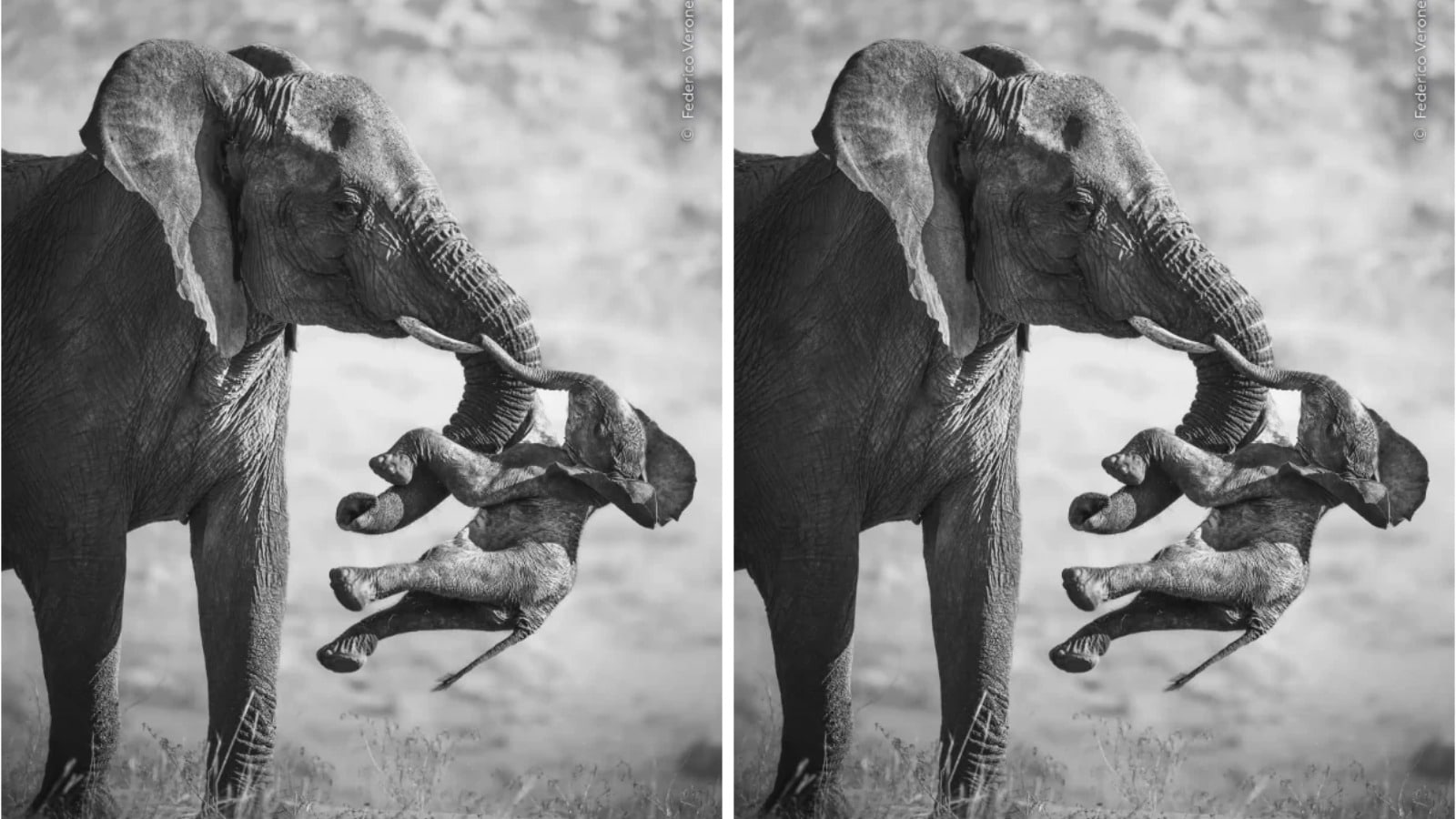
Federico Veronesi Wins the Top Award
Italian wildlife photographer Federico Veronesi won Wildlife Photographer of the Year 2026 for his image titled “The Aftermath.” Taken in Namibia’s Huab River Valley, the black-and-white photo shows a female elephant carrying a dead calf. While tracking elephants, Federico Veronesi noticed an unusual set of drag marks in the sand of a dry riverbed. Following these marks helped him capture the rare moment. Reportedly, researchers later found that the elephant had lost her own calf years earlier and was picking up dead calves belonging to other females. (Photo Federico Veronesi via The Natural History Museum)
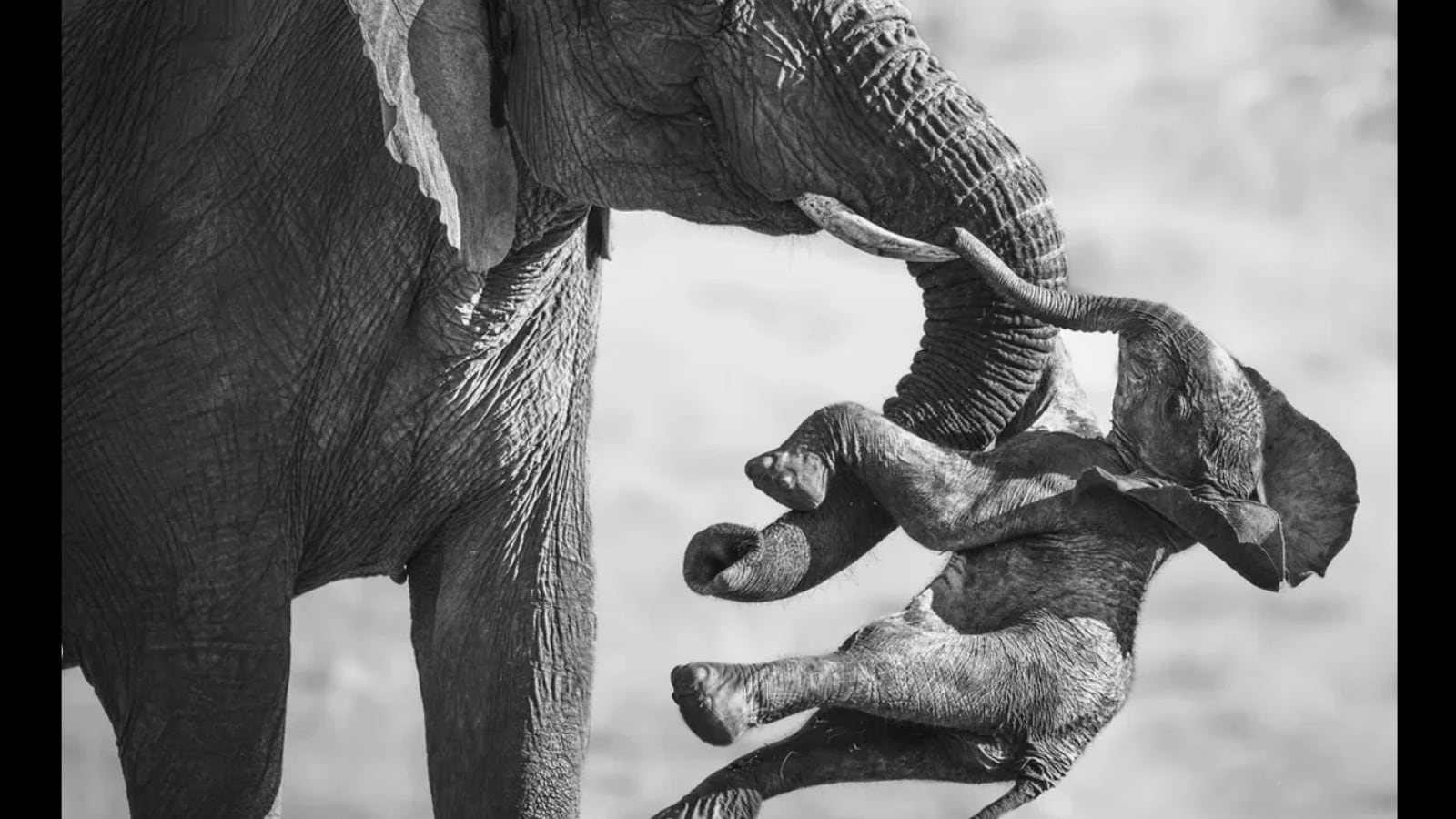
A Powerful Look At Animal Feelings
Federico Veronesi said the image was the most heartbreaking, fascinating and dramatic moment he had captured in his 20 years of photographing animals. He felt it showed how deep and complex animal emotions can be. Competition chair Kathy Moran also praised the photograph, calling it deeply moving and a sign that animals have the ability to think and understand. The image stood out not only for its emotional power but also for the questions it raises about how animals respond to loss and the world around them. (Photo Credit: Federico Veronesi via The Natural History Museum)
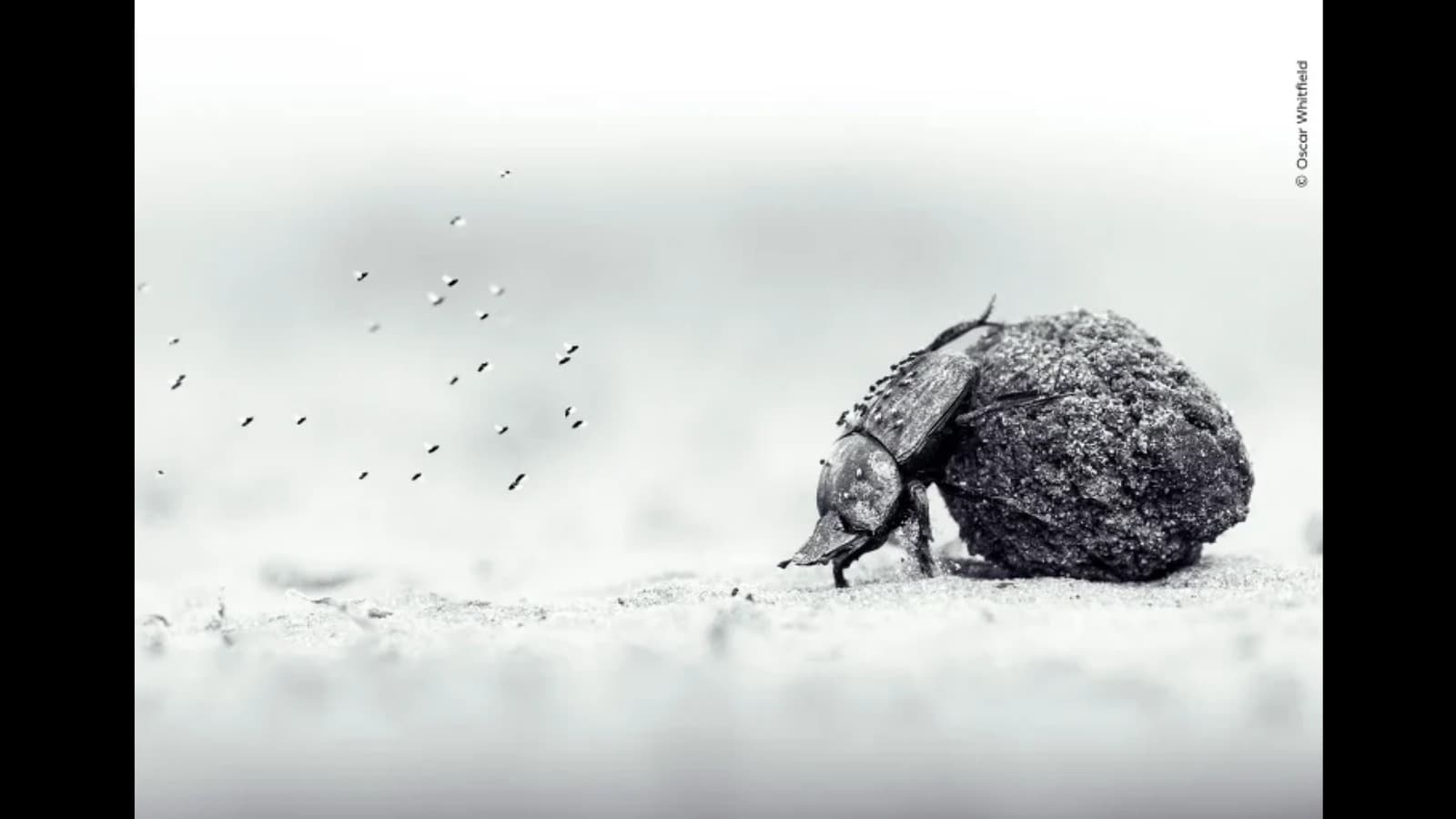
Oscar Whitfield’s Hardworking Dung Beetle
British photographer Oscar Whitfield won Young Wildlife Photographer of the Year 2026 with his image “Labour of Love.” The photograph shows a dung beetle pushing its load across dusty ground under the hot sun in Zimbabwe’s Zambezi National Park. Taken at the beetle’s eye level, the image highlights the tiny insect’s effort as it moves its precious cargo. Oscar Whitfield lives in Zimbabwe and won the competition’s 11–14 age category. He said he was grateful for the award and never expected his wildlife photography to receive such recognition. (Photo Credit: Oscar Whitfield via The Natural History Museum)
A Historic First for Black-and-White Photos
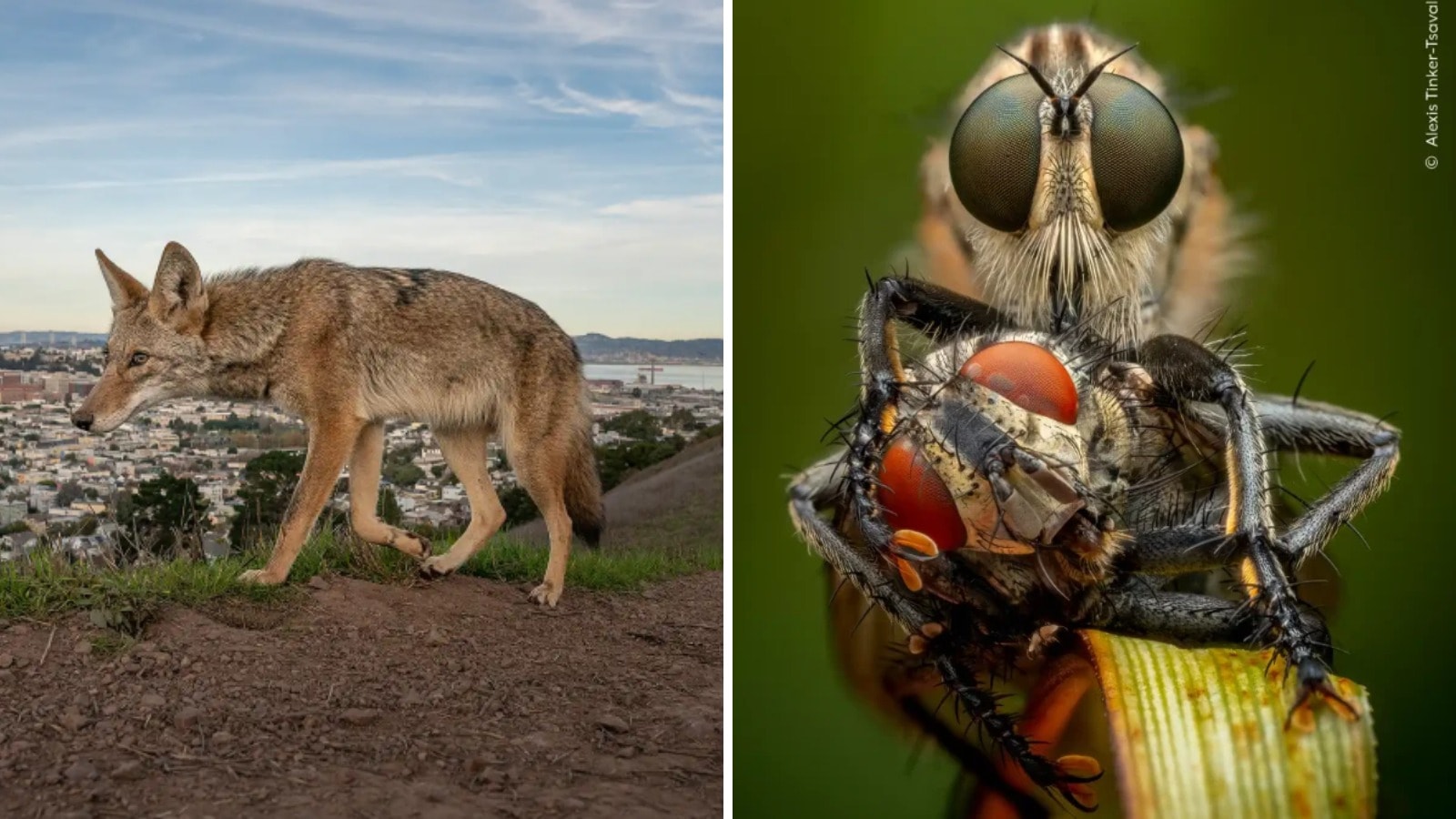
The 2026 competition marked a special moment in its 62-year history. For the first time, black-and-white photographs won both the adult and young photographer’s top awards. The winning images will be shown at the Wildlife Photographer of the Year 2026 exhibition at London’s Natural History Museum, opening Friday, October 16. Visitors will also get to see photographs that won awards in several other categories. These include underwater life, urban wildlife and mammal behaviour, offering a closer look at animals living in many different places and conditions. (Photo Credit: Loren Elliott via The Natural History Museum/ Photo Credit: Alexis Tinker-Tsavalas via The Natural History Museum)
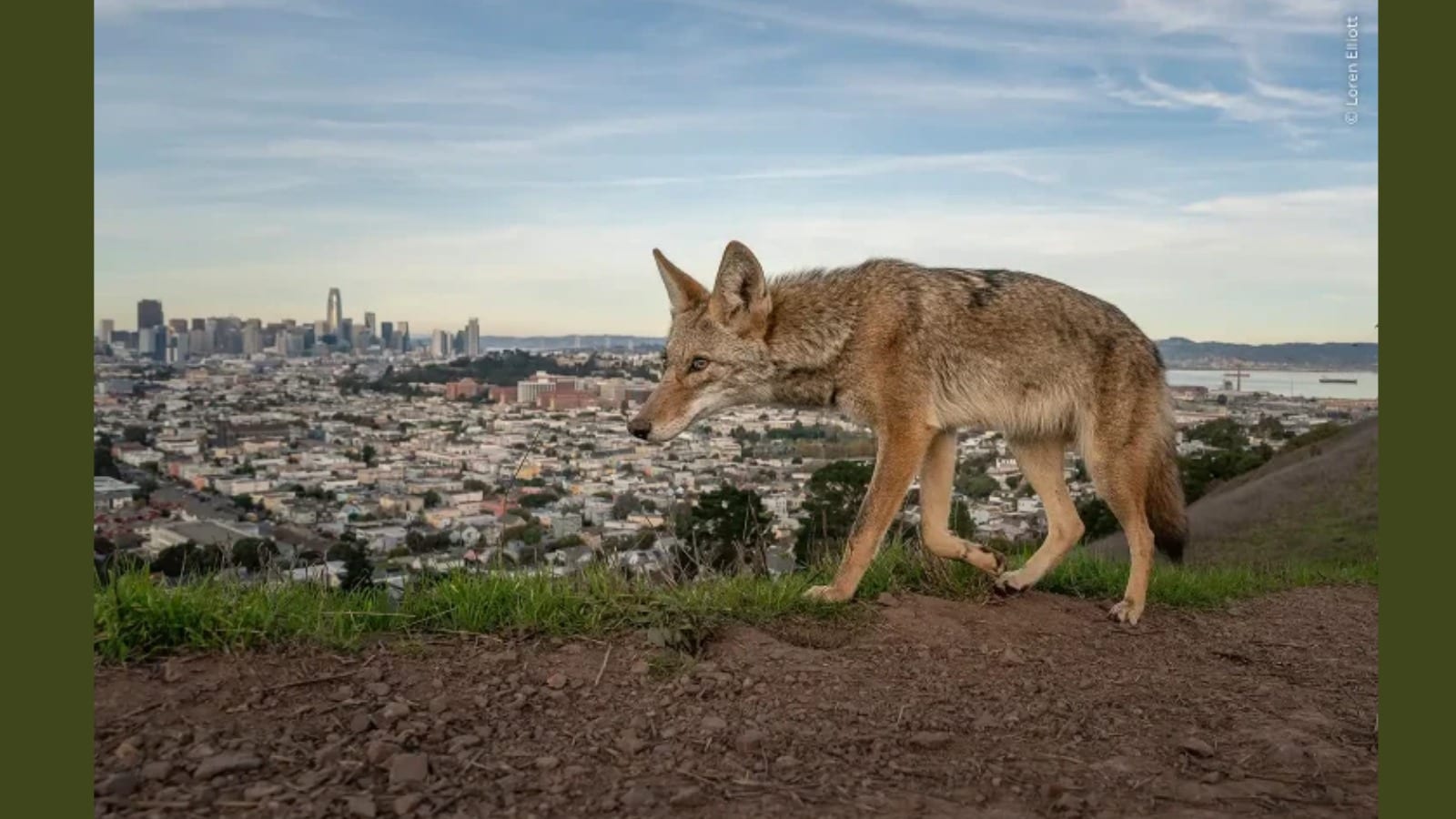
A Coyote Overlooks San Francisco
American photojournalist Loren Elliott won the Photojournalist Story Award for “Wily Coyotes of San Francisco.” His photograph shows a coyote walking along a trail in Bernal Heights Park, with the Californian city of San Francisco in view. Loren Elliott had spotted the animal as part of a local pack that hunted rodents in the area. The image offers a glimpse of how wild animals live close to busy city life. It also shows how wildlife can find food and space in places where people live and work. (Photo Credit: Loren Elliott via The Natural History Museum)
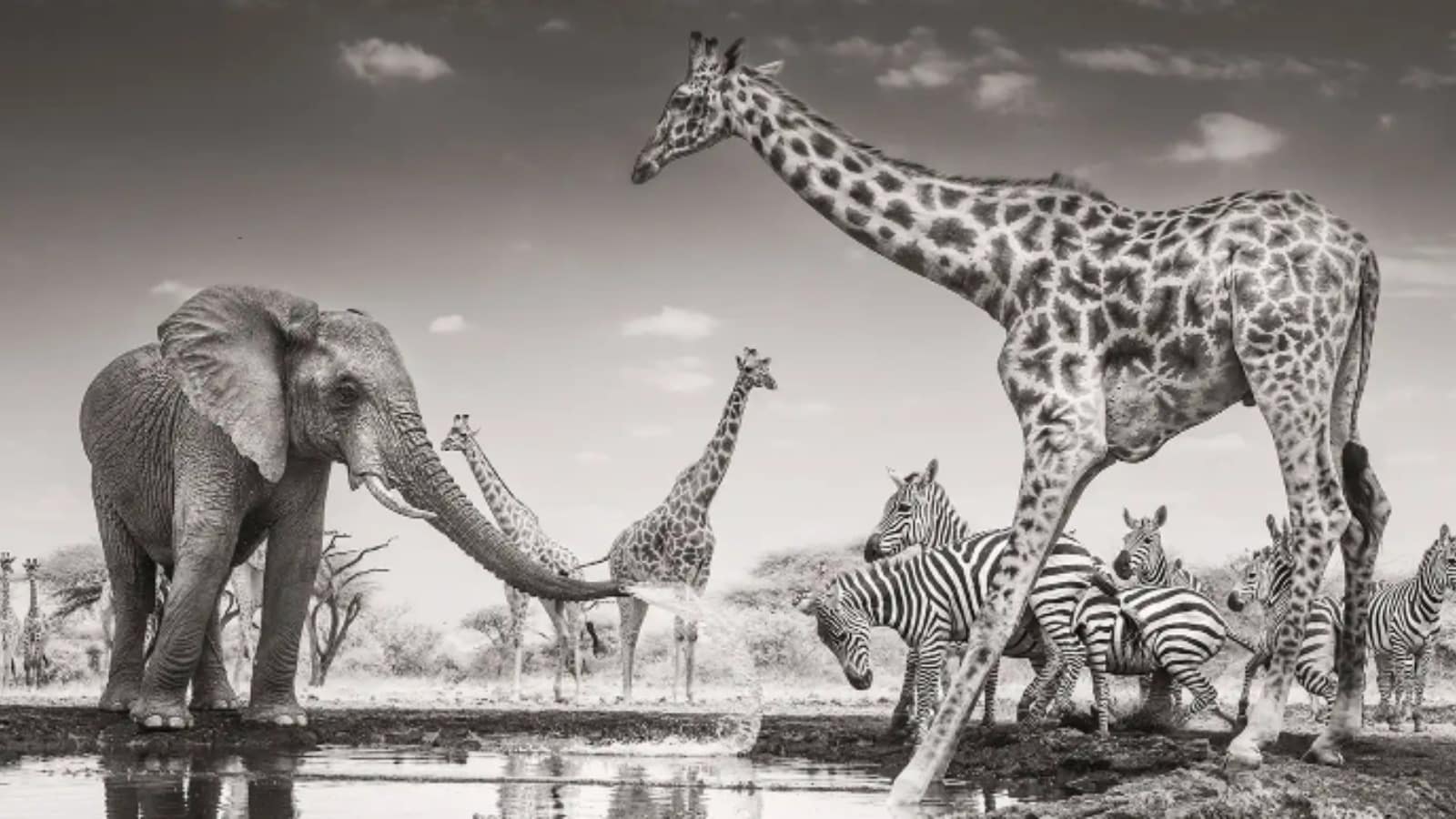
Tiny Insects and a Giant Elephant Steal the Show
Alexis Tinker-Tsavalas won the Rising Star Award for a detailed photograph of a robber fly attacking a flesh fly in Germany. Tiny bubbles in the victim’s eyes showed that the robber fly had injected enzymes to break down its inner tissues before feeding. A former young competition winner, Alexis Tinker-Tsavalas began using a camera at age 10 and turned to macro photography during the COVID-19 pandemic. British photographer James Lewin won the Animals in Their Environment category with a picture of a young bull elephant spraying zebras at a waterhole in Kenya’s Chyulu Hills National Park. He used an infrared-converted camera to soften the harsh light. (Photo Credit: James Lewin via The Natural History Museum)
Source link
[ad_3]

