
Angelika has a picture in her mind she cannot bring herself to delete. In it, a young soldier holds his phone over a chessboard, somewhere near the front, and asks her what he should play next. “He used to send me videos of himself playing chess and ask me questions such as, ‘What should I play here?’ or ‘What should I play there?'” she says. “He would send me these videos and ask for my advice while he was there.” Her friend Vitya was 28, maybe 29. Later a drone killed him.
Angelika, 28, now stands in the playing hall at the Total Chess event in Budapest, microphone in hand, waiting to catch grandmasters as they walk in and out of their games. Beside her in the broadcast world is her mother, Inna, 54, a player turned chess influencer. They are both from Nikopol, a city on the Dnipro River in southeastern Ukraine. They live in Germany now, their city does not look like the one they left.
The city they remember
“When I look back at the time when we lived in Ukraine, of course, everything was cheerful and wonderful,” Inna says while speaking to NDTV, sitting in the historic lounge of the Anantara hotel in Budapest.
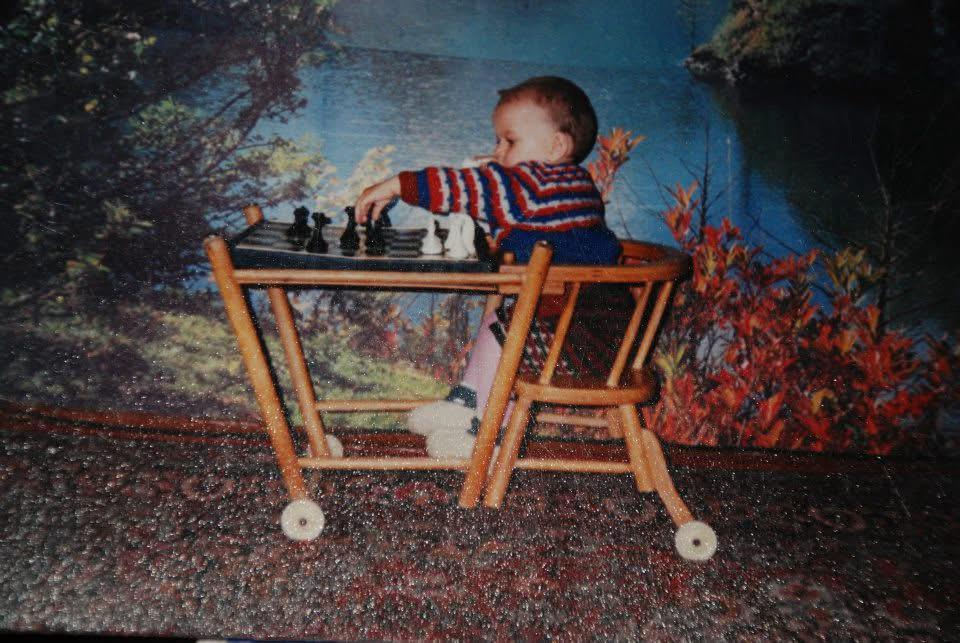
Chess was the family’s language. Her father, grandfather and brother played every evening, and Ina sat down at the board. Her Grandmaster daughter went on to play the Women’s Bundesliga and finished third twice among junior girls in Ukraine, a result that, she says, felt like a national holiday because the competition was so fierce. When Angelika was a toddler, Inna showed her the pieces. By one year and eight months, she knew them. At four, she was playing.
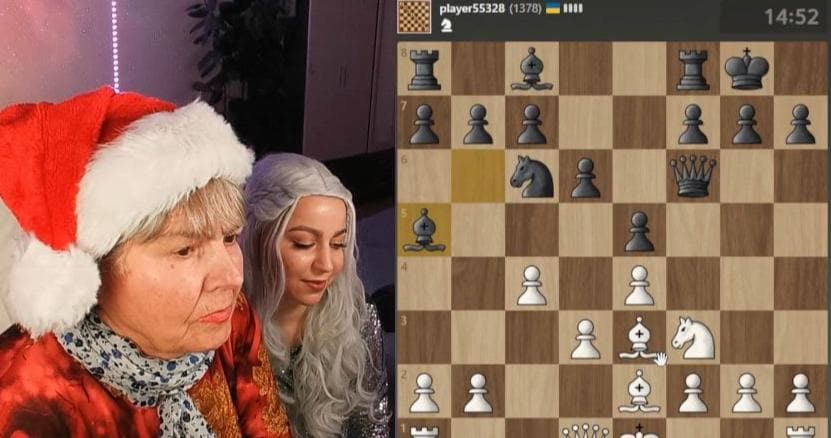
The family moved to Germany in 2016. The conflict was on. A war was already smouldering in the east, and Crimea had been annexed, but “it was not full fledged escalation till then,” says Inna.
Then came 2022.
Four kilometres from the line
Inna’s father, her brother, two uncles and an aunt are still in Nikopol. She cannot visit them. “I want to see my family, but right now it is not possible,” she says. “It is very, very dangerous.”
Her family’s home is four kilometres from Russian soldiers. She says drones and shelling arrive daily. About 40 civilians have been killed in the city and many more wounded. Four or five artillery shells landed inside the apartment where her grandfather lives, about four years ago.
“People are forced to remain inside their apartments because drones are flying outside,” she says. “If a drone spots someone on a bicycle or in a car, they can become a target. The drones are looking for targets.” She says the city has become “almost like a safari,” and repeats the phrase “human safari.” Yesterday, she says, a bus carrying people was hit.
What remains of ordinary life is thin. Electricity arrives for a few hours, then vanishes. Since the dam was destroyed in 2023, clean water has been a constant worry, and neighbours queue to fill bottles from volunteers. There are no banks, and not a single petrol station is open. The road into town is a strategic one that drones also watch, so even a truck bringing food or medicine risks being hit.
From Germany, Inna and Angelika do what they can. “We buy tourniquets, strong devices that stop heavy bleeding, at roughly 15 to 20 euros each, and send them to Ukraine. When we cannot physically send something, we send money instead.”
The grandmother who stayed
One story still makes Angelika’s voice change. Her grandmother came to Germany in late 2021 for a visit and was due to fly home on February 18, five or six days before the full-scale invasion. Something felt wrong. The family wrote to German authorities, with a lawyer’s help, asking that she be allowed to stay.
The reply was, “No war is happening, she should go back. While they were considering it, the war started,” Angelika says. “At that time, many people did not believe it would actually happen.”
Her grandmother is now safe in Germany. Her grandfather remains in Nikopol.
Children Play Chess in bunkers
There is one thing the war has not taken. Inna says air-raid sirens now decide the school day. Children run underground whenever they sound, even if they are mid-lesson and the Wi-Fi happens to be working. September 1, the traditional first day of school, once meant flowers and celebrations. “Even these occasions have changed.”
But the children who love chess keep playing. Tournaments are held in bunkers and bomb shelters, in clubs in Odesa and Kyiv. In Nikopol, the chess club is damaged and can’t be used, so players meet in each other’s homes, a few at a time.
“Children also have chessboards in the bomb shelters, and they continue to play there,” Ina says. “It is, of course, nice to see that they are still playing, but at the same time, it is very sad that they have to live in this reality. They did not deserve this.”
The soldiers play too. Dmitry Smolin, the champion of Nikopol, has been on the front line for five years. “Many people are losing their minds because it is extremely difficult to maintain mental balance in such circumstances. Chess has been helping him, He plays tournaments in a dugout and has posted good results.” Inna says Chess is like a balm for people who are in the middle of war. Grandmaster Igor Kovalenko, one of Ukraine’s strongest by rating, spent four years competing online while serving, often from underground shelters.
“When people are inside their rooms or apartments and there are air-raid sirens and attacks, playing chess can be calming,” Inna says. Her own mother, 75, plays online and once joined one of Inna’s livestreams. “People do not feel alone when they have chess. I am not alone because I have chess.”
The ones who are missing
Officially, Angelika says, around 50 Ukrainian chess players have been killed. She believes the real figure is higher. Plenty of people who played every week were never registered with FIDE, and nobody is counting them.
She names some of them. A classmate, who left behind a wife and a child. A coach from a neighbouring city, killed while helping people get water. A young player from Nikopol, who once sat across the board from her, is still missing. “People are looking for him, but they cannot find him. Unfortunately, in around 90 per cent of such cases, these people have been killed.”
There was one piece of good news. Another player on the same list was freed in a prisoner exchange after three years in Russian captivity. He is recovering in Germany.
Inna also describes a recent attack about 70 km from her home, in the Zaporizhzhia region, where she says people had gathered at a school to collect bread and water. She says an aerial bomb hit, and after 30 to 40 minutes, as rescuers arrived and people moved into the shelter, shelling resumed. “More than 60 people have been confirmed dead. Another 50 people are missing.” Her account could not be independently verified here.
A different kind of chess
Before Total Chess, Angelika never imagined a life in media. She says the work is almost the opposite of playing. At the board, you hide your thinking. On air, you reveal it.
“When you are a player, you try to reveal as little as possible to your opponent. But in the media, we try to show as much as possible to the audience and make people fall in love with the game,” she says. “In a way, it is like being a translator, because everything happens inside the players’ heads.”
Money was always the shadow over Ukrainian chess, she says. The country was among the top five post-Soviet nations for grandmasters, and its teams have won European and Olympiad titles. But sponsors were scarce, and talented players quit to coach or take other jobs. “If you only played chess, it was very difficult to survive financially.”
On Russia, in her own words
Angelika is registered with FIDE as a player but is not employed by it, and she works as a freelancer. She says she is free to speak openly, and is careful to say whom she speaks for. “When I speak to you, I am speaking for myself. I am not speaking on behalf of Total Chess, and I am not expressing the views of FIDE.”
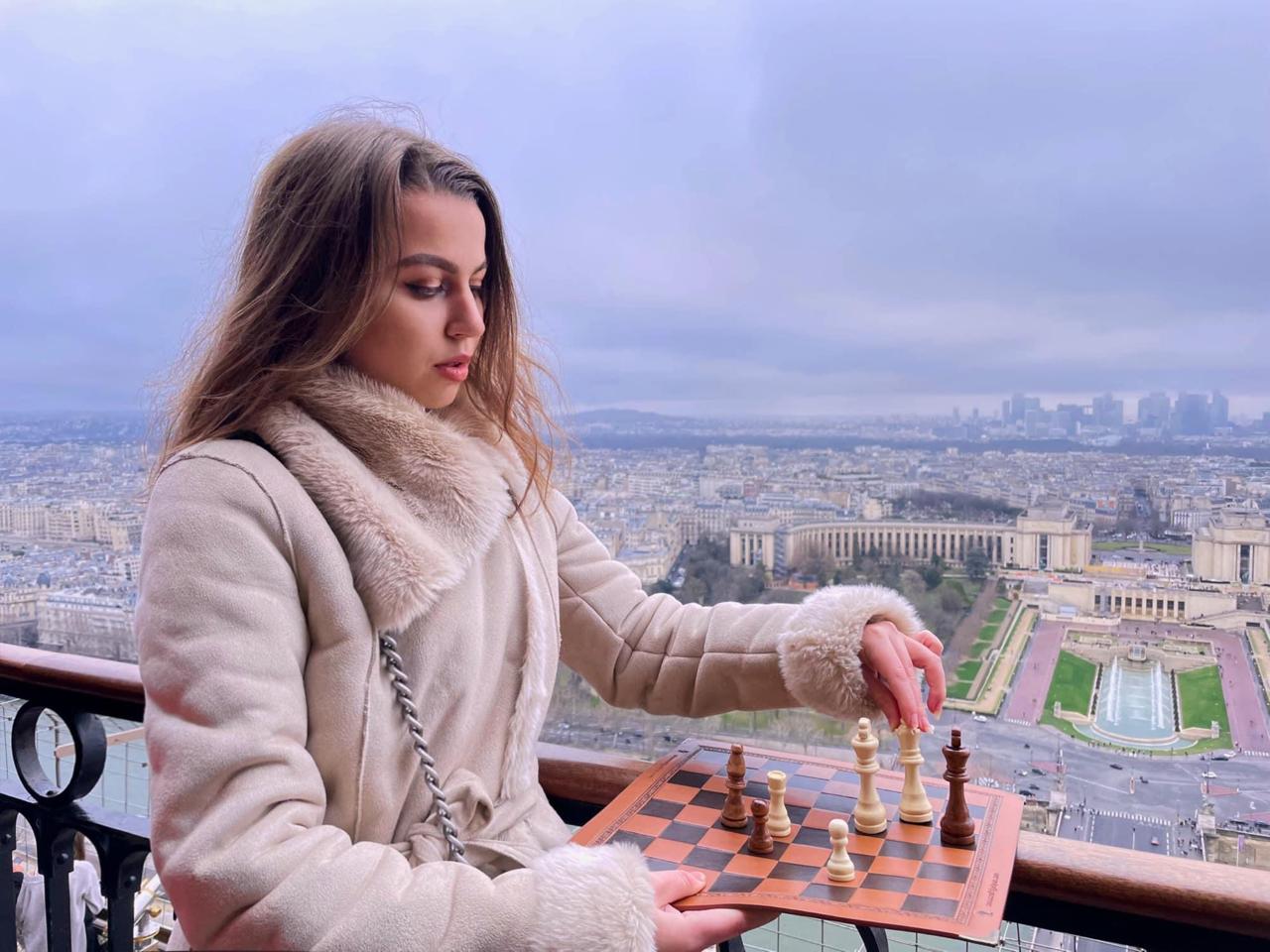
Her point on Russia is narrow. “Russian grandmasters make up the largest number of grandmasters in the chess world. That is the only kind of dominance I have referred to.” She notes that Russians haven’t played in World Championship matches since 2021 and are barred from team events like the Olympiad, which she calls fair.
That chess video
Back in the playing hall, the games go on. Angelika waits by the door for the next player to come through, ready with a gentle question for someone who just lost.
She says that is the trick. “If you simply ask them what went wrong and express sympathy for their loss, they will usually tell you what happened.”
It is a lesson she knows from both sides. Somewhere on her phone, a young soldier is still holding a camera over a chessboard, asking her what to play
Featured Video Of The Day
CWG 2026 Weightlifting Gold Medallist, Mirabai Chanu Get Hero’s Welcome in Delhi
Topics mentioned in this article
Source link
[ad_3]

