
The world’s religious landscape could look very different by 2070. According to new Pew Research Center projections, Muslims are expected to overtake Christians as the world’s largest religious group by 2035.
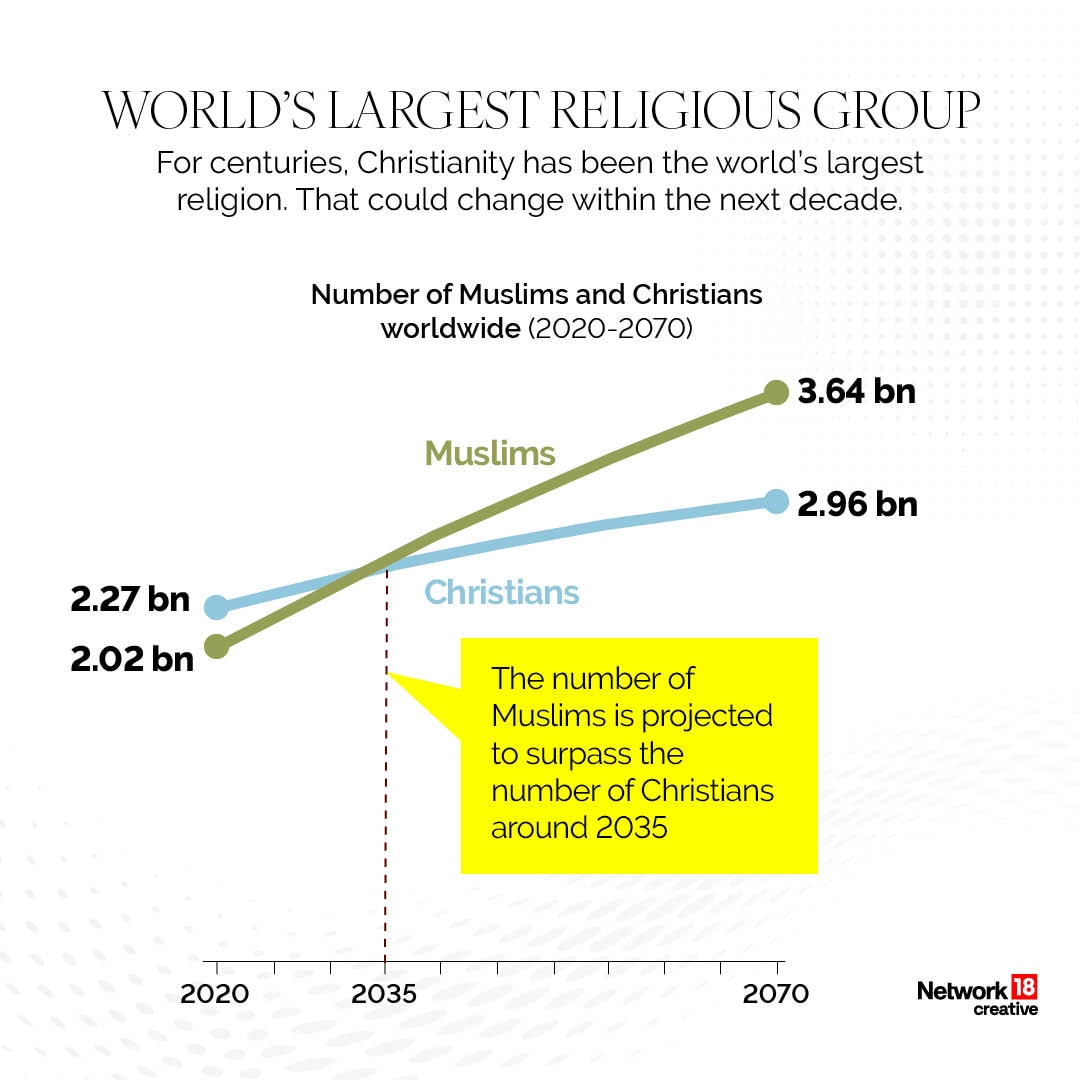
Christianity has been the world’s largest religious group for centuries, but that could change soon. Muslims are projected to surpass Christians in numbers around 2035. By 2070, the global Muslim population could reach 3.64 billion, compared to 2.96 billion Christians.
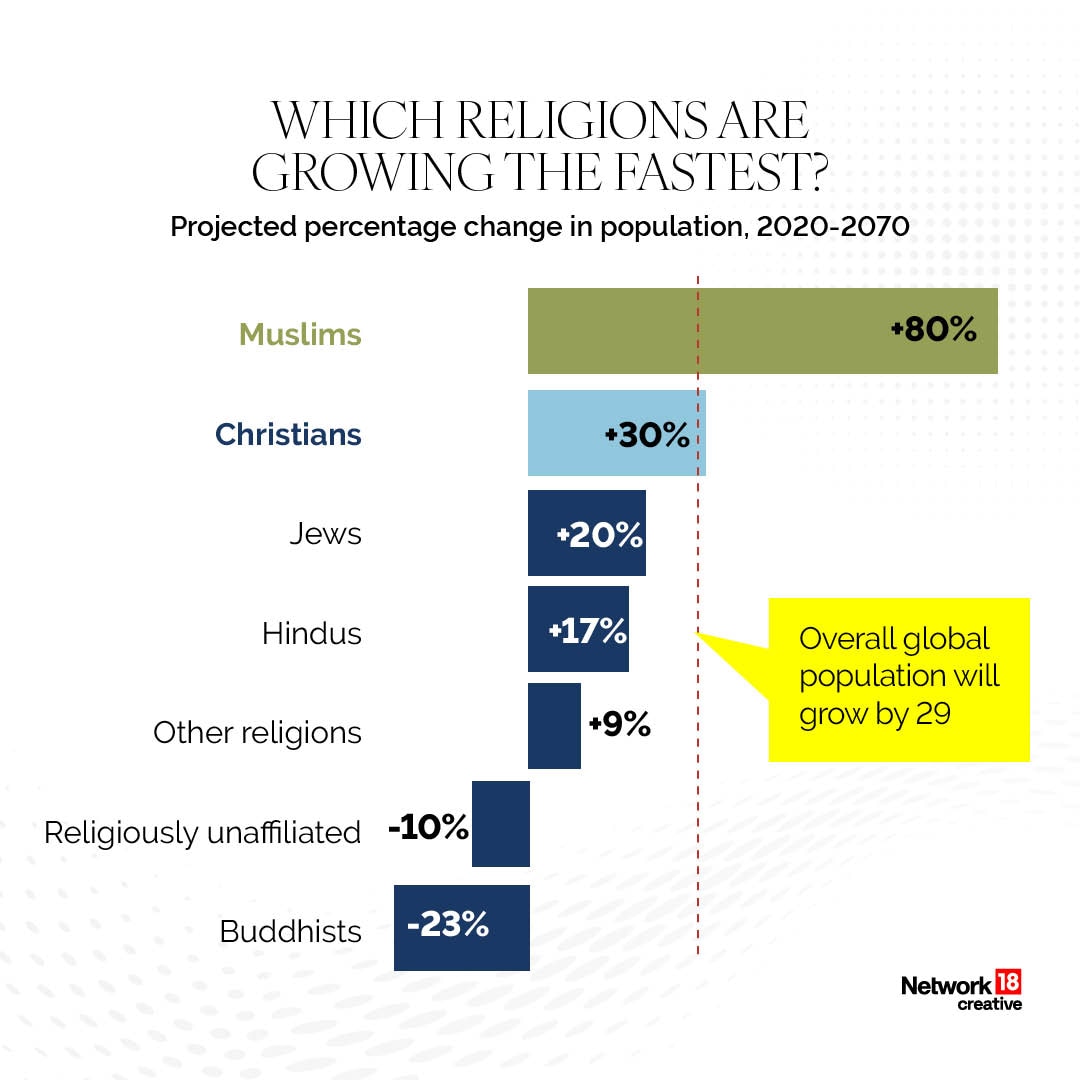
Islam is projected to record the fastest population growth between 2020 and 2070, rising by 80%. Christianity could grow by 30%, followed by Judaism at 20% and Hinduism at 17%. Meanwhile, the Buddhist population and the number of people identifying with no religion are expected to decline.
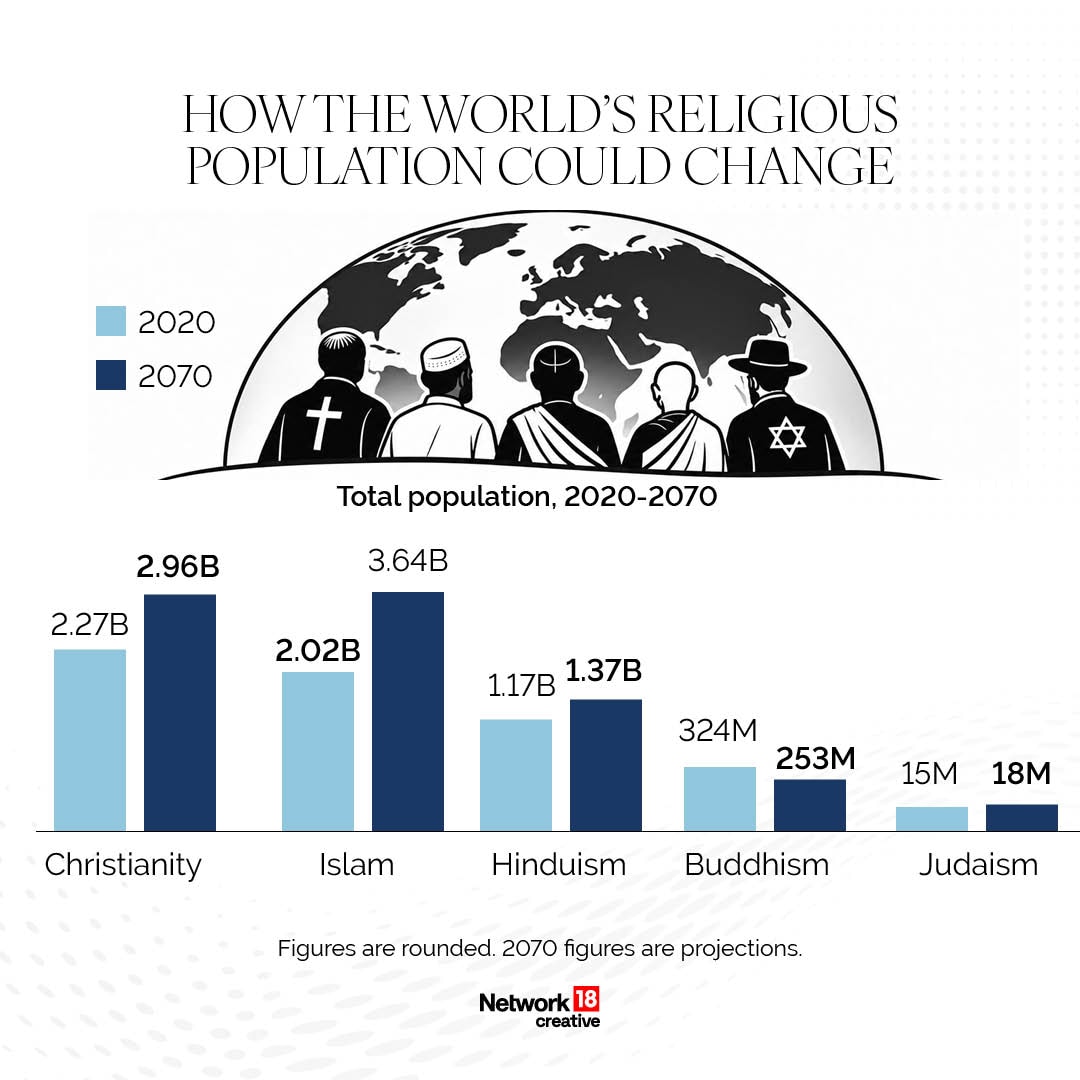
The projections show a significant rise in the number of Muslims and Christians worldwide by 2070. The Muslim population could grow from 2.02 billion in 2020 to 3.64 billion, while the Christian population may rise from 2.27 billion to 2.96 billion. Hinduism and Judaism are also expected to grow in absolute numbers.
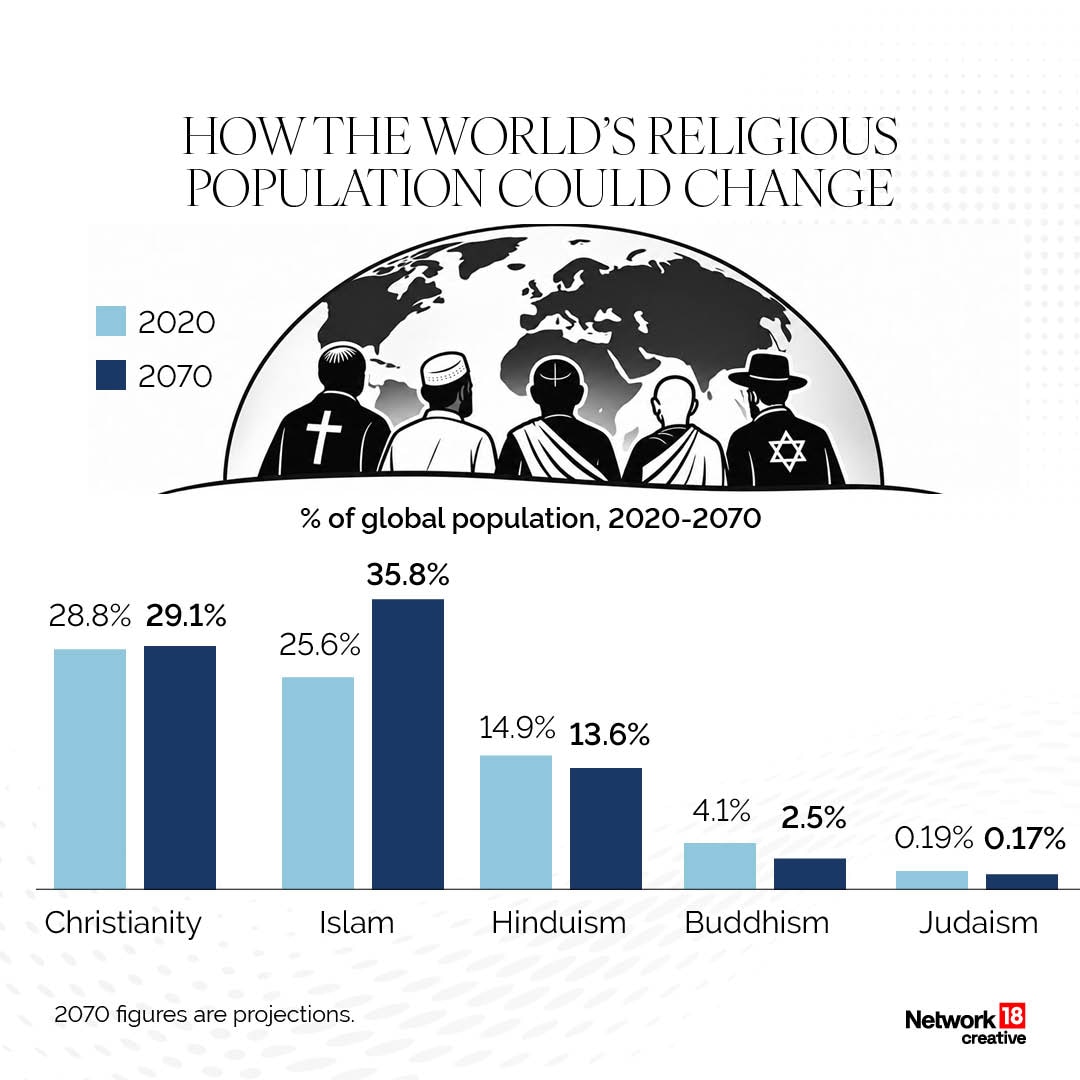
Population growth will also change how different religions are represented globally. Muslims could account for 35.8% of the world’s population by 2070, up from 25.6% in 2020. Christianity’s share is expected to remain almost unchanged, while Hinduism, Buddhism and Judaism could see slight declines in their global shares.
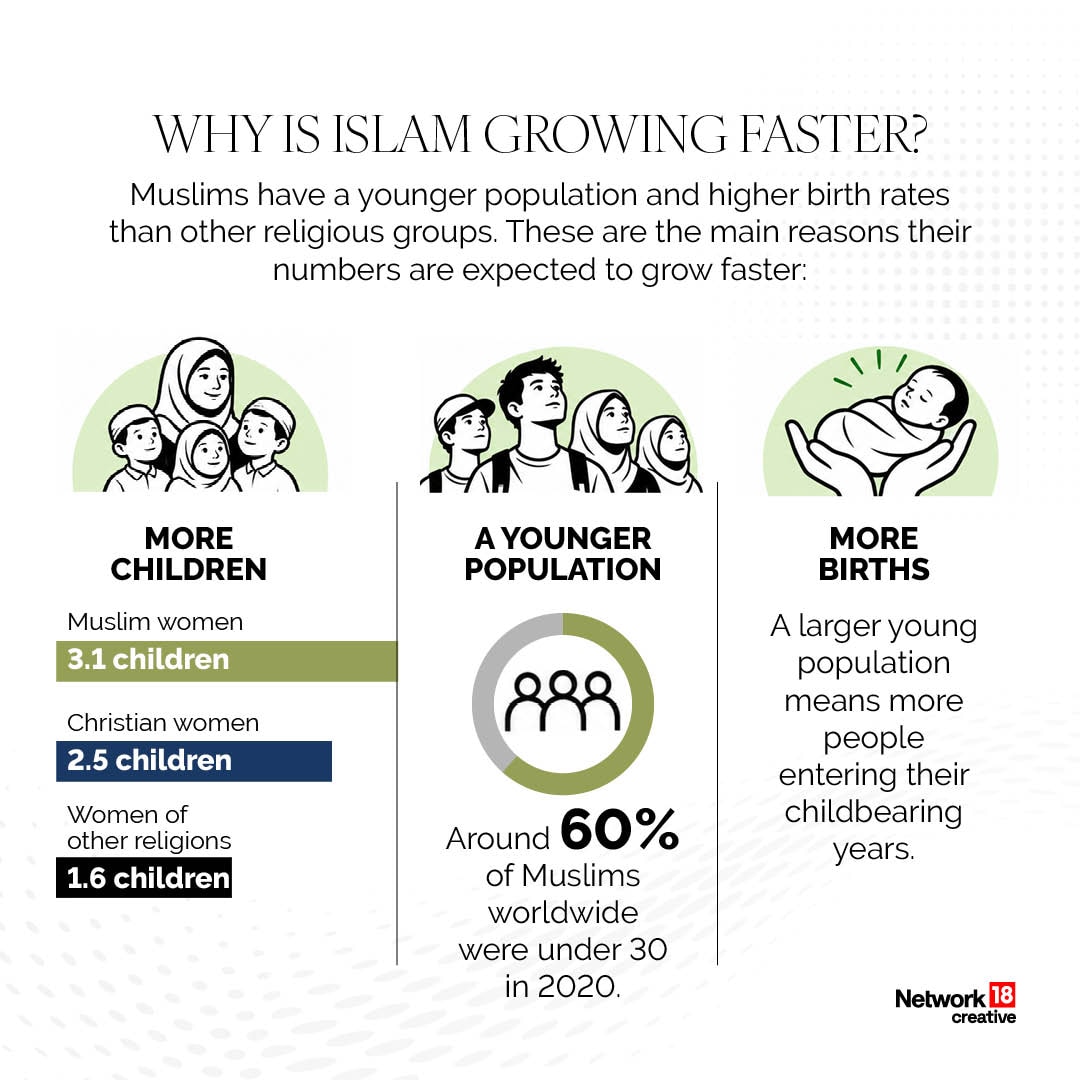
A younger population and higher birth rates are among the main reasons behind the projected growth of Islam. Muslim women have an average of 3.1 children, compared to 2.5 among Christian women and 1.6 among women of other religions. Around 60% of Muslims worldwide were also under the age of 30 in 2020.
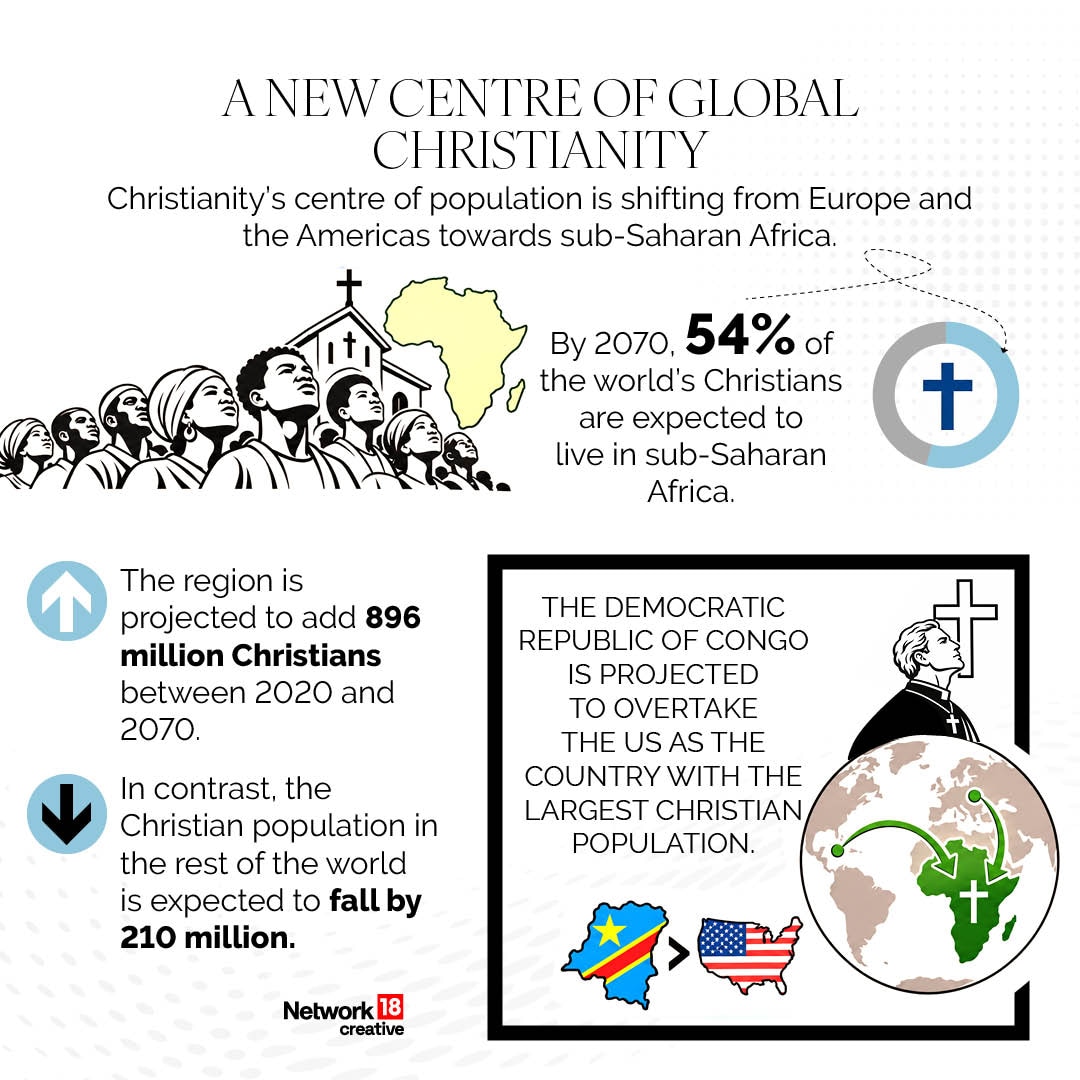
Christianity’s population centre is gradually shifting from Europe and the Americas towards sub-Saharan Africa. By 2070, the region is expected to be home to 54% of the world’s Christians. The Democratic Republic of Congo is also projected to overtake the US as the country with the largest Christian population.
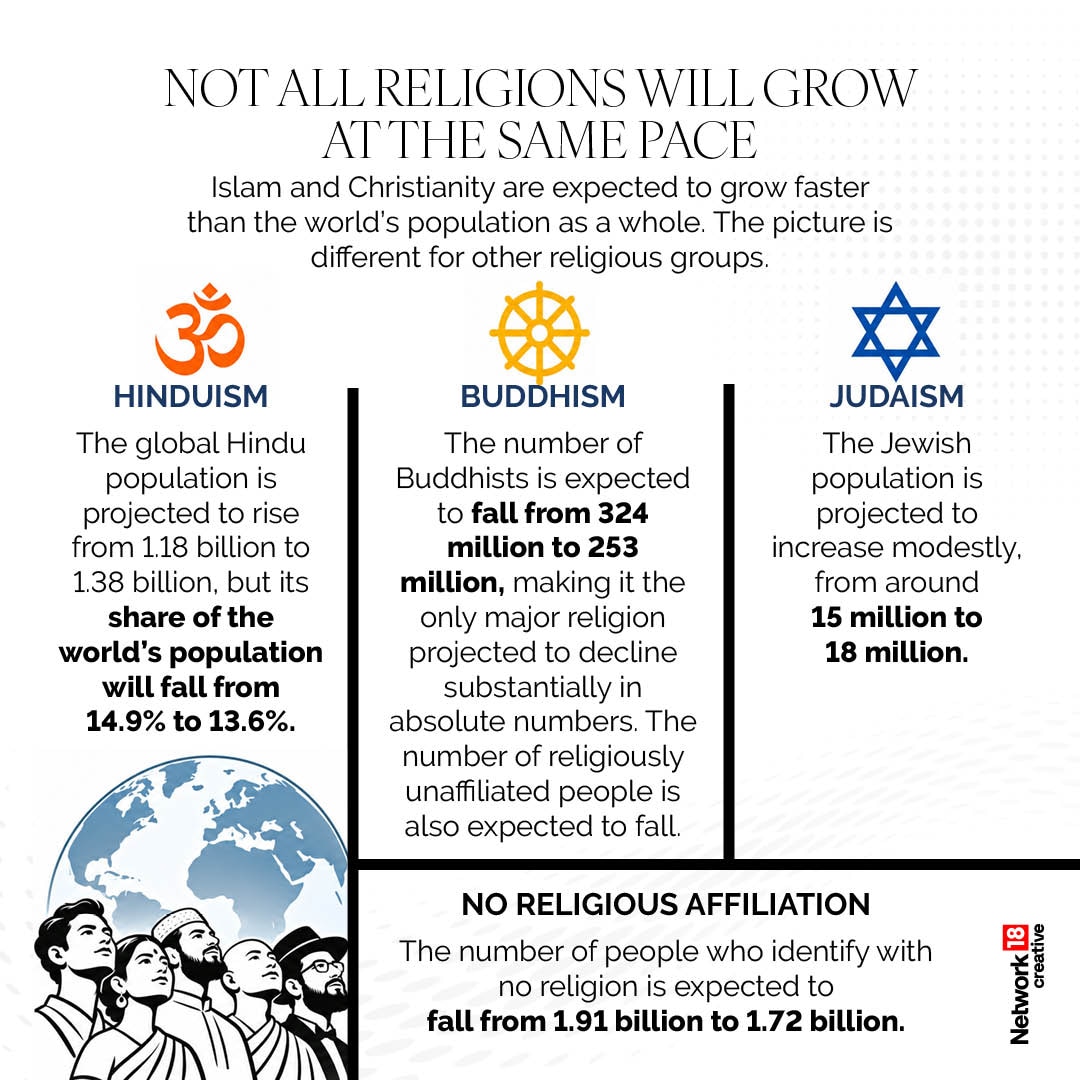
While Islam and Christianity are expected to grow faster than the global population, other religions could see slower growth or a decline. Hinduism’s global population is projected to increase, but its share of the world’s population may fall. Buddhism is expected to record a decline in numbers, while Judaism could see modest growth.
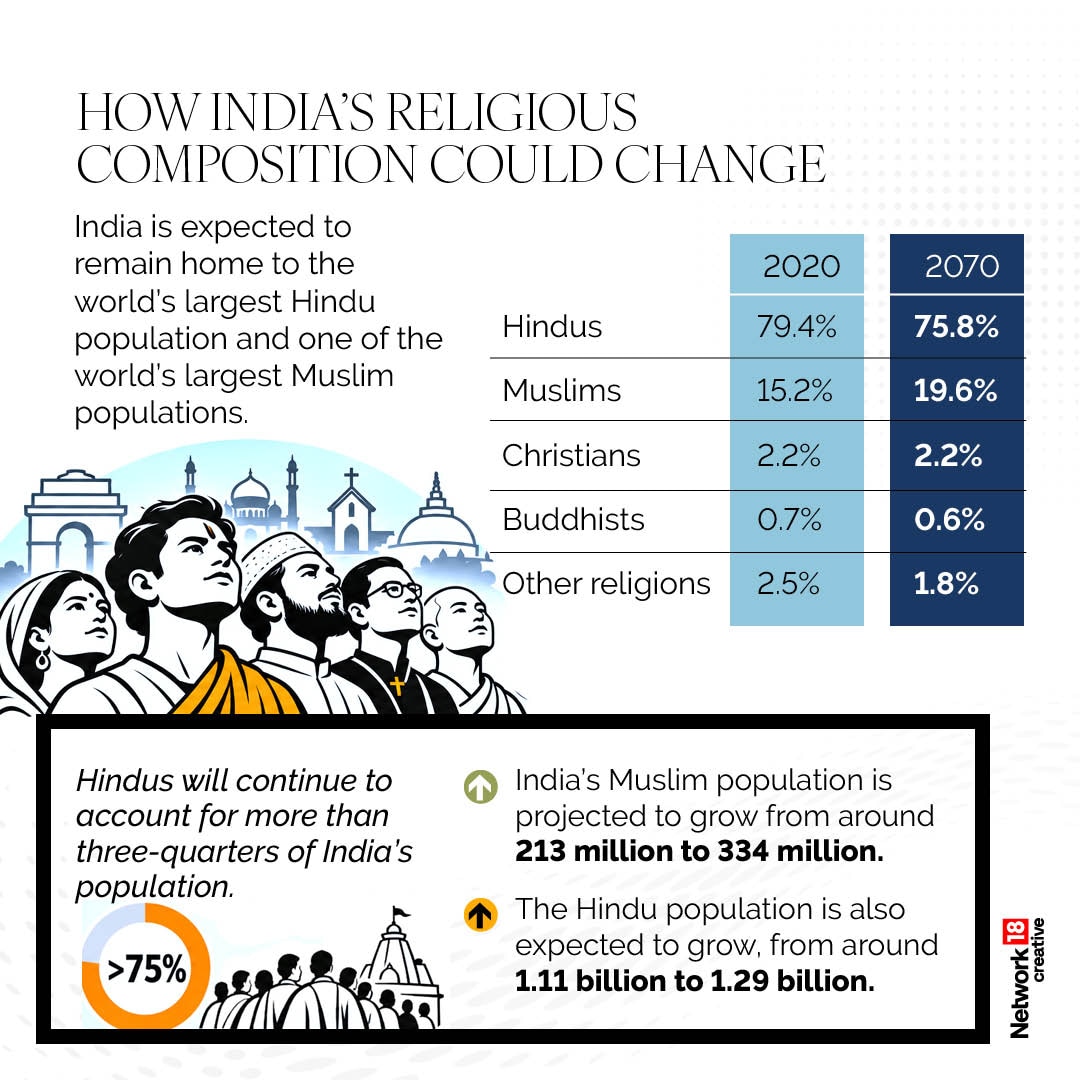
India is expected to remain home to the world’s largest Hindu population and one of its largest Muslim populations. Hindus could account for 75.8% of the country’s population by 2070, down from 79.4% in 2020. Meanwhile, the Muslim population’s share is projected to rise from 15.2% to 19.6%.
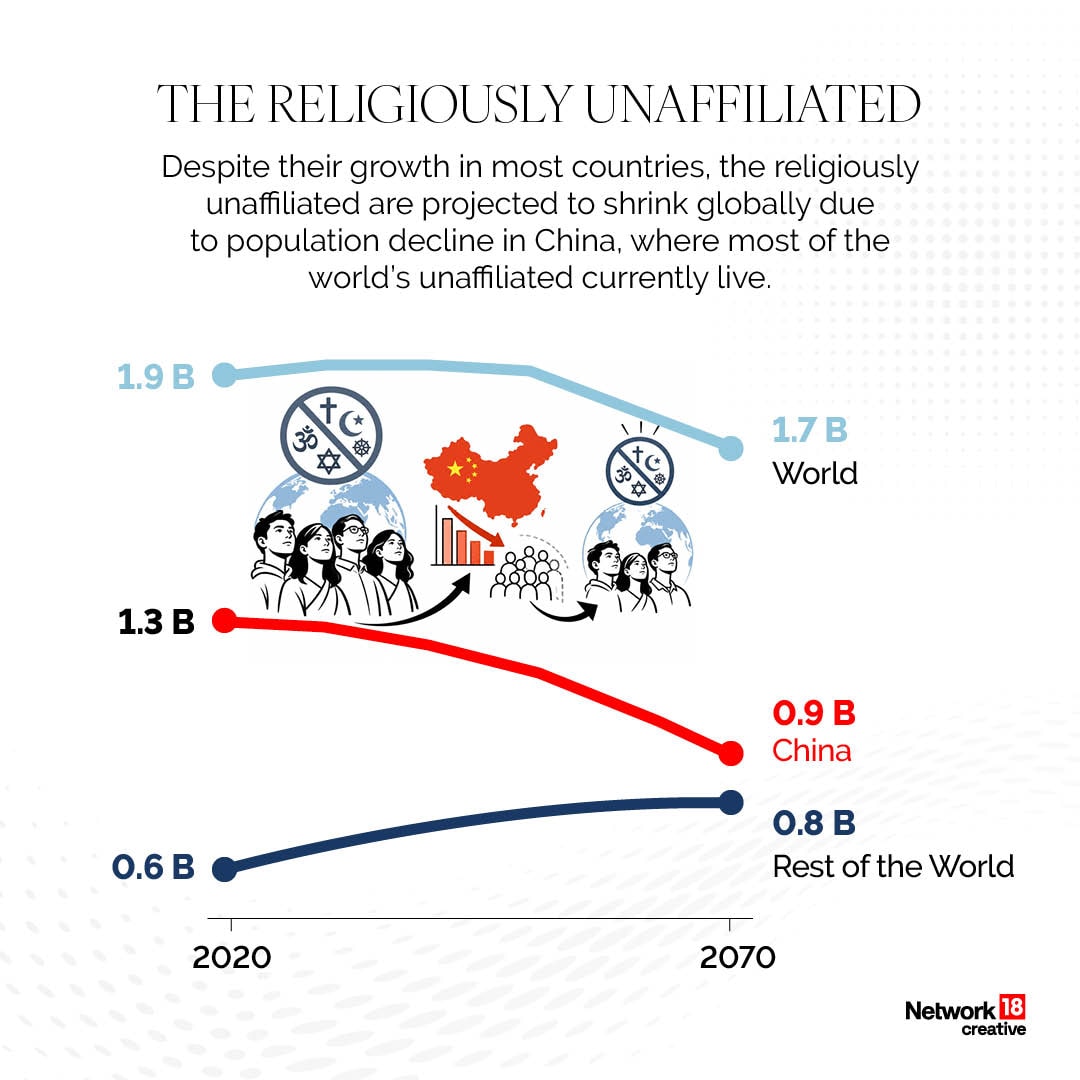
The number of people identifying with no religion is projected to decline globally, falling from around 1.9 billion in 2020 to 1.7 billion by 2070. Interestingly, the trend is largely driven by China’s expected population decline. While the number of religiously unaffiliated people is projected to fall in China, it could increase in the rest of the world.
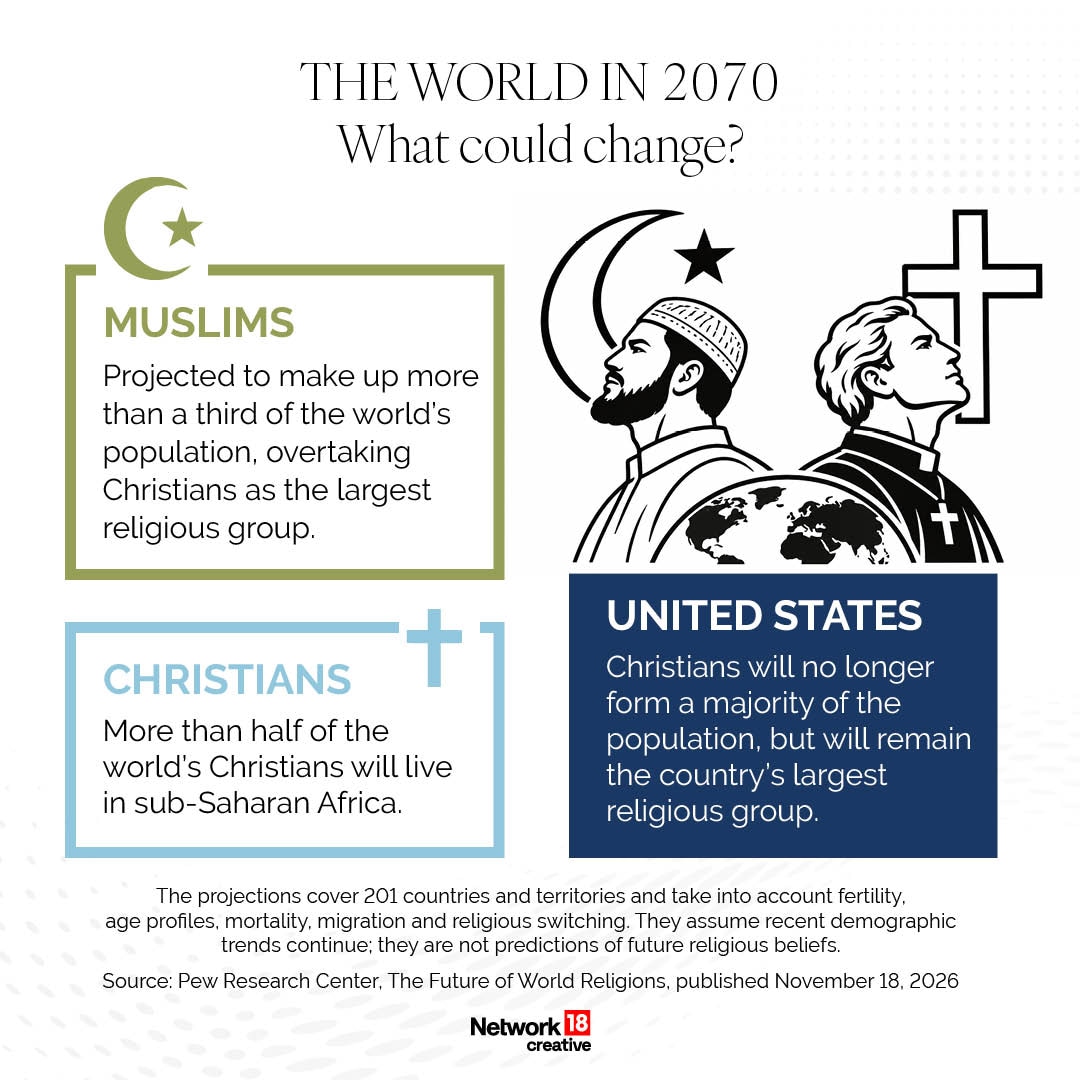
By 2070, Muslims are projected to make up more than a third of the world’s population, while more than half of Christians could live in sub-Saharan Africa. In the US, Christians may no longer form a majority of the population, although they are expected to remain the largest religious group.
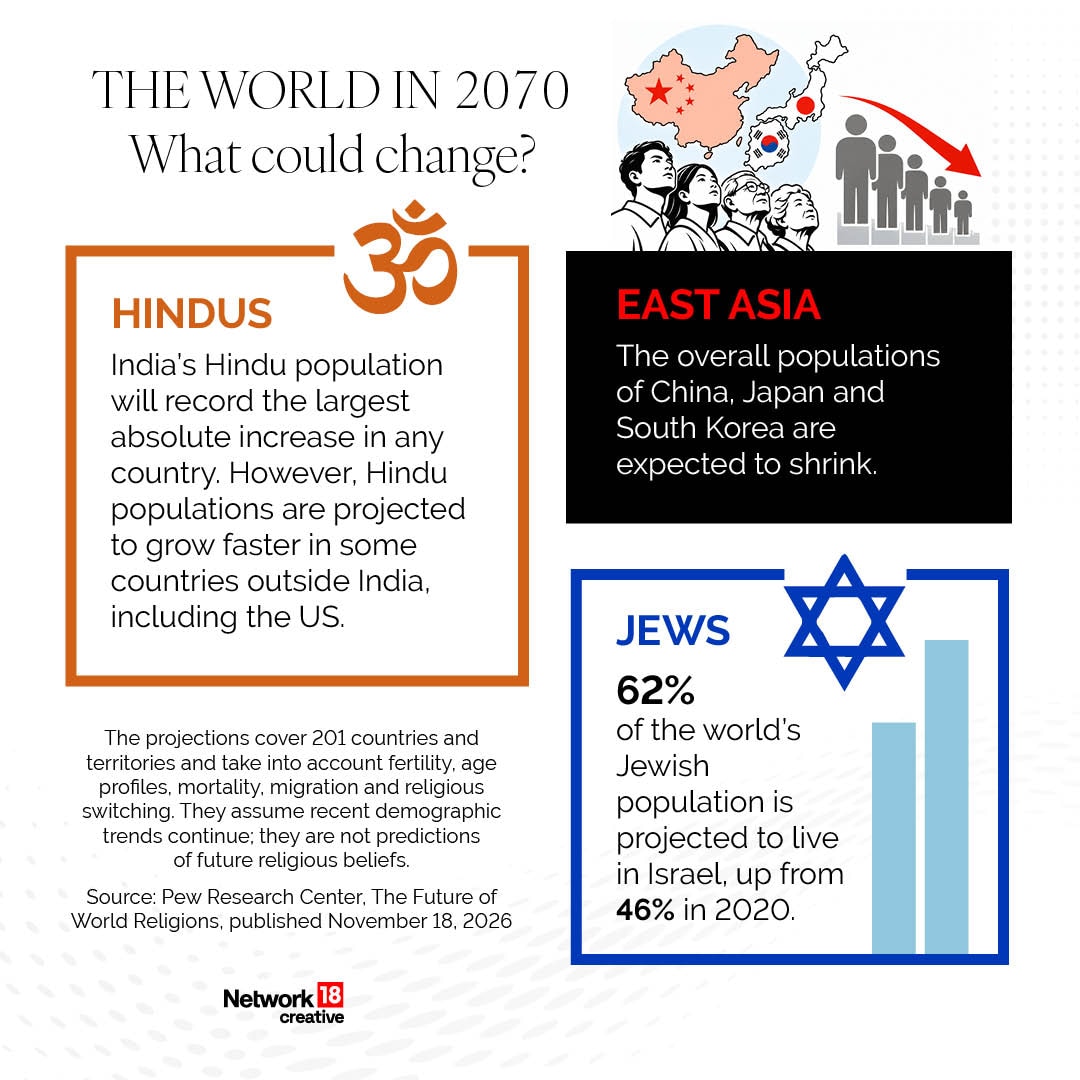
India is projected to record the largest absolute increase in its Hindu population of any country. Meanwhile, the populations of China, Japan and South Korea are expected to shrink. Another major shift could be seen in Israel, which is projected to be home to 62% of the world’s Jewish population by 2070, up from 46% in 2020.
Source link
[ad_3]

