
Tokyo17 minutes ago
- copy link
The number of people aged 100 years or older in Japan has crossed the 1 lakh mark for the first time. Of these, 88 percent are women.
According to the data released by the Health Ministry on Tuesday, there are now 1,07,677 people in the country who are at least 100 years old.
Of these, women are 94.3 thousand and men are 13.4 thousand. Compared to last year, the number of people above 100 years of age has increased by about 8 thousand.
The oldest woman in Japan is Fuyo Kishimoto of Kyoto, who is 114 years old. At the same time, the oldest man is Hikaru Kato of Kumamoto. His age is 112 years.
According to experts, the Second World War is also one of the reasons for the high number of women above 100 years of age in Japan. According to an estimate, about 23 lakh soldiers were killed then. Almost all of them were men.
Why do people live so long in Japan?
According to Stuart Gitel-Basten, social science professor at the Hong Kong University of Science and Technology, there are many reasons behind longevity in Japan.
Among these, healthy eating habits, being active in everyday life and affordable health care are important. People also have regular health checkups in Japan.
Men who survived the war also had more smoking and drinking habits than women. Additionally, men were more likely to be involved in industrial work, which had long-term health implications.
Many men also become socially isolated after retirement or the death of their spouse. In comparison, women remained more connected to their community and the people around them. This benefited him at social and mental level.
106 year old Sato still does his own work
Tetsuo Sato, living in Osonogo village in the mountainous area of Niigata Prefecture, is also among the more than 1 lakh people aged 100+ in Japan.
Sato is now about to turn 107 years old. He lives with his son, daughter-in-law, dog and cat.
He has trouble hearing and his eyesight has also become weak. Despite this, he keeps himself busy throughout the day.
Sato makes notebooks from old calendars and wrapping paper. He also tells stories of his experiences in the Battle of Imphal during World War II.
His 68-year-old daughter-in-law Kuniko Sato says that even today her father-in-law tries to do most of the work himself. He bathes himself without help.

Tetsuo Sato (left) with his daughter-in-law in Osonogo last year. (Photo-NYT)
When Kuniko injured her leg last year, Sato started washing her own rice bowls. “We have started taking care of each other as we get older,” says Kuniko.
Sato will turn 107 years old in two days. More than a dozen members of four generations of the family will gather at a traditional hot spring hotel for their anniversary. Photographs of four generations will also be taken here.
Sato’s aim was to live to 100 years. Now he wants to live till 110 years.
Population may decrease by more than 4 crores by 2070
Japan had the highest population in 2008 with about 128 million. According to government estimates, by 2070 it may reduce to around 8.7 crores. This means that the country’s population may decrease by more than 4 crores in the coming decades.
At present, approximately two people are dying for every child born in Japan. Its direct impact is on the working population of the country.
The number of working people is decreasing, while the number of elderly people is increasing. Due to this, the burden of tax and social security on the government is increasing.
The Japanese government has been encouraging people to have more children for several decades. Despite this, the trend of decline in population has not changed.
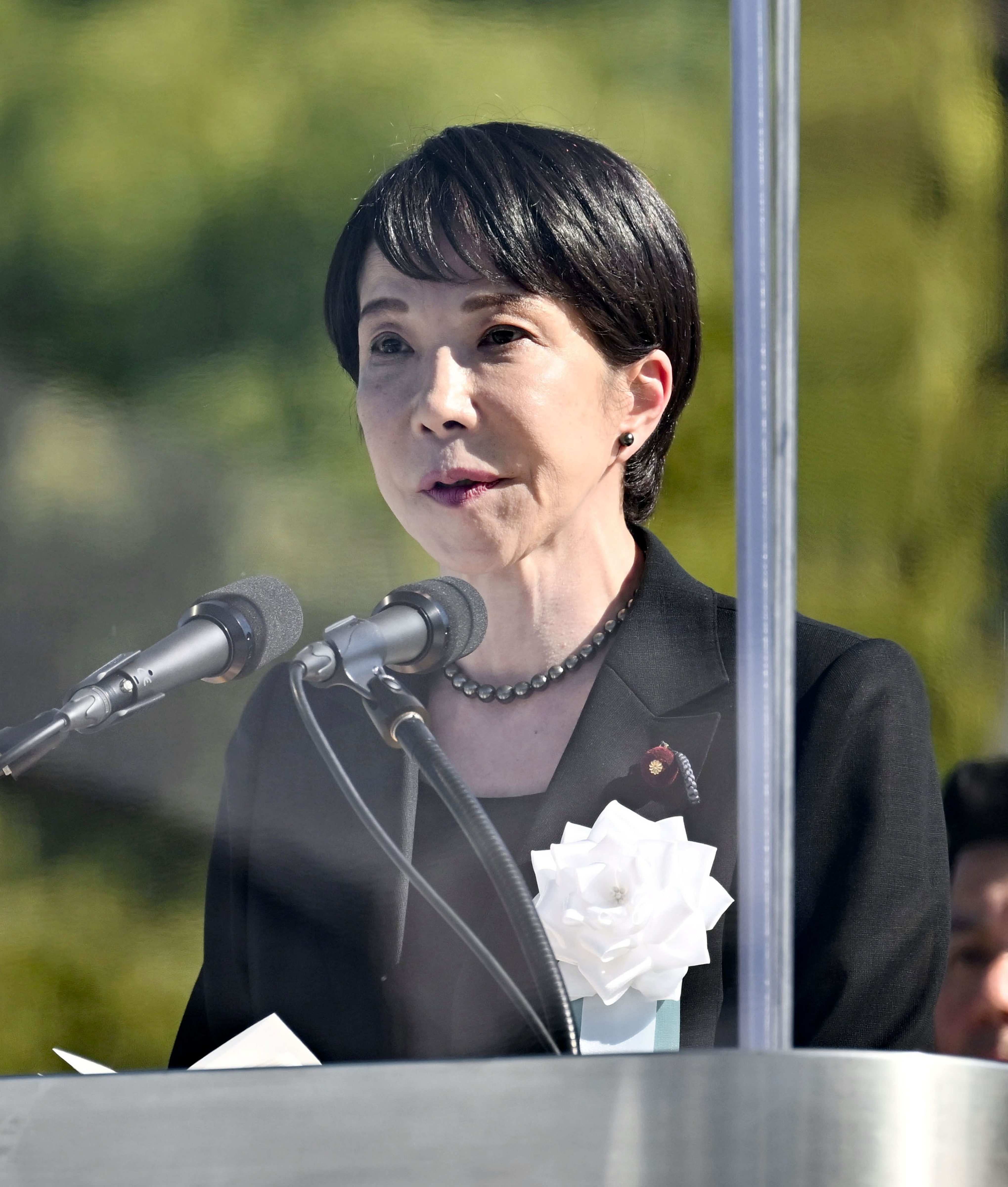
Japan’s birth rate has been falling for a long time. Prime Minister Sanae Takaichi has described the situation as a ‘quiet emergency’.
Population reduced by 31 lakh in 5 years
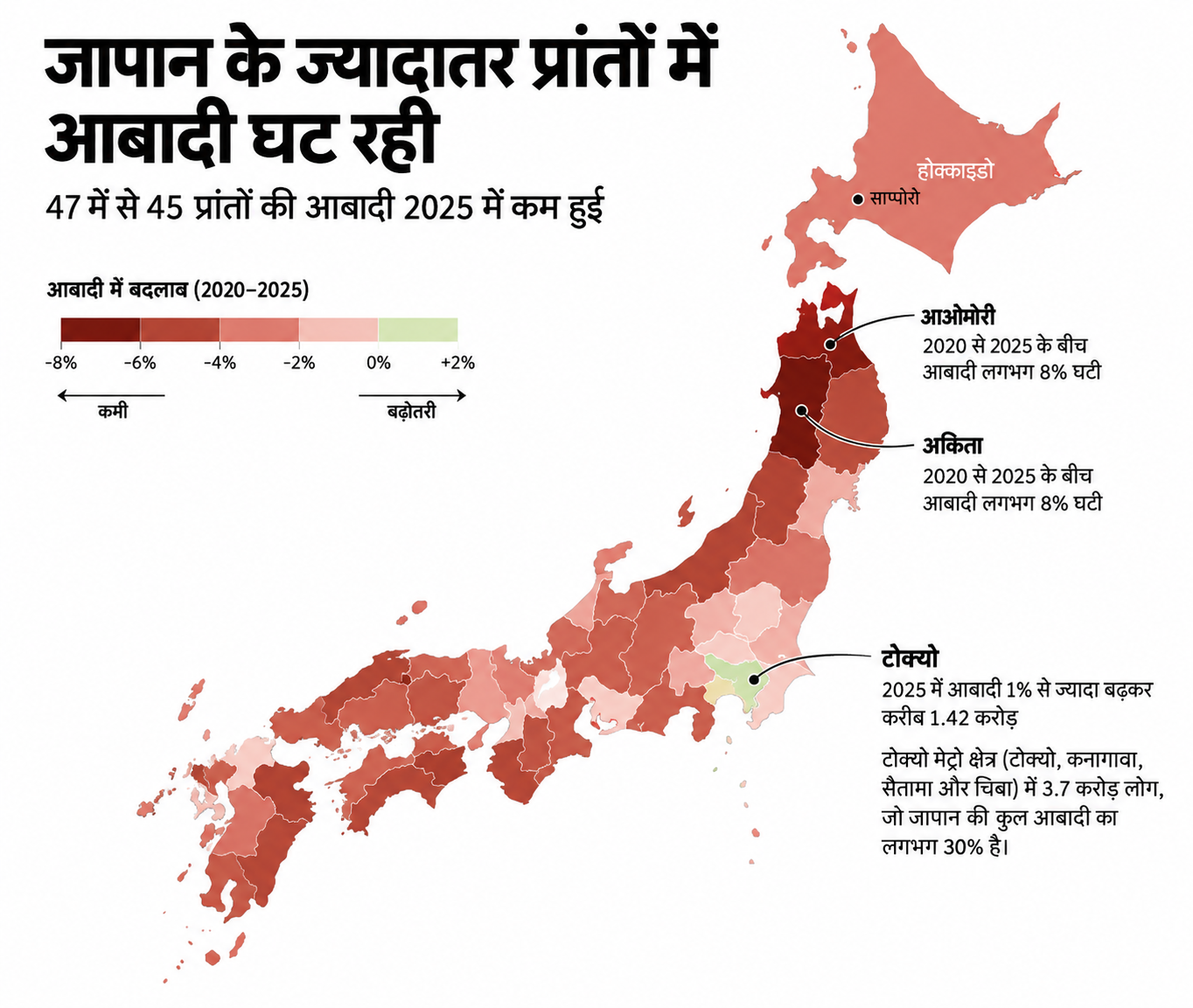
Japan’s population will decrease by 31 lakh between 2020 and 2025. The population of the country was 12.61 crore in 2020, which will decrease to around 12.3 crore in 2025.
This is the largest decline in population since the census began in 1920.
Census data shows that the problem has now reached almost every part of Japan. The population of 45 out of 47 provinces of the country will decrease in 2025. There were only two provinces where the population increased.
Villages are becoming vacant, nursing homes are being built instead of schools.
The population in rural areas of Japan is aging rapidly. Youth are moving towards big cities like Tokyo, Osaka and Nagoya for jobs and studies.
Its impact is visible on the everyday life of the villages. In many places the number of children in schools has reduced so much that they have had to be closed. In some areas, closed schools are being converted into nursing homes and community centres.
Lakhs of houses are lying vacant in the country. In many places, government offices and hospitals are reducing the scope of their work. Train services are also being stopped in some areas.

A school bus passing through an empty road in the morning in Tenai village, Japan. The picture is of March 10, 2023.
Population is increasing in Tokyo, rest of the country is decreasing
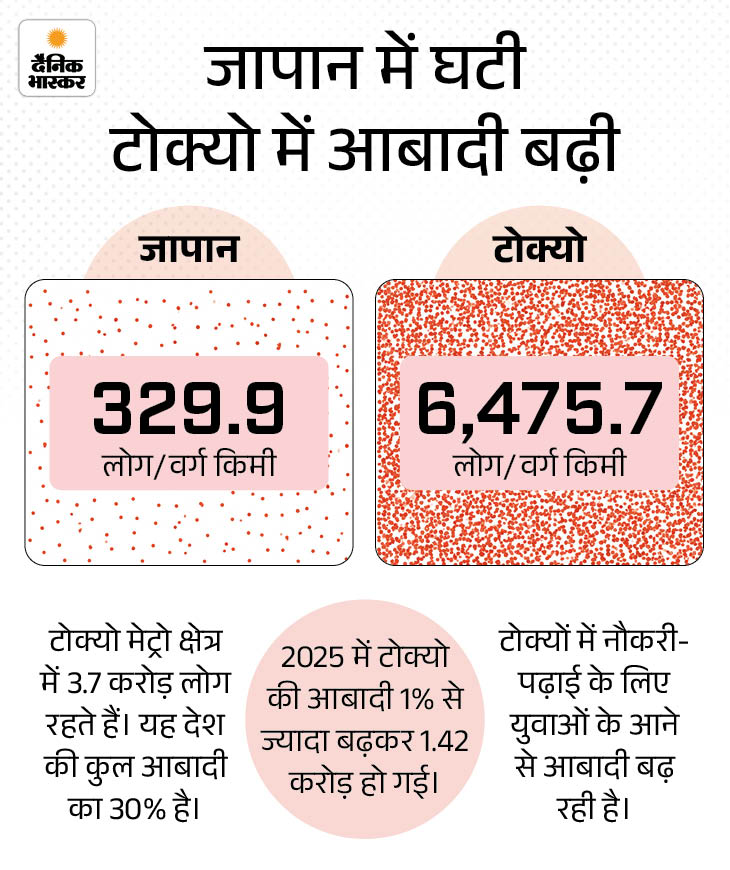
While the population is declining in most parts of Japan, Tokyo and its surrounding areas are still attracting people.
In 2025, the population of the Tokyo metro area was about 37 million. It includes Kanagawa, Saitama and Chiba provinces along with Tokyo. The region now accounts for about 30% of Japan’s total population.
Tokyo’s own population is also expected to grow by more than 1% to about 14.2 million by 2025. The main reason for this is the youth coming here for studies and jobs.
Debate on bringing in foreigners to stop population decline
To deal with the problem of population decline, some experts call for allowing more foreigners to work and live in Japan. He believes that this can overcome the shortage of working people to some extent.
But there is a debate going on regarding this in Japan. Some people are demanding more strict immigration rules instead of increasing the number of foreigners. This thinking is also visible in movements like ‘Japan First’. ————————— Read this news also…
Singapore government will give money in exchange for reading the book: Must read for at least 15 minutes daily; The aim is to get rid of the addiction of smart phones and reels.

Amidst the habit of smartphones and reels, the Singapore government is paying people to read books. Read the full news here…

Source link
[ad_3]

