
Last Updated:
Uttarakhand’s abandoned border villages are getting a tourism push, with new homestays and plans to attract visitors to remote areas like Jadung and Nelang.




Aerial view of the rugged mountains and landscape of Nelang Valley in Uttarkashi, Uttarakhand.
Jadung and neighbouring Nelang were once home to the Jadh-Bhotiya community, whose traditional livelihoods included farming, livestock rearing and trade with Tibet. The villages were evacuated after the 1962 India-China war, forcing residents to leave their ancestral homes and land. Many families were subsequently relocated to settlements such as Bagori and Dunda in Uttarkashi. The evacuation also disrupted their traditional cross-border trade and way of life.
For decades, the displaced community sought a return to their ancestral villages. In 2020, the Centre directed the Uttarakhand government to examine their resettlement demand, followed by a multi-agency survey of Jadung in 2022.
The revival effort later took a tourism-led turn. In 2024, Uttarakhand announced plans to renovate six traditional houses in Jadung as homestays, with the aim of involving descendants of the original residents. By 2025, the Centre was also highlighting the resettlement of Jadung and Nelang under the broader Vibrant Villages Programme and the development of tourism infrastructure in the region.
Six Homestays, One Bigger Experiment
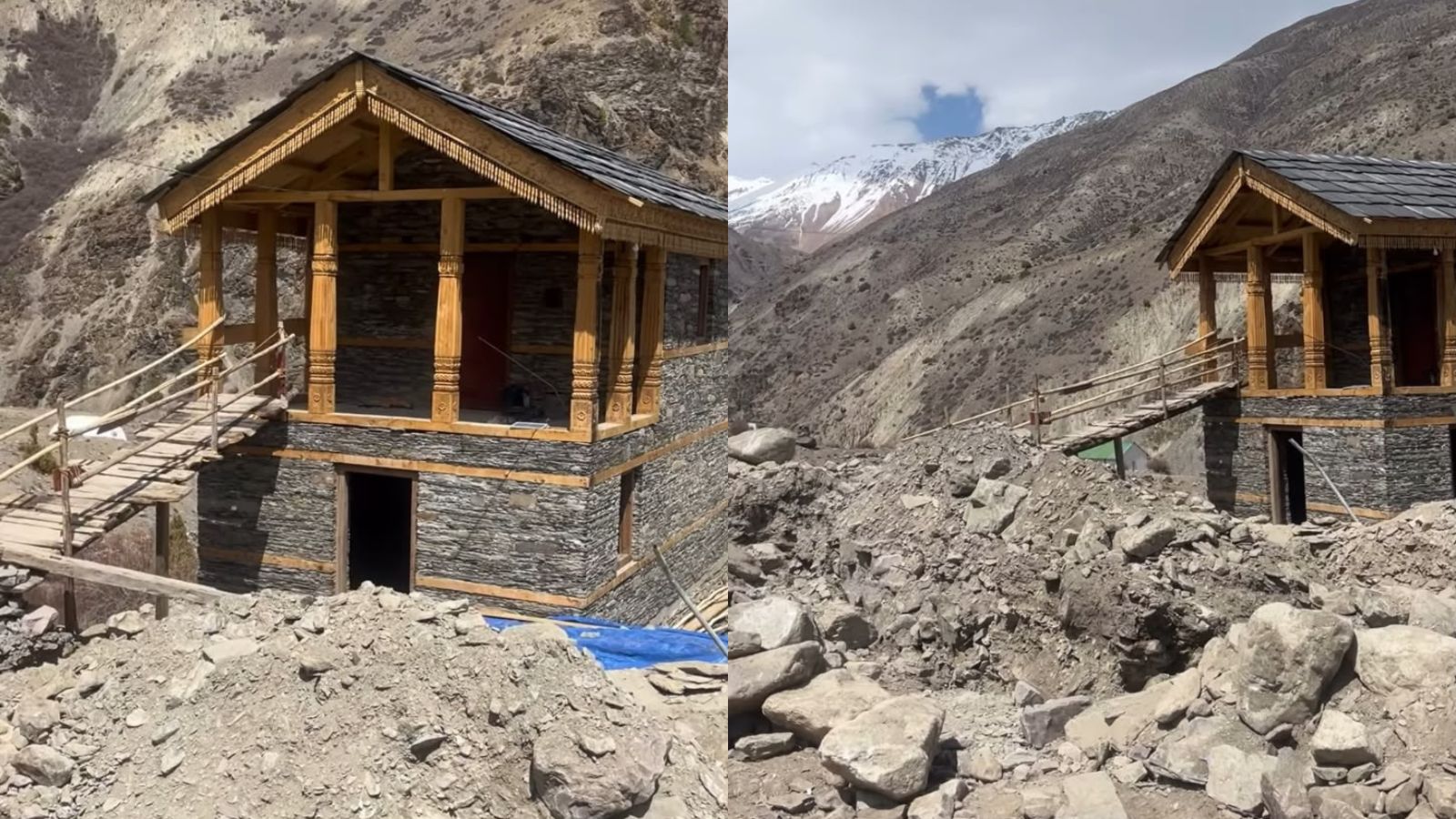
In January 2024, the Uttarakhand Cabinet approved a plan to convert six dilapidated houses in Jadung into homestays, with the structures to be restored in the village’s traditional architectural style using local materials. The homestays are intended to involve families of the original residents, with selected operators required to run them for at least 10 years. The Tourism Department is also to provide hospitality training and marketing support.
Construction began in September 2024 through the Garhwal Mandal Vikas Nigam (GMVN), at an estimated cost of ₹365.33 lakh (₹3.65 crore). The project was conceived as a livelihood opportunity for families displaced after the 1962 war and as part of efforts to encourage reverse migration in the border region.
The plan has since expanded, with eight more homestays being developed in a second phase at a cost of around ₹4.9 crore. However, a key hurdle remains: Jadung is currently subject to restrictions on overnight tourist stays. The district administration is now preparing a proposal to enable overnight tourism, along with a security SOP.
The larger question is whether these homestays can do more than attract tourists and actually create enough livelihood for former residents to reconnect with their ancestral village.
Can Tourism Beat Migration?
Uttarakhand’s ghost-village problem is part of a much larger migration crisis. According to a Times of India report citing the state Migration Commission, more than 6.9 lakh people temporarily migrated from villages between 2011 and 2022, while around 1.38 lakh migrated permanently. As of 2025, 758 villages were reported to be uninhabited. The report also noted that more than 6,282 people had returned to their native villages since 2020, with around 21% of these returnees taking up tourism and service-related work.
Tourism has consequently become a key part of the government’s strategy to make staying in remote villages economically viable. Under the Vibrant Villages Programme-I, 51 villages in Uttarakhand have been identified for development, with tourism, cultural heritage, entrepreneurship, agriculture and better infrastructure among the focus areas. The Centre says the programme is designed to create enough economic incentives for residents to stay in border villages rather than migrate.
The scale of the intervention is also expanding. As of July 2026, 152 projects worth ₹306.32 crore had been sanctioned under VVP-I in Uttarakhand, while the programme has also supported roads, infrastructure, tourism and livelihood-related projects.
But Jadung presents a tougher test. A tourist economy can generate income without necessarily creating a permanent population. For former residents to return, tourism would have to offer stable, year-round livelihoods, alongside basic requirements such as healthcare, education, connectivity and access to essential services.
That is why the Jadung experiment matters beyond its six homestays. If tourism can generate a sustainable livelihood for families displaced in 1962, it could become a model for reviving other depopulated border villages. But if tourists arrive while the younger generation continues to live elsewhere, the village may become a tourist destination without truly becoming a living community again.
Jadung And Nelang: Can Tourism Bring A Ghost Village Back To Life?
The government’s tourism push in Jadung and Nelang is now moving from planning to implementation. Six homestays in Jadung, built at a cost of ₹3.65 crore, are expected to be ready by September 15, 2026, with the administration planning to hand them over to villagers displaced from Jadung after the 1962 India-China war. A second phase of eight more homestays, costing around ₹4.9 crore, is also under construction.
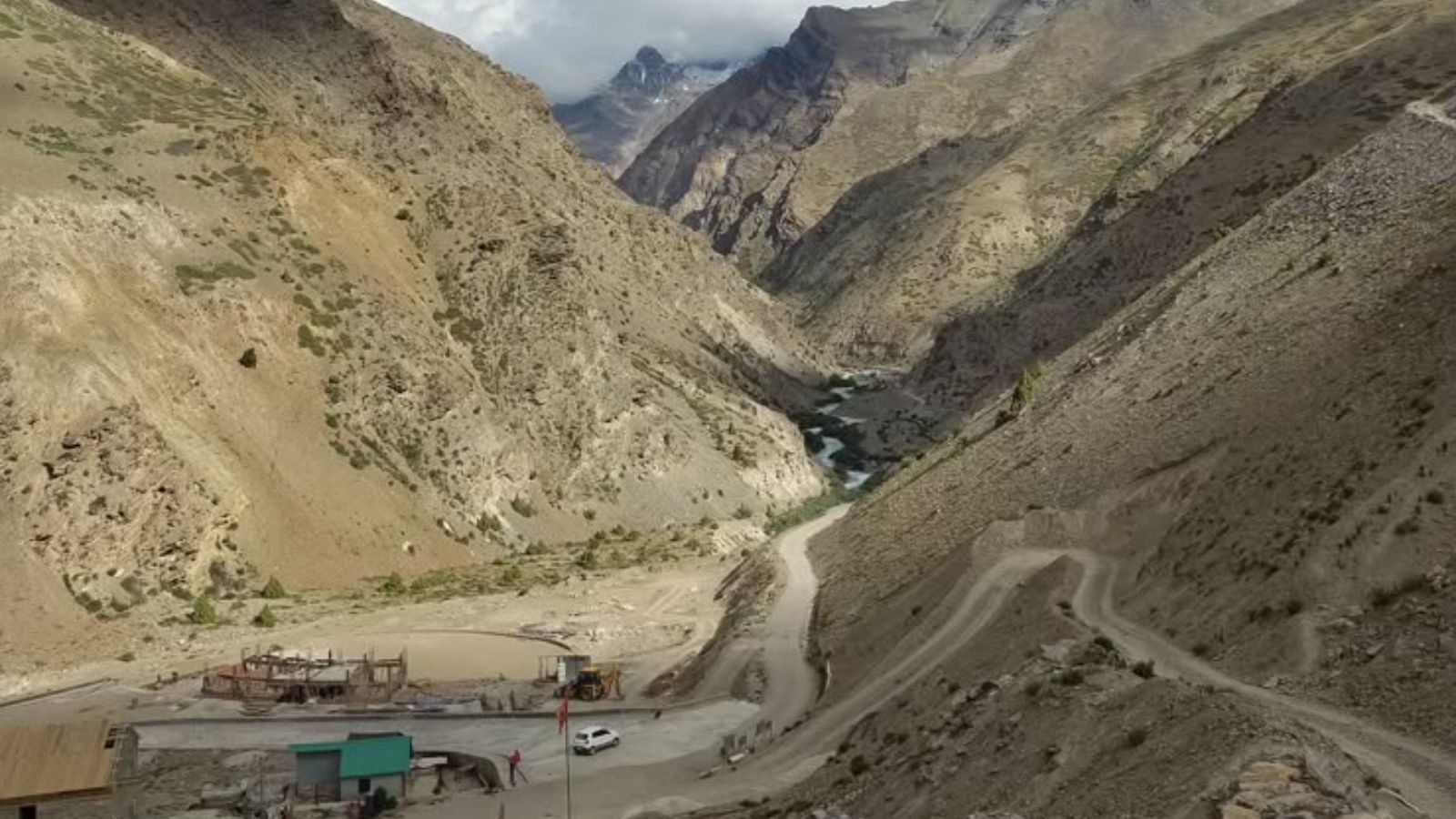
Nelang Valley in Uttarkashi, Uttarakhand, near the India-China border, is among the remote border areas being explored for tourism-led development.
But the bigger challenge is whether these projects can actually bring people back. Jadung and Nelang are among 10 Uttarkashi border villages covered under the Centre’s Vibrant Villages Programme, which seeks to improve livelihoods and living conditions in remote border areas while encouraging people to remain in or return to them. In 2025, Prime Minister Narendra Modi said that work on the resettlement of both villages had begun and highlighted homestays and tourism as part of the revival effort.
The government’s approach has since expanded beyond individual homestays. Under VVP-I, 200 projects worth ₹270.58 crore had been sanctioned for Uttarakhand as of January 2026, while more than 1,800 activities had been undertaken in the state, including tourism promotion, training, health camps and community programmes. By July 2026, the Centre said tourism had become one of the programme’s major components nationally, with projects covering viewpoints, trekking routes, eco-tourism and tourist centres.
Quick Answers
 Ask News18
The tourism push in Jadung aims to revive the abandoned village, create livelihood opportunities for families displaced after the 1962 India-China war, and encourage reverse migration in the border region.
Ask News18About the Author

Pragya Bahuguna is a digital journalist at News18.com, covering national and international news, including Indian politics and geopolitics, with an interest in environment and climate affairs. She hol…Read More
Uttarkashi, India, India
September 10, 2026, 07:00 IST
Read More
Source link
[ad_3]

