
New Delhi43 minutes ago
- copy link
Sanjeev Sanyal, member of the Prime Minister’s Economic Advisory Council, said that India should not try to stop the fall of the rupee. Instead, he should be allowed to decide his level according to the market. Our main focus should be on keeping the inflation rate under control.
Sanyal said that when the country adopted the inflation targeting framework, it chose monetary policy over currency exchange rates.
1. Primary goal to control inflation
Sanjeev Sanyal said that policy makers face many challenges in economies with open capital account.
India’s framework is based on the principle that no country can simultaneously run an independent monetary policy and strictly control the exchange rate of its currency.
For a large and internally strong country like India, targeting inflation instead of fixing the rupee rate is the right step.
2. Success of Inflation Targeting Framework
Sanyal stressed that India should not interfere in the level of the rupee. He said that the inflation targeting system has worked very well in the country.
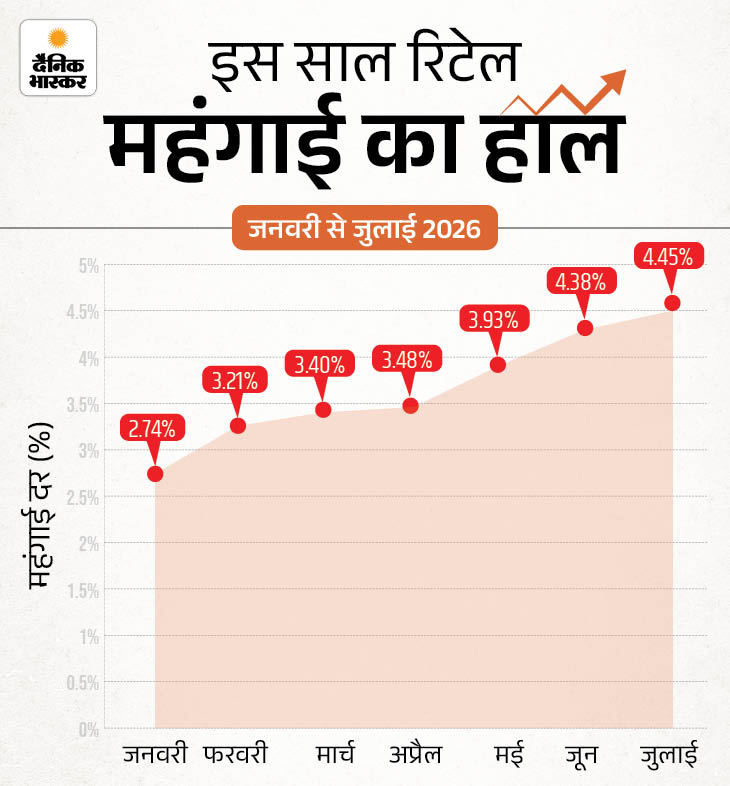
There was a time when the inflation rate in India used to be in the range of 8% to 12%, whereas in the last decade it has successfully come down to the range of 2% to 6%.
3. Proper use of foreign exchange reserves
Sanjeev Sanyal also said that leaving the rupee to the market does not mean that the central bank or the concerned officials will remain completely silent.
He said that the forex reserve can be used to slow down the pace of sudden or sharp fluctuations in the currency and to handle the shocks, but it should not be used to prevent the rupee from reaching its natural level.
4. Exporters benefit from weak rupee
Sanyal said that weakening of rupee is always harmful for the economy. He said that if inflation rate remains under control in the country, then the fall in rupee gives Indian exporters a competitive edge in the international market.
There are a lot of fluctuations in the currencies of many countries of the world, hence if the prices are stable at the domestic level, then the weak rupee does not become a hindrance to the economy.
5. India’s approach is different from China
According to Sanyal, the main concern should be whether the falling currency is increasing inflation within the country. If inflation is under control and interest rates can be increased if needed, then forced saving of rupee is not the right way.
He also said that this step of India is not like China deliberately weakening its currency, but this movement of Indian rupee is completely natural and organic. Purchasing Power Parity (PPP) will play its role in the long run.
What is inflation targeting framework?
It is a monetary policy framework under which the country’s central bank like RBI aims to maintain the inflation rate within a certain range (2% to 6%), so that prices remain stable.
What is Purchasing Power Parity (PPP)?
Purchasing power parity is an economic measure to compare the purchasing power of currencies of two different countries.
Read this news also…
Silver fell by ₹ 5,772 to ₹ 2.27 lakh kg: Price of 10 grams of gold decreased by ₹ 1,196 to ₹ 1.53 lakh, see the price according to carat.
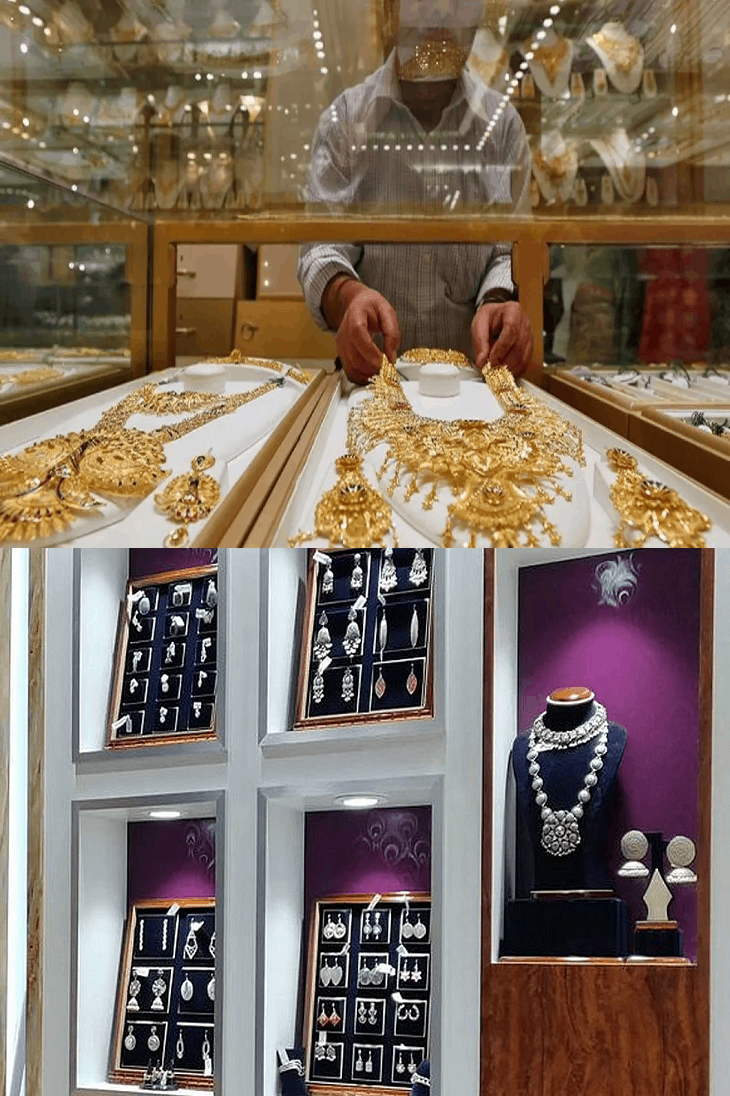
There is a fall in the prices of gold and silver on 19th August. According to India Bullion and Jewelers Association (IBJA), the price of one kg silver has fallen by Rs 5,772 to Rs 2.27 lakh. The price of 10 grams 24 carat gold has decreased by Rs 1,196 to Rs 1.53 lakh. Read the full news…

Source link
[ad_3]

