Kabul12 minutes ago
- copy link
Today completes five years of Taliban occupation of Kabul. The picture of Afghanistan has completely changed in five years. The Taliban strengthened their control over the entire country and the economy improved somewhat.
But on the other hand, there were strict restrictions on women’s rights, press freedom decreased and physical punishments again became common.
According to a Human Rights Watch report, between August 2021 and November 2022, courts ordered corporal punishment in at least 18 cases. Most of these cases were related to so-called moral crimes.
In December 2022, 27 people were flogged in front of a crowd in a stadium in Parwan province. Corporal punishment also existed under Afghan governments before the Taliban, but under Taliban rule it began to be applied openly and regularly.
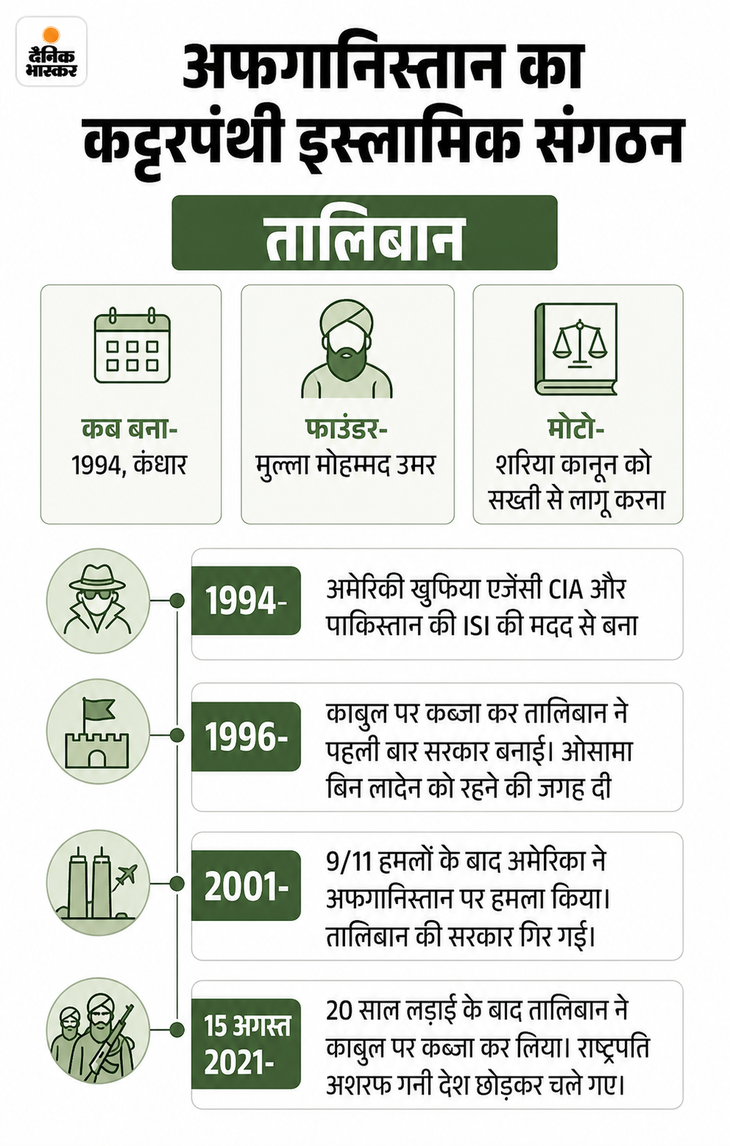
15 August 2021: Taliban entered Kabul
Taliban captured Kabul in Afghanistan on 15 August 2021. The Afghan government collapsed within a few hours. Commercial flights were canceled and thousands of people reached Kabul airport to leave the country.
At that time, the Taliban had promised to maintain women’s rights and grant amnesty to those who worked with the US and the previous Afghan government.
Spokesperson Suhail Shaheen had said that people will not face any threat to their property, life or honor. But in the next five years the picture appeared completely opposite to these promises.

The most talked about photographs of that time included the photo of people hanging from a US Air Force C-17 Globemaster aircraft. American troops had to stop the operation to clear the runway. This footage is from 16 August 2021.
Girl students were prevented from going to school and university
Afghanistan is now the only country in the world where girl students are formally barred from studying in secondary schools and universities.
After the Taliban came to power, restrictions on women continued to increase. Many restrictions were imposed regarding working and going to public places.
According to the UN report, more than 100 decrees have been issued against women so far under Taliban rule. 7 out of 10 women surveyed described their mental condition as bad or very bad.
More than half of the women said they go out of the house only once or twice a month. Nearly three-fourths of women reported feeling insecure about leaving the house without a man. According to the report, only 7% of women are working in Afghanistan, whereas this figure among men is 84%.
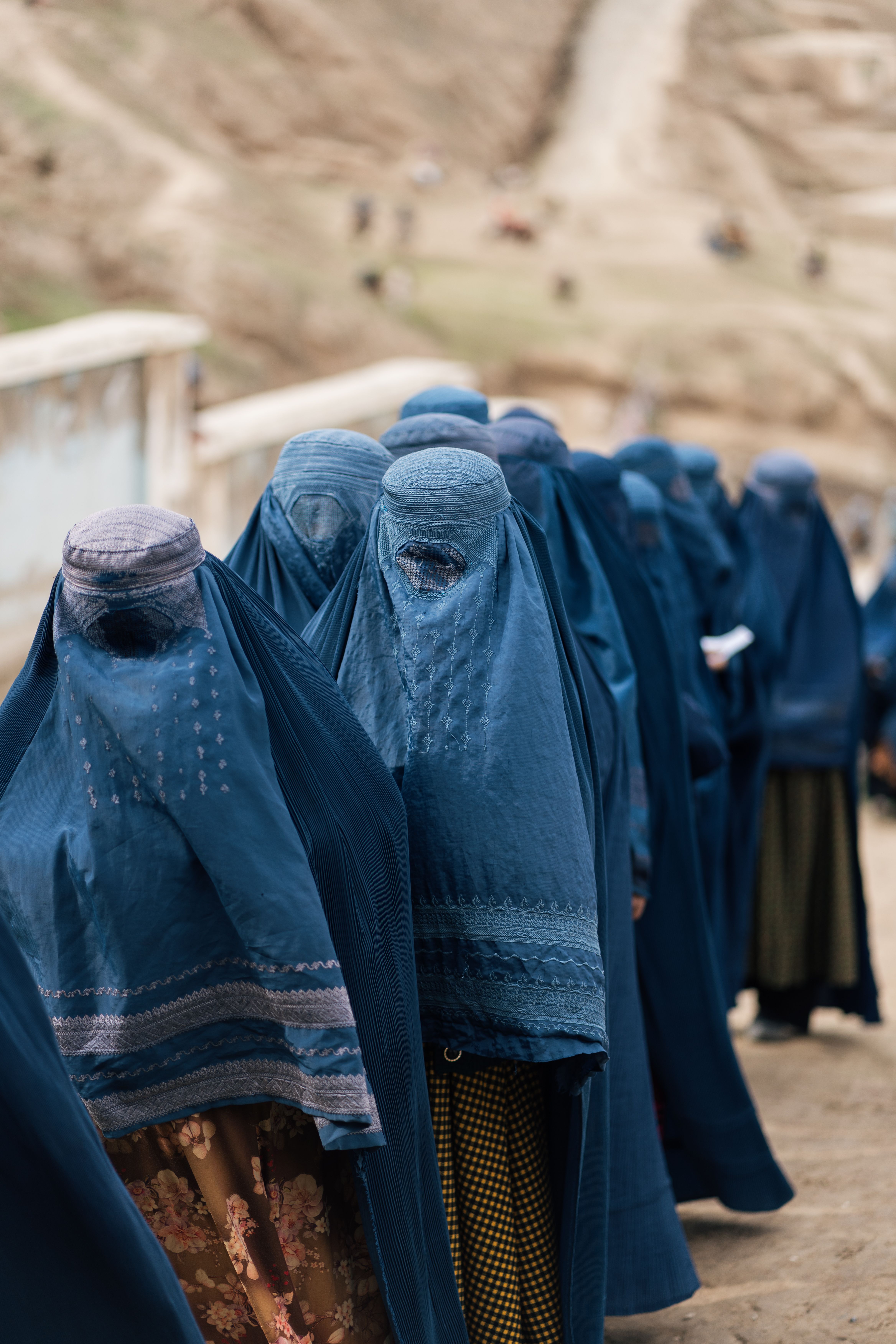
A group of women wearing blue burqas in a mountainous area of Afghanistan.
Pressure on the press increased, journalists left the country
Journalism has also been badly affected under Taliban rule. Committee to Protect Journalists i.e. CPJ has included Afghanistan among the most dangerous and difficult places in the world for journalists. Many Afghan journalists have left the country since 2021.
- In 2024, Taliban officials banned live political TV broadcasts.
- Criticism of the Taliban leadership was made a crime.
- Media organizations also faced restrictions in choosing guests for interviews.
- Taliban strengthened its media network.
- By 2025, about 15 major TV and radio stations, newspapers and digital media institutions were under the control of the Taliban.
Afghanistan’s economy improving under Taliban rule
Afghanistan’s economy was not completely ruined under Taliban rule. There have been signs of improvement in some areas. According to the World Bank, Afghanistan’s real GDP will grow by 4.8% in 2025. The government’s domestic revenue also increased to 19.8% of GDP.
But the benefits of this growth did not reach the common people widely. Per capita income has decreased and inflation has increased. The country is still largely dependent on imports. Lack of electricity, limited access to banking facilities, large informal cash sector and lack of foreign aid also pose major challenges to economic development.
95% decline in opium cultivation
Afghanistan was the world’s largest source of opium when the Taliban came to power. According to UNODC, in 2022, about 80% of the world’s opium would come from Afghanistan.
In April 2022, the Taliban banned the cultivation of poppy (opium plant). This had a direct impact on farming. According to UNODC’s 2023 survey, poppy cultivation declined by 95%.
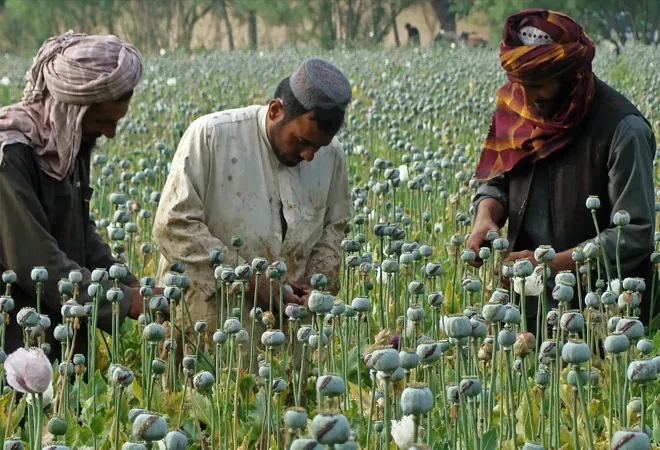
Opium cultivation in Afghanistan. (file photo)
Russia recognized Taliban government
So far only Russia has formally recognized the Taliban government. However, Taliban says that it is in contact with about 40 countries and has fulfilled the necessary conditions for formal recognition.
India has also strengthened its ties with Kabul without formally recognizing the Taliban government. Taliban Foreign Minister Amir Khan Muttaki visited India in October 2025. This was the first visit by a senior Taliban government official to India.
China and the UAE have also accepted ambassadors appointed by the Taliban, although neither has yet formally recognized the Taliban government.
—————-
Read this news also…
Bangladesh’s condition before PM Rahman’s visit to India: Sheikh Hasina should be kept away from politics; Can come to Delhi on 21st August
Bangladesh Prime Minister Tariq Rahman may visit India for the first time on August 21. Preparations for the visit have started, but some important issues are yet to be agreed between the two countries before finalizing it. The biggest issue among these is that of former Prime Minister Sheikh Hasina. Read the full news…

Source link
[ad_3]

