
There are lunches, and then there are lunches that you talk about for weeks. The kind where every dish arrives with a story, where the ingredients have a biography, and where the person behind the stove has more years in a professional kitchen than most of us have been alive. On a Friday afternoon in May, Le Meridien New Delhi became the setting for exactly that kind of afternoon. The occasion was The Portuguese Pour, the first edition of Chef DK’s Tasting Series, an invitation-only, sit-down culinary experience that brought together five decades of Indian cooking expertise and a bottle of extra virgin olive oil from the sun-soaked groves of southern Portugal. The result was a meal that deserved every bit of the applause it received.
The Man Behind the Menu
Before we talk about the food, it’s worth taking a moment to appreciate who cooked it. Chef Davinder Kumar is not someone who needs much of an introduction in Indian hospitality circles, but for those who may be newer to the food scene, here is the short version: he is a legend, and that word is not being used loosely.
Chef DK has spent over five decades in the industry, most of them at the helm of Le Meridien New Delhi, where he rose from a young cook to one of the most respected culinary figures in the country. He trained at the Oberoi School of Hotel Management and went on to become the Executive Chef of Le Meridien at a point when the hotel was one of the most prestigious addresses in Delhi’s dining landscape. Over the years, he has cooked for presidents, prime ministers, and heads of state. He has represented India at international culinary competitions, won awards that most chefs can only dream of, and mentored a generation of cooks who now run kitchens across the country.
What makes Chef DK genuinely remarkable is that his cooking has never been about showing off. It has always been about balance — between tradition and innovation, between the familiar and the surprising. You see that philosophy most clearly in a menu like the one he designed for this occasion, where Indian flavours and European technique sit together without either one trying to dominate the other.
Also Read: 6 Refreshing Indian Sherbets To Beat The Summer Heatwave
The Setting and the Welcome
The afternoon began in the warm, unhurried way that the best meals do. Guests were welcomed with crostini and olive focaccia alongside roasted makhana, a pairing that quietly announced the event’s intentions. The focaccia was drizzled generously with extra virgin olive oil, and the makhana offered a familiar, light crunch that felt entirely at home on the same table. It was a small but smart gesture: here is something you know, and here is something new. Let them meet.
A Broccoli Almond Soup with EVOO Pesto Crostini opened the meal formally. The soup was creamy and earthy in the right proportions, but what made it stand out was the pesto crostini alongside it, the olive oil’s grassy, lightly peppery character came through cleanly without overwhelming the delicate almond base. It was a confident start.
The Tasting Dishes: Where the Real Story Happened
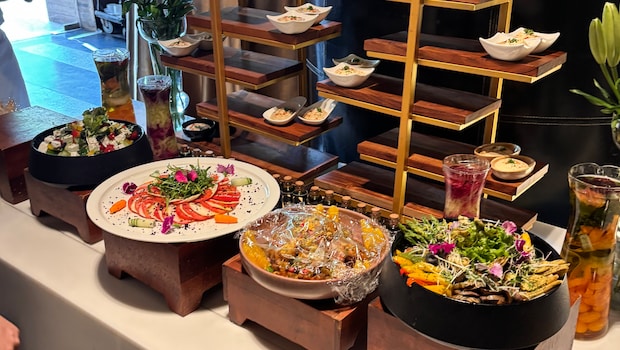
The heart of the afternoon was a series of four live demonstration dishes, each conceived specifically for this occasion, each using extra virgin olive oil not as an afterthought but as a genuine flavour component.
Tomato and Raw Mango Carpaccio with Kalamata Dust, EVOO and Shaved Parmesan
This dish appears simple but reveals complexity upon tasting. Thin slices of ripe tomato and tart raw mango are dusted with Kalamata olive powder, finished with olive oil and Parmesan curls. The mango’s tartness complements the Parmesan’s saltiness, while olive oil ties it together, enhancing flavours subtly.
Charred Sweet Potato Chaat, Bajra Crisp, Imli Jaggery and EVOO Reduction
This dish was the highlight, reimagining Delhi’s street food with fine dining finesse. Charred sweet potato on a crisp bajra disc offered nutty crunch. Imli jaggery provided a North Indian sweet-sour balance. An EVOO reduction added complexity, elevating the dish beyond chaat with confident, clever cooking.
Pan Seared Sole with Mint, Caper and EVOO Tapenade
The fish course was all about precision. The sole was seared to that ideal point where the skin blisters and the flesh remains just barely opaque inside, a technical achievement that looks easy and absolutely is not. The tapenade was the hero here: mint and capers and olive oil blended into a vivid, pungent relish that cut through the mild sweetness of the fish with real purpose. There was nothing shy about this dish. It was bright, assertive, and exactly right for what it was trying to do.
Rustic Carrot and Cinnamon Cake
The dessert demonstration was unexpectedly fascinating. Using olive oil instead of butter in cake batter, a Mediterranean technique, resulted in a moist, rich cake with a slight density. Cinnamon added warmth, while carrot provided earthiness. It was a compelling case for olive oil in Indian desserts.
The Lunch Spread: Familiar Ground, Handled Beautifully
Beyond the tasting menu, the lunch was confidently rooted in the Indian kitchen. The centrepiece was a Mutton Biryani, fragrant and deeply spiced, with each rice grain carrying the aromatics beneath. It came with a Mirchi Saalan, balancing heat and nuttiness, and a lighter Vegetable Pulao. Murg Makhani rounded out the Indian spread with its richness, a dish Chef DK could cook effortlessly. International options included Spinach Ravioli, offering herby freshness, and Pan Seared Sole, maintaining its precision. Desserts ended on a high note with Mango Tres Leches, milky and mango-soaked, and Phirni, cool and cardamom-scented. Carrot and Cinnamon Cake reappeared, proving its concept, while ice cream offered a cold, undemanding finish.
What the EVOO Actually Brought to the Table
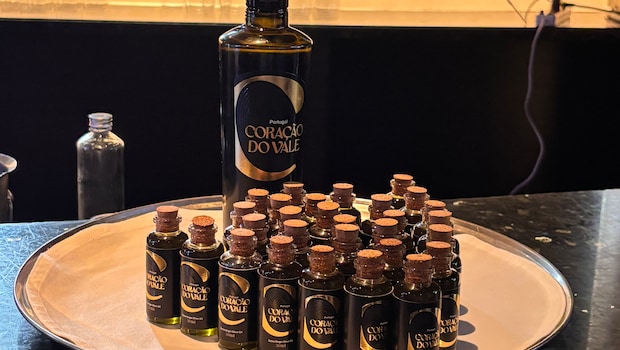
Framing this event as mere marketing would be a mistake, unlike many food brand launches. Chef DK, known for his authenticity, wouldn’t endorse an ingredient he doesn’t truly believe in. His remark, “never competes with the food, it completes it,” seemed like a marketing line until tasted. The olive oil, with its fruity, grassy start, creamy middle, and peppery finish, complemented Chef DK’s Indian cuisine perfectly. Indian dishes span various temperatures, textures, and flavours, requiring a finishing oil that stands out yet harmonises with spices. From delicate carpaccio to bold chaat, the olive oil balanced each dish impeccably.
A Legacy Lunch
The Portuguese Pour was a meal that earned its ambitions. It would have been easy to design a menu that used extra virgin olive oil as decoration, a drizzle here, a garnish there, but Chef Davinder Kumar is far too experienced and far too interested in cooking for that. Instead, he built a menu where the oil was genuinely integrated, where it changed the flavour of every dish it touched, and where the result felt like a coherent point of view rather than a series of recipe demonstrations. For anyone who has followed his career, this felt entirely in character. For anyone encountering his cooking for the first time, it was a very good introduction to why this man is considered a legend. Some titles are given. This one was cooked for, over fifty years, one dish at a time.
Source link
[ad_3]

