
washington dca few moments ago
- copy link
America is tightening visa rules for people suffering from diseases like diabetes and blood pressure.
Now it may be difficult for people suffering from diseases like diabetes, obesity and cancer to get entry into America. The US State Department on Friday instructed US embassies and consulates around the world not to allow people with health problems to come to or stay in the US.
This rule is based on the ‘public charge’ policy, which is intended to deter immigrants who may be dependent on US government resources.
In this, visa officers have been advised to check the health, age and financial status of the applicants. If a person is likely to become dependent on expensive medical care or government assistance in the future, his or her visa will be rejected.
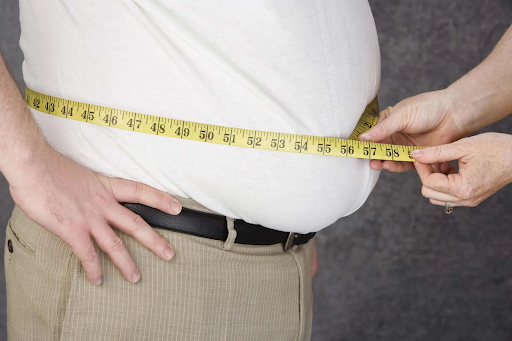
Visa officers will check the health status of the people. The visa will be approved only after they are completely healthy.
Visa officers will decide whether immigrants are a burden on the government
In the instructions given to the officials, it has been said that it is important to keep the health of the applicant in mind. Medical conditions such as heart disease, respiratory failure, cancer, diabetes, metabolic disease, neurological disease and mental health problems can require millions of dollars of care.
Additionally, officials will also take into account conditions like obesity, as it can cause problems like asthma, sleep apnea and high blood pressure.
Under the new guidelines, authorities will have to decide whether a migrant may become a ‘public charge’, i.e. a burden on government resources, and whether he or she will need expensive long-term care.
According to the report, ‘Visa officers have also been asked to check whether the applicant can bear the medical expenses on his own throughout his life without any government assistance. Along with this, the health of family members like children or elderly parents also has to be kept in mind.
Visa officer not inclined to check health condition
Charles Wheeler, senior lawyer at the Legal Immigration Network, called it worrying. He said that visa officers are not trained to check health conditions.
Wheeler said, ‘Officials do not have the experience to assess how dangerous a disease is, or how much of an impact it will have on government resources.’
Sophia Genovese, an immigration attorney at Georgetown University, said that the green card process requires the submission of medical records, but the directive focuses on reducing applicants’ medical expenses based on their medical history and their desire to get a job in the US.
Genovese said that anyone can have diabetes or heart problems. Earlier too, health status was checked, but ‘what if someone suddenly goes into diabetic shock’. If this change is implemented immediately, it will cause many problems in visa interviews.
What will the visa officer check?
Earlier, only infectious diseases (TB, HIV) were checked in the visa process. Now complete history of old diseases will be asked.
- How much does your treatment cost?
- Can you get lifelong treatment without government help?
- Does your child need any special care? Will you be able to do the job?
- Are your parents sick? Will they stay with you?
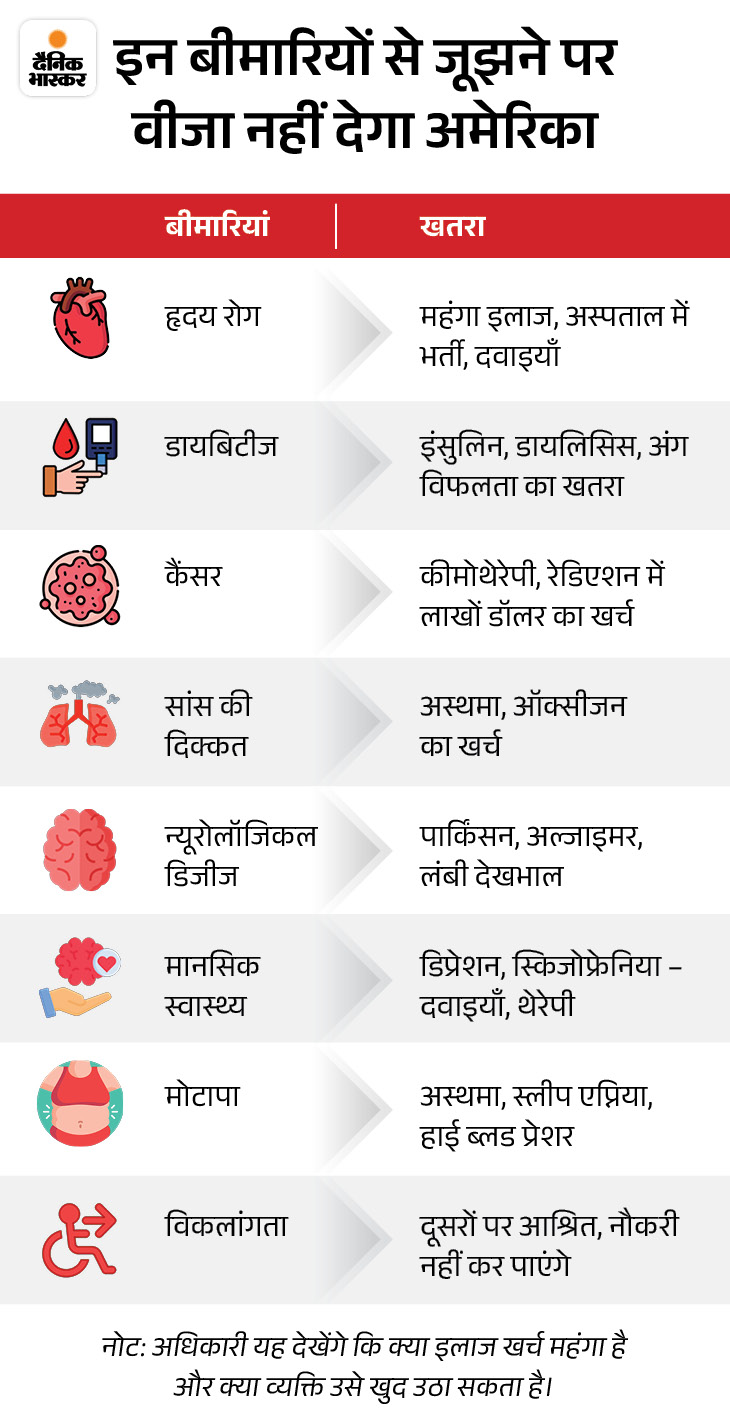
People will leave health services, risk of diseases expected to increase
The Trump administration had tightened the ‘public charge’ rule in 2019, saying, ‘We will allow entry into our country only to those individuals who will contribute to our society, and not be a burden.’
This rule will affect immigrants, especially those with health problems. According to experts, this will not only increase visa rejections but also create a ‘chilling effect’ in the utilization of health services.
1.Visa and Green Card Rejection
- 2-4.7 million Medicaid/CHIP beneficiaries lost coverage from Trump’s first rule. Now Indian/Asian immigrants with diabetes (more than 10 crore affected in India) or obesity will face difficulties in getting visas. The H-1B and green card process can be difficult.
- This will have the greatest impact on families with aging parents or disabled children.
2. Staying away from health services (chilling effect):
- The 2019 rule left 1 in 7 immigrant families without Medicaid, SNAP (food assistance) or housing benefits, even if they were eligible. Following this rule, people will postpone treatment, which will worsen the diseases.
3.Effect on children:
- Immigrant parents also won’t allow their US citizen children to receive benefits. UCLA reports that 17% of illegal immigrants gave up benefits, leading to increased hospital visits.
- Pregnant women or chronic patients will avoid prenatal or preventive care, which may increase maternal/infant mortality.
4.Effect on Economy:
- Immigrants make up a large portion of the workforce. The rule could lead to fewer health-skilled workers (such as IT professionals), which could hurt the economy. But the administration claims that this will save government expenses.

If you suffer from serious illness, it may be difficult to get a visa. There will also be a risk of visa rejection.
20-30% risk of Indian applications being rejected
The Trump administration’s 2025 public charge rule will have a deep impact on India. Nearly 1 lakh Indians apply for green cards every year, of which more than 70% are H-1B visa holders from sectors like IT and healthcare.
According to experts, this rule could increase the rejection rate of Indian applications by 20-30%, especially for middle-income professionals, who will not be able to find high-paying jobs.
If an Indian engineer has diabetes and has elderly parents in the family, his visa may be rejected. Even if it has a strong sponsor. This will increase family separation.
Highest number of diabetes cases in India
537 million people in the world are affected by diabetes, which will increase to 783 million by 2045. India is number 1 in this, while China is at number two (140 million in 2030).
According to the International Diabetes Federation (IDF), India is called the ‘Diabetes Capital of the World’ because it has the highest number of diabetes cases. In 2019, 77 million (7.7 crore) adults in India had diabetes, which will increase to about 10.1 crore by 2021.
According to Diabetes Atlas 2025 (11th edition), the number of adults (20-79 years) affected by diabetes in India exceeds 101 million in 2024, and is projected to reach 134.2 million (13.42 crore) by 2045.

—————————————————
Read this news also…
5000 flights canceled at 40 airports in America: Staff is not available due to shutdown, employees are working without salary
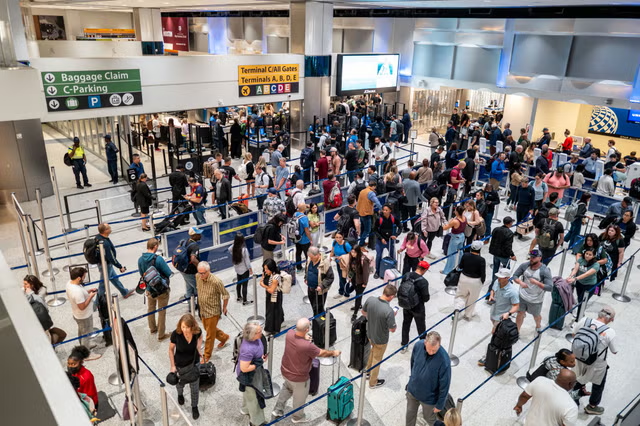
38 days have passed since the shutdown in America. Its biggest impact is on air travel. More than 5,000 flights were canceled or delayed here on Friday. Read the full news..
Source link
[ad_3]

