
Three Nations. Sixteen Cities. Forty-Eight Teams. One Tournament Across. An Entire Continent. Let’s have a look at all the venues of FIFA World Cup 2026.
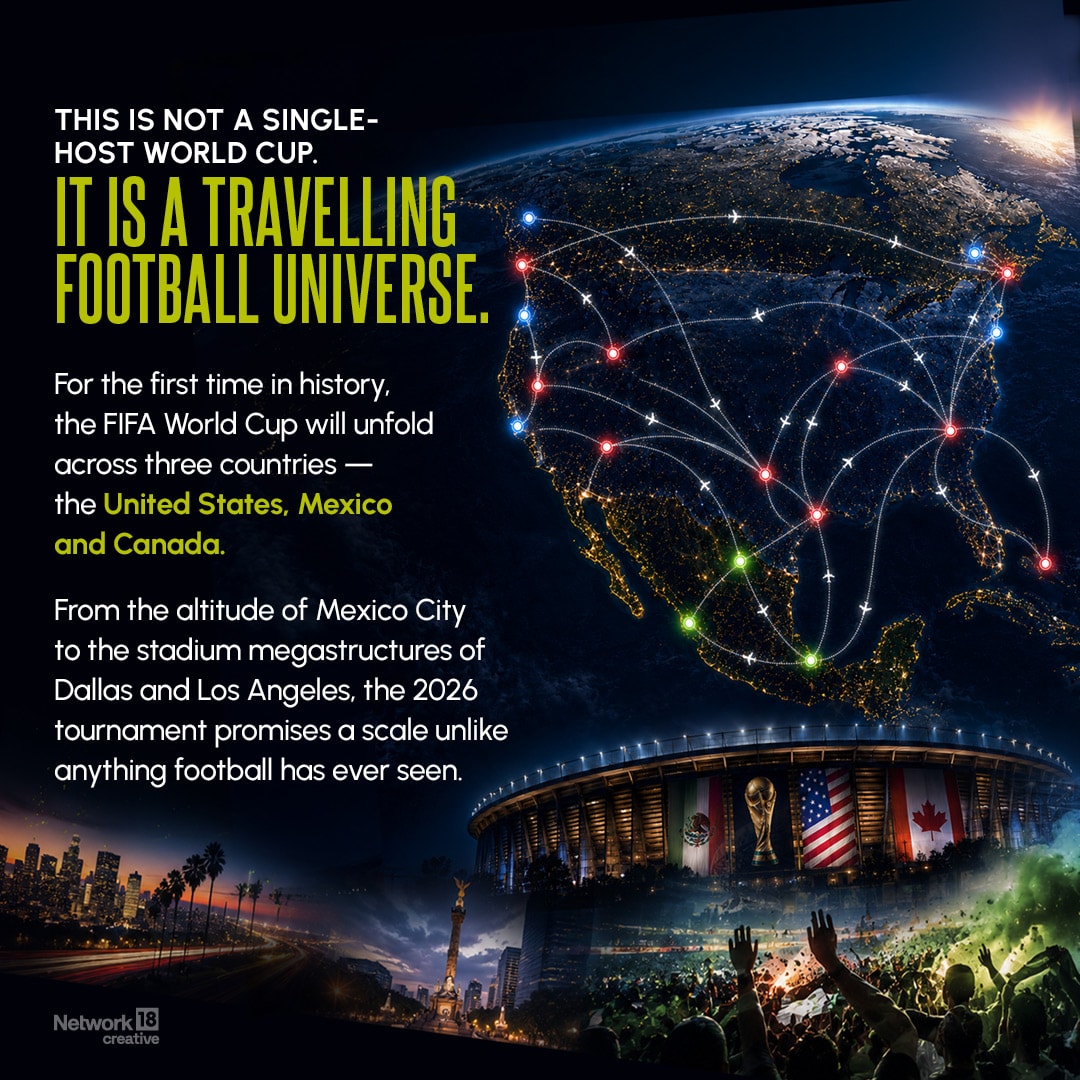
For the first time in history, the FIFA World Cup will unfold across three countries — the United States, Mexico and Canada. From the altitude of Mexico City to the stadium megastructures of Dallas and Los Angeles, the 2026 tournament promises a scale unlike anything football has ever seen.

Mexico – The most legendary venue of all
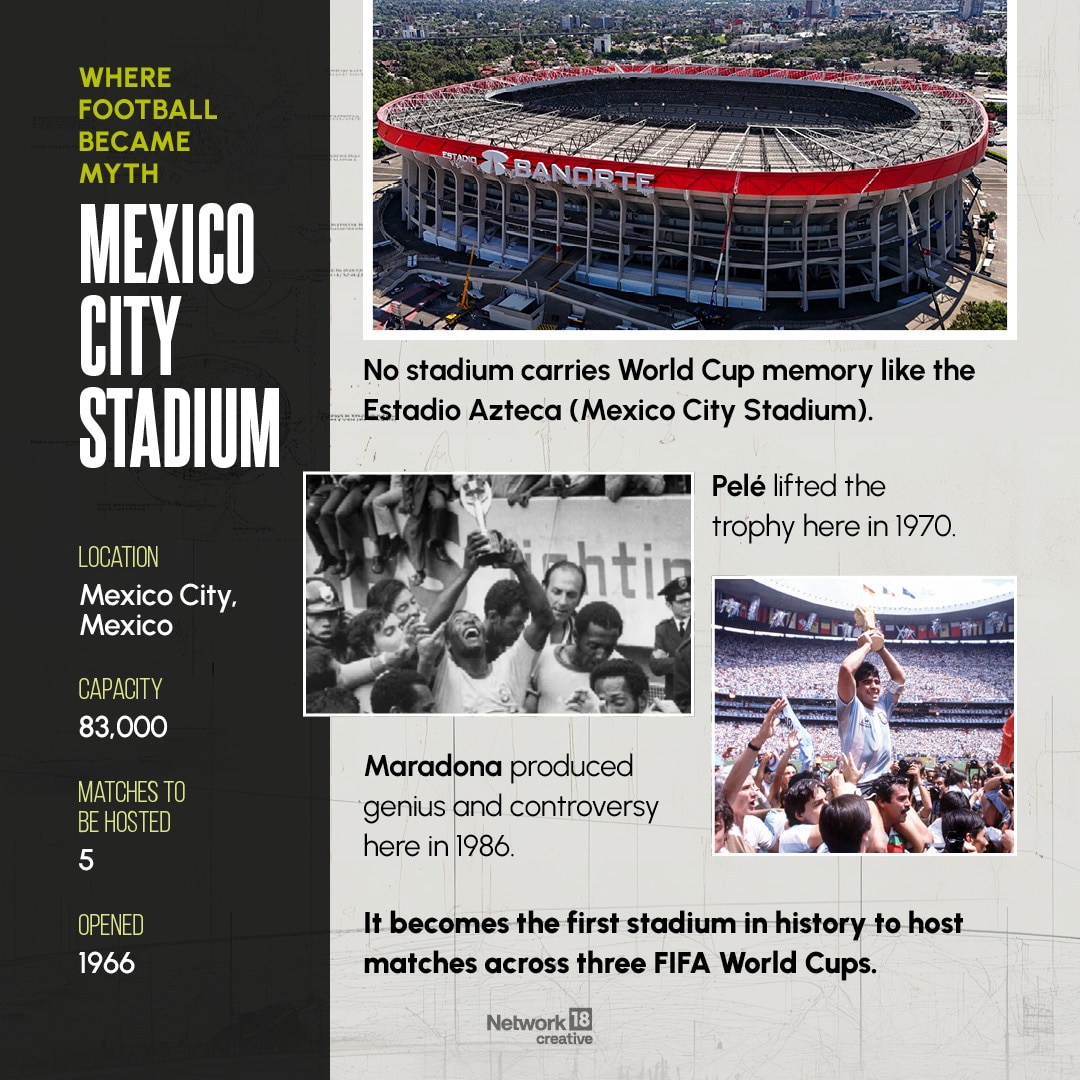
The Mexico City Stadium – It becomes the first stadium in history to host matches across three FIFA World Cups.
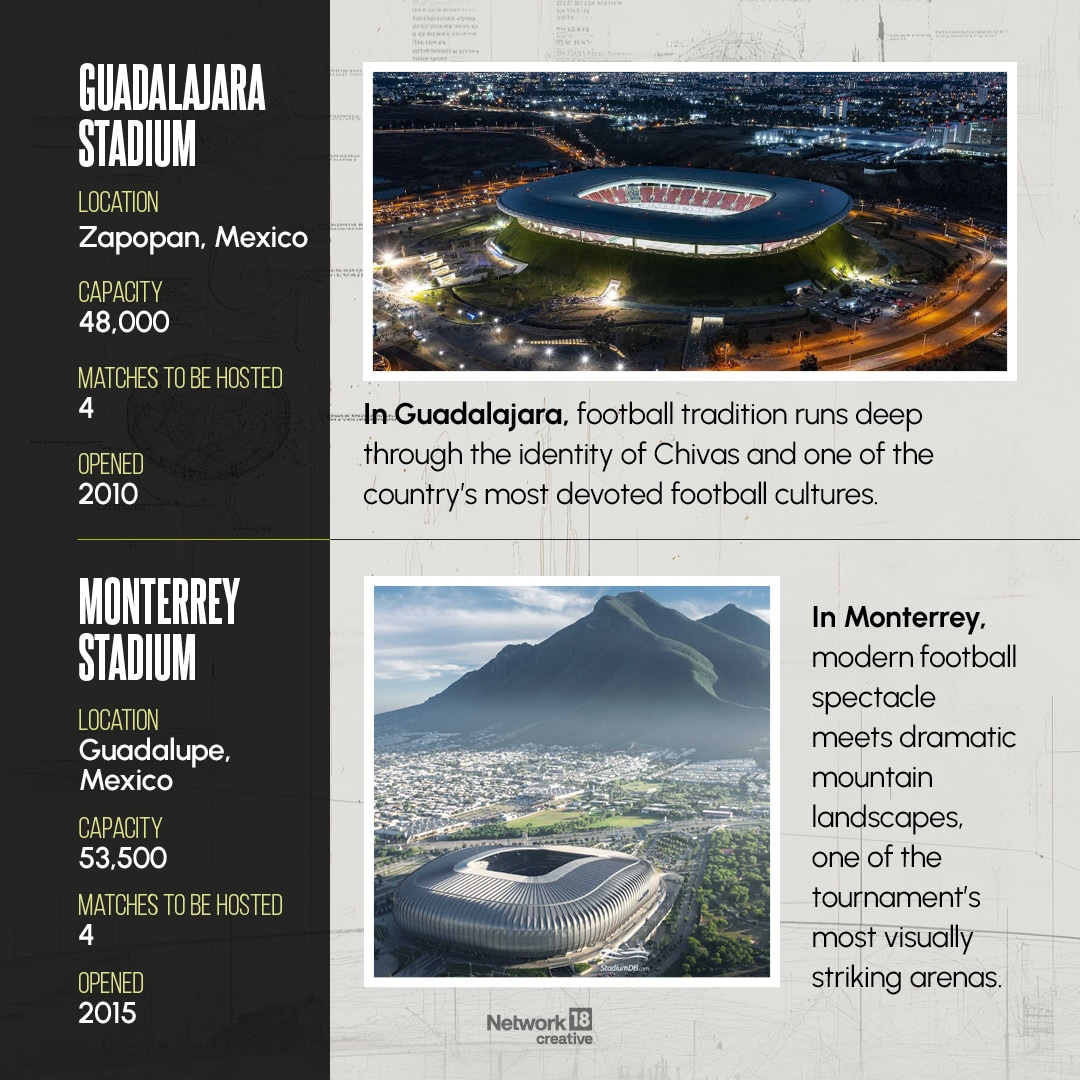
In Guadalajara, football tradition runs deep through the identity of Chivas and one of the country’s most devoted football cultures.

Many 2026 venues were built not for football, but for America’s entertainment machine. NFL cathedrals. Retractable roofs. Billion-dollar screens. These stadiums were designed to overwhelm the senses.
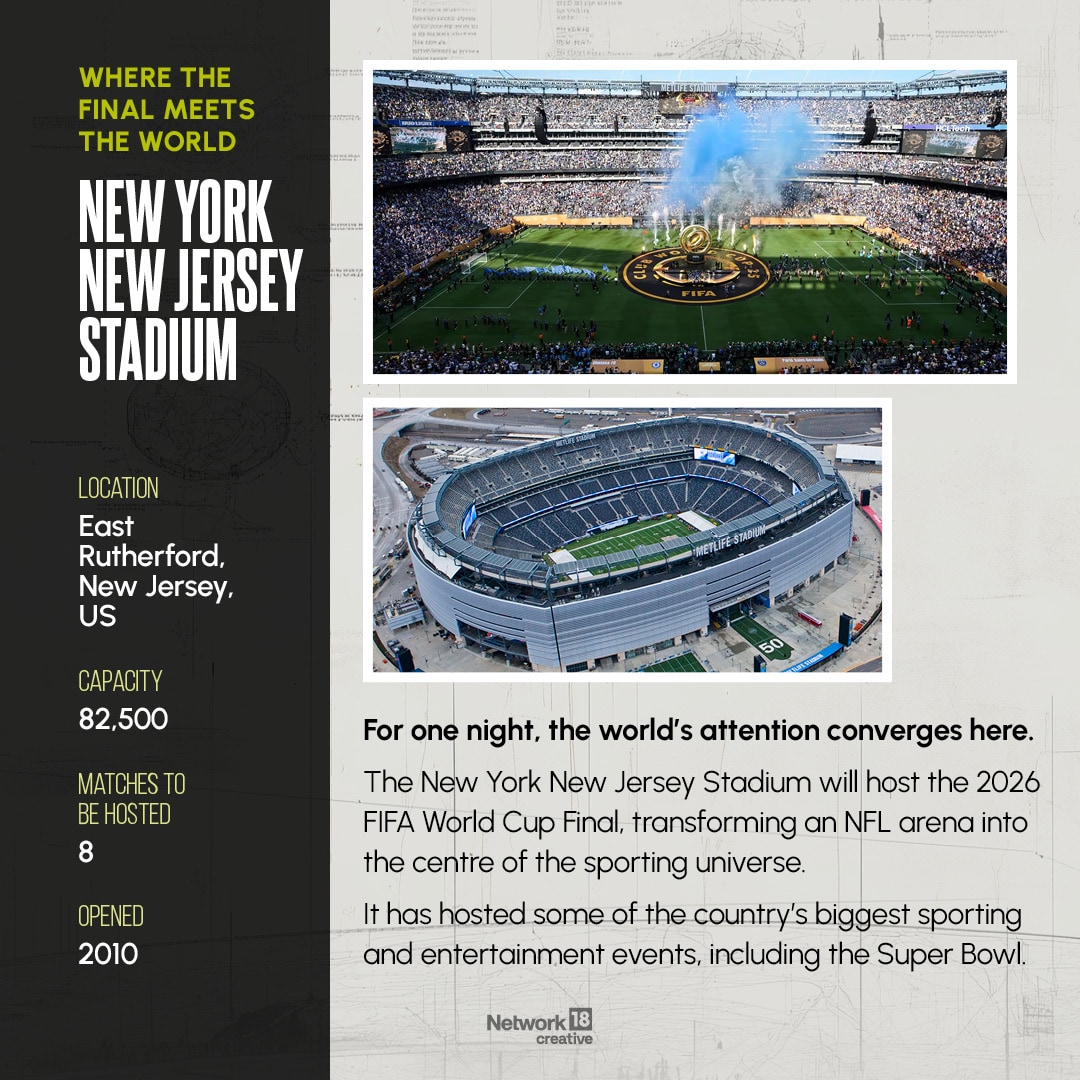
The New York New Jersey Stadium will host the 2026 FIFA World Cup Final, transforming an NFL arena into the centre of the sporting universe.
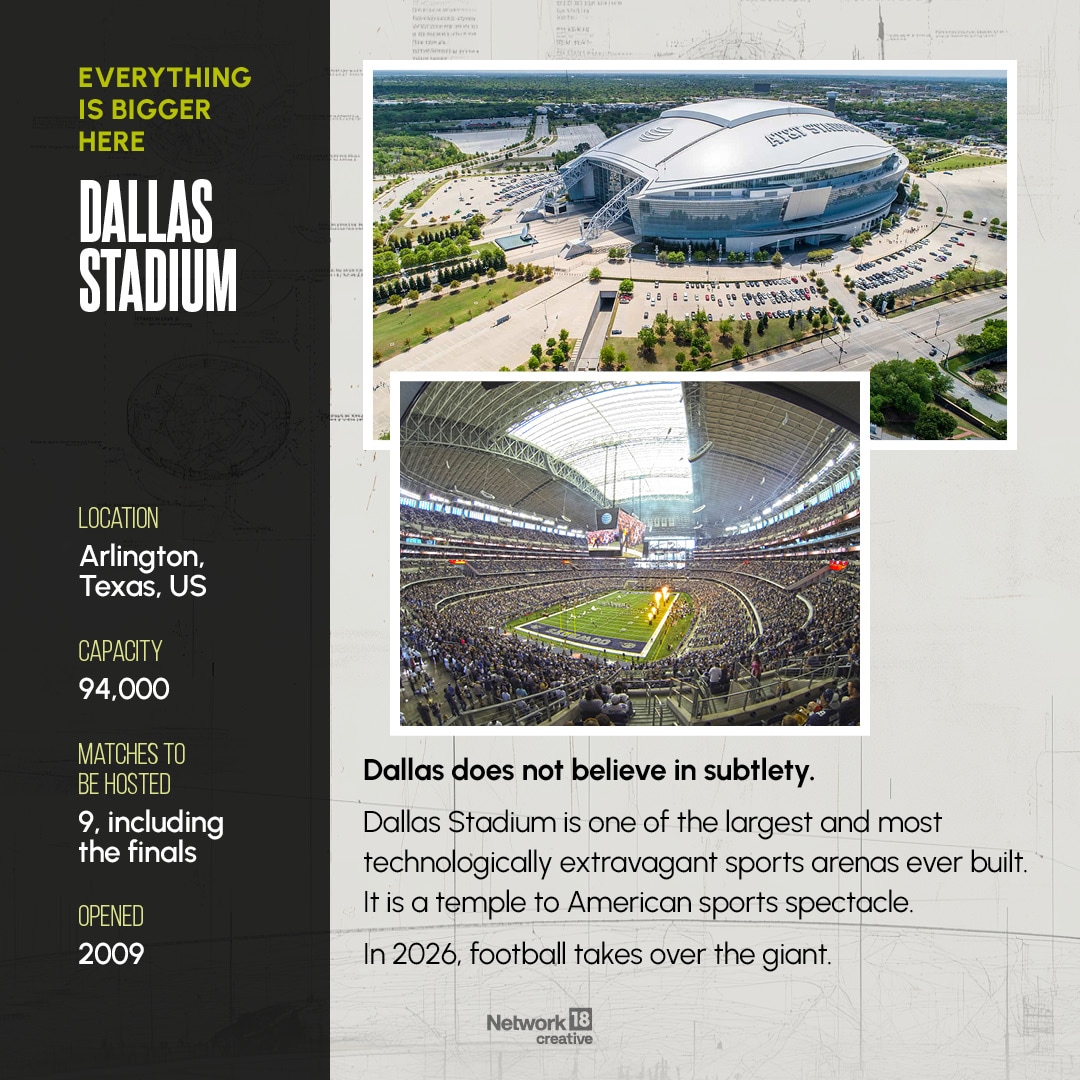
Dallas Stadium is one of the largest and most technologically extravagant sports arenas ever built. It is a temple to American sports spectacle.
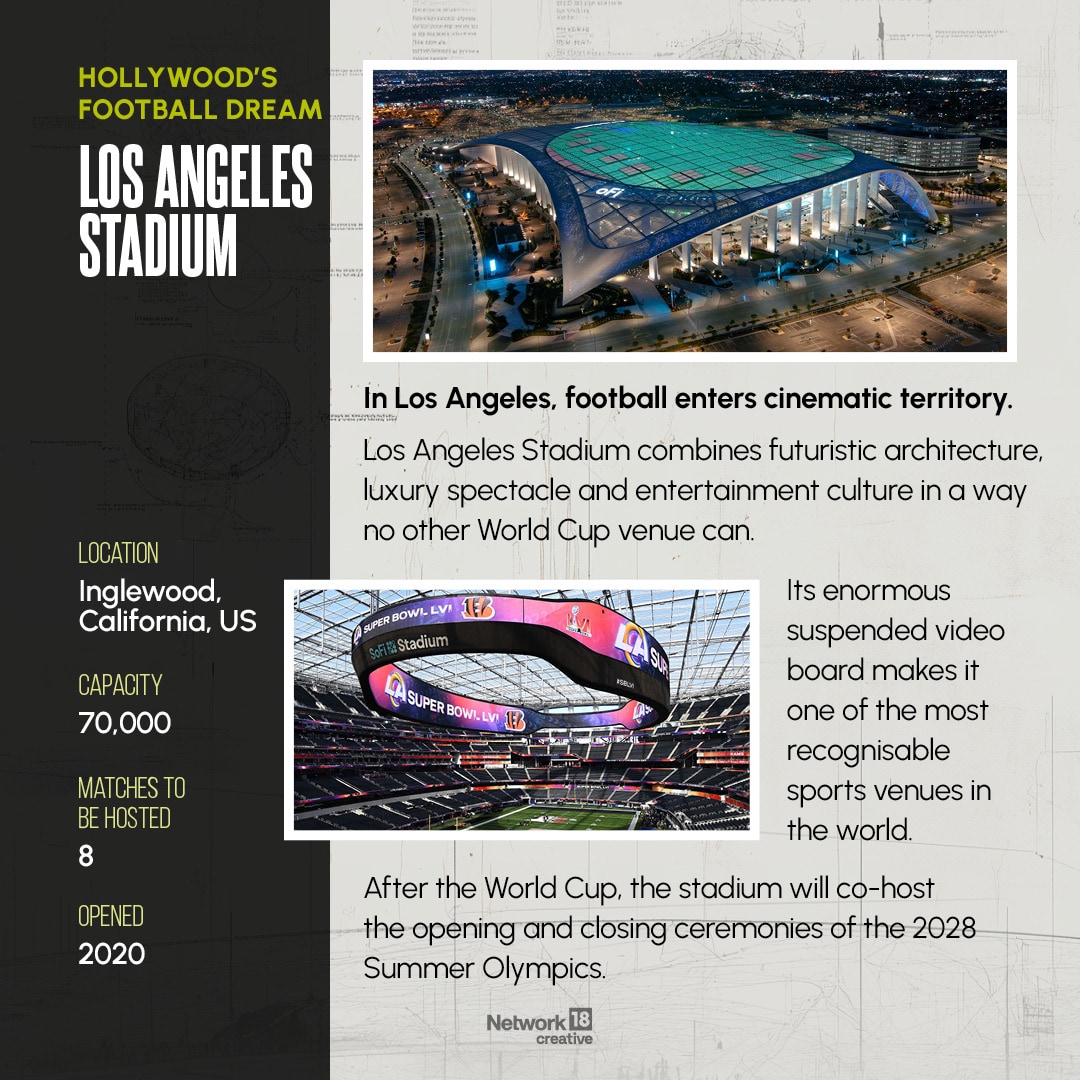
Los Angeles Stadium combines futuristic architecture, luxury spectacle and entertainment culture in a way no other World Cup venue can.

From NFL showdowns to international football nights, the stadium has already established itself as one of America’s premier sporting stages. Boston Stadium enters 2026 transformed by a major renovation that blends historic sporting pedigree with cutting-edge spectacle.
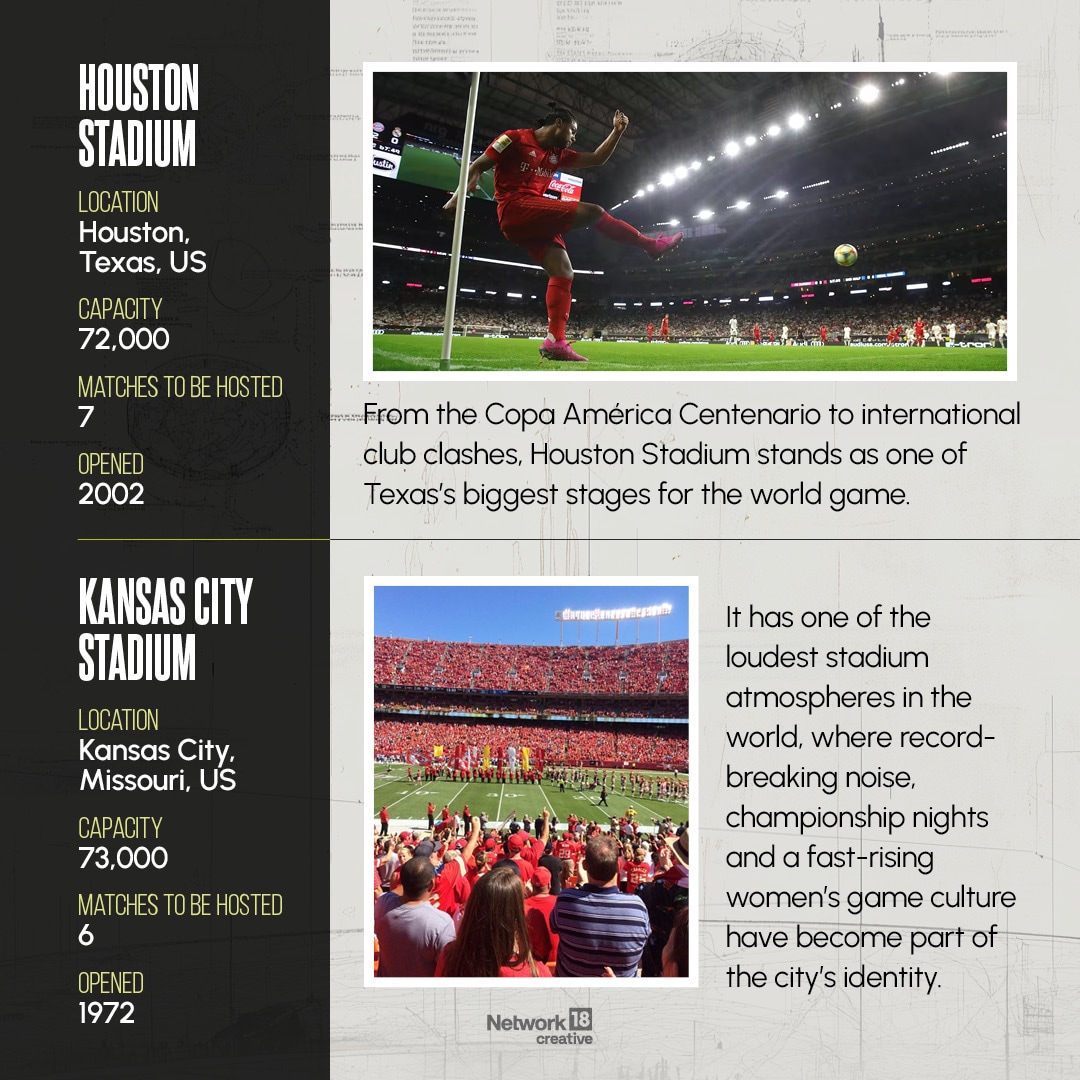
Houston Stadium stands as one of Texas’s biggest stages for the world game. Kansas Stadium has one of the loudest stadium atmospheres in the world, where recordbreaking noise, championship nights and a fast-rising women’s game culture have become part of the city’s identity.
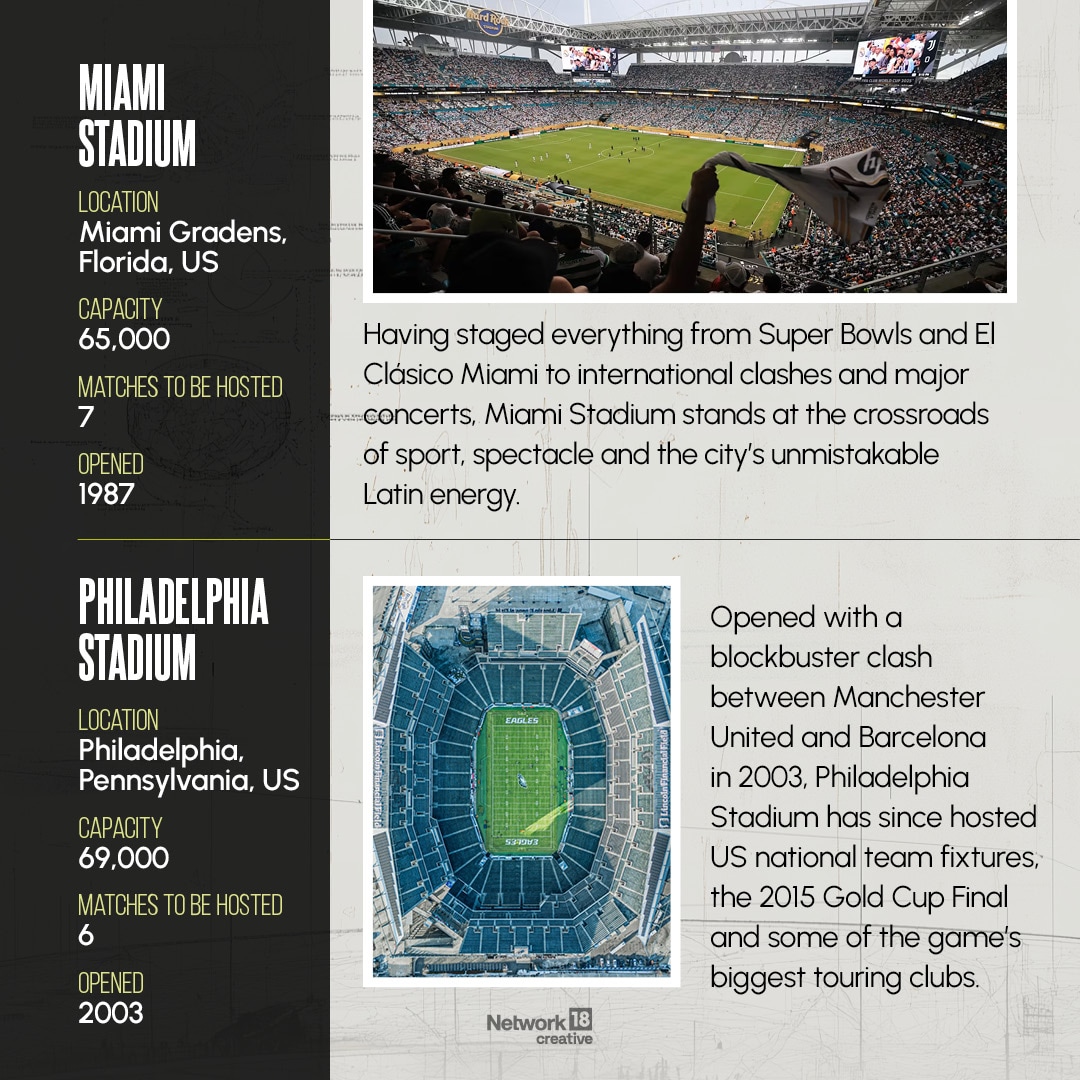
Miami Stadium stands at the crossroads of sport, spectacle and the city’s unmistakable Latin energy. The Philadelphia Stadium was opened with a clash between Manchester United and Barcelona in 2003. It has since hosted US national team fixtures, the 2015 Gold Cup Final and some of the game’s biggest touring clubs.
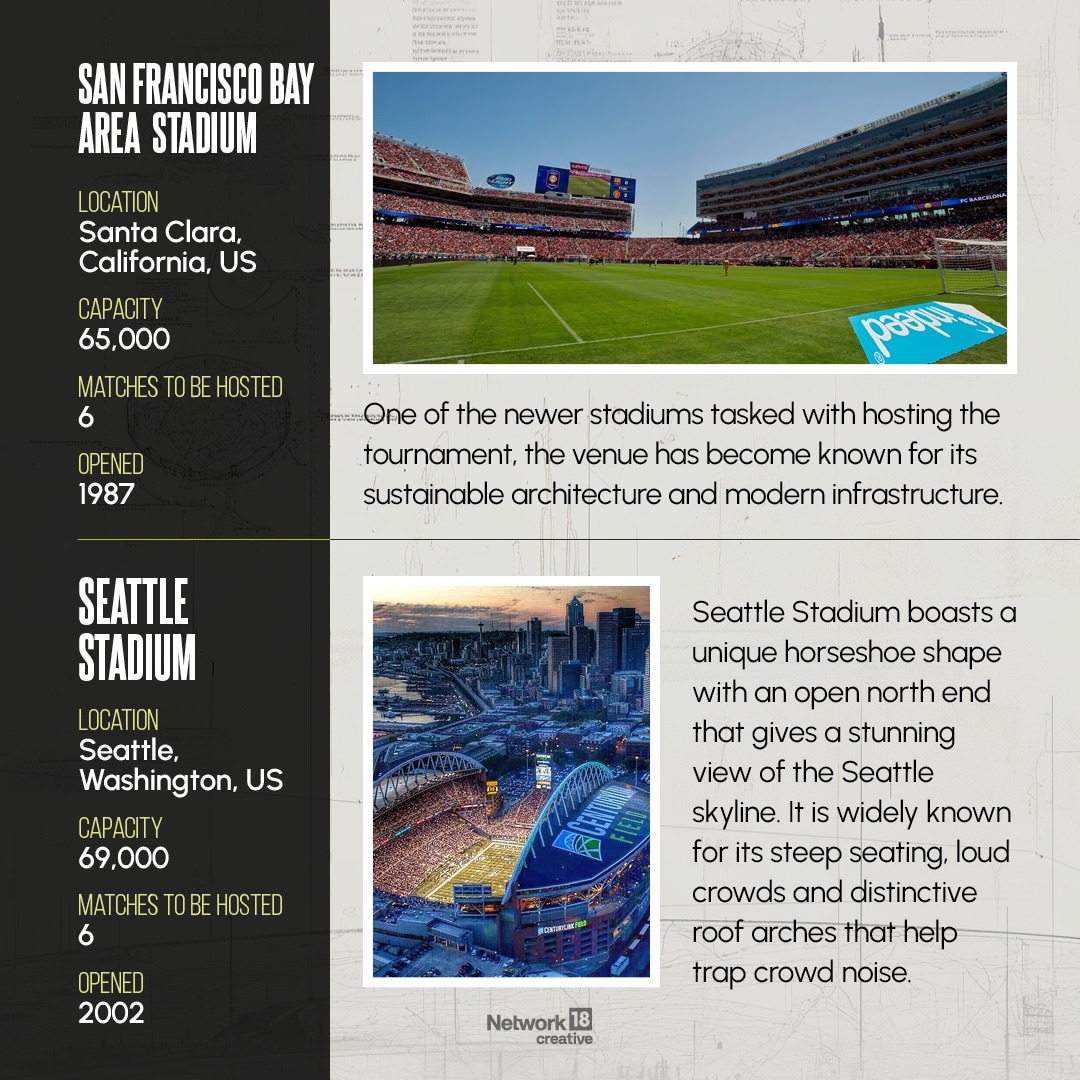
San Francisco Bay Area Stadium is a modern, sustainable venue known for its eco-friendly design and advanced infrastructure. Seattle’s stadium features a horseshoe shape with an open north end, steep seating, and roof arches that amplify crowd noise while offering skyline views.
These stadiums are shaping a new North American football identity — modern arenas rooted in multicultural cities, evolving fan cultures and the changing scale of the global game.
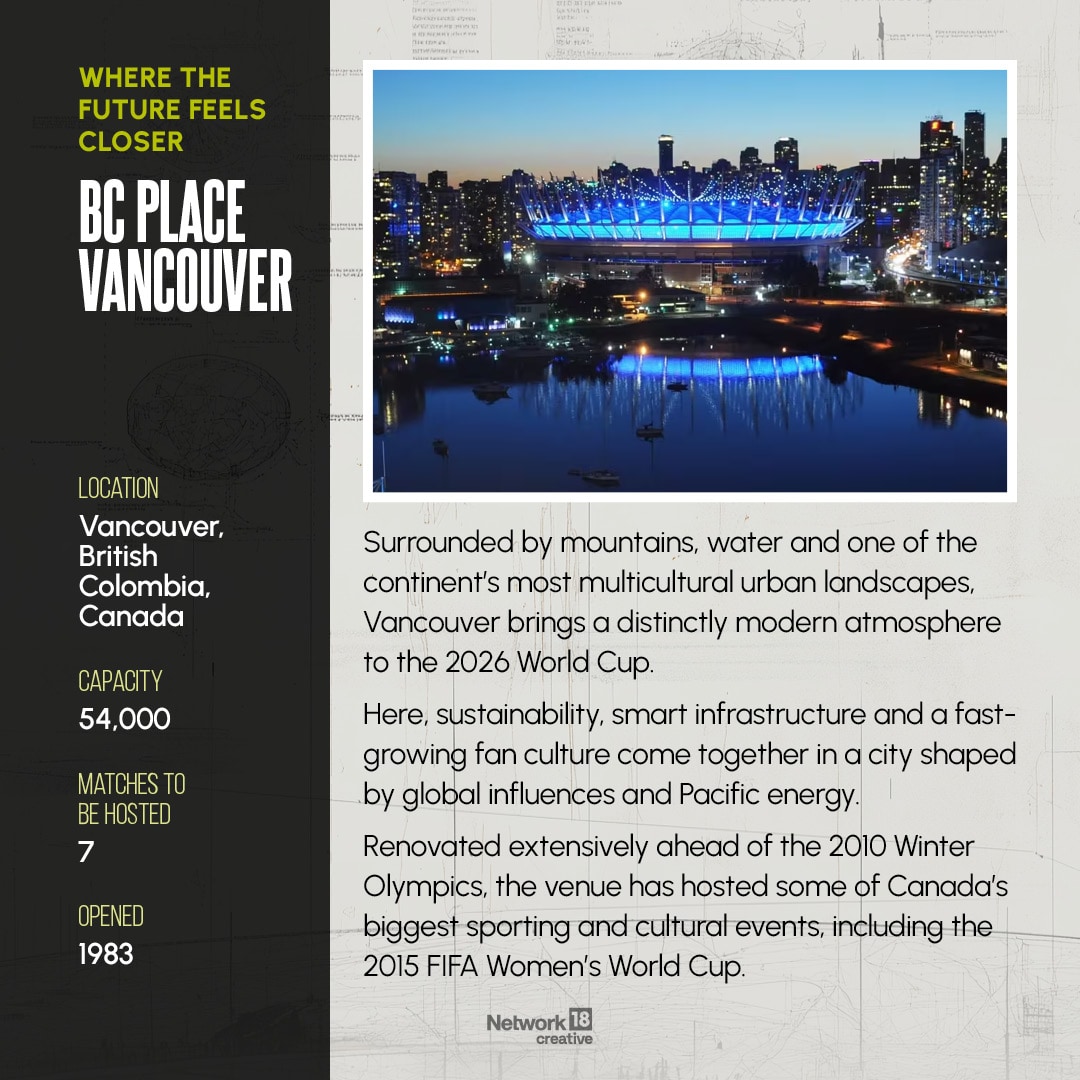
Vancouver brings a distinctly modern atmosphere to the 2026 World Cup. Here, sustainability, smart infrastructure and a fast-growing fan culture come together in a city shaped by global influences and Pacific energy.
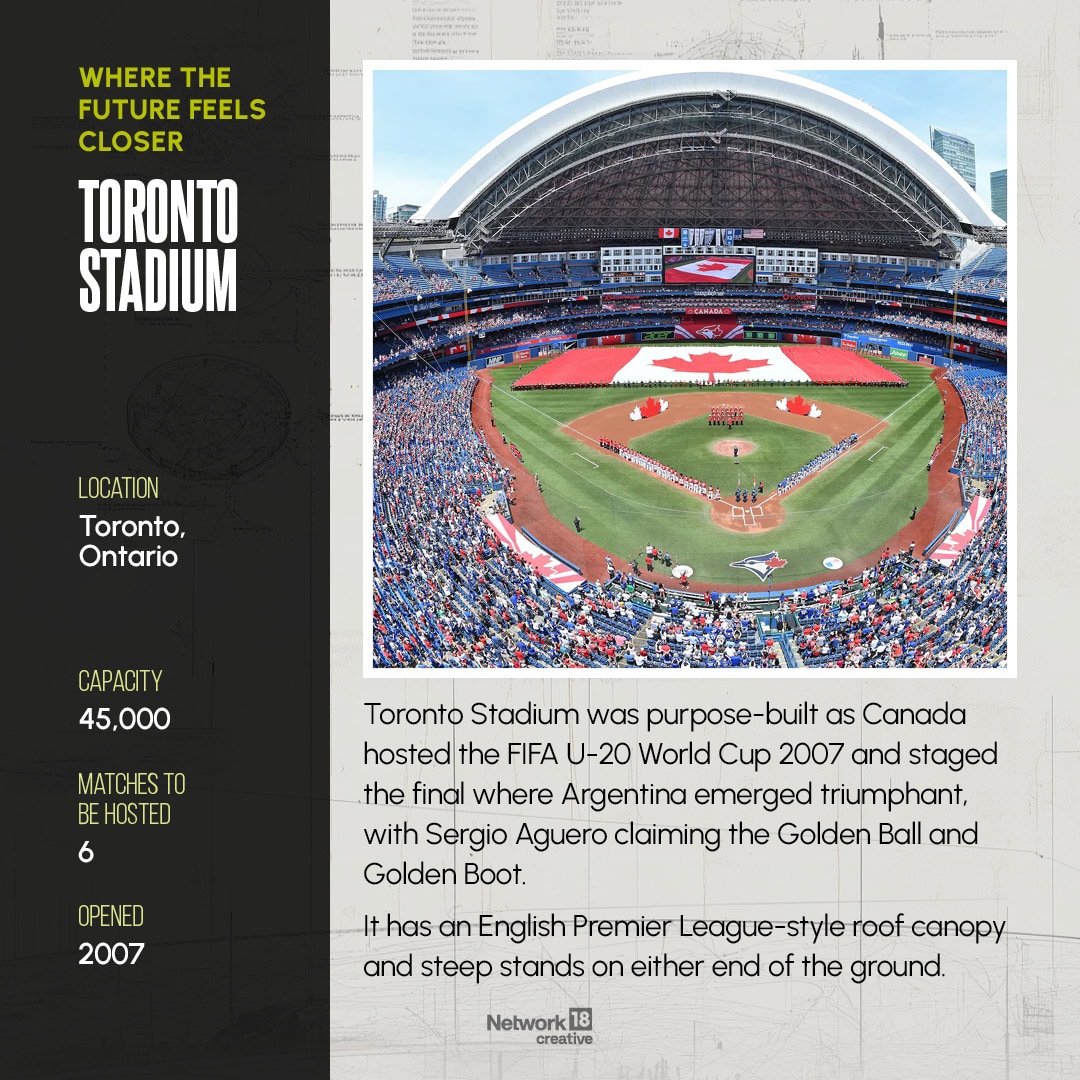
Toronto Stadium was purpose-built as Canada hosted the FIFA U-20 World Cup 2007 and staged the final, where Argentina emerged triumphant, with Sergio Aguero claiming the Golden Ball and Golden Boot.

The 2026 World Cup will span Multiple time zones, thousands of travel kilometres, dramatic climate shifts, altitude extremes, and sixteen host cities.

It will be remembered for movement: across countries, across cultures, across languages, across football worlds.
Source link
[ad_3]

